
Cocoa powder for hot chocolate is chosen on three results that can be measured in the cup: how quickly the powder wets and disperses, the colour of the finished drink, and its flavour when it is served hot or cold. Mix producers, café and vending suppliers, dairies and beverage brands control those results through five choices: alkalized or natural cocoa, the fat grade, the dose, the method of dispersion, and, for bottled drinks, the stabilizer that keeps cocoa from settling.
Each type of drink puts a different demand on the powder. In hot milk, cocoa wets easily, so colour and flavour are the main selection criteria. In cold milk, a standard powder floats and forms lumps unless it is dry-blended with sugar or treated with lecithin. In bottled chocolate milk, about two thirds of the cocoa does not dissolve and will settle over the shelf life unless a stabilizer holds it in suspension. The cocoa share of a mix also sets its legal name: in the EU, drinking chocolate needs at least 25% cocoa powder and chocolate powder at least 32%, and the Gulf standard sets the same 32% minimum for chocolate powder.
Overview
Alkalized cocoa powder with 10 to 12% fat is the usual starting point for hot chocolate, chocolate milk and instant mixes. Compared with natural cocoa, it gives a deeper brown colour, a smoother flavour and better dispersion in liquids. Natural cocoa gives a lighter, brighter drink with caramel notes, but it disperses less easily and settles more readily. A 10/12 powder wets more easily than a 20/22 powder because cocoa butter repels water, and it looks darker in the drink at the same level of alkalization.
Supplier guidance puts cocoa powder at about 1 to 3% of a cold dairy drink, while a dry mix sold as drinking chocolate in the EU contains at least 25%. For cold mixes, dry-blend the cocoa with sugar, add lecithin at about 2 to 5% of the powder, or buy a lecithin-coated grade. For bottled drinks, set the carrageenan or other stabilizer against the cocoa level, the milk fat and the heat treatment. Before ordering, write fineness, moisture, shell content, microbiological limits and, for EU sales, cadmium and ochratoxin A limits into the specification, then test two or three samples in your own drink.
Radad International supplies alkalized and natural cocoa powder in 1 kg to 25 kg packs with delivery across the UAE, and in bulk on FOB or CIF terms.
In this guide
- Hot chocolate, drinking chocolate and chocolate powder
- Matching cocoa powder to the drink
- Alkalized or natural cocoa powder
- Fat grade: 10/12 or 20/22
- How much cocoa powder to use
- Dispersing cocoa powder without lumps
- Cocoa settling in chocolate milk
- Troubleshooting drinks
- Cocoa powder specification for drinks
- Prices and specification sheets
- FAQs
- Sources and References
Product names
Hot Chocolate, Drinking Chocolate and Chocolate Powder: What Each Name Requires
Consumers ask for hot chocolate, but food law names a mix by its cocoa content. In the EU, Directive 2000/36/EC sets these definitions:
Name
Definition under EU rules
Naming point
Name
Cocoa powder
Definition under EU rules
Ground cocoa with at least 20% cocoa butter on dry matter and no more than 9% water
Naming point
Below 20% cocoa butter, the product is sold as fat-reduced cocoa powder
Name
Sweetened cocoa or drinking chocolate
Definition under EU rules
A mixture of cocoa powder and sugars with at least 25% cocoa powder
Naming point
Made with fat-reduced cocoa powder, it is sold as fat-reduced drinking chocolate
Name
Chocolate powder
Definition under EU rules
A mixture of cocoa powder and sugars with at least 32% cocoa powder
Naming point
The minimum cocoa share is 7 points higher than for drinking chocolate
In the Gulf states, cocoa powders and dry mixtures of cocoa and sugars are covered by the Gulf technical regulation GSO 1304:2015. It sets chocolate powder at not less than 32% cocoa powder (29% on a dry matter basis), limits the moisture of cocoa powder to 7%, and bars the word chocolate from the name of any mix with less than 25% total cocoa powder.
Hot chocolate mixes sold to consumers are made in one of two ways:
Cocoa and sugar mix
Cocoa powder and sugar, with optional flavouring, salt or emulsifier, prepared with hot or cold milk by the consumer or the café.
Instant mix with milk powder
Cocoa powder, sugar and milk powder in one pack, prepared with hot water. The milk solids are already in the mix, so the customer adds only water.
Fat-reduced powder and the product name
The widely used 10/12 grade contains 10 to 12% cocoa butter, which is below the 20% minimum that EU rules set for cocoa powder. Drinking chocolate made with 10/12 powder must therefore be labelled as fat-reduced drinking chocolate in the EU, while drinking chocolate made with 20/22 powder needs no fat-reduced wording. Check the naming rules of each country where the product will be sold before you print the labels.
Drink type
Hot, Cold, Instant or Bottled: Matching Cocoa Powder to the Drink
The same cocoa powder performs differently in hot milk, cold milk, a vending machine and a bottle, so record how the drink will be made before you compare samples:
Drink
What limits the result
What to specify or test
Drink
Hot milk or hot water mix
What limits the result
Cocoa wets more easily in hot liquid, so colour and flavour are the main selection criteria
What to specify or test
Alkalized 10/12 powder, with the shade chosen on the colour of the prepared drink
Drink
Cold instant mix, shaken or stirred into cold milk
What limits the result
Cocoa butter repels water and cold liquid slows wetting, so the powder floats and forms lumps
What to specify or test
Dry-blend with sugar, add lecithin, or use a lecithin-coated grade
Drink
Vending machine instant drink
What limits the result
The powder has to disperse almost instantly in the machine
What to specify or test
A dispersible powder tested on your own machine
Drink
Bottled chocolate milk
What limits the result
Undissolved cocoa settles over the shelf life, and UHT heat can change the cocoa flavour
What to specify or test
A stabilizer matched to cocoa level, fat and heat treatment, with flavour tested after processing
Drink
Plant-based chocolate drink
What limits the result
Each plant base brings out cocoa flavour differently and needs its own stabilizer system
What to specify or test
The shade, dose and stabilizer re-tested in the plant base
Supplier ranges recommend different cocoa powders for almond, coconut and soy drinks, and a supplier reference recipe for an oat drink uses a guar and gellan stabilizer in place of the carrageenan used in dairy cocoa milk. For a comparison across bakery, drinks and chocolate products, see how to choose cocoa powder.
Cocoa type
Alkalized or Natural Cocoa Powder for Hot Chocolate
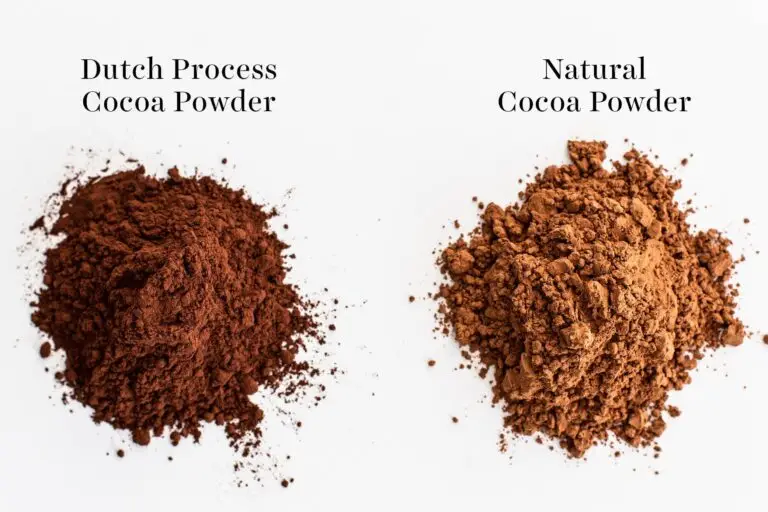
Alkalized (Dutch-process) cocoa powder is the usual choice for drinks, because alkalization deepens colour and flavour and improves dispersibility. Drinks made with natural cocoa show more caramel notes than drinks made with alkalized powder. Natural cocoa powder suits a lighter, brighter drink, provided its lower dispersion is tested in the way the drink is made.
Property
Natural cocoa powder
Alkalized cocoa powder
Property
Colour
Natural cocoa powder
Light to medium reddish-brown
Alkalized cocoa powder
Light brown to near-black, darker with stronger alkalization
Property
Flavour
Natural cocoa powder
Brighter, with more caramel notes
Alkalized cocoa powder
Smoother and rounder; medium and high alkalization give a richer, more intense chocolate flavour
Property
Dispersion
Natural cocoa powder
Lower; tends to settle in liquids
Alkalized cocoa powder
Higher; disperses easily in liquids
Property
Usual role in drinks
Natural cocoa powder
A lighter colour and a brighter cocoa note
Alkalized cocoa powder
Hot chocolate, chocolate milk and instant mixes
Producers match the degree of alkalization to the customer. Children’s chocolate drinks typically use mid-range alkalized powders with a milder taste, and drinks for adults often use stronger alkalization. The most heavily alkalized powders give the strongest colour, but their flavour becomes less pleasant, so test a medium shade before moving to the darkest one.
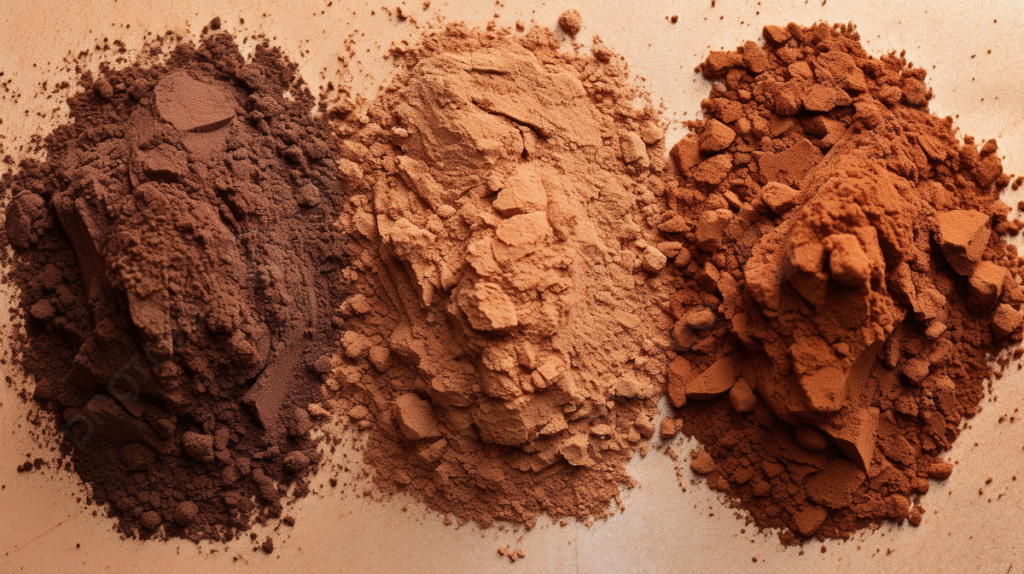
Natural and alkalized cocoa powder side by side: alkalization darkens the colour
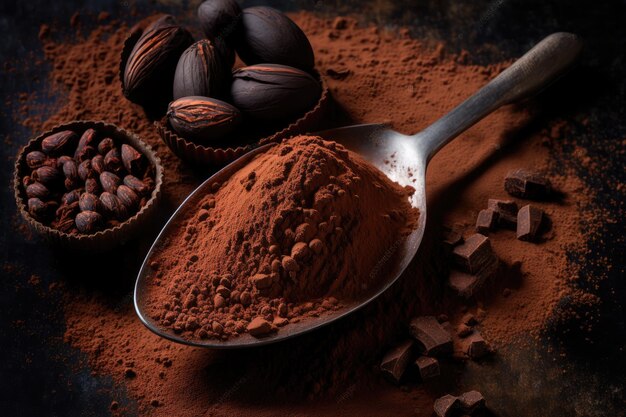
Dark brown alkalized cocoa powder
Colour and pH in a milk drink
The colour of the dry powder changes once it is blended into a liquid. For a darker drink, add more powder or choose a more alkalized one, and compare samples in your own milk at your own dose. Alkalization also raises the pH of the powder, so in a milk drink choose a cocoa that keeps the drink close to the pH of milk; a supplier reference recipe runs carrageenan stabilization at pH 6.6 to 7.0.
The full comparison, including pH and baking rules, is in alkalized vs natural cocoa powder.
Fat grade
Fat Grade: 10/12 or 20/22 Cocoa Powder for Drinks
Cocoa powder is sold in fat grades of 10 to 12%, 16 to 18% and 20 to 24%, and most food and beverage products use the 10/12 grade. In a drink, the fat grade affects how easily the powder wets, how much cocoa flavour each gram gives, how dark the drink looks and, in the EU, what the mix can be called.
Property
10/12 grade
20/22 and 22/24 grades
Property
Cocoa butter
10/12 grade
10 to 12%
20/22 and 22/24 grades
20 to 22% or 22 to 24%
Property
Wetting in liquid
10/12 grade
Easier
20/22 and 22/24 grades
Harder, most of all in cold liquid, because cocoa butter repels water
Property
Cocoa flavour per gram
10/12 grade
Strongest
20/22 and 22/24 grades
A 22 to 24% powder can give about 10% less flavour, because cocoa butter has no cocoa flavour
Property
Colour at the same alkalization
10/12 grade
Looks darker
20/22 and 22/24 grades
Looks lighter
Property
Naming under EU rules
10/12 grade
The mix must be labelled fat-reduced
20/22 and 22/24 grades
No fat-reduced wording needed
Property
Typical use
10/12 grade
Most hot chocolate, chocolate milk and instant mixes
20/22 and 22/24 grades
Premium mixes where a rounder, richer body is wanted
The cocoa butter in a high-fat grade adds to the fat of the drink, so run a test batch when you change grade. Our guide to 10/12 vs 20/22 cocoa powder compares the grades across all applications.
Dosage
How Much Cocoa Powder to Use in Hot Chocolate and Chocolate Milk
The cocoa dose depends on whether you formulate the finished drink or the dry mix. In a bottled or cold dairy drink, cocoa powder is a small share of the liquid. In a dry mix it is a large share of the powder, and the amount of cocoa in the cup depends on the serving size printed on the pack. Colour usually sets the minimum dose: formulators find the lowest powder level that gives the target colour, and in bottled drinks a lower cocoa level also reduces settling.
Product
Typical cocoa powder level
Basis
Product
Cold dairy drink (chocolate milk)
Typical cocoa powder level
About 1 to 3% cocoa powder in the drink
Basis
Supplier guidance; more powder or a more alkalized shade gives a darker, more intense drink
Product
Dairy cocoa milk, reference recipe
Typical cocoa powder level
1.3% cocoa powder
Basis
A supplier reference recipe for a dairy cocoa milk
Product
Oat drink, reference recipe
Typical cocoa powder level
1.2% fat-reduced cocoa powder
Basis
A supplier reference recipe for a plant-based chocolate drink
Product
Dry drinking chocolate mix
Typical cocoa powder level
At least 25% cocoa powder in the mix
Basis
Minimum for the name drinking chocolate in the EU; chocolate powder needs at least 32% in the EU and the Gulf states
Product
Cup of hot chocolate from a 25% mix
Typical cocoa powder level
7.5 g cocoa powder from a 30 g serving, about 3% of the prepared drink
Basis
Worked example: 30 g of mix stirred into 200 ml of hot milk
A laboratory study of chocolate beverage powders tested alkalized cocoa at 10 to 30% and soy lecithin at 0 to 4% of the powder. In that formulation, 20% alkalized cocoa with 2 to 4% soy lecithin gave the best physical properties, and the flavour was acceptable at 20% cocoa. A 20% mix falls below the 25% needed for the name drinking chocolate in the EU, and under the Gulf standard a mix with less than 25% cocoa powder cannot use the word chocolate in its name, so a product formulated at that level would need a different name.
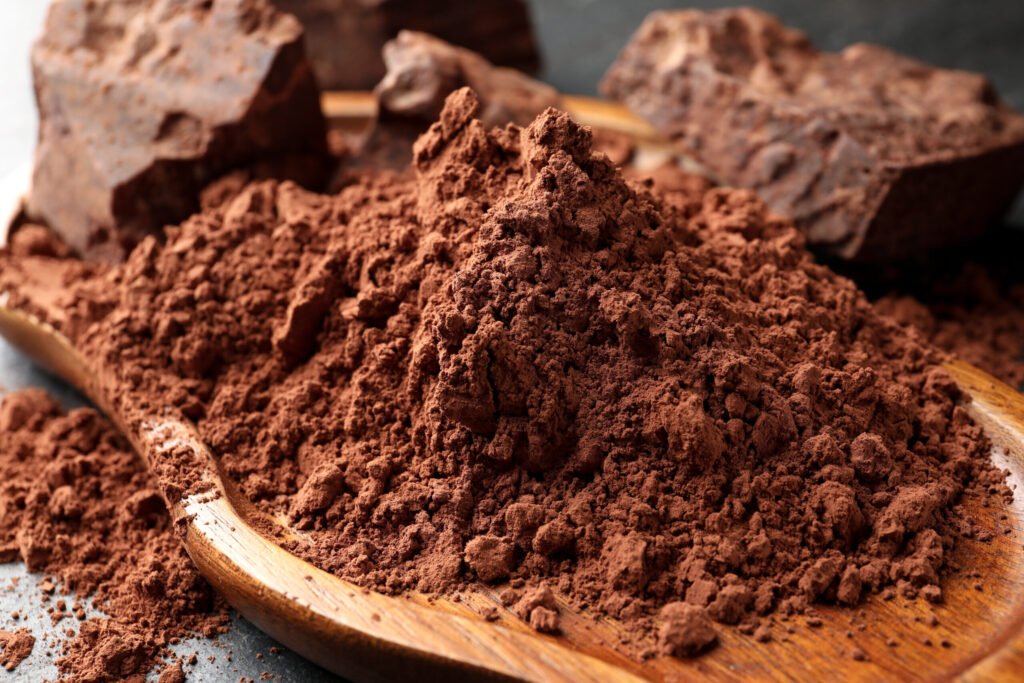
Cocoa powder is dosed from about 1 to 3% in a cold dairy drink to at least 25% in a drinking chocolate mix.
Dispersion
Dispersing Cocoa Powder in Hot and Cold Drinks Without Lumps
Only about 35% of cocoa powder is naturally soluble. The rest stays as suspended particles, so a drink can look well mixed and still leave grit or a cocoa layer at the bottom of the cup. Dispersion is controlled at four points:
Wetting
Cocoa powder is not easily wetted, which slows dispersion and causes lumps. Cocoa butter repels water, so the problem grows with higher-fat powders and with cold liquid.
Lecithin
Lecithin reduces the surface tension between powder and liquid. Additions of about 5% of the powder are common in industry, and 2 to 4% gave the best physical properties in a laboratory beverage powder. Lecithin counts toward the fat on the label, adds cost, and at high levels can bring off-flavours.
Pre-blending and shear
Dry-mixing powders with sugar before they meet the liquid reduces agglomeration. In a factory, a high-shear mixer draws the powder into the liquid and breaks agglomerates apart, which removes the need to pre-blend.
Lecithin-coated grades
Some suppliers coat cocoa powder with lecithin so that it blends into cold drinks and instant beverages without lumps. Most lecithinated cocoa powders use soy lecithin, and sunflower lecithin versions are also sold.
Lecithin, flavour and allergen labelling
In the laboratory study, lecithin improved wettability, and panellists detected a soy taste in powders with high lecithin and low cocoa; raising the cocoa level reduced it. Soy lecithin is also a soy ingredient: soybeans and products made from them are on the EU list of allergens that must be emphasised on the label, and lecithin is not one of the listed exceptions, while sunflower lecithin is not on the allergen list and needs no soy declaration.
Hot liquid wets cocoa more readily than cold liquid, so a mix that disperses well in hot milk can still form lumps when it is shaken into cold milk. Test the mix in every way it will be prepared, at the temperature the customer will use.
Bottled drinks
Cocoa Settling in Chocolate Milk and Ready-to-Drink Products
Cocoa is insoluble in milk, and without a stabilizer it can start to settle within hours. Even a well-dispersed powder eventually forms a settled layer in bottled chocolate milk, while a powdered mix drunk straight after mixing is less affected. The stabilizer builds a network that holds the particles in suspension, breaks when the bottle is shaken and rebuilds when it stands. These factors set how much stabilizer a recipe needs:
Factor
Effect
Factor
Cocoa content
Effect
A higher cocoa level needs less stabilizer
Factor
Fat in the milk
Effect
Higher-fat milk needs less stabilizer
Factor
Heat treatment
Effect
Sterilized products need the least stabilizer, UHT products more, and pasteurized products the most
Factor
Protein and solids
Effect
Set the stabilizer dosage, so a low-protein drink needs its own system
Factor
Carrageenan
Effect
The usual choice; it binds cocoa to milk protein, but its margin is narrow, and overdosing can give a jelly-like or lumpy texture and a marbled look
Factor
Microcrystalline cellulose
Effect
Lower risk of separation from overdosing, though overdosing raises viscosity considerably
Factor
Gellan gum
Effect
Suspends cocoa in a similar way to carrageenan with less mouthfeel; starch is sometimes added to restore creaminess
How Much Stabilizer a Chocolate Milk Uses
Stabilizers work at very low levels, which is why the narrow carrageenan margin in the table above matters: a small weighing error can move a recipe from settling cocoa to a jelly-like drink. A supplier reference recipe for dairy cocoa milk uses carrageenan at 0.012%, which is 0.12 g per kilogram of drink. In a laboratory study of a lower-sugar chocolate milk, carrageenan levels between 0 and 0.04% had the strongest effect on viscosity and sedimentation of all the ingredients tested. Carrageenan holds cocoa by binding it to milk protein, and plant drinks contain no milk protein, so a supplier reference oat drink uses a guar and gellan blend at 0.06% instead.
Heat treatment also affects the cocoa flavour: pasteurization heat can roast cocoa and introduce off-notes, and UHT or extended shelf life processing can add a malt-like flavour, so judge each cocoa after your own heat treatment. A supplier reference process for dairy cocoa milk runs as follows:
Step
Condition
Step
Disperse the cocoa
Condition
Cold liquid at 5 °C for 30 minutes
Step
Preheat
Condition
50 °C
Step
Homogenize
Condition
150 bar
Step
Heat-treat
Condition
Pasteurized at 96 °C for 2 minutes, or UHT at 135 °C for 15 seconds
Step
Cool and store
Condition
Cool to 10 °C and store below 7 °C
Step
Shelf life
Condition
1 to 3 weeks for a short-life product, 2 to 9 months for a long-life product
Colour after processing
Read the colour of a bottled drink at the end of the line, after heat treatment and homogenization, because that is the colour the customer sees on the shelf.
Troubleshooting
Troubleshooting Hot Chocolate and Chocolate Milk
Most faults in hot chocolate and chocolate milk come from the cocoa powder itself or from a recipe that was not adjusted for the way the drink is made:
Fault
Likely cause
What to check
Fault
Lumps floating on top
Likely cause
Cocoa butter repels water; cold liquid or a high-fat grade makes it worse
What to check
Dry-blend with the sugar, add lecithin or use a lecithin-coated grade, and add the powder to the liquid under agitation
Fault
Cocoa layer at the bottom of the cup or bottle
Likely cause
Undissolved particles settling
What to check
In a bottled drink, match the stabilizer to the cocoa level, fat and heat treatment; in a mix, check the fineness
Fault
Jelly-like or marbled chocolate milk
Likely cause
Carrageenan overdose
What to check
Reduce the dose or test a microcrystalline cellulose system
Fault
Malt-like or cooked flavour in UHT chocolate milk
Likely cause
Heat treatment acting on the cocoa
What to check
Test several cocoa grades under your own UHT or extended shelf life process
Fault
Pale drink
Likely cause
Dose too low or shade too light
What to check
Raise the dose or choose a more alkalized shade, and judge the colour of the prepared drink
Fault
Sharp, acidic taste
Likely cause
Natural cocoa
What to check
Test an alkalized powder
Fault
Soy or off-taste in a lecithin mix
Likely cause
High lecithin with low cocoa
What to check
Lower the lecithin or raise the cocoa level
Fault
Specks in the cup
Likely cause
Shell and fibre particles
What to check
Specify a shell limit and fineness by wet sieve
Specification
Cocoa Powder Specification for Hot Chocolate and Drink Mixes
Put the following points on the purchase specification and ask for a certificate of analysis with every lot:
Parameter
What to ask for
Radad alkalized cocoa powder
Parameter
Fat
What to ask for
The grade and its range
Radad alkalized cocoa powder
10 to 12% cocoa butter
Parameter
Fineness
What to ask for
Wet sieve result, not a general claim of “fine”
Radad alkalized cocoa powder
At least 98.0% through the sieve, below 75 microns
Parameter
Moisture
What to ask for
A maximum value; the Gulf standard caps cocoa powder at 7%
Radad alkalized cocoa powder
Maximum 5.0%
Parameter
Shell content
What to ask for
A maximum value, because fibre shows as specks
Radad alkalized cocoa powder
Maximum 1.75% on alkali-free nibs
Parameter
Colour
What to ask for
A reference sample and a tolerance for each lot
Radad alkalized cocoa powder
Light brown and dark brown shades
Parameter
Dispersion and settling
What to ask for
An acceptance limit tested in your own drink
Radad alkalized cocoa powder
Test with samples in your own milk or water
Parameter
Microbiology
What to ask for
Plate count, yeasts and moulds, coliforms, E. coli and Salmonella limits
Radad alkalized cocoa powder
Total plate count maximum 10,000 CFU/g; yeasts and moulds maximum 100 CFU/g; coliforms and E. coli negative per g; Salmonella negative per 50 g
Parameter
Shelf life
What to ask for
Months from production
Radad alkalized cocoa powder
24 months
Parameter
Packing
What to ask for
Bag size and material
Radad alkalized cocoa powder
25 kg sacks, plus retail packs from 1 kg
Contaminant limits for drinks sold in the EU
Cocoa powder sold to the final consumer, or used in sweetened cocoa powder and drinking chocolate sold to the final consumer, has a cadmium maximum of 0.60 mg/kg. Cocoa powder also has an ochratoxin A maximum of 3.0 µg/kg. If your mix is sold in the EU, add both limits to the specification and ask for the results.
Values can vary slightly by batch, and the certificate for your order gives the measured results. Our guide to cocoa microbiological specifications and contaminant limits sets out the limits buyers usually apply, and bulk cocoa powder packaging covers bags, labelling and storage.
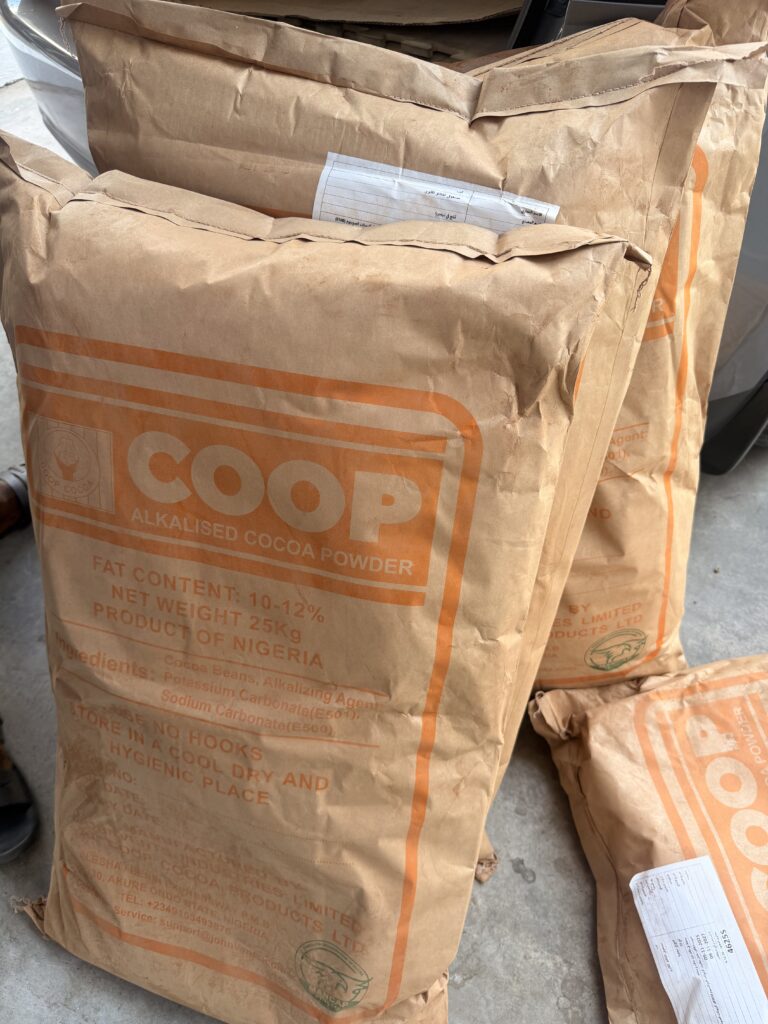
Bulk cocoa powder for drink producers is supplied in 25 kg sacks.
Supply
Cocoa Powder for Hot Chocolate: Prices and Specification Sheets
Radad International sells alkalized and natural cocoa powder in 1 kg, 5 kg, 10 kg and 25 kg packs, or any custom weight up to 100 kg, with delivery all over the UAE. For hot chocolate and chocolate milk, the alkalized powder is the usual choice, and the natural powder suits recipes that need a lighter colour and a brighter note; both are 10 to 12% fat grades.
Pack size
Alkalized cocoa powder
Natural cocoa powder
Pack size
1 kg
Alkalized cocoa powder
AED 59.97
Natural cocoa powder
AED 58.95
Pack size
5 kg
Alkalized cocoa powder
AED 299.85
Natural cocoa powder
AED 294.75
Pack size
10 kg
Alkalized cocoa powder
AED 599.70
Natural cocoa powder
AED 589.50
Pack size
25 kg
Alkalized cocoa powder
AED 1,499.25
Natural cocoa powder
AED 1,473.75

Product
Alkalized Cocoa Powder
Dutch-process 10/12 grade: deeper colour and a smoother flavour.
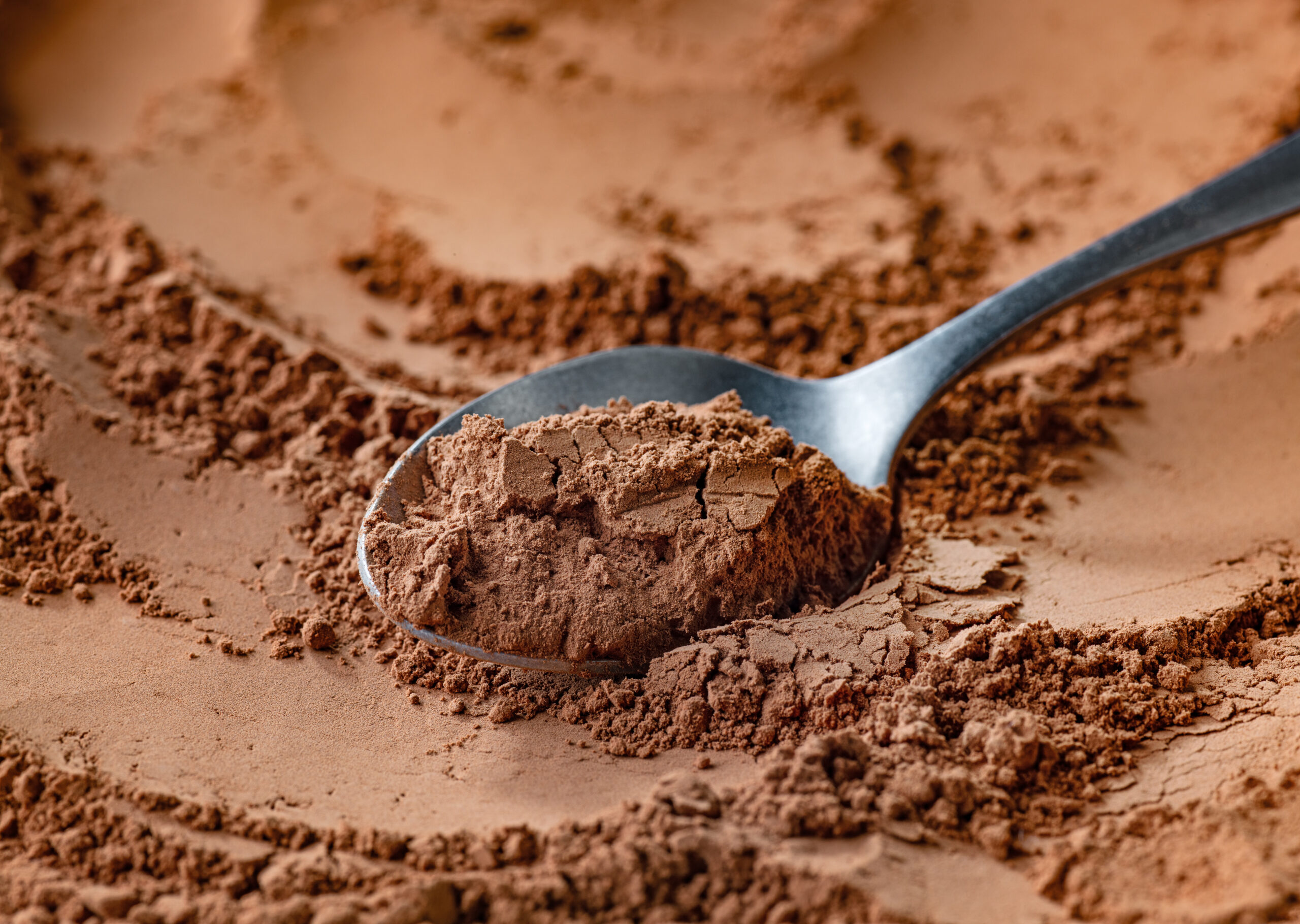
Product
Natural Cocoa Powder
Non-alkalized 10/12 grade: lighter colour and a brighter note.
Work with Radad International
Request a Cocoa Powder Quote for Your Drink Mix
Tell us your drink or mix, the shade and fat grade you need, how the drink is prepared, your monthly volume and your destination, and we will send the specification and a quote.
Or email info@radadinternational.com · +971 522 501 039
Questions
Cocoa Powder for Hot Chocolate: FAQs
What is the best cocoa powder for hot chocolate?
Alkalized (Dutch-process) cocoa powder with 10 to 12% fat is the usual choice, because it gives a deeper colour and a smoother flavour than natural cocoa and disperses more easily in liquids. Choose the shade by comparing samples in your own milk at your own dose.
Is cocoa powder the same as hot chocolate mix?
Cocoa powder is pure ground cocoa, while a hot chocolate or drinking chocolate mix is cocoa powder blended with sugar and sometimes milk powder, flavouring or an emulsifier. In the EU, a mix needs at least 25% cocoa powder to be sold as drinking chocolate.
How much cocoa powder is in drinking chocolate?
At least 25% of the mix in the EU, and at least 32% for a product sold as chocolate powder in the EU and the Gulf states. In the cup, a 30 g serving of a 25% mix gives 7.5 g of cocoa powder.
What does the Gulf standard say about drinking chocolate?
The Gulf technical regulation GSO 1304:2015 covers cocoa powders and dry mixtures of cocoa and sugars in the Gulf states. It sets chocolate powder at not less than 32% cocoa powder, caps the moisture of cocoa powder at 7%, and bars the word chocolate from the name of any mix with less than 25% cocoa powder.
How much cocoa powder should I use in chocolate milk?
Supplier guidance for dairy drinks is about 1 to 3% cocoa powder. A supplier reference recipe for a dairy cocoa milk uses 1.3%, and one for an oat drink uses 1.2% of a fat-reduced powder. Raise the dose or choose a more alkalized shade for a darker drink.
Can I use natural cocoa powder for hot chocolate?
Natural cocoa works in hot chocolate and gives a lighter colour and a brighter taste with caramel notes. It disperses less easily and tends to settle, so test it in the way your drink is made before you change a recipe.
Why does cocoa powder go lumpy in cold milk?
Cocoa powder is not easily wetted, and the cocoa butter in it repels water, so the powder floats and forms lumps, and cold liquid slows wetting further. Dry-blend the cocoa with sugar, add lecithin, or use a lecithin-coated grade made for cold drinks.
What is dispersible cocoa powder?
Dispersible cocoa powder is treated, usually with lecithin, so that it wets and blends into cold liquids and instant beverages without lumps. Most lecithinated powders use soy lecithin, and sunflower lecithin versions are also sold.
Does soy lecithin in a cocoa mix need allergen labelling?
In the EU, soybeans and products made from them must be emphasised on the label as an allergen, and lecithin is not one of the listed exceptions, so a mix made with soy lecithin declares soy, while sunflower lecithin is not on the allergen list and needs no soy declaration.
Why does cocoa settle at the bottom of chocolate milk?
Only about 35% of cocoa powder is naturally soluble, so the remaining particles sink unless a stabilizer holds them. The stabilizer level depends on the cocoa level, the fat in the milk, the protein and solids, and the heat treatment. Carrageenan has a narrow margin, and overdosing can give a jelly-like or marbled texture.
Should I use 10/12 or 20/22 cocoa powder in drinks?
10/12 is the usual grade for drinks, because it wets more easily, gives more cocoa flavour per gram and looks darker at the same alkalization. A 20/22 powder suits premium mixes that want a richer body, and drinking chocolate made with it needs no fat-reduced wording in the EU.
What should a cocoa powder specification for drinks include?
Fat grade, fineness by wet sieve, moisture, shell content, colour against a reference sample, microbiological limits including Salmonella, shelf life and packing, with a certificate of analysis for every lot. Add cadmium and ochratoxin A limits for EU sales, and set a dispersion and settling test in your own drink.
Can I buy cocoa powder for a café in small quantities in the UAE?
Radad International sells alkalized and natural cocoa powder online in 1 kg, 5 kg, 10 kg and 25 kg packs, or any weight up to 100 kg, with delivery all over the UAE, and orders above 100 kg are quoted in bulk on FOB or CIF terms.
Keep reading
More Guides from Radad International
Sources and References
- Directive 2000/36/EC, Annex I: sales names, definitions and characteristics of cocoa and chocolate products
- GSO 1304:2015, Cocoa powders and dry mixtures of cocoa and sugars
- WTO TBT notification: GSO/FDS 1304/2014, Gulf standard for cocoa powders and dry mixtures of cocoa and sugars
- Commission Regulation (EU) 2023/915 on maximum levels for certain contaminants in food
- Regulation (EU) No 1169/2011, Annex II: substances or products causing allergies or intolerances
- Dairy Foods, Chocolate challenges
- Dairy Foods, Dispelling some misperceptions about chocolate and cocoa in dairy
- Barry Callebaut (Bensdorp), Cocoa powders for dairy drinks
- Cargill (Gerkens), Dairy drinks white paper
- Palsgaard, How to prevent sedimentation in chocolate milk
- Silverson, Production of flavored milk drinks
- Effects of alkalized cocoa powder and soy lecithin on physical characteristics of chocolate beverage powders (AGRIS, FAO)
- Korean Journal for Food Science of Animal Resources, Optimization of a lower-sugar chocolate milk (PMC)
- US Patent 7,201,934, Dispersible cocoa products (Google Patents)