100% dark chocolate is chocolate made only from cocoa beans, with no sugar, milk or emulsifier added. Radad’s CN100 bar is 100% cocoa, about half natural cocoa butter, and comes as a 100 g bar, 24 bars per carton, best before 24 months. We supply retailers, health stores, pastry kitchens and distributors in the UAE and worldwide.
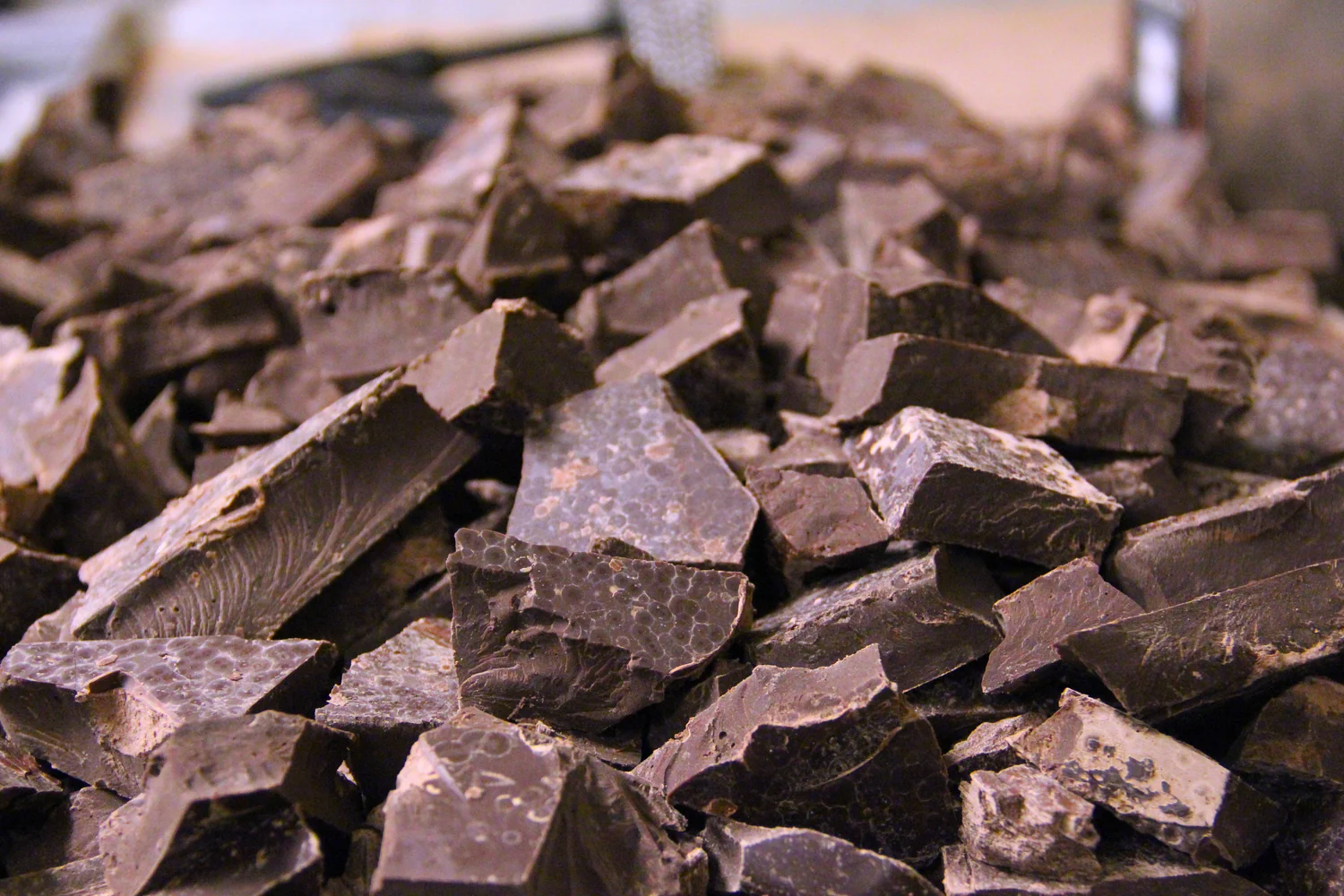
100% dark chocolate is chocolate made only from roasted, ground cocoa beans, with no sugar or other ingredient added. It is also sold as unsweetened chocolate, 100% cacao or pure dark chocolate, and it is the upper limit of dark chocolate: every gram is cocoa.
Because nothing is added, the bar keeps everything in the bean. Typical values for unsweetened chocolate are about 52 g fat per 100 g, almost all of it natural cocoa butter, which gives the snap and melt, plus 14 g protein, 17 g dietary fibre and less than 1 g of natural sugar. Cocoa solids also carry minerals such as magnesium, potassium and iron, and the natural stimulants theobromine and caffeine. Under the Codex standard for chocolate (CXS 87-1981), chocolate must contain at least 35% total cocoa solids, including at least 18% cocoa butter. A 100% bar has no other ingredient at all.
Dark Chocolate 100% (CN100) at a glance
Also called
Unsweetened chocolate, 100% cacao, pure dark chocolate
Ingredients
Cocoa beans 100%
Added sugar, milk, emulsifier
None
Net weight
100 g per bar
Shipping carton
24 bars of 100 g (2.4 kg net)
Application
Eating chocolate, also baking, pastry and drinks
Origin
Africa
Best before
24 months from manufacture
The CN100 bar is refined and tempered as an eating chocolate: it breaks cleanly and melts evenly, and it can also be chopped for baking, pastry and drinks. It suits buyers who need a single-ingredient label, such as health retailers, pastry kitchens, cafés, hotels and importers.
Compare
100% vs 85% vs 70% Dark Chocolate
The percentage on a chocolate bar is its total cocoa content. In a plain dark bar the rest is almost entirely sugar, so the percentage shows both how intense the bar is and roughly how much sugar it contains.
Feature
70% dark
85% dark
100% (Radad CN100)
Cocoa content
70%
85%
100%
Sugar per 100 g (plain bar)
About 30 g
About 15 g
None added
Typical ingredients
Cocoa mass, sugar, cocoa butter, often lecithin and vanilla
Cocoa mass, sugar, cocoa butter, sometimes lecithin
To replace 100 g of 70% chocolate, use 70 g of 100% chocolate plus 30 g of sugar or sweetener. For 85%, use 85 g of 100% chocolate plus 15 g of sugar. The cocoa content of the recipe stays the same, and you choose the sweetness.
Nutrition
100% Dark Chocolate Nutrition per 100 g
Typical values for unsweetened (100%) chocolate are 608 kcal, 52.3 g fat, 11.8 g carbohydrate, 16.6 g fibre and 14.3 g protein per 100 g, with less than 1 g of natural sugar.
Nutrient
Per 100 g
Per 25 g serving
Energy
2512 kJ / 608 kcal
628 kJ / 152 kcal
Fat
52.3 g
13.1 g
of which saturates
32.3 g
8.1 g
Carbohydrate
11.8 g
3.0 g
of which sugars
0.9 g
0.2 g
Dietary fibre
16.6 g
4.2 g
Protein
14.3 g
3.6 g
Salt
0.06 g
0.02 g
Magnesium
327 mg
82 mg
Potassium
830 mg
208 mg
Iron
17.4 mg
4.4 mg
Theobromine and caffeine
USDA reference data for unsweetened chocolate give about 1.3 g theobromine and 80 mg caffeine per 100 g, so a 25 g serving has about 20 mg caffeine.
Technical sheet
Dark Chocolate 100% Specifications (CN100)
Dark chocolate 100%, made from cocoa beans only. Choose a tab to see each group of data, or download the full technical sheet.
100 g bar wrapped in plastic film, in a small rectangular carton
Sales unit
1 bar of 100 g
Shipping carton
24 bars of 100 g (2.4 kg net)
Storage
Cool, dry place, away from direct sunlight and strong odours
Best before
24 months from the date of manufacture
Allergens
Cocoa beans are not among the 14 allergens listed in EU Regulation 1169/2011
Food hygiene
Complies with standard NC 30:2001-20 (general principles of food hygiene) and international codes of practice
Pork and dioxin
None
GMO and irradiation
GMO-free, not irradiated
Bean to bar
How Is 100% Dark Chocolate Made?
100% dark chocolate is made by fermenting, drying and roasting cocoa beans, removing the shells, grinding the nibs into cocoa mass, then refining, conching, tempering and moulding it into bars. With no sugar to mask defects, the bar depends entirely on bean quality and processing.
01
Ferment and dry
Beans are fermented in their pulp for several days to develop chocolate flavour, then dried so they store safely.
02
Sort and roast
Defective beans and foreign matter are removed, and roasting develops the chocolate aroma.
03
Crack and winnow
Roasted beans are cracked and the shells blown away, leaving clean cocoa nibs.
04
Grind to cocoa mass
Grinding releases the cocoa butter in the nibs and turns them into liquid cocoa mass.
05
Refine and conche
The mass is refined until the particles cannot be felt on the tongue, then conched to smooth the texture.
06
Temper, mould and pack
Tempering sets stable cocoa butter crystals for gloss and snap, then the chocolate is moulded into 100 g bars and packed.
Tempering, for chefs
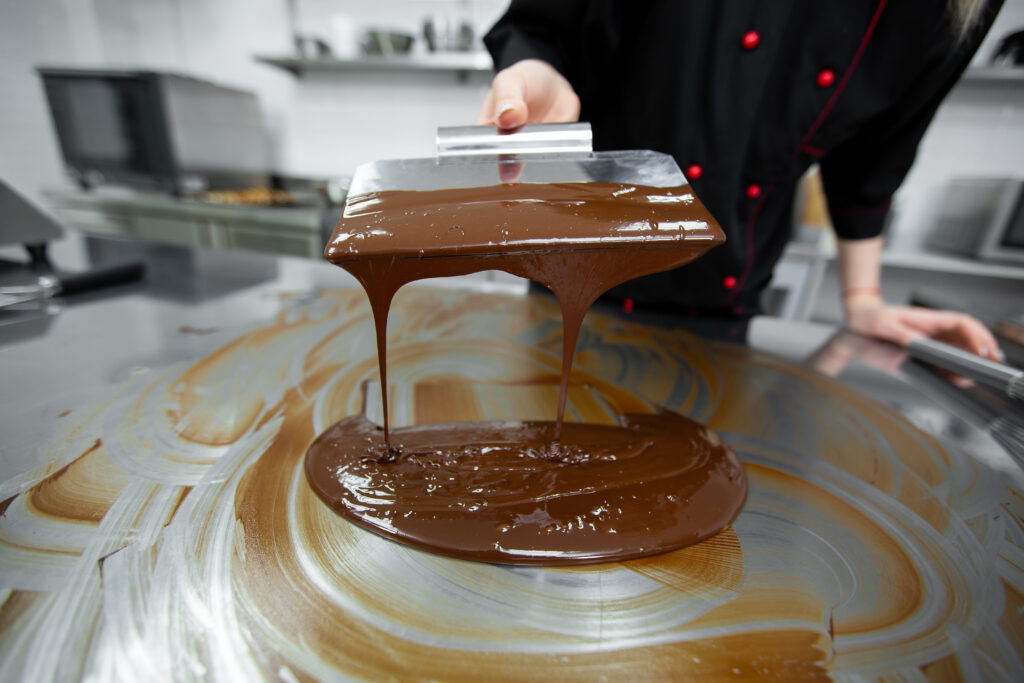
Dark chocolate is typically melted to 45 to 50 °C, cooled to 27 to 28 °C, then rewarmed to a working temperature of 31 to 32 °C. The bars arrive tempered, so re-temper only if you melt them to mould or coat.
Applications
What Is 100% Dark Chocolate Used For?
100% dark chocolate is eaten in small pieces and used in baking, pastry, drinks and savoury cooking. With no sugar in the bar, you decide how sweet the final result is.
Eating and tasting
Eaten in small squares by people avoiding sugar and by dark chocolate lovers.
Baking and pastry
Brownies, ganache, mousse, glazes and fillings, with full control of sweetness.
Hot chocolate and drinks
Melted into hot milk or plant milk, mochas and shakes, sweetened to taste.
Savoury cooking
A few grams deepen chilli, mole, stews and sauces without adding sweetness.
No-sugar-added desserts
A base for desserts made with your own choice of sweetener.
Retail shelves
A one-ingredient label suits health stores, premium groceries and gift ranges.
Food service
Hotels, cafés and restaurants use it for plated desserts and drinking chocolate.
Chocolate makers
Blended with sweeter chocolate to raise cocoa content or build custom percentages.
Storage and handling
How to Store and Work with 100% Dark Chocolate
Store 100% dark chocolate sealed in a cool, dry place, away from sunlight, heat and strong odours, and use it within 24 months of manufacture.
Keep it cool and dry
Avoid the fridge: moving chocolate between cold and warm air causes condensation and bloom. Keep it away from strong-smelling goods, because cocoa butter absorbs odours.
White marks (bloom)
Greyish streaks are fat bloom from temperature swings. They are harmless and disappear when the chocolate is melted. With almost no sugar in the bar, sugar bloom is unlikely.
Melting without seizing
Chop finely and melt gently below 50 °C, over a bain-marie or in short microwave bursts. Keep water and steam out.
Wholesale supply
How Do I Order 100% Dark Chocolate Bars?
Bars are supplied by the carton of 24 × 100 g. Send Radad the number of cartons and your destination, and we reply with a quote and the technical sheet. Once you confirm, we arrange supply to buyers in the UAE and export markets.
01
Send your enquiryTell us the number of cartons, the destination and any documents your market requires.
02
Receive your quoteThe Radad team replies with price per carton, lead time and the technical sheet.
03
Confirm and arrange supplyAgree the details with us and we arrange packing and shipping.
Storage and handling: keep the bars sealed in a cool, dry place, away from direct sunlight and strong odours.
100% dark chocolate is chocolate made only from cocoa beans, with no sugar, milk or emulsifier added. Every gram is cocoa: the natural cocoa butter and the cocoa solids of the bean. It is also sold as unsweetened chocolate, 100% cacao or pure dark chocolate.
Both are made only from ground cocoa beans. Our CN100 bar is refined and tempered as an eating chocolate, so it breaks cleanly and melts smoothly, while cocoa mass is supplied in blocks as an ingredient for chocolate makers.
Both contain only cocoa. The CN100 bar is made as an eating chocolate, with a smooth melt and clean snap, and it works equally well chopped for baking, pastry and drinks.
It tastes intensely of cocoa: bitter, deep and unsweetened, with roasted notes. Let a small piece melt slowly on the tongue, and pair it with coffee, dates, berries or nuts.
Typical values for unsweetened chocolate are about 608 kcal (2512 kJ) per 100 g, calculated with EU factors, so a 25 g serving provides about 152 kcal.
Typical values are 11.8 g carbohydrate and 16.6 g dietary fibre per 100 g, with no added sugar, so it fits many low-carb plans. Check portions against your own daily limits.
Greyish white streaks are fat bloom, caused by temperature changes during transport or storage. They are harmless and disappear when the chocolate is melted. With almost no sugar in the bar, sugar bloom is unlikely.
Yes. Radad International supplies retail and wholesale buyers in Dubai, the wider UAE and export markets. Tell us the number of cartons and your destination for a quote.
Use the Request a Quote button on this page, or message us on WhatsApp at +971 522 501 039. Tell us the number of cartons and your destination, and we will send a quote together with the technical sheet.