
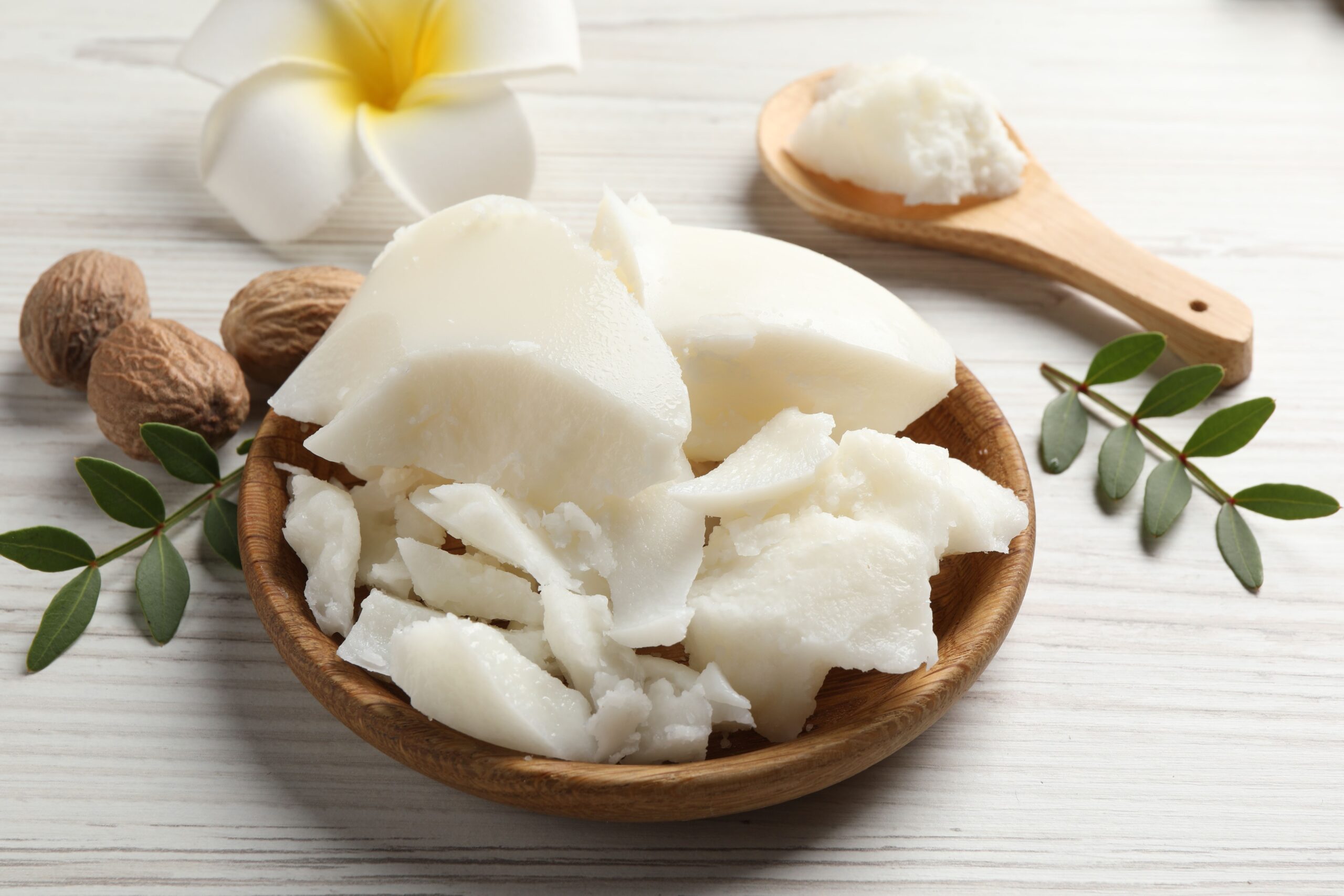
West African Shea Butter · Bulk Supply
Shea butter is the natural fat extracted from the kernels of the shea tree (Vitellaria paradoxa), which grows wild across the Sahel and savannah belt of Africa. It is solid at room temperature, melts at 32 to 40 °C, and is made up mainly of stearic and oleic acids plus an unusually high share of unsaponifiable compounds. Those properties make it one of the most widely used natural butters in cosmetics, chocolate and food manufacturing, pharmaceuticals and soap making. This guide covers the grades, the official African and Codex quality limits, composition, how it is made, its uses, and how to buy it in bulk.
Botanical name
Vitellaria paradoxa
INCI name
Butyrospermum Parkii (Shea) Butter
HS code
1515.90
Melting point
32 to 40 °C
Quality standard
ARS SHEA-B / Codex CXS 325R-2017
The basics
Shea butter is the fat of the shea nut, the seed of the shea tree (Vitellaria paradoxa, formerly Butyrospermum parkii). The tree grows wild across the “shea belt”, about 1 million km² of dry savannah spanning some 21 African countries from Senegal to Uganda. It is slow to mature: a wild tree usually bears its first fruit only after 10 to 15 years, and it is rarely planted, so almost all shea comes from wild or parkland trees.
There are two subspecies. V. paradoxa subsp. paradoxa grows in West and Central Africa (Ghana, Burkina Faso, Mali, Nigeria, Côte d’Ivoire, Benin and neighbours) and gives a firmer butter richer in stearic acid. Subsp. nilotica grows in East Africa (Uganda, South Sudan, Ethiopia) and gives a softer butter richer in oleic acid.
The plum-like fruit is eaten fresh; the nut inside holds a kernel that is roughly half fat once dried. Collecting nuts and making butter is traditionally women’s work: women make up around 95% of shea processors, and shea is a major source of their cash income in the Sahel. A large share of production is used locally for cooking and skin care, and the rest is exported, mainly to Europe, Japan and North America.
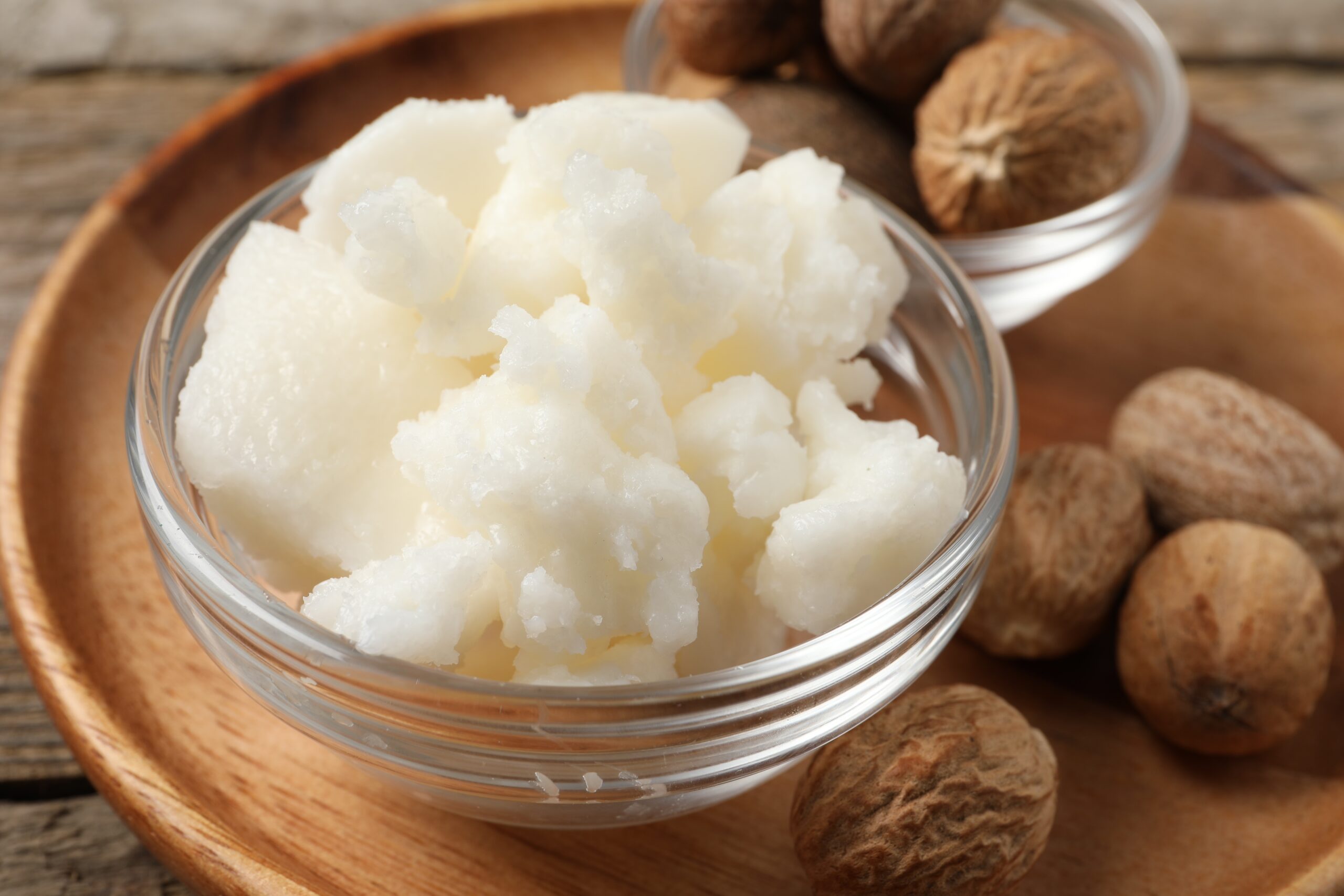
Types of shea butter
Shea butter is sold in four main forms. They come from the same kernel; what changes is how far the butter is processed, which decides its colour, smell, texture, shelf life and how much of its natural bioactive content it keeps.
Grade A · Raw
Extracted by the traditional kneading-and-boiling method or by mechanical pressing, then only filtered. Ivory to pale yellow, with a natural nutty, slightly smoky smell. Keeps the highest level of unsaponifiables (triterpenes, phytosterols, tocopherols).
Best for: natural and premium cosmetics, body butters, hair care, soap, direct use on skin.
Grade C · RBD
Refined, bleached and deodorized (RBD), often after mechanical or solvent extraction. Pure white, odourless and consistent from batch to batch, with a longer shelf life, but a lower share of natural bioactive compounds.
Best for: mass-market creams and lotions, pharmaceuticals, food and products that must be scent-free.
Stearin · Olein
Refined shea is separated by temperature into a hard, stearic-rich shea stearin and a liquid, oleic-rich shea olein (often sold as shea oil).
Best for: stearin in cocoa butter equivalents (CBE) and confectionery fats; olein in liquid cosmetics, serums and hair oils.
Certified
Usually unrefined butter made from nuts collected in certified organic areas, with a traceable chain of custody and organic certification documents for the importing market.
Best for: certified organic and natural cosmetic brands that need documented provenance.
Retail labels often use the American Shea Butter Institute (ASBI) scale from A to F: Grade A is unrefined, Grade C is refined, and Grade F is industrial, unsuitable for skin. For trade, the African (ARS) and Codex standards below are the reference.
Grades and standards
The trade reference for unrefined shea butter is the African Standard ARS SHEA-B (2011), adopted by Codex Alimentarius as the Regional Standard for Unrefined Shea Butter, CXS 325R-2017. It sorts butter into three types by four measurable quality criteria, and each type has an intended end use.
Quality criterion
Type 1
Type 2
Type 3
Moisture (% m/m)
≤ 0.05
> 0.05 to 0.2
> 0.2 to 2.0
Free fatty acids (% m/m)
≤ 1.0
> 1.0 to 3.0
> 3.0 to 8.0
Peroxide value (meq O₂/kg)
≤ 10
> 10 to 15
> 15 to 50
Insoluble impurities (% m/m)
≤ 0.09
> 0.09 to 0.2
> 0.2 to 2.0
Intended use
Cosmetics, pharmaceuticals, direct consumption
Food industry: confectionery, chocolate, edible oil, margarine
Soap making, or refining before consumption
Specifications
Every grade must also fall within these identity ranges, set by the same ARS / Codex standard. They confirm that a product is genuine shea butter and not blended with other fats.
32 – 40 °C
Melting point
30 – 75
Iodine value (Wijs)
160 – 190
Saponification value (mg KOH/g)
1 – 19%
Unsaponifiable matter
1.4620 – 1.4650
Refractive index at 44 °C
0.89 – 0.93 g/ml
Relative density at 40 °C
Composition and nutrition
Shea butter is roughly half saturated and half unsaturated fat. Its texture comes from the balance of two fatty acids: stearic acid, which makes it firm, and oleic acid, which makes it soft and spreadable. West African butter tends to be higher in stearic acid; East African (nilotica) butter is higher in oleic acid and noticeably softer.
Oleic acid (C18:1, omega-9)
36 – 62%
Stearic acid (C18:0)
25 – 50%
Linoleic acid (C18:2, omega-6)
1 – 11%
Palmitic acid (C16:0)
2 – 10%
Arachidic acid (C20:0)
0.8 – 1.8%
Bars show a typical mid-range value. Exact figures vary by region, season and processing; the certificate of analysis for each lot gives the measured profile.
What sets shea apart from most vegetable fats is its unsaponifiable fraction, from 1% to as much as 19% in unrefined butter. It contains triterpene alcohols and their esters (α- and β-amyrin, lupeol, butyrospermol, cinnamates and acetates), phytosterols, tocopherols (vitamin E) and phenolic compounds. These are the components linked to shea’s soothing, anti-inflammatory and skin-protecting reputation. Refining lowers them, which is why unrefined butter is preferred for skin care.
Like any pure fat, shea butter is about 100 g fat per 100 g, roughly 880 to 900 kcal, with no protein, carbohydrate, sugar or fibre and no cholesterol. Across West Africa it is a staple cooking fat. In industry, food-grade shea (Type 2 or refined) and its stearin fraction are used in confectionery fats, margarine and chocolate as a cocoa butter equivalent. Its stearic acid is generally regarded as neutral for blood cholesterol.
How it is made
Shea fruits ripen and fall between roughly May and August. What happens next decides the quality of the butter: nuts that are boiled and dried quickly give low free fatty acids, while nuts left damp or mouldy give high acidity and off-odours whatever the extraction method.
01
Fallen fruits are gathered and the sweet pulp is removed, by hand, by fermenting it off, or by eating it.
02
Boiling stops germination and inactivates the lipase enzymes that would otherwise raise free fatty acids.
03
Nuts are dried for several days, cracked, and the kernels sorted to remove mouldy, black or germinated pieces.
04
Kernels are dried again, to below about 7% moisture, so they can be stored without spoiling.
05
Kernels are crushed into small pieces and lightly roasted, which loosens the fat and gives traditional butter its smoky note.
06
The roasted pieces are ground, in a stone or mechanical mill, into a thick dark-brown paste.
07
The paste is beaten and kneaded with water until the fat separates as a pale cream that floats and is skimmed off.
08
The cream is boiled to drive off water, the clear oil is filtered and left to cool and set into butter.
Dried kernels are flaked, conditioned with heat and pressed in screw expellers. No chemicals; leaves some fat in the press cake.
Press cake or kernels are extracted with food-grade hexane for the highest yield. The crude butter must then be refined.
Crude butter is neutralized, bleached and deodorized (RBD), and can be split into shea stearin and shea olein by controlled cooling.
Applications
Shea butter is valued because it melts at body temperature, spreads easily and leaves a protective film on skin and hair, while its stearin fraction behaves much like cocoa butter in chocolate.
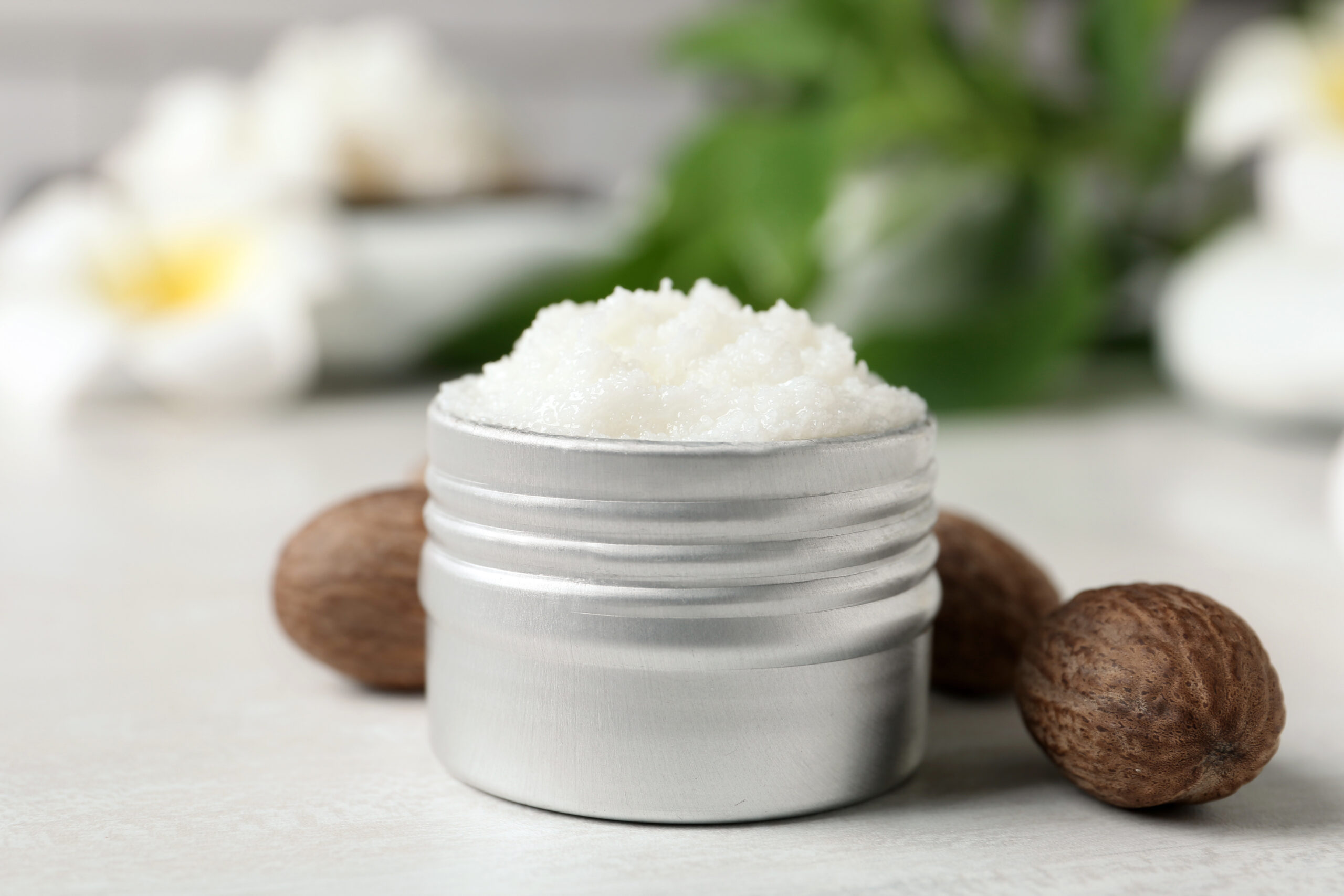
Body butters, creams, lotions, lip balms, baby care, sun care and after-sun, hair conditioners, masks and hair butters. Works as an emollient and occlusive; unrefined grades add the triterpene and vitamin E content.
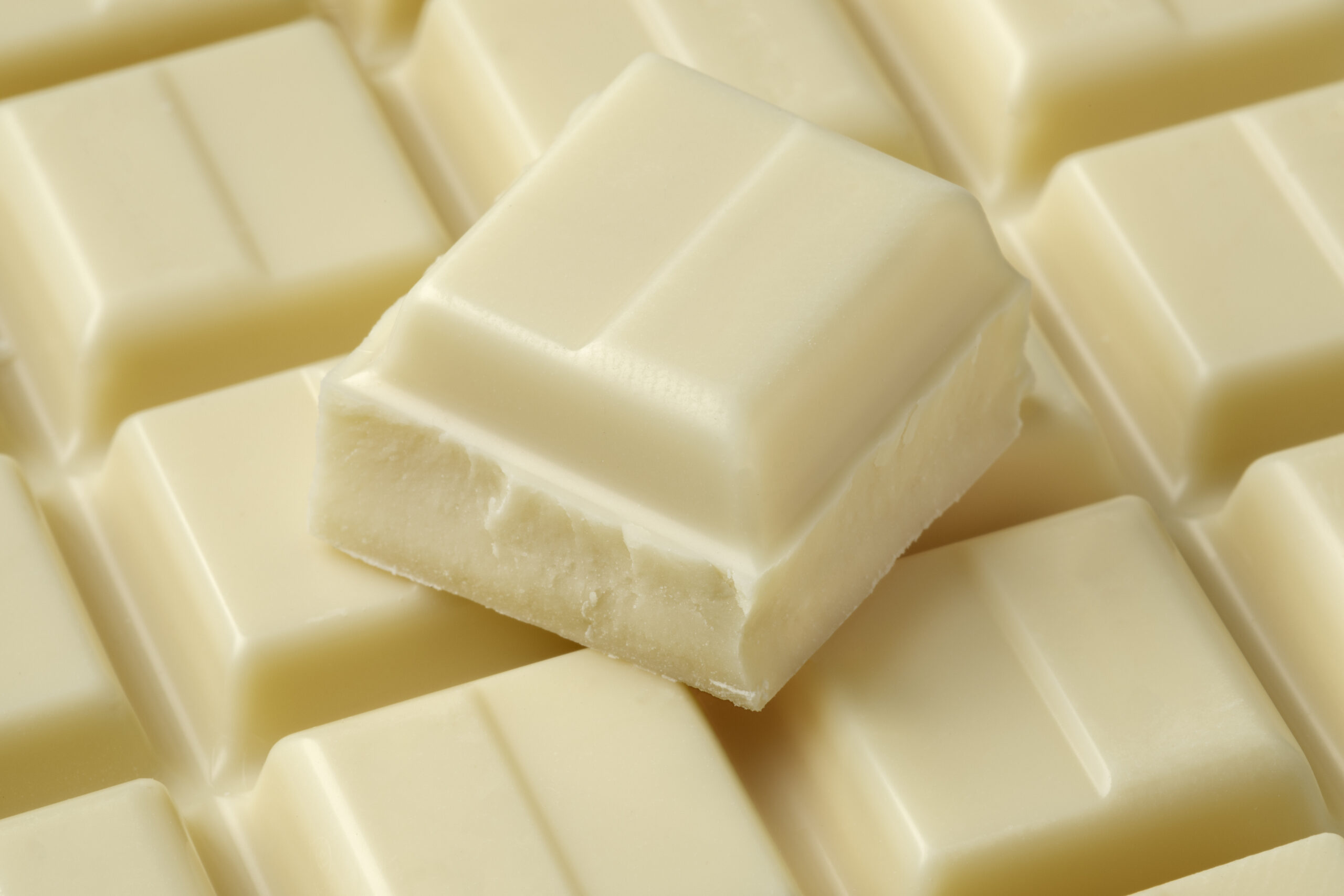
Shea stearin is a key ingredient of cocoa butter equivalents (CBE); EU rules allow up to 5% of named vegetable fats, including shea, in chocolate. Also used in confectionery fats, margarine, bakery fats and as a cooking fat.
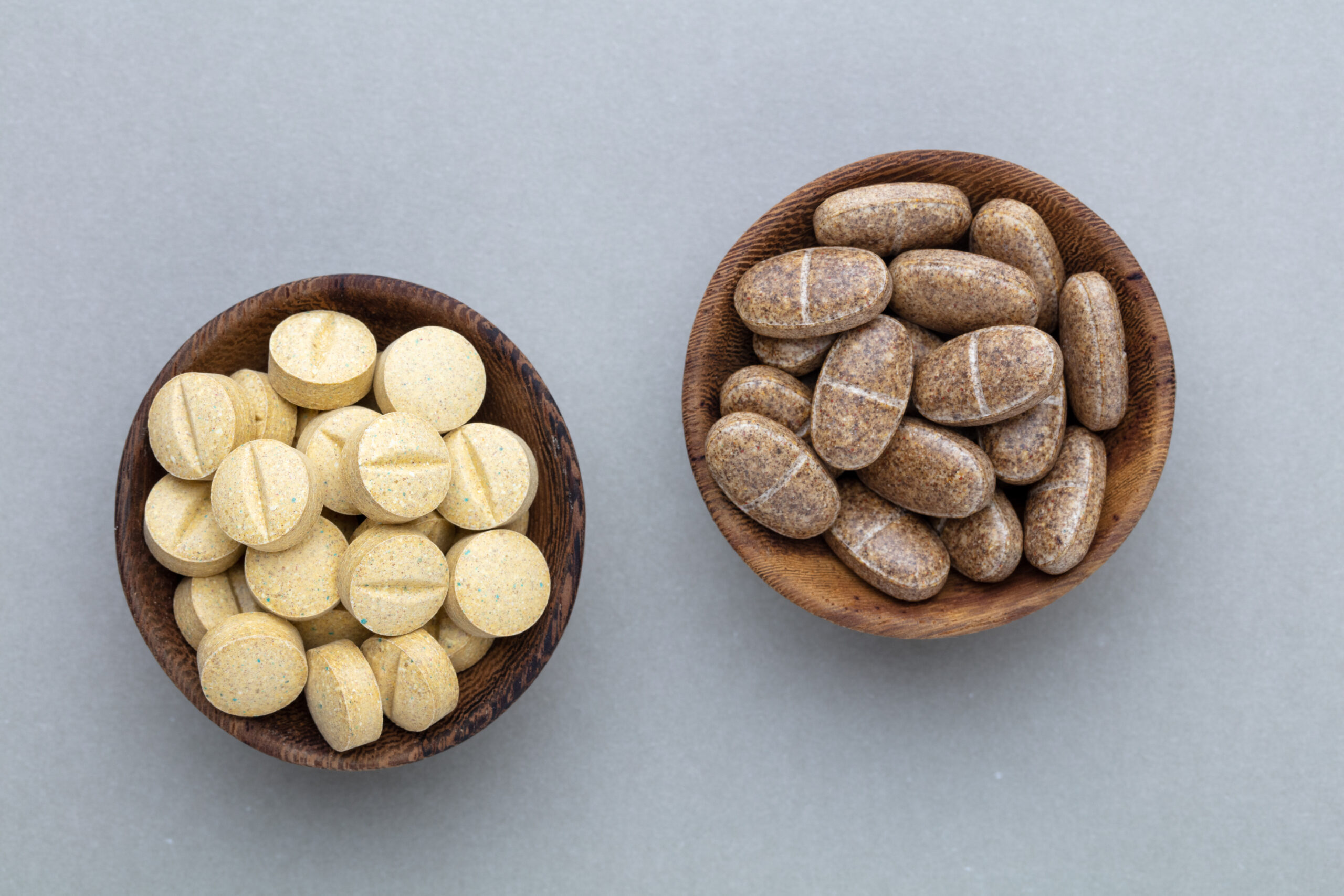
A base for ointments, creams and topical preparations, and an emollient for dry and irritated skin. Type 1 or refined butter is used where purity and consistency must be documented.
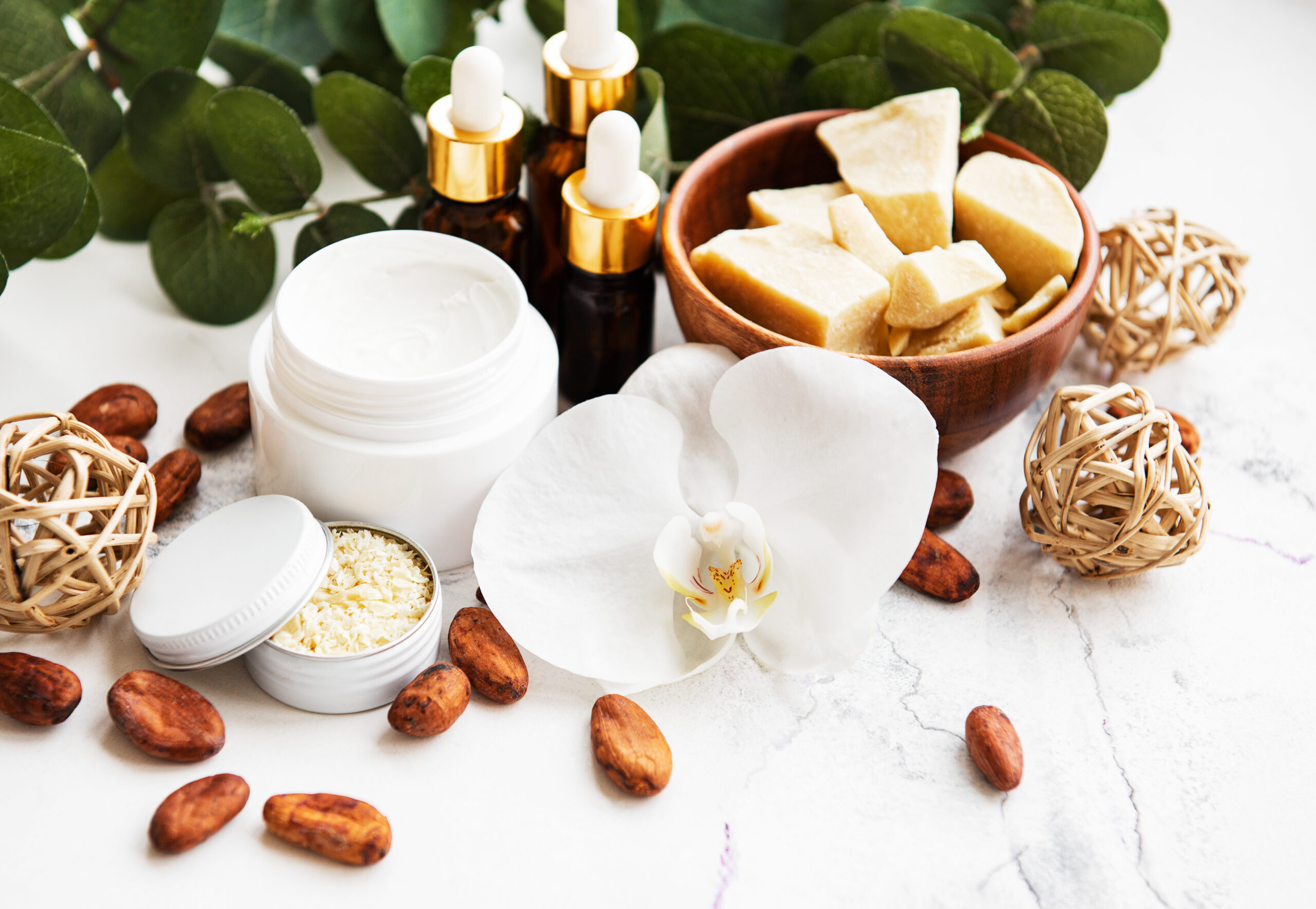
Gives a hard, creamy, conditioning bar in cold-process and melt-and-pour soap. Type 3 butter also goes into candles, wood and leather care and other technical uses.
Quality and storage
Use these checks when you sample a supplier or receive a shipment.
Unrefined: ivory to pale yellow or light grey-green, with a mild nutty, smoky smell. Refined: white and odourless. Warning signs are a sharp, sour or rancid smell, dark grey colour, visible specks, or a burnt odour from over-roasting.
Request a certificate of analysis per lot showing moisture, free fatty acids, peroxide value and insoluble impurities, and compare them with the ARS / Codex types above. For cosmetics, also ask for microbiology and heavy metals; for food, contaminant and residue testing for your market.
Grainy shea is common and not a sign of spoilage: when the butter melts and resets slowly, its stearic-rich fats crystallise separately. Melting it fully and cooling it quickly gives a smooth texture again.
Keep shea butter sealed, in a cool (ideally below 25 °C), dry, dark place, away from strong smells. Well-stored butter typically keeps 12 to 24 months; refined butter keeps longer than unrefined. Always follow the best-before date on the lot’s documents.
Bulk supply from Radad International
Radad International supplies West African shea butter to cosmetic formulators, soap makers, food manufacturers and distributors. Every order is matched to your grade, volume and destination, and shipped with the documents your market needs.
01 · Grade
Unrefined, refined, or organic; the ARS / Codex type and any limits you specify.
02 · Quantity and packing
Sample, trial or container volumes, in lined cartons, buckets or drums.
03 · Documents
Certificate of analysis, certificate of origin, and phytosanitary or other certificates your destination requires.
04 · Shipping
Your destination port and preferred Incoterms. Shea butter ships under HS code 1515.90.
FAQ
In trade they mean the same thing: butter that has been extracted and filtered but not refined, bleached or deodorized. “Raw” is a marketing term; ask for the ARS / Codex type and a certificate of analysis to know the actual quality.
Yes. Food-grade shea butter is a traditional cooking fat in West Africa and is used industrially in chocolate, confectionery fats and margarine. For food use, buy butter sold and documented as food grade.
For natural skin and hair care, unrefined butter meeting ARS / Codex Type 1 (low moisture, free fatty acids ≤ 1%, peroxide value ≤ 10). If the product must be white and scent-free, use refined shea butter.
Temperature changes during transport or storage let the higher-melting fats crystallise separately. It is harmless; melt the butter completely and cool it quickly to restore a smooth texture.
Typically 12 to 24 months when sealed and kept cool, dry and dark; refined butter lasts longer than unrefined. A sharp, sour smell means it has gone rancid.
Shea butter is softer and creamier, has a nutty smell when unrefined and a much higher unsaponifiable content. Cocoa butter is hard and brittle at room temperature, smells of chocolate unless deodorized, and has a narrow melting range that suits chocolate. Many formulas use both.
Shea butter is generally considered to have a low tendency to clog pores, but very oily or acne-prone skin can react to rich butters. A patch test is sensible for new formulations.
Shea butter is classified under HS 1515.90 (other fixed vegetable fats and oils). National tariff lines add further digits, so confirm the full code with your customs broker.
African Standard ARS SHEA-B: Shea butter (unrefined), 2011
Codex Alimentarius, Regional Standard for Unrefined Shea Butter (Africa), CXS 325R-2017
Bup Nde et al., Production zones and systems, markets, benefits and constraints of shea butter processing, OCL 2014
The current state of knowledge of shea butter tree for nutritional value and tree improvement, Forests 2021
Bulk supply
Tell us the grade, quantity and destination port. We reply with pricing, the specification sheet and lead time.
Request a Quote WhatsApp UsOr call +971 52 250 1039
Source: kernels of Vitellaria paradoxa
Main fatty acids: stearic and oleic
Melting point: 32 to 40 °C
Unsaponifiables: 1 to 19%
Forms: unrefined, refined, stearin, olein
Storage: cool, dry, dark
HS code: 1515.90