
Home / Cocoa Products / Alkalized Cocoa Powder
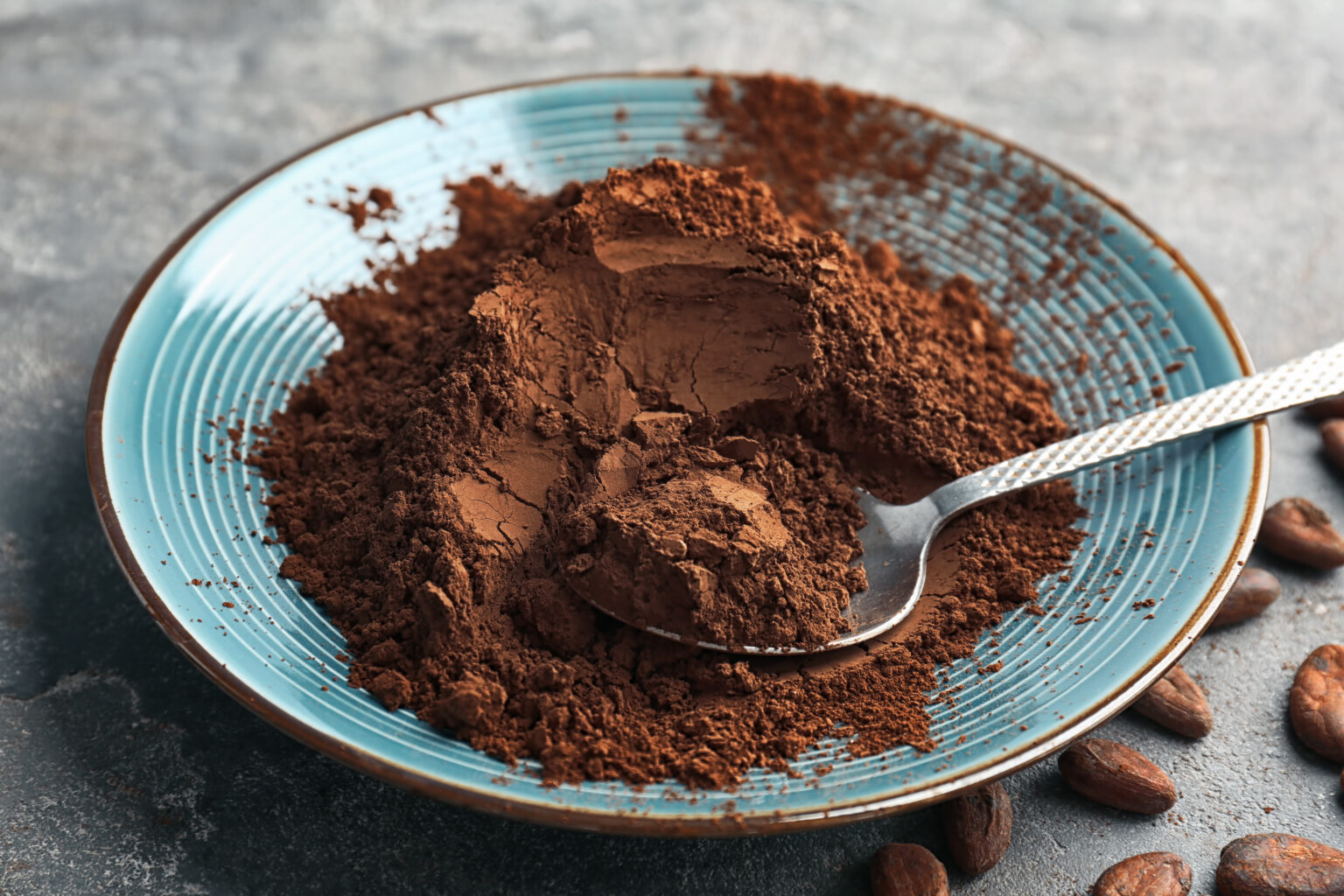
Radad International supplies Dutch-process alkalized cocoa powder in light and dark brown, with 10 to 12% fat, in 1 kg packs and 25 kg sacks, to bakers, beverage makers, ice cream producers and food manufacturers in the UAE and worldwide.
Product
Dutch-process alkalized cocoa powder
Shades
Light brown and dark brown
Packs
1 kg retail, 25 kg wholesale
Supply terms
FOB and CIF, worldwide
pH 6.8 to 8.5
Dutch-process alkalized
10 to 12%
Fat content
24 months
Shelf life
1 kg and 25 kg
Retail and wholesale packs
50+ clients
In more than 12 countries
Overview
Alkalized cocoa powder, also called Dutch-process or Dutched cocoa, is cocoa powder treated with an alkali to neutralise its natural acidity. The treatment darkens the colour, mellows the flavour and helps the powder dissolve in liquids. Radad alkalized cocoa powder has a pH of 6.8 to 8.5 and a fat content of 10 to 12%.
Radad International supplies light brown and dark brown alkalized cocoa powder, retail and wholesale, to bakeries, beverage makers, ice cream producers, confectioners, importers and distributors in the UAE and around the world. If you are looking for a bulk alkalized cocoa powder supplier in Dubai, or an exporter who can serve your own market, send us your requirements and we will quote.
A practical note for recipe developers: alkalized cocoa does not supply the acid that baking soda needs to rise, so it is normally paired with baking powder.
Colour variants
The colour of alkalized cocoa depends on how far the alkalization is taken. Choose the shade that matches the finished colour and taste of your product, and tell us which one you need when you request a quote.
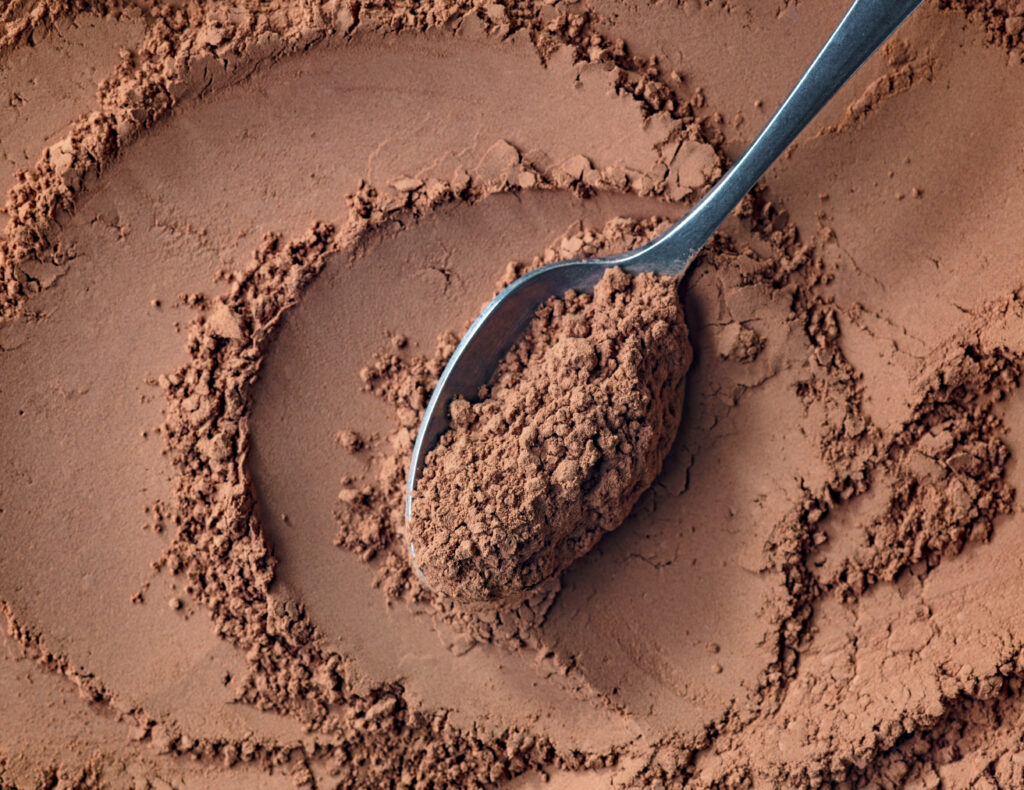
A lighter level of alkalization gives a warm, light brown tone and keeps more of the natural cocoa character, while still delivering the smoothness and high solubility of Dutch-process cocoa. It suits products where you want a clear chocolate colour without a very dark result.
Suited to: marble and sponge cakes, milk-style chocolate drinks, ice cream bases, creams, fillings and biscuits.
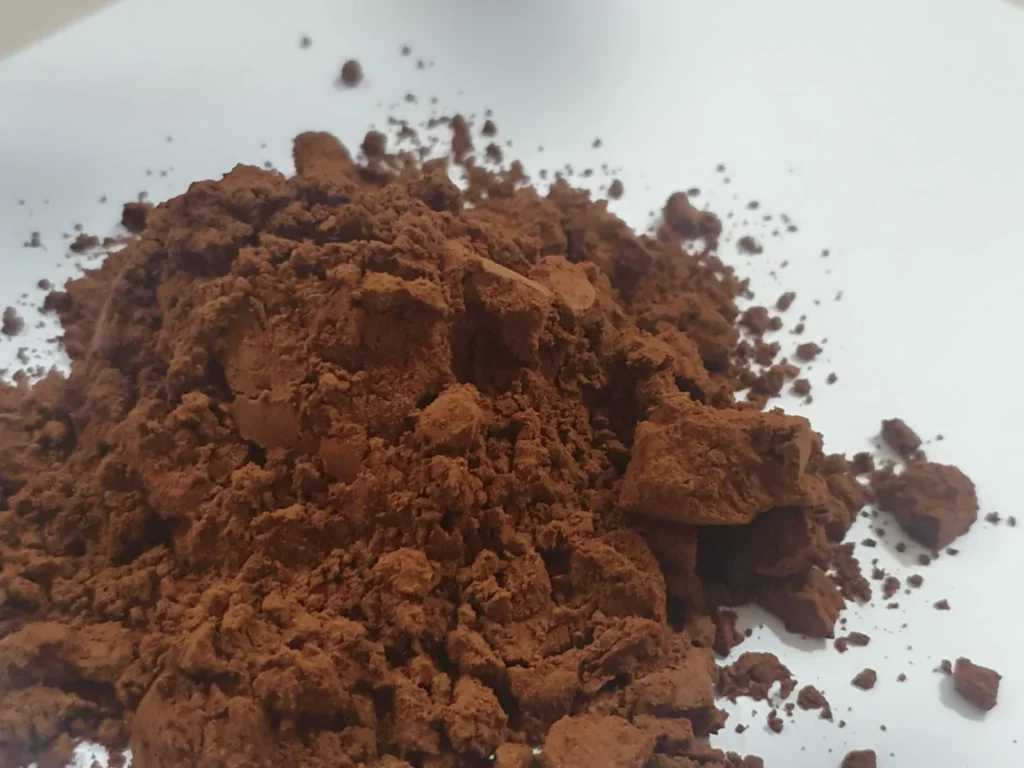
A deeper level of alkalization produces a rich, dark brown powder with a smoother, milder flavour and strong colouring power. It suits products where a deep chocolate colour is part of the appeal.
Suited to: chocolate cakes, brownies, cookies, hot chocolate, glazes, sauces and desserts.
Natural vs alkalized
Natural cocoa powder is acidic, with a pH of around 5 to 6, a sharper, fruitier flavour and a lighter reddish-brown colour. Alkalized cocoa powder has been neutralised, so it has a higher pH, a darker colour, a smoother flavour and dissolves more easily in liquids. Both start as roasted cocoa beans that are pressed and ground.
Feature
Natural cocoa powder
Radad alkalized cocoa powder
Processing
Roasted, pressed and ground with no alkali treatment
Treated with an alkali to neutralise the natural acidity of the cocoa
pH
Acidic, typically around 5 to 6
6.8 to 8.5 across our shades
Colour
Lighter, reddish brown
Light brown to dark brown, depending on the level of alkalization
Flavour
Sharper, fruitier, more acidic and more bitter
Smoother, mellower, rounded chocolate flavour
Solubility
Lower, tends to settle in liquids
High, disperses easily in hot and cold liquids
Leavening
Reacts with baking soda to help cakes rise
Does not supply acid, so it is usually used with baking powder
Flavanols
Generally higher
Generally lower, as alkali treatment reduces flavanols
Best suited to
Recipes built around baking soda and a bold, tangy cocoa taste
Drinks, ice cream, coatings, fillings and bakes that need deep colour and a smooth taste
You want a sharper, fruitier cocoa taste, or your recipe relies on baking soda for its rise.
You want a deeper colour, a smooth and mellow flavour, easy dissolving in drinks, or a recipe that uses baking powder. It is the usual choice for hot chocolate, ice cream, chocolate coatings and dark cakes.
Swapping one for the other changes both flavour and rise, so test a small batch first and adjust the leavening if needed. For more on the non-alkalized option, read our guide to natural cocoa powder.
Production
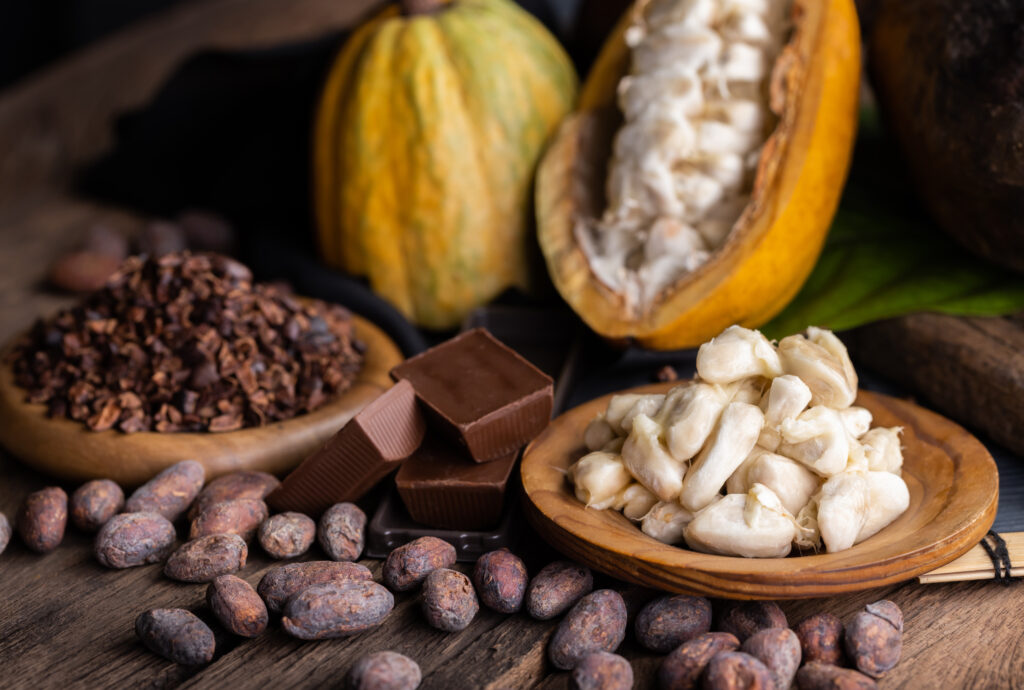
Alkalized cocoa powder is made from roasted cocoa beans that are ground and pressed to remove part of the cocoa butter, then treated with an alkali, commonly potassium carbonate, before drying and pulverising. The alkali neutralises the cocoa's acidity, and the stronger the treatment, the darker the powder.
1
Fermented, dried beans are roasted, then cracked and winnowed to remove the shell.
2
The nibs are ground to cocoa liquor and pressed to remove part of the cocoa butter, leaving a cocoa cake.
3
The cocoa is treated with an alkali to neutralise its acidity. The step can be applied to the nibs, the liquor or the pressed cake.
4
The cocoa is dried and milled to a fine, free-flowing powder with a particle size below 75 microns.
The method takes its name from the Netherlands. Dutch chemist Coenraad van Houten patented his cocoa-alkalizing process in 1828, which is why the product is called Dutch-process or Dutched cocoa.
Technical data
Radad alkalized cocoa powder is Dutch-process cocoa with a pH of 6.8 to 8.5, 10 to 12% fat, a maximum of 5.0% moisture, a particle size below 75 microns, high solubility and a 24-month shelf life. The tables below give the full technical data.
Parameter
Specification
Product
Dutch-process alkalized cocoa powder
Manufacturer
Radad International Company Limited, Nigeria
Process
Roasting, grinding, pressing, kibbling and pulverizing
Shades
Light brown and dark brown (different shades of reddish brown), depending on the level of alkalization
Appearance
Free flowing, without lumps and foreign matter
Taste and odour
No off flavour and no off odour
Total fat
10 to 12% (IOCCC 37, 1990)
Moisture content
Maximum 5.0% (IOCCC 1, 1990)
pH
6.8 to 8.5 across shades. Lightly alkalized grade: 6.7 to 7.2 in a 10% solution (IOCCC 15, 1972)
Ash content
Maximum 12% on fat-free dry matter (IOCCC 16, 1973)
Fineness
Wet sieve residue minimum 98.0% (IOCCC 11, 1970). Particle size below 75 microns
Shell content
Maximum 1.75% on alkali-free nibs (AOAC 970.23)
Solubility
High
Parameter
Specification
Total plate count
Maximum 10,000 CFU/g (IOCCC 39, 1990 no. 2)
Moulds and yeast count
Maximum 100 CFU/g (IOCCC 39, 1990 no. 7)
Coliforms
Negative per g (IOCCC 39, 1990 no. 5)
Escherichia coli
Negative per g (IOCCC 39, 1990 no. 4)
Salmonella
Negative per 50 g (IOCCC 39, 1990 no. 8)
Parameter
Specification
Shelf life
24 months
Storage
Store in a cool, odourless and ventilated area
Relative humidity
Maximum 65%
Storage temperature
22 to 25 °C
Transport temperature
Maximum 26 °C
Retail packaging
1 kg packs
Bulk packaging
25 kg sacks
Nutrient
Per 100 g
Energy
228 kcal
Protein
19.6 g
Total fat
13.7 g
Iron
13.9 mg
Magnesium
499 mg
Potassium
1524 mg
Calcium
128 mg
Typical values per 100 g of cocoa powder. Actual values vary by batch.
Fat, moisture, pH, ash, fineness and microbiology are specified against IOCCC and AOAC methods.
Salmonella, E. coli and coliforms are negative, with set limits for plate count, moulds and yeast.
No genetically modified or transgenic raw cocoa beans are used in production.
No listed allergenic foods are a constituent or declared as potential cross-contact, per the Radad allergen declaration.
Applications
Alkalized cocoa powder is used in baking, hot chocolate and cold drinks, ice cream, confectionery coatings, fillings and dry mixes, wherever a deep colour, a smooth flavour and easy dispersion are needed. These are the uses our customers build around it most often.
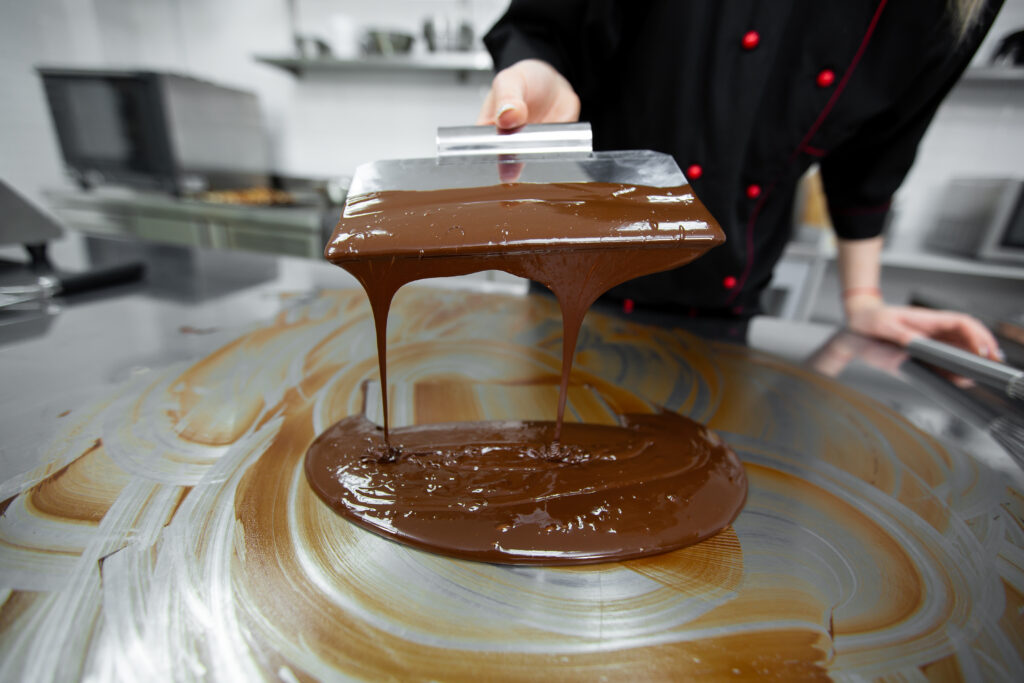
Cakes, brownies, cookies, muffins and pastry fillings gain a deeper colour and a mellow chocolate taste. Pair it with baking powder for a reliable rise.

Mousses, tarts, cookies and layered desserts that depend on a deep, even chocolate colour.
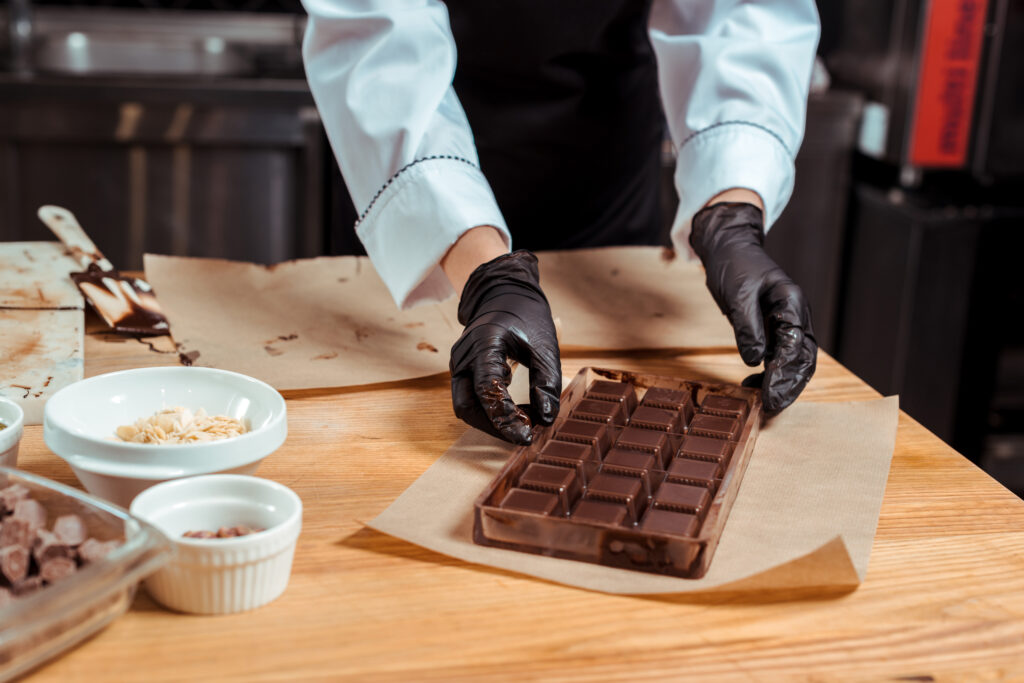
Creams, truffle centres, glazes and coatings where a uniform colour and a fine texture matter.

Dissolves readily in hot milk and water for rich, smooth drinking chocolate.
Disperses well in cold liquids for milkshakes, smoothies, iced mochas and chilled chocolate drinks.
Gives ice cream, gelato and frozen yoghurt a clear chocolate colour and a smooth finish.
Chocolate milk, puddings, mousses and yoghurts with an even colour and a mellow taste.
Chocolate spreads, sandwich-biscuit creams and bakery fillings with a fine, smooth texture.
Dissolves easily into chocolate sauces, syrups and dessert toppings.
Chocolate cereals, granola, snack bars and coated snacks, plus cake, brownie, pancake and instant beverage mixes.
Retail and wholesale supply
Send Radad your preferred shade, pack size, quantity and destination. We reply with a quote, and once you confirm, we arrange supply. Retail orders are packed in 1 kg packs and wholesale orders in 25 kg sacks, supplied on FOB or CIF terms to importers, distributors, bakeries, beverage producers and food manufacturers in the UAE and worldwide.
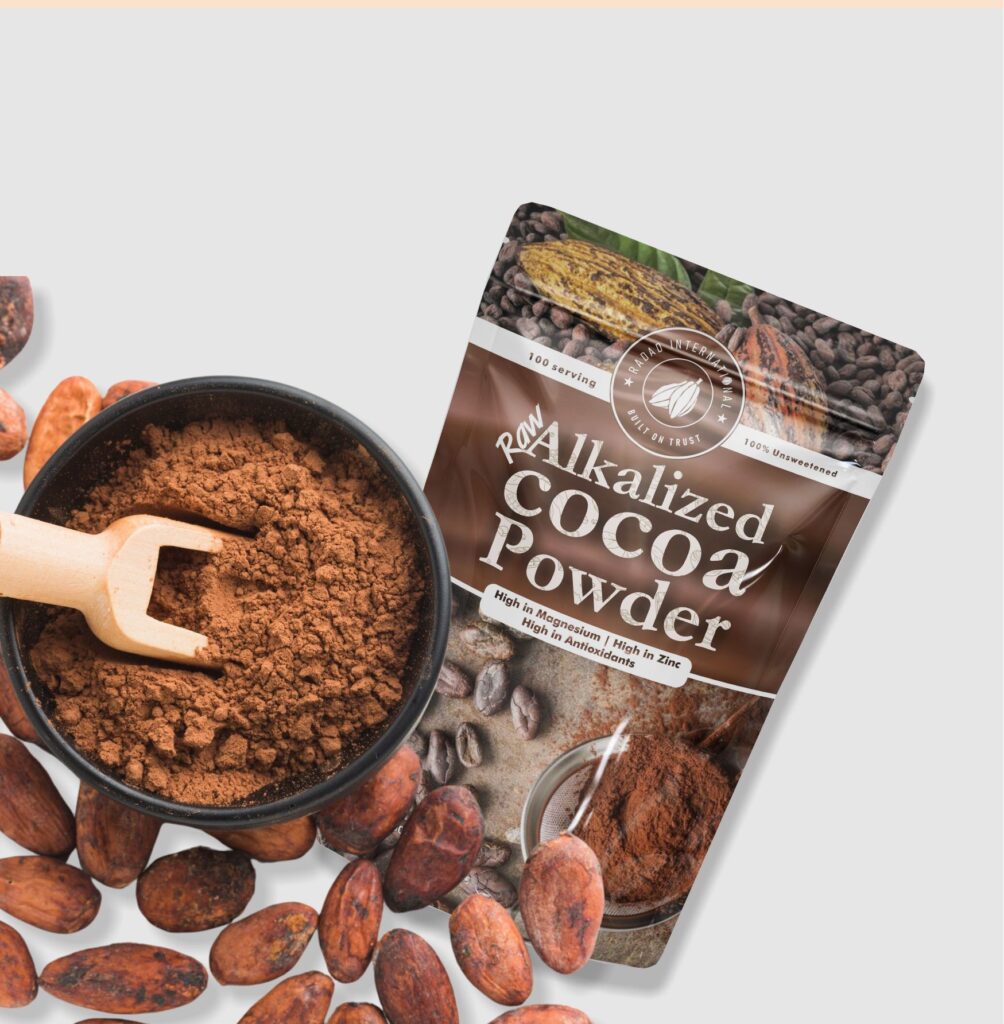
For shops, cafes, bakeries and resellers, and for trial orders before you scale up.
Built for factories, large bakeries, distributors and importers who buy in volume.
1
Tell us the shade, pack size, quantity and delivery destination.
2
The Radad team replies with a quote for your order.
3
Agree the details with us and we take it from there.
Get a quote
Tell us the shade, pack size, quantity and destination. The Radad team replies with a quote.
Call or WhatsApp
+971 522 501 039Monday to Sunday, 09:00 AM to 06:00 PM (Dubai time)
FAQs
Quick answers about Dutch-process cocoa, our shades, specifications, supply terms and how to order.
More from Radad
Alkalized cocoa powder pairs with the rest of our range, from raw materials to finished cocoa ingredients.
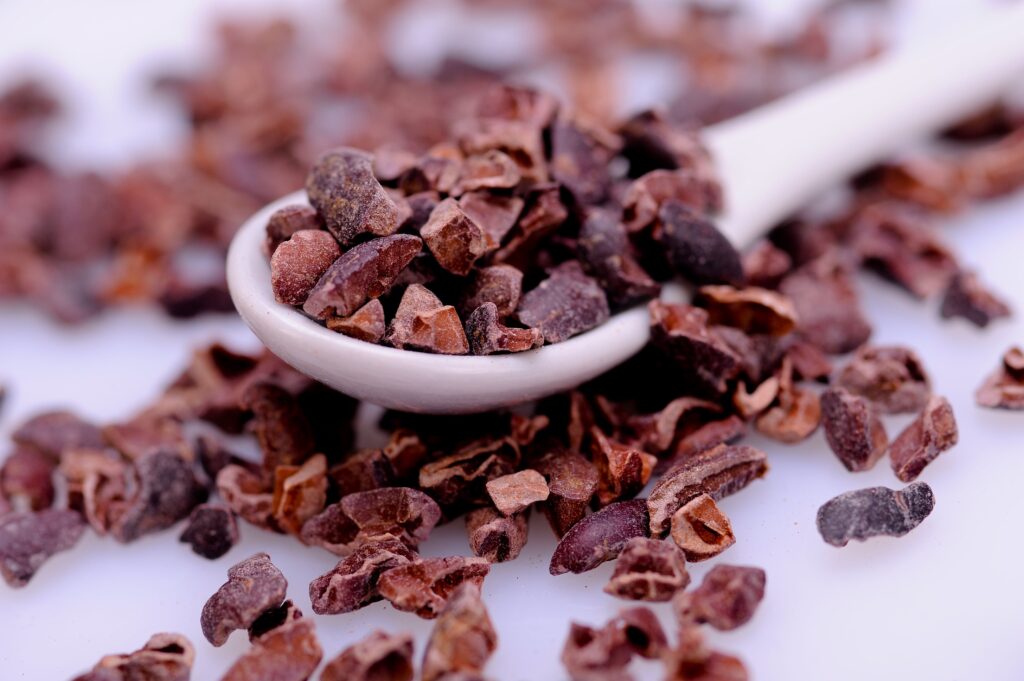
Pure, crunchy African cocoa nibs for chocolate makers, bakers and food brands.
View Raw Cocoa Nibs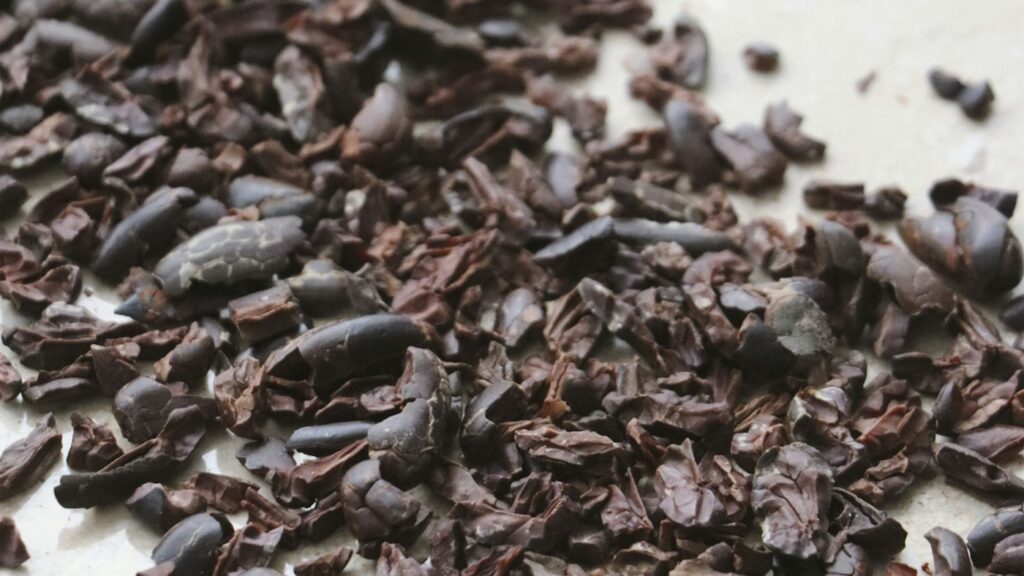
Fermented, sun-dried African beans for grinders and chocolate makers.
View Whole Cocoa Beans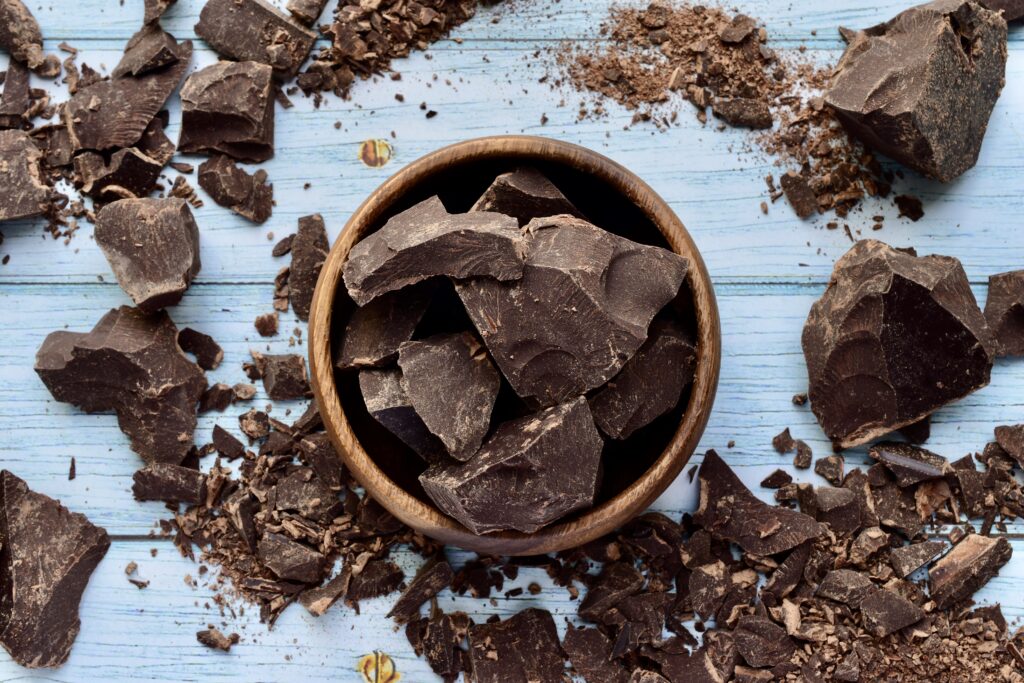
Pure ground cocoa, the foundation of every chocolate, in solid blocks.
View Cocoa MassLast updated: October 2026