
Home / What we offer / Natural Cocoa Powder
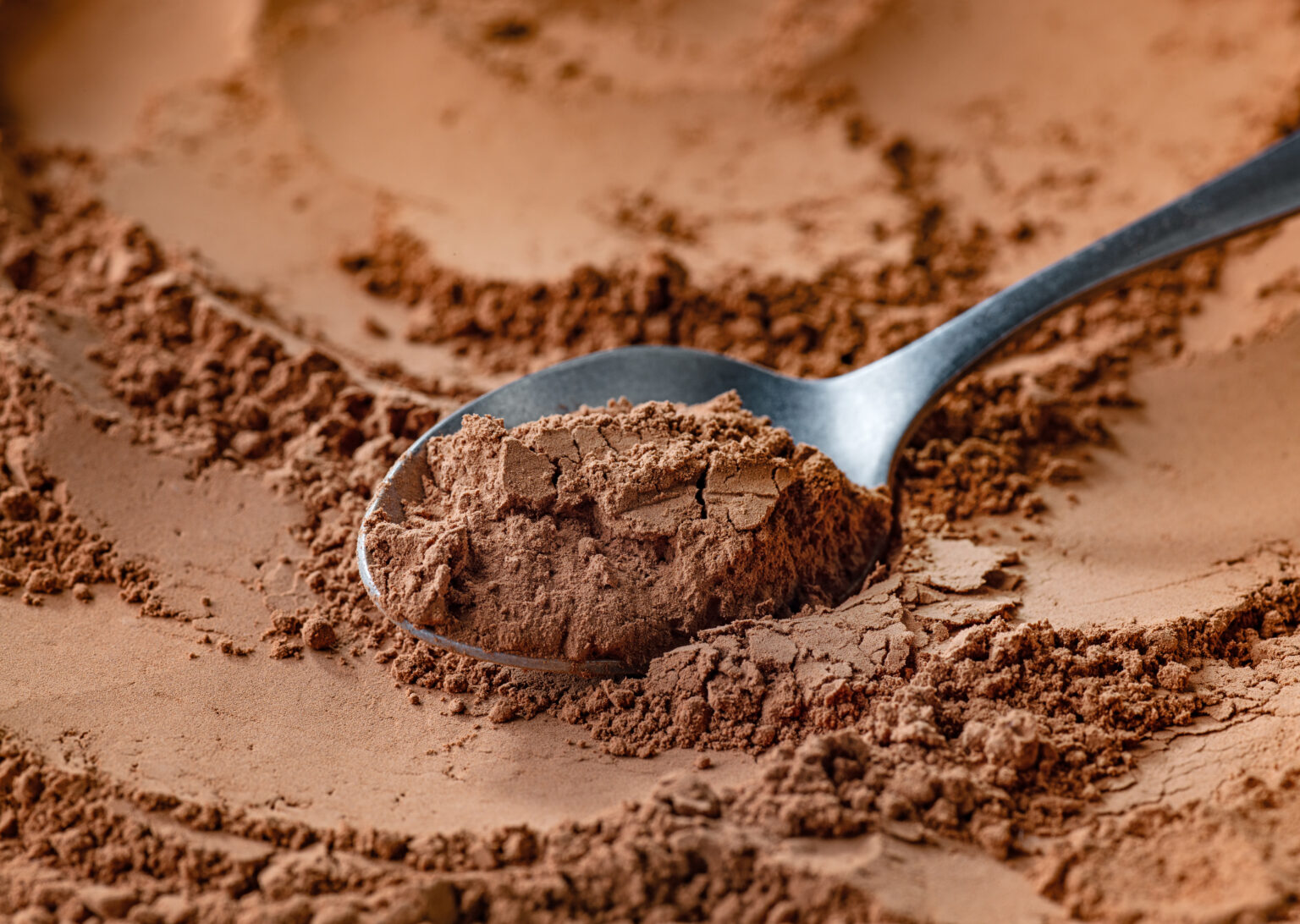
Natural Cocoa Powder Supplier: Bold, Non-Alkalized Cocoa
Radad International supplies natural cocoa powder with a bright, fruity flavour and a pH of 5.2 to 5.8, for bakers, beverage makers, ice cream producers and food manufacturers. Not sure whether natural or alkalized is right for you? The guide below helps you choose in minutes.
By Funui Donard, Operations Director, Radad International | Updated October 2026
At a glance
Type
Natural, non-alkalized
pH
5.2 to 5.8, naturally acidic
Fat content
10 to 24%, typically 10 to 12%
Shelf life
18 to 24 months
pH 5.2 to 5.8
Naturally acidic
10 to 12%
Typical fat content
18 to 24 months
Shelf life
No alkali
Mechanical processing only
Retail and bulk
Pack sizes for every buyer
Overview
What Is Natural Cocoa Powder?
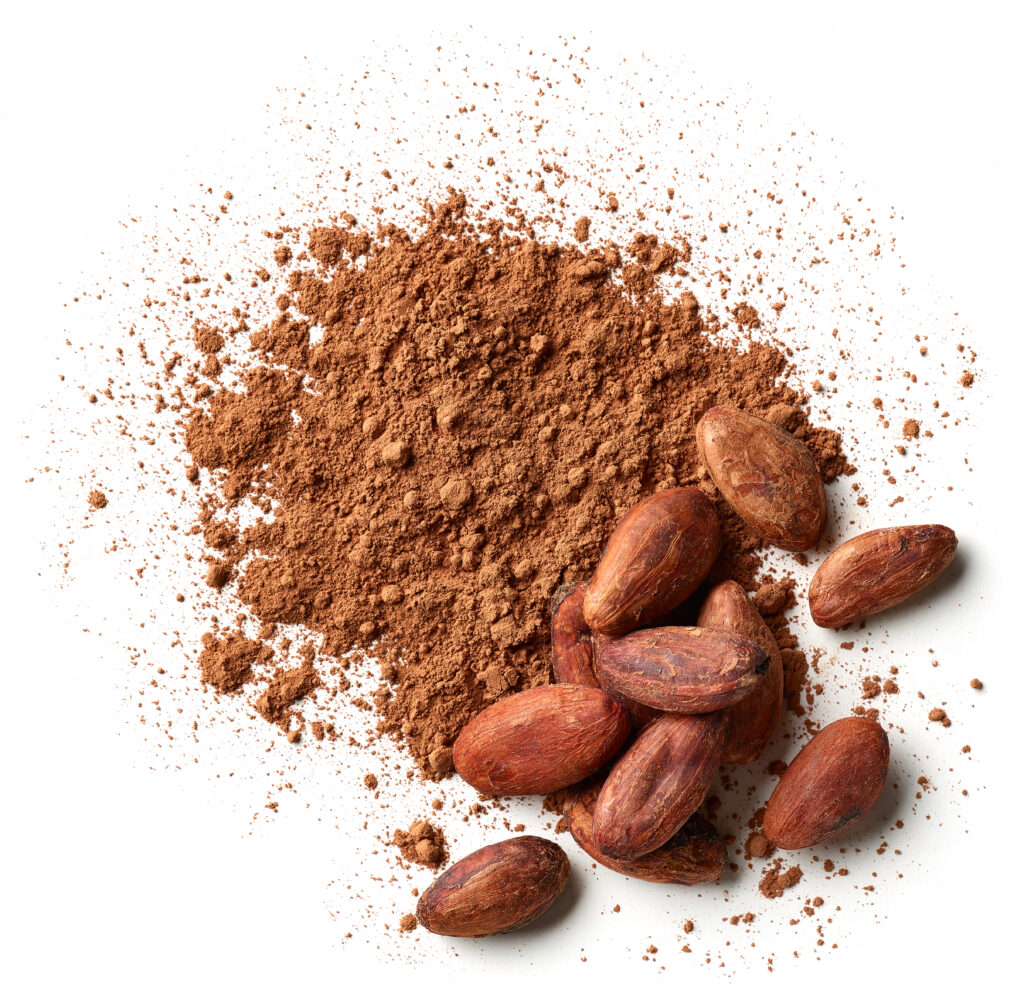
Natural cocoa powder is made by pressing cocoa mass to remove most of the cocoa butter and milling the remaining cake into powder, with no alkali treatment. It stays acidic, with a pH of about 5.2 to 5.8, and keeps a lighter colour, a sharper, fruitier flavour and more of the cocoa bean's natural flavanols.
It is also sold as non-alkalized, raw-process or unsweetened cocoa powder. What makes it natural is what does not happen after pressing: in alkalized, or Dutch-process, cocoa the powder is treated with an alkali to raise the pH, darken the colour and soften the taste. Natural cocoa skips that step.
Because it is acidic, natural cocoa reacts with baking soda to help cakes and brownies rise, which is why many classic recipes and bakery formulations are built around it. Radad supplies natural cocoa powder in retail and bulk quantities, with a specification sheet available on request.
Find your match
Which Cocoa Powder Should You Choose?
Choose natural cocoa powder if your recipe uses baking soda, or if you want a bold, fruity cocoa flavour and the most natural flavanols. Choose alkalized cocoa powder for deeper colour, a smoother taste, easy dissolving or a recipe leavened with baking powder. Read the two checklists, then use the quick picker to match your product.
Choose natural cocoa powder if you:
Bake with baking soda, as in classic cakes, brownies and cookies
Want a bold, fruity, slightly tangy cocoa flavour
Prefer a lighter, reddish-brown colour
Want to keep more of cocoa's natural flavanols
Request Natural Cocoa PowderChoose alkalized cocoa powder if you:
Bake with baking powder, or in recipes with no acidic ingredients
Want a deep, dark colour and a smooth, mellow taste
Need a powder that dissolves easily in hot and cold drinks
Make ice cream, coatings, fillings or dark cakes
View Alkalized Cocoa PowderQuick Picker: Match Your Product
Your product
Best choice
What to expect
Cakes or brownies leavened with baking soda
Natural
Lift from the acid-base reaction and a bold chocolate flavour
Cakes leavened with baking powder
Alkalized
Deeper colour and a mellow taste
Cookies with brown sugar and baking soda
Natural, or either
Brown sugar adds acid, so either type can work
Hot chocolate and drinking chocolate
Alkalized
Dissolves easily and tastes smooth
Smoothies, energy bites and raw desserts
Natural
Bright cocoa flavour with no baking involved
Ice cream and frozen desserts
Either
Natural for a lighter, fruitier result, alkalized for a darker, rounder one
Dark, black-style cookies and desserts
Alkalized
Depth of colour and a milder flavour
Formulations that specify flavanol content
Natural
Retains the most flavanols of any cocoa powder
Baking science
How Does Natural Cocoa Powder Work With Baking Soda?
Natural cocoa is acidic and baking soda is a base. When they meet in a moist batter they react and release carbon dioxide, which lifts the bake, and the reaction also softens the cocoa's acidity for a balanced flavour. Alkalized cocoa is neutral, so it is paired with baking powder, which carries its own acid.
1
Acid
Natural cocoa has a pH of about 5.2 to 5.8, which makes it acidic.
2
Base
Baking soda is sodium bicarbonate, an alkaline ingredient that needs acid to react.
3
Rise
The reaction releases carbon dioxide, which lifts cakes and brownies, and leaves a more balanced chocolate taste.
Swapping Between Natural and Alkalized Cocoa
If your recipe
And you use
Adjust like this
Calls for natural cocoa and baking soda
Natural cocoa
No change. This is the intended pairing
Calls for alkalized cocoa and baking powder
Natural cocoa
Replace the baking powder with about half the amount of baking soda
Calls for natural cocoa and baking soda
Alkalized cocoa
Replace the baking soda with about twice the amount of baking powder
Is rich in acidic ingredients such as buttermilk, yoghurt or brown sugar
Either type
Either can work, because those ingredients supply acid
Substitution guidance follows common baking references, including King Arthur Baking. Colour and flavour will still change, so always test a small batch before scaling up.
Side by side
Natural vs Alkalized Cocoa Powder: What Is the Difference?
Natural cocoa powder is acidic (pH about 5.3 to 5.8), lighter in colour and fruitier in taste, and it keeps more flavanols. Alkalized cocoa is treated with an alkali, so it is darker, smoother, easier to dissolve and closer to neutral in pH. Both start as roasted cocoa beans that are pressed and ground.
Feature
Natural cocoa powder
Alkalized cocoa powder
Processing
Mechanical only: pressed and milled, no alkali
Treated with an alkali to neutralise acidity
pH
About 5.2 to 5.8 (acidic)
6.8 to 8.5 across Radad shades
Colour
Light to medium brown, often reddish
Light brown to very dark brown
Flavour
Bright, fruity, slightly acidic and sharper
Smoother, mellower, rounded chocolate
Solubility
Lower, tends to settle in liquids
High, disperses easily in liquids
Leavening partner
Baking soda
Baking powder
Flavanols
Highest of any cocoa powder
Reduced. In one study, light Dutching kept about 40%, medium 25% and heavy 10%
Best for
Baking-soda bakes, bold flavour, raw desserts, flavanol-specified products
Drinks, ice cream, coatings, dark cakes, baking-powder recipes
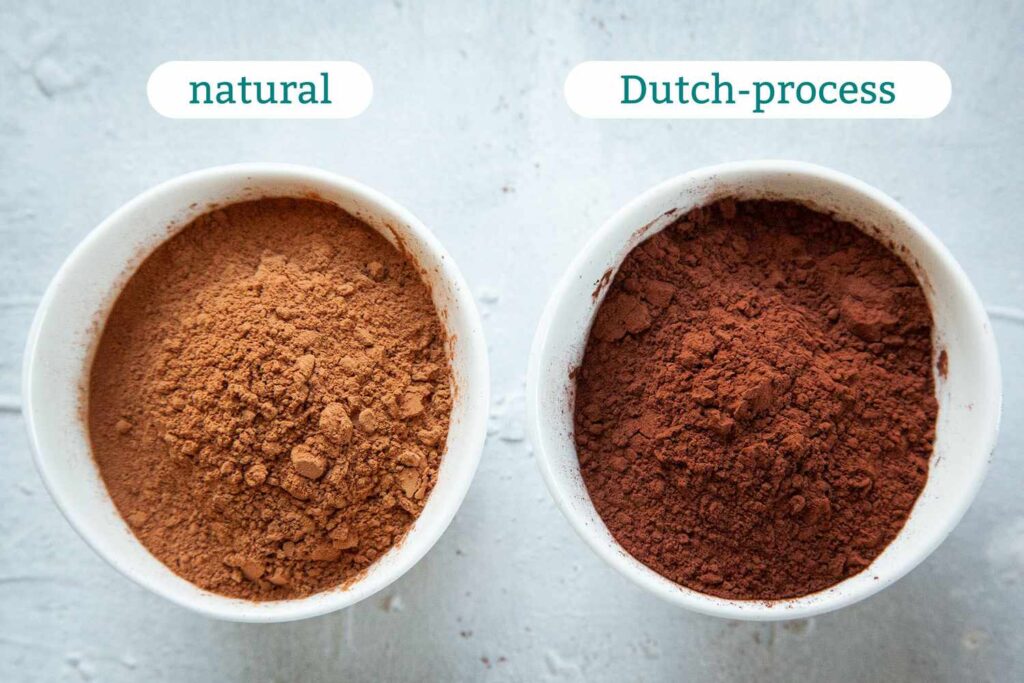
Natural cocoa powder (lighter, reddish brown) beside alkalized cocoa powder (darker brown).
Read About Alkalized Cocoa PowderFat grades
What Does 10/12 Cocoa Powder Mean?
10/12 means the powder contains 10 to 12% cocoa butter, which is classed as low-fat or reduced-fat cocoa powder. Ordinary full-fat cocoa powder is sold as 20/22, with 20 to 22% cocoa butter. Radad natural cocoa powder is typically 10 to 12% and is available across a range of up to 24%, so tell us the grade you need.
Grade
Cocoa butter
Where it fits
10/12 (low-fat)
10 to 12%
A leaner powder that handles easily in dry mixes, bakery and beverages
20/22 (full-fat)
20 to 22%
A richer powder that adds body and a fuller mouthfeel in desserts and coatings
Other grades
Up to 24%
Tell us your target and we will confirm what is available
Changing grade changes your recipe
More cocoa butter means more fat in the finished product, so you may need to adjust the other fats in your formulation. Test a small batch when you switch grade.
Technical data
Natural Cocoa Powder Specifications
Radad natural cocoa powder is non-alkalized, with a pH of 5.2 to 5.8, 10 to 24% cocoa butter (typically 10 to 12%), a light to medium brown colour, a bright, fruity flavour and a shelf life of 18 to 24 months. A full specification sheet is available on request.
Characteristic
Typical value
Product
Natural (non-alkalized) cocoa powder
Processing
Mechanical only, no chemical treatment
pH
5.2 to 5.8
Colour
Light to medium brown
Cocoa butter (fat)
10 to 24%, typically 10 to 12%
Flavour
Bright, fruity, slightly acidic cocoa taste
Shelf life
18 to 24 months when stored properly
Supply
Retail and bulk quantities
Shipping terms
FOB and CIF
Storage
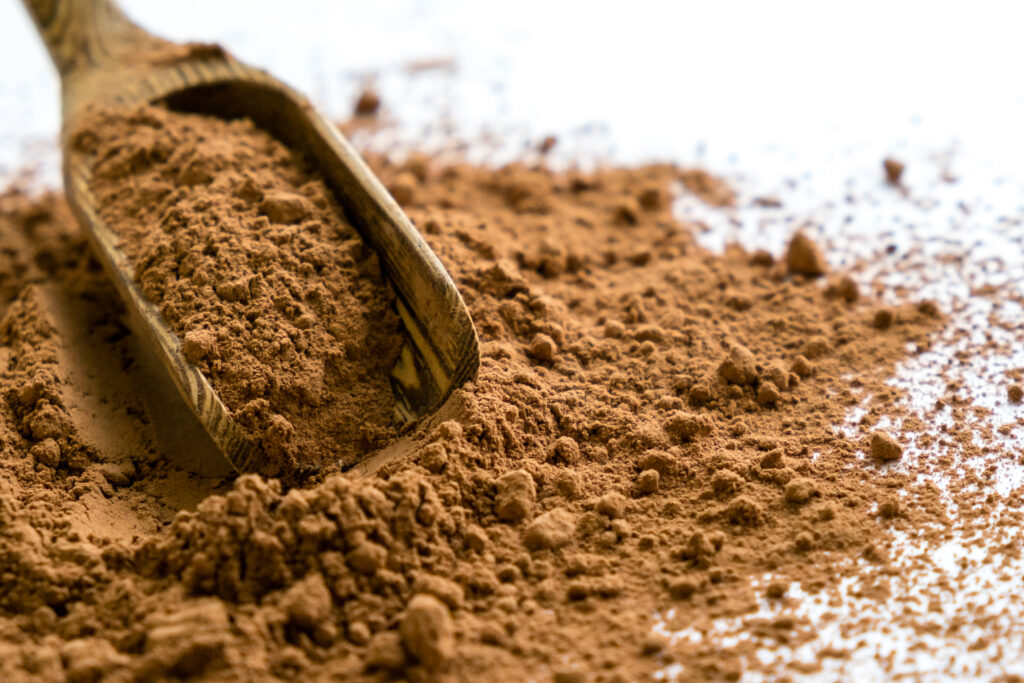
Store in a cool, dark, dry place in an airtight container, ideally at 15 to 25 °C and away from strong odours.
Retail and bulk quantities are available. Tell us your volume and we will recommend the right pack.
Request the Specification SheetWhat to Check on Any Cocoa Powder Specification Sheet
Fat content
Confirm the grade, such as 10/12 or 20/22, and the allowed range.
pH
Natural cocoa sits around 5.3 to 5.8. A higher figure points to alkali treatment.
Fineness
Ask for particle size or sieve residue. Finer powder disperses and feels smoother.
Moisture
Lower moisture protects shelf life. Ask for the maximum allowed.
Colour
Ask for a reference sample or colour values so every batch matches.
Microbiology and contaminants
Ask for plate count, yeast and mould and Salmonella limits, plus contaminant data.
Applications
What Is Natural Cocoa Powder Used For?
Natural cocoa powder is used in cakes, brownies and cookies leavened with baking soda, and in hot chocolate, ice cream, sauces, confectionery, smoothies and dry mixes wherever a bold, fruity cocoa flavour is wanted.

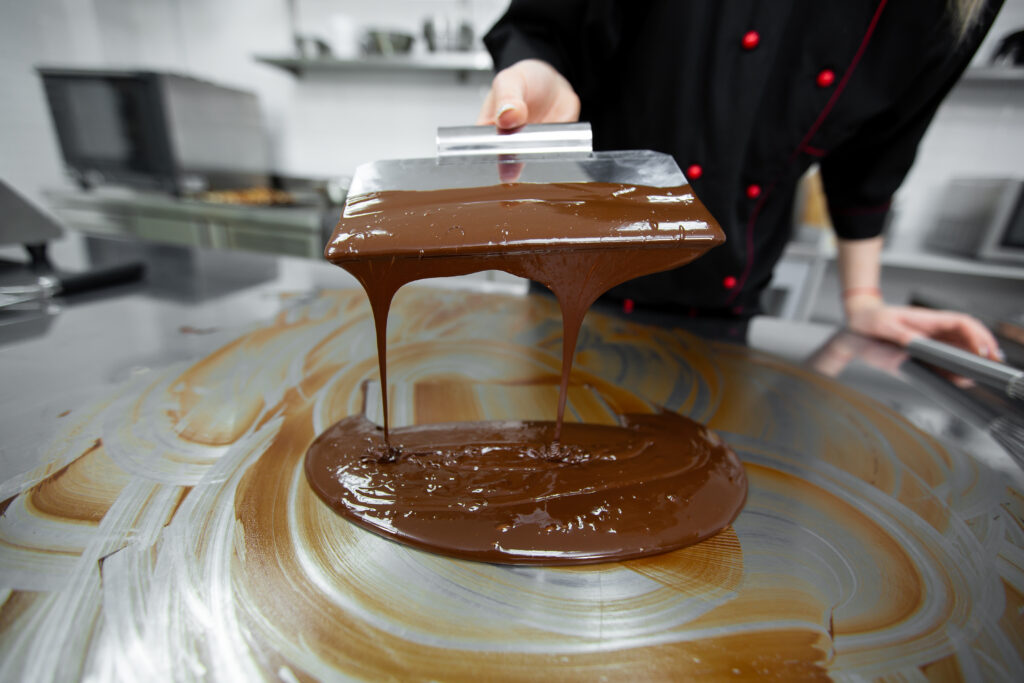
Cakes and brownies
Paired with baking soda, natural cocoa gives lift and a pronounced chocolate note.
Cookies and pastry
Adds a bright cocoa flavour to cookies, biscuits and pastry fillings.

Hot chocolate and drinks
Gives hot chocolate, chocolate milk and cocoa-flavoured coffee a bold, fruity edge.
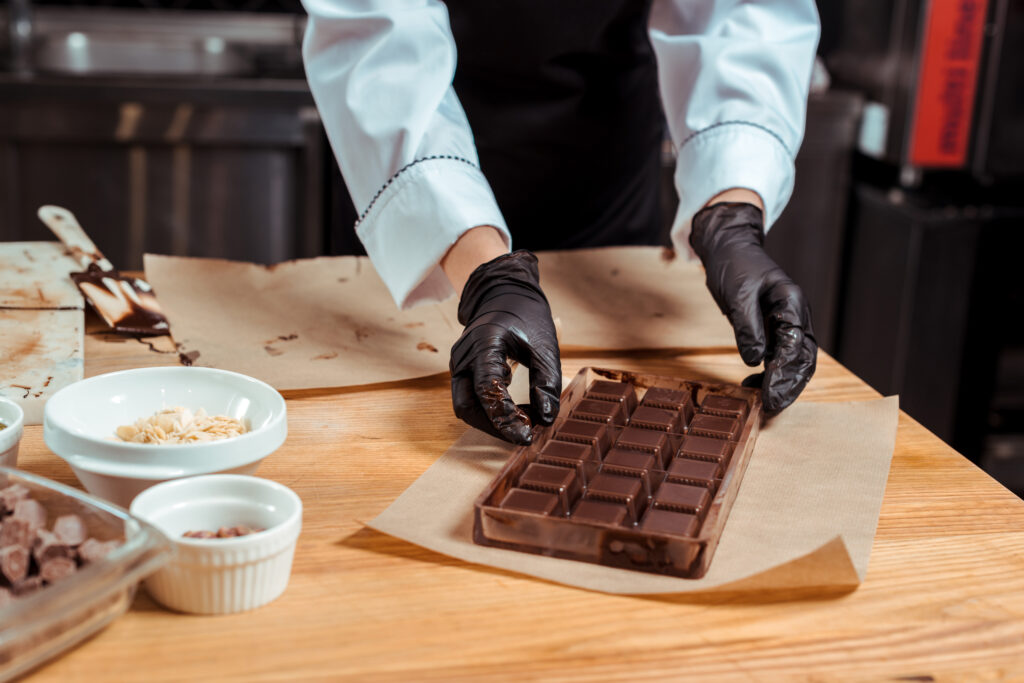
Confectionery and coatings
A source of cocoa flavour for fillings, truffle dusting, glazes and coatings.
Ice cream and frozen desserts
Adds a clear chocolate note to ice cream, gelato and frozen yoghurt.
Sauces, syrups and toppings
Builds cocoa flavour into chocolate sauces, syrups and dessert toppings.
Smoothies and raw desserts
Stirs into smoothies, energy bites and no-bake desserts for a bright cocoa taste.
Dry mixes and snack bars
Used in cake and brownie mixes, instant drink blends, cereals and snack bars.
Retail and bulk supply
How Do I Buy Natural Cocoa Powder in Bulk?
Send Radad your preferred grade (for example 10/12), quantity, pack size and destination. We reply with a quote, and once you confirm we arrange supply on FOB or CIF terms. Retail and bulk quantities are available, and a specification sheet is available on request.
Bakeries and food manufacturers
Natural cocoa for cakes, brownies, cookies, mixes and fillings.
Beverage and ice cream makers
Cocoa for hot chocolate, shakes, ice cream and frozen desserts.
Importers and distributors
Bulk supply for buyers serving their own markets in the UAE and worldwide.
1
Send your enquiry
Tell us the grade, quantity, pack size and delivery destination.
2
Receive your quote
The Radad team replies with a quote and the specification sheet.
3
Confirm and arrange supply
Agree the details with us and we arrange supply and shipping.
Get a quote
Source Natural Cocoa Powder
Tell us the grade, quantity, pack size and destination. The Radad team replies with a quote.
Call or WhatsApp
+971 522 501 039Monday to Sunday, 09:00 AM to 06:00 PM (Dubai time)
FAQs
Natural Cocoa Powder: Frequently Asked Questions
Quick answers about natural cocoa powder, how it differs from alkalized cocoa, how to bake with it and how to buy it.
More from Radad
Explore Our Cocoa Products
Natural cocoa powder sits alongside the rest of the Radad range.
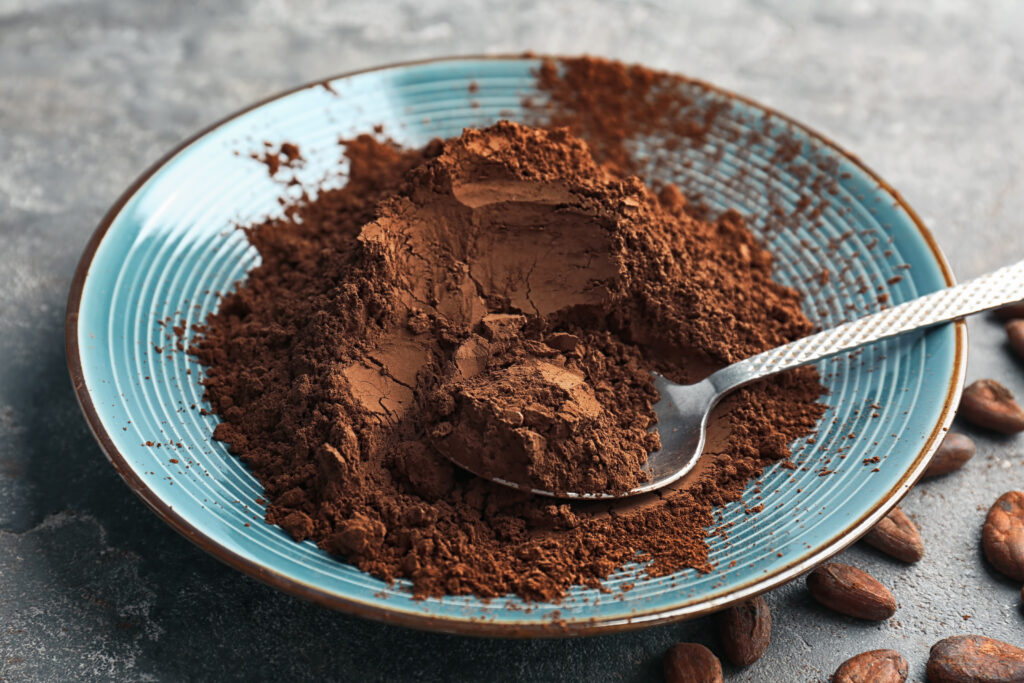
Alkalized Cocoa Powder
Dutch-process powder in light and dark brown for drinks, ice cream and dark bakes.
View Alkalized Cocoa Powder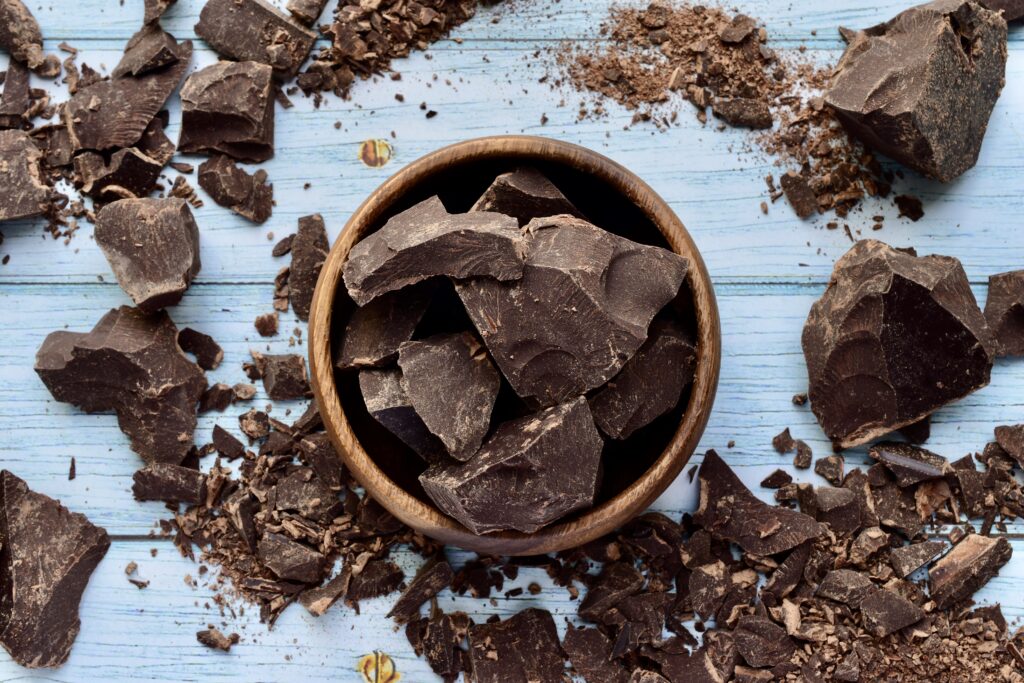
Cocoa Mass (Cocoa Liquor)
Pure ground cocoa, the foundation of every chocolate, in solid blocks.
View Cocoa Mass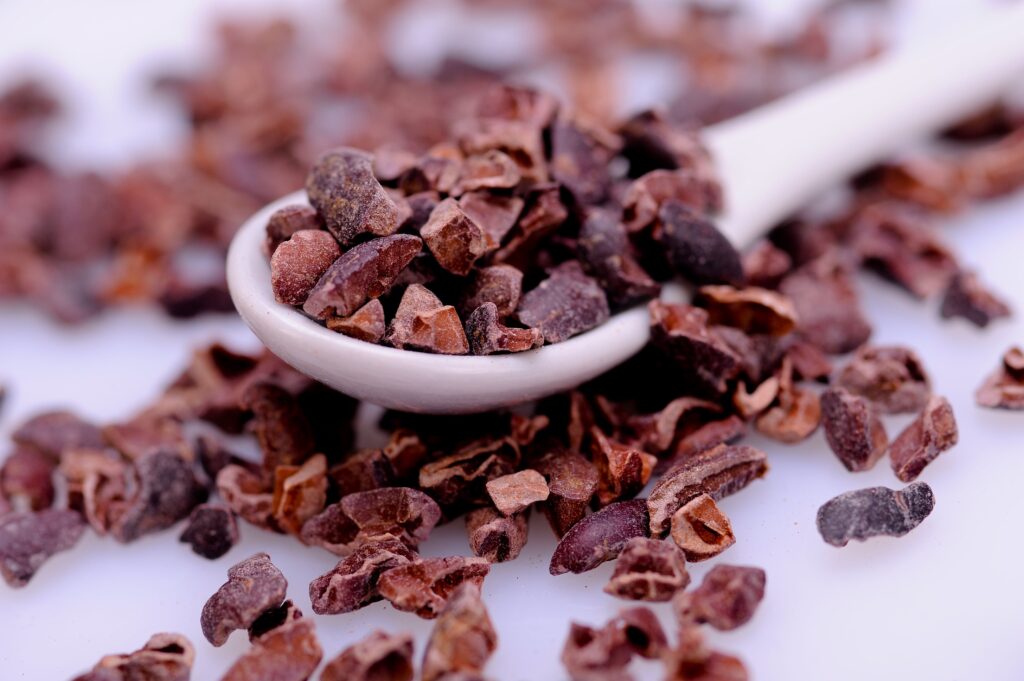
Raw Cocoa Nibs
Pure, crunchy African cocoa nibs for chocolate makers, bakers and food brands.
View Raw Cocoa Nibs
Whole Cocoa Beans
Fermented, sun-dried African beans for grinders and chocolate makers.
View Whole Cocoa BeansSources and References
1. Wikipedia, Cocoa powder (pH range, fat grades, baking soda pairing).
2. Miller et al., Journal of Agricultural and Food Chemistry, Impact of Alkalization on the Antioxidant and Flavanol Content of Commercial Cocoa Powders.
3. EurekAlert, New study re-emphasizes natural cocoa powder has high antioxidant content (flavanol retention by degree of alkalization).
4. King Arthur Baking, Dutch-process vs. natural cocoa (leavening adjustments).
5. Radad International, Natural cocoa powder: benefits, uses and baking chemistry.
Last updated: October 2026