
Home / What we offer / Cocoa Pods
Cocoa Pods: Complete Guide to Growing, Harvesting and Buying
A cocoa pod is the fruit of the cacao tree and the starting point of all chocolate. This guide explains how pods grow, how they are harvested and used, and how to buy them from Radad International.
By Funui Donard, Operations Director, Radad International | Updated October 2026
At a glance
Pod length
About 15 to 30 cm
Beans per pod
Usually 30 to 40, up to 60
Ripening
5 to 6 months after pollination
First pods
3 to 5 years after planting
15 to 30 cm
Typical pod length
20 to 60
Beans in each pod
5 to 6 months
Pollination to ripe pod
3 to 5 years
From planting to first pods
20 to 40
Pods per mature tree each year
Overview
What Are Cocoa Pods?
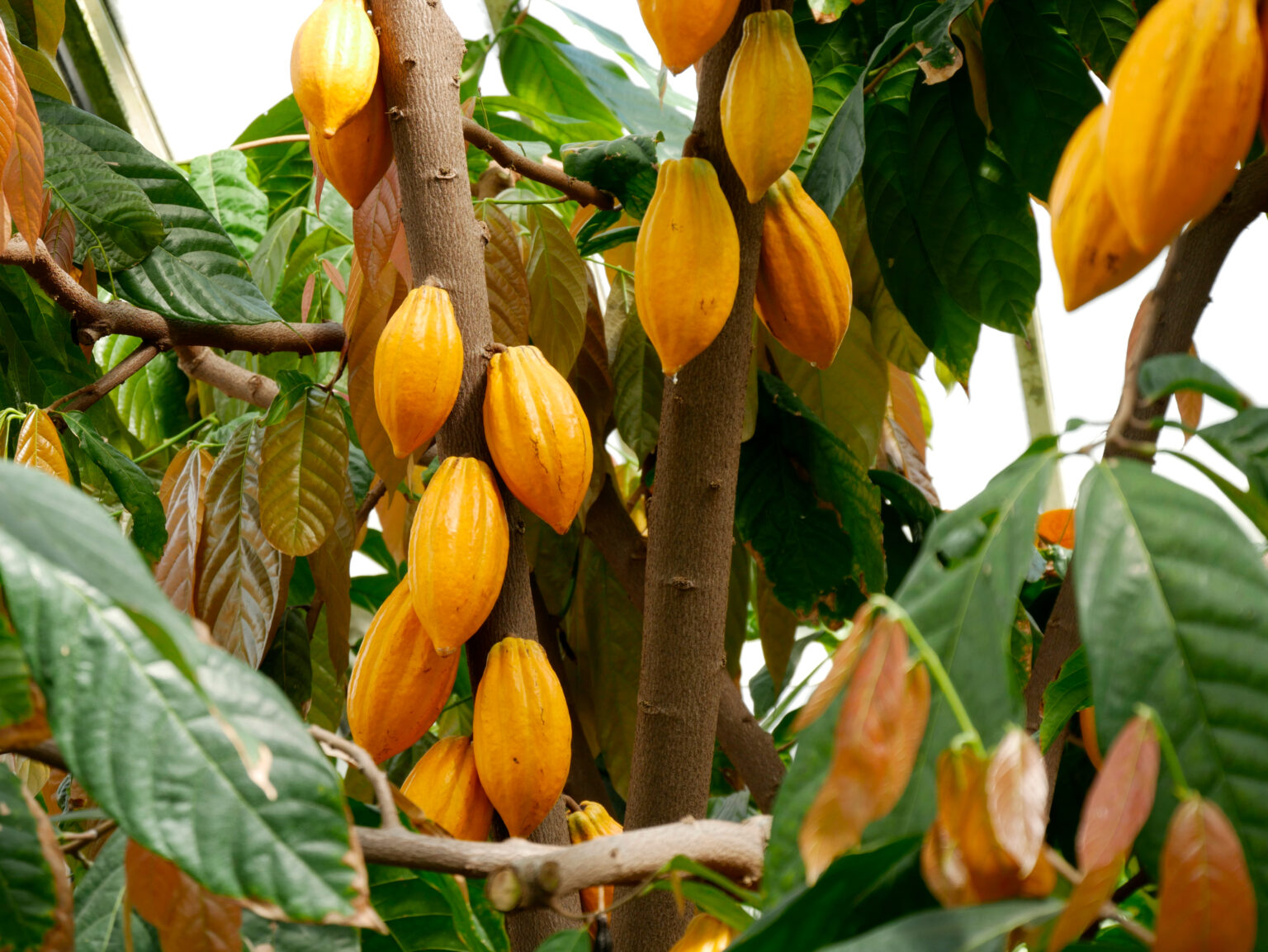
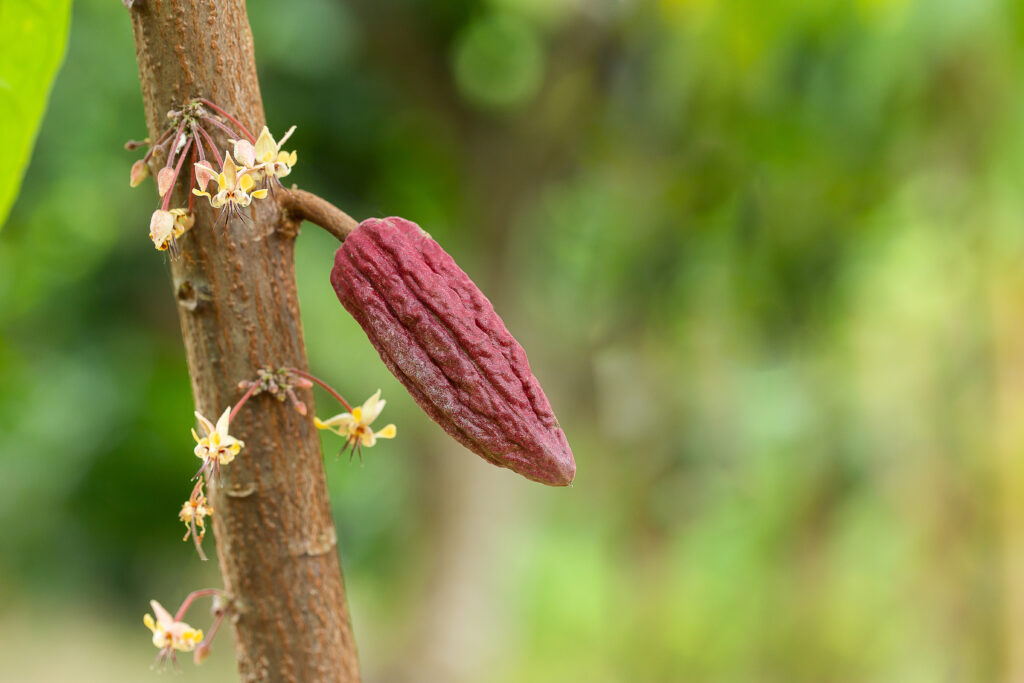
A cocoa pod is the fruit of the cacao tree (Theobroma cacao). It grows straight from the trunk and branches, is about 15 to 30 cm long, and holds 20 to 60 seeds, called cocoa beans, in sweet white pulp. After fermenting, drying and roasting, those beans become chocolate, cocoa butter, cocoa powder and cocoa nibs.
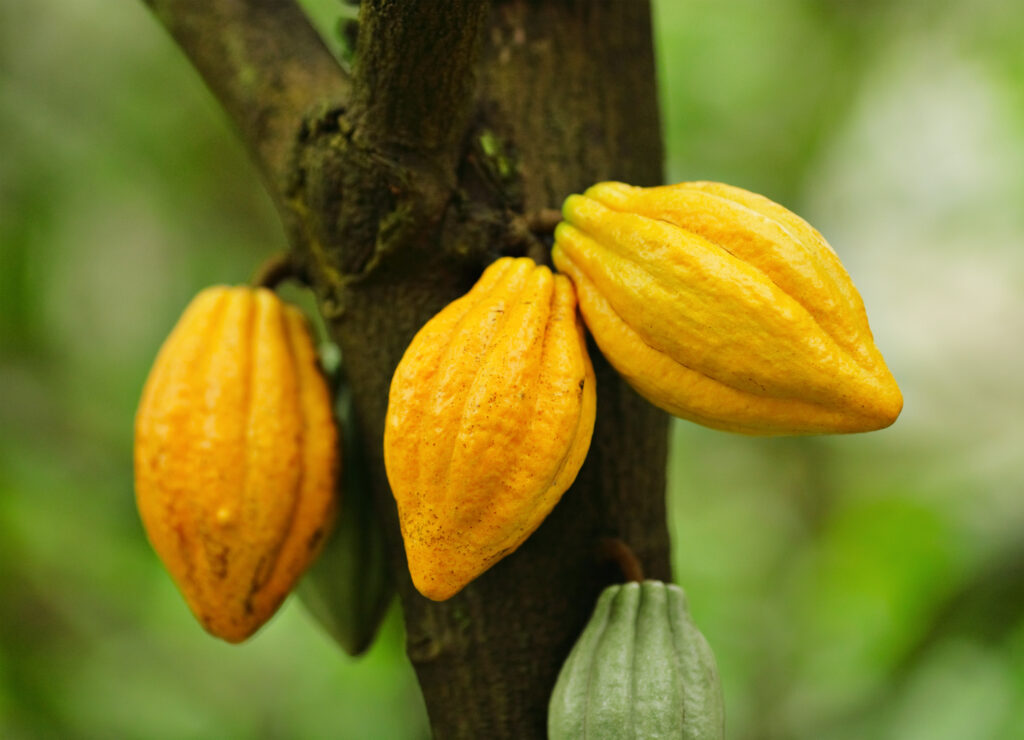
The name Theobroma means "food of the gods" in Greek. Cocoa pods are unusual because they grow directly on the trunk and older branches, a trait called cauliflory. Pods ripen from green, red or purple to yellow, orange or gold, and a single tree carries flowers and pods at several stages at once.
Many pods go into every batch of chocolate, which is why pod quality, ripeness at harvest and careful handling shape the finished product. Radad International works with African cocoa and can source pods for planting, pod-to-bar projects and trade.
A small fraction of flowers becomes pods
A cacao tree produces thousands of tiny flowers, but studies of cacao pollination put successful pollination at under 5%. That low conversion is one reason cocoa is such a labour-intensive crop.
Anatomy
Anatomy of a Cocoa Pod
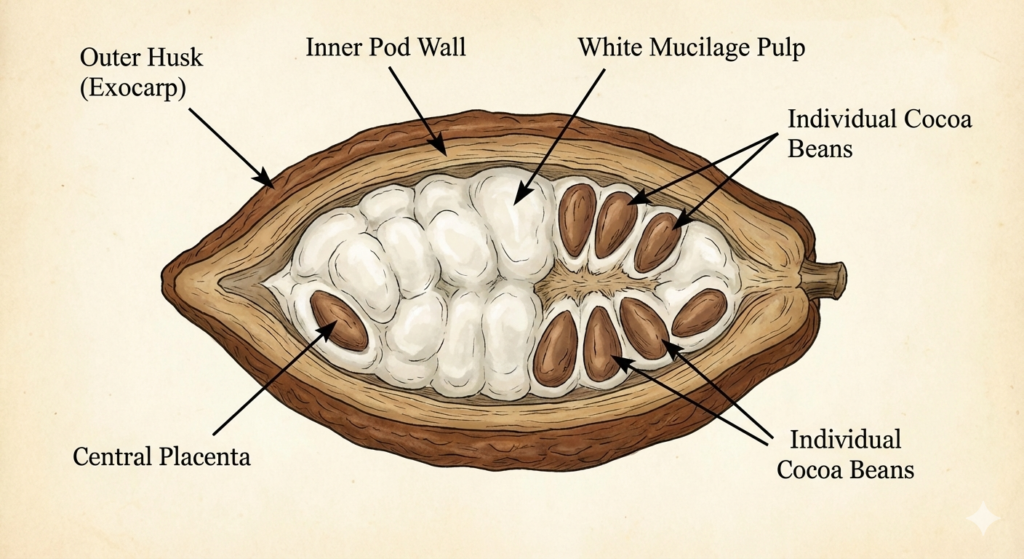
A cocoa pod has five parts: the leathery outer husk, the fibrous pod wall, the white pulp (mucilage), the beans and the central placenta they attach to. The beans are the part used for chocolate, while the husk and pulp are increasingly used for compost, animal feed and drinks.
Nothing goes to waste
Modern cocoa farming increasingly takes a zero-waste approach to the pod. Husks are composted as natural fertilizer, pulp is fermented into juice, vinegar or spirits, and bean shells left after processing become mulch or animal feed. What once looked like leftovers is now an extra income stream for farmers.
Part of the pod
What it is
Composition
Main uses
Outer husk (exocarp)
Thick, leathery outer shell, ridged or smooth depending on the variety
Cellulose, pectin, lignin and minerals
Compost, animal feed, biochar and potash fertilizer
Pod wall (mesocarp)
Fibrous inner wall between the husk and the beans
Fibre, water and trace minerals
Composting and biofuel research
White pulp (mucilage)
Sweet, sticky coating around each bean, with a tropical fruit flavour
Mostly water (80 to 90%), plus sugars, citric acid and pectin
Cocoa juice, syrup, vinegar and spirits. Essential to fermentation
Cocoa beans (seeds)
20 to 60 seeds, purple when fresh and brown after fermentation
Cocoa butter (about 50%), cocoa solids, theobromine, protein and flavonoids
Chocolate, cocoa butter, cocoa powder and cosmetics
Placenta (core)
Central column that holds the beans in rows
Fibrous plant material
Composted back into the farm
Varieties
The Three Main Cocoa Varieties: Criollo, Forastero and Trinitario
Forastero supplies roughly 80 to 85% of the world's cocoa with a bold, classic chocolate flavour. Trinitario, a hybrid, makes up about 10 to 15%, and Criollo, the rare and mild fine-flavour variety, about 1 to 5%. Pod shape, colour, bean count and yield differ between them, which is why knowing the variety matters to both farmers and chocolate makers.
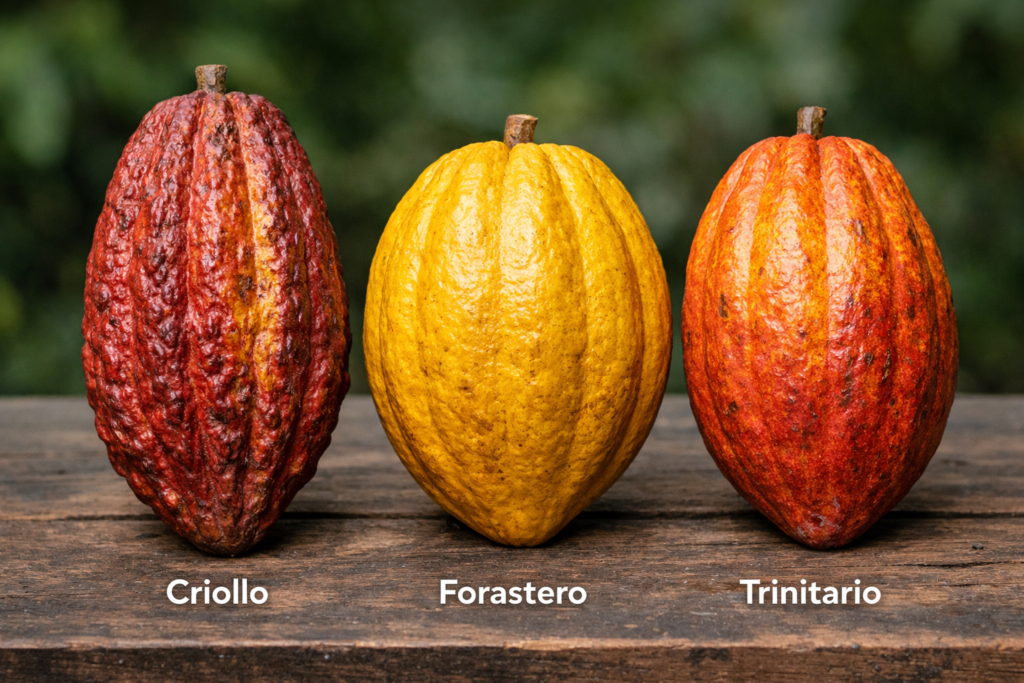
Criollo is the original cacao of the Maya and Aztecs. Its pods are elongated and pointed, its beans are pale, and the chocolate is complex and mild. It is fragile, low-yielding and grown mainly in Central America, the Caribbean and parts of South America.
Forastero is the workhorse of the industry: hardy, productive and the basis of most commercial chocolate. African cocoa is predominantly Forastero of the Amelonado type. Trinitario, born in Trinidad as a cross of the two, combines fine flavour with better hardiness and is also grown in Cameroon.
Characteristic
Criollo
Forastero
Trinitario
Share of world supply
1 to 5%
80 to 85%
10 to 15%
Ripe pod colour
Red or yellow
Yellow or green
Variable
Fresh bean colour
White or pale purple
Deep purple
Mixed
Flavour
Complex, mild, fruity and nutty
Bold, strong, classic chocolate
Rich, balanced and nuanced
Beans per pod
About 20 to 30
About 30 to 50
About 25 to 45
Disease resistance
Low
High
Medium to high
Yield
Lower
Higher
Medium
Typical use
Fine and luxury chocolate
Mass-market chocolate, cocoa powder and cocoa butter
Premium and gourmet chocolate
Growing
How Do Cocoa Pods Grow?
A cacao tree begins flowering at around three to five years old. Tiny midges pollinate the flowers, and each pollinated flower takes about five to six months to grow into a ripe pod. Pods on the same tree ripen at different times, so harvesting continues through the season.
Thousands of small white or pink flowers appear on the trunk and older branches, and each stays receptive to pollen for only a day or two. Pollination depends on midges, tiny flies of the genus Forcipomyia, not bees, and the process is inefficient: well under 5% of flowers are successfully pollinated.
Because the midges breed in humid, shaded places with leaf litter, shade trees and a moist understorey help pollination. Deforestation and unshaded monoculture reduce it. Healthy trees stay productive for roughly 25 to 40 years and can live far longer.
Agroforestry: the smart way to grow cocoa
Growing cocoa under taller shade trees, alongside crops such as banana, citrus and timber, keeps soil cool and moist, supports the midges that pollinate cacao, adds organic matter and gives farmers extra income.
What a Cocoa Tree Needs to Produce Pods
Requirement
Ideal condition
Climate
Tropical, within about 20 degrees of the equator, with constant warmth and humidity
Temperature
About 21 to 32 °C through the year. Extremes cause flower drop and pod loss
Rainfall
About 1,500 to 2,000 mm a year, well distributed
Dry season
No more than about three consecutive months below 100 mm of rain
Shade
Partial shade, especially when trees are young
Soil
Deep, well drained and rich in organic matter, with a pH of about 6.0 to 7.5
Altitude
Mostly below about 600 m above sea level
Wind
Sheltered from strong winds, which damage flowers and young pods
Harvesting
How Are Cocoa Pods Harvested?
Cocoa pods are harvested by hand. Farmers judge ripeness by colour, by a hollow sound when the pod is tapped and by scraping the husk, then cut the stem cleanly with a machete or pole knife without damaging the flower cushion. Harvesting happens several times a week in peak season, because pods ripen unevenly.
How Do Farmers Know a Pod Is Ripe?
Colour check
Green pods turn yellow or orange and red pods turn bright orange. Colour change can be subtle in hot climates, so farmers combine it with other signs.
The hollow knock
A gentle tap on a ripe pod gives a hollow sound because the beans have loosened inside. An unripe pod sounds dense and dull.
Shell scrape
Scraping a little husk shows the flesh below. Green means the pod needs longer. White or yellow means it is ready.
Timing
Unripe pods lack the pulp sugar needed for fermentation. Overripe pods can germinate or rot on the tree, so the window for picking is narrow.
The Harvesting Process, Step by Step
1
Select
Walk the plantation and check each pod by colour, sound and touch. Pick only ripe or nearly ripe pods.
2
Cut carefully
Cut the stem cleanly. Do not damage the flower cushion, because future flowers and pods grow from the same spot.
3
Collect and pile
Carry pods to a central point. Open them within about a week to ten days, before the beans start to deteriorate.
4
Crack open
Strike each pod once with a wooden club or the blunt side of a machete so it splits without cutting the beans.
5
Remove beans and pulp
Scoop out the beans with their white pulp by hand. Leave the husks on the farm to decompose and return nutrients.
6
Ferment
Heap the beans in boxes or baskets under banana leaves for about five to seven days. Heat builds as the pulp ferments and flavour develops.
Harvest seasons: in West Africa the main crop runs from about October to March, with a smaller mid-crop from May to August. Close to the equator, in Ecuador for example, pods ripen more continuously through the year.
Pod to bar
How Is Chocolate Made From a Cocoa Pod?
Pod-to-bar chocolate is made by one maker from the whole pod, controlling every stage: opening the pod, fermenting and drying the beans, then roasting, winnowing, grinding, conching and tempering. It gives the most control over flavour, traceability and ethics, and keeps more of the value with producing communities.
1
Choose a ripe pod
Select a fully ripe, healthy pod using colour, sound and scrape. Never use an overripe or diseased pod.
2
Crack and extract
Split the pod with a wooden club and remove the beans and pulp gently, because damaged beans spoil fermentation.
3
Ferment
Heap the beans in boxes or baskets under banana leaves for about five to seven days. Fermentation builds the flavour precursors and cannot be repaired later.
4
Sun-dry
Spread the beans on raised beds or mats for roughly one to two weeks, turning them often, until moisture falls to about 7% or less.
5
Sort and grade
Remove flat, mouldy, broken, germinated and insect-damaged beans by hand. Consistent beans make consistent chocolate.
6
Roast
Roast at roughly 110 to 140 °C. A lighter roast keeps fruity and floral notes. A darker roast builds bold, classic chocolate.
7
Crack and winnow
Crack the roasted beans and blow away the thin shells, leaving pure cocoa nibs.
8
Grind to liquor
Grind the nibs until their cocoa butter melts into a smooth paste called cocoa mass or cocoa liquor.
9
Refine and conche
Keep refining with sugar and other ingredients for 24 to 72 hours to reduce particle size, develop flavour and create a silky texture.
10
Temper and mould
Heat and cool the chocolate through a set temperature curve to stabilise the cocoa butter, then mould and set it into bars.
Radad also supplies the finished intermediate products if you do not want to start from the pod: whole cocoa beans, raw cocoa nibs and cocoa mass.
Uses
What Are Cocoa Pods Used For?
Beyond chocolate, cocoa pods yield cocoa butter for cosmetics, pulp for juice and spirits, and husks for fertilizer, feed and biochar. Using the whole pod gives farmers extra income and cuts waste.
Chocolate production
The beans are the source of all chocolate and cocoa products worldwide.
Cosmetics and skincare
Cocoa butter from the beans is prized in moisturisers, lip balms and body care.
Cocoa pulp juice
The sweet white pulp can be juiced into a mild, citrusy tropical drink.
Cocoa wine and spirits
Pulp can be fermented and distilled into cocoa wine and craft spirits.
Organic fertilizer
Composted husks return potassium and organic matter to the farm.
Animal feed
Dried and processed husks can supplement feed for cattle, goats and poultry.
Food and nutraceutical ingredients
Pectin from husks and theobromine and flavanols from cocoa are used in food and functional ingredients.
Biochar and fuel
Pod husks can be turned into biochar, a soil amendment, or used as biomass fuel.
The cocoa pulp opportunity
For decades the sweet pulp around the beans was washed away. Producers in Brazil, Ecuador and Ghana now collect it and sell it as juice, smoothie ingredient, syrup, jam and even vinegar, adding a new revenue stream and a fresh taste of chocolate's tropical fruit origins.
Buying
How Do I Buy Cocoa Pods for Planting?
To plant cocoa you can sow fresh seeds from a pod or buy grafted seedlings. Seeds cost less but lose viability within days of leaving the pod, so they must be sown almost immediately, while grafted seedlings fruit sooner and keep the parent tree's variety. Buy from a supplier who can name the variety, the harvest date and the source.
Seed freshness decides everything
Cacao seeds have no dormancy and cannot tolerate drying. Sow them as soon as possible after the pod is opened, ideally the same day. Seeds left in their pulp stayed highly viable for only about two days in one study, while cleaned seeds kept germinating well for up to three weeks. Germination usually takes one to two weeks, and seedlings are ready to transplant at roughly four to six months.
Factor
Fresh seeds from a pod
Grafted seedlings
Cost
Lower
Higher
Time to first pods
About 3 to 5 years
Usually sooner than seed-grown trees
Genetics
Can vary between plants
Identical to the parent tree
Handling
Very short viability, so sow immediately
Supplied as nursery plants
Best for
Large-scale planting at lower cost
A specific variety, or replanting aged and diseased trees
Buyer's Checklist for Cocoa Pods
Known variety
Know whether you are buying Criollo, Forastero or Trinitario. Each differs in yield, disease resistance and market value.
Freshness
Ask for the harvest date. Seeds deteriorate within days of the pod being opened.
Disease-free source
Pods should come from healthy trees. Cocoa swollen shoot virus and black pod disease can travel with planting material.
Reliable supplier
Choose a supplier who can provide documentation and origin traceability.
Seed selection
The best seeds for sowing are the large, fully developed beans from the middle of the pod.
Climate match
Check that the variety performs in your climate and at your altitude.
Farming realities
What Challenges Do Cocoa Pod Farmers Face?
Cocoa farmers face climate change, crop diseases, ageing trees and volatile prices. Understanding these pressures explains why quality pods and fair, reliable sourcing matter to the whole chocolate supply chain.
Climate change
Shifting rainfall, longer droughts and temperature extremes make harvest cycles less predictable. Farmers are responding with agroforestry, more resilient planting material and careful water management.
Crop diseases and pests
Cocoa swollen shoot virus (a serious problem in Ghana), black pod disease, witches' broom in South America and mirid bugs can all cut yields sharply if left untreated.
Ageing trees
Many West African trees are 30 to 40 years old or more, past their most productive years. Replanting means years without income while new trees mature, so farmers need support to renew their farms.
Price volatility
Cocoa prices can swing sharply within a season, as the 2024 and 2025 markets showed. Smallholders often lack the cushion to ride out falls or the bargaining power to benefit fully from rises.
Buy from Radad
How Do I Buy Cocoa Pods From Radad International?
Tell Radad what you need the pods for, the variety, the quantity and your destination. We confirm availability, freshness and shipping, then send a quote. Pods are perishable, so tell us your timing as well. We supply buyers in the UAE, the GCC and around the world.
Planting and propagation
Pods and planting material for farmers starting or renewing a plantation.
Pod-to-bar makers
Fresh pods for chocolate makers who want to control every step from the pod.
Trade and supply
Cocoa products for importers, distributors and food manufacturers, supplied on FOB or CIF terms.
1
Send your enquiry
Tell us the purpose, variety, quantity, destination and when you need the pods.
2
Receive your quote
The Radad team confirms what is available and replies with a quote.
3
Confirm and arrange supply
Agree the details with us and we arrange supply and shipping.
Get a quote
Source Cocoa Pods
Tell us the purpose, variety, quantity and destination. The Radad team replies with a quote.
Call or WhatsApp
+971 522 501 039Monday to Sunday, 09:00 AM to 06:00 PM (Dubai time)
FAQs
Cocoa Pods: Frequently Asked Questions
Quick answers about cocoa pods, how they grow, how they are used and how to buy them.
More from Radad
Explore Our Cocoa Products
Pods are where cocoa begins. These are the products they become.
Whole Cocoa Beans
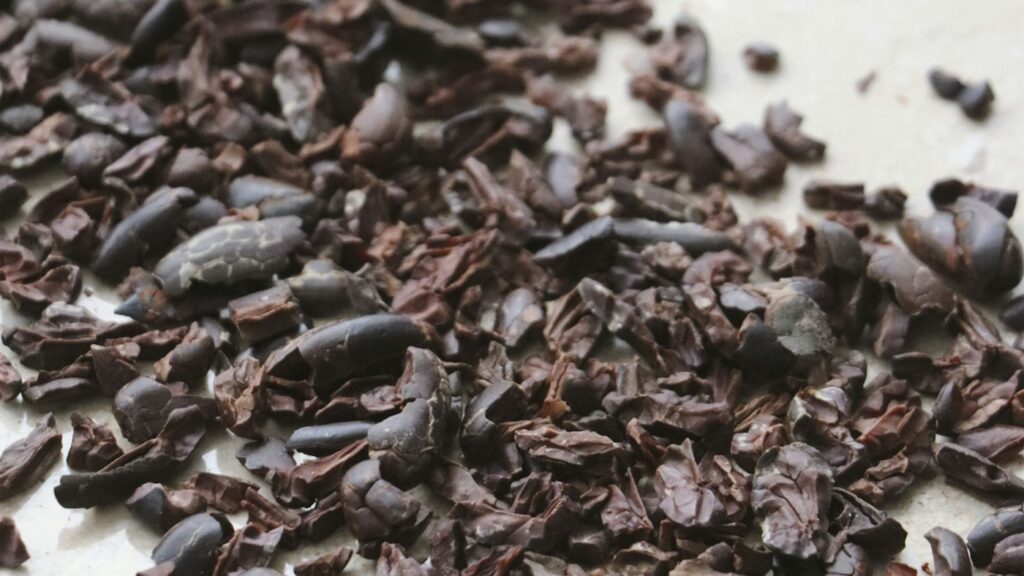
Fermented, sun-dried African beans for grinders and chocolate makers.
View Whole Cocoa Beans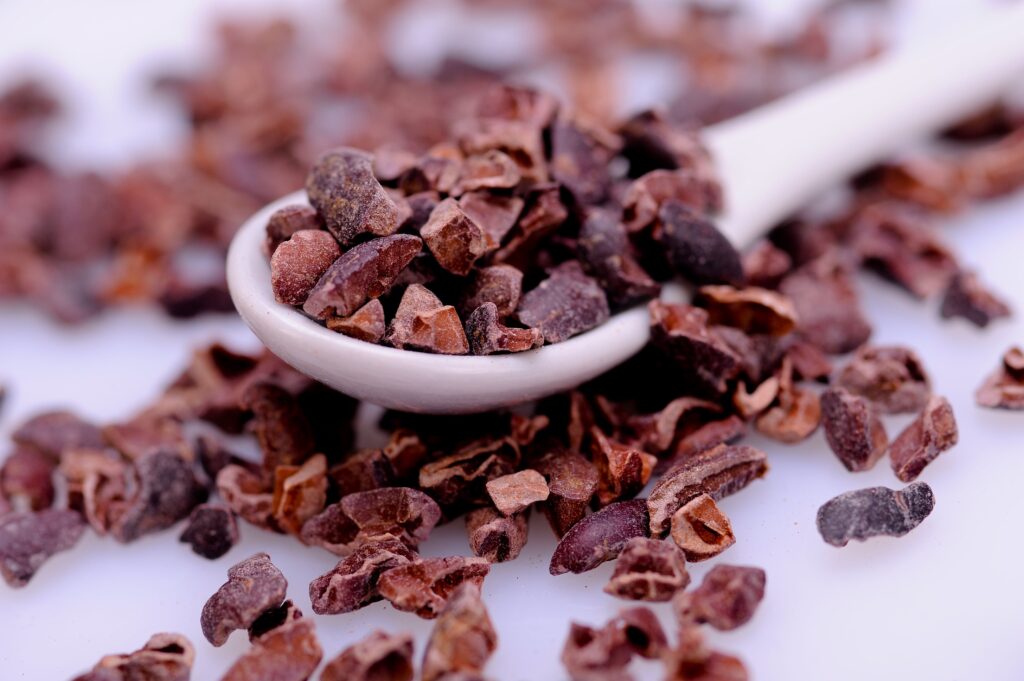
Raw Cocoa Nibs
Pure, crunchy African cocoa nibs for chocolate makers, bakers and food brands.
View Raw Cocoa Nibs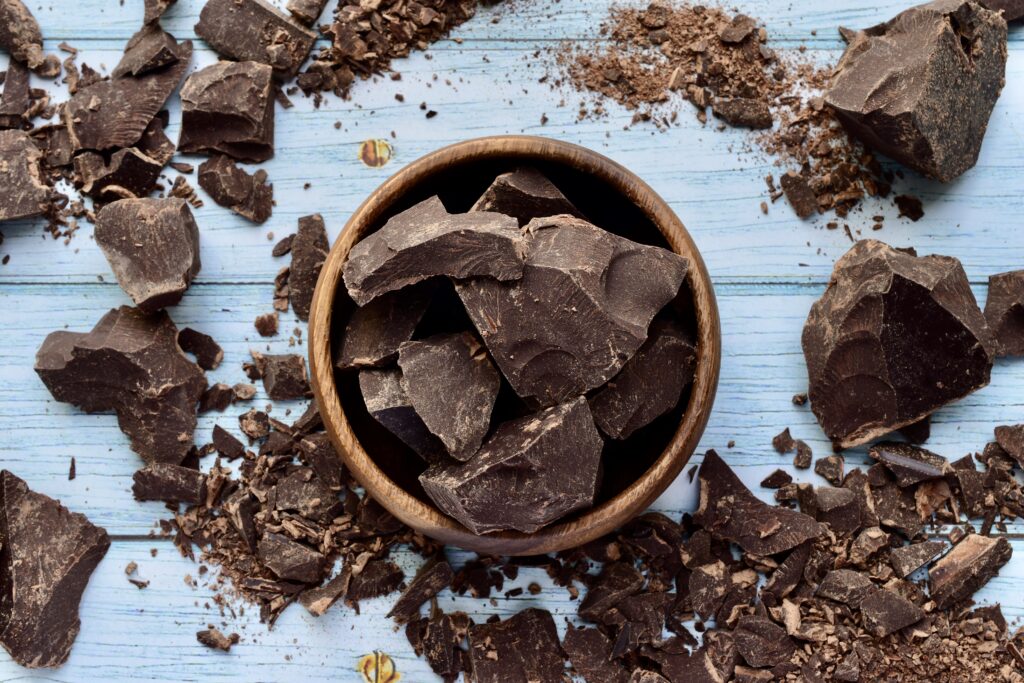
Cocoa Mass (Cocoa Liquor)
Pure ground cocoa, the foundation of every chocolate, in solid blocks.
View Cocoa Mass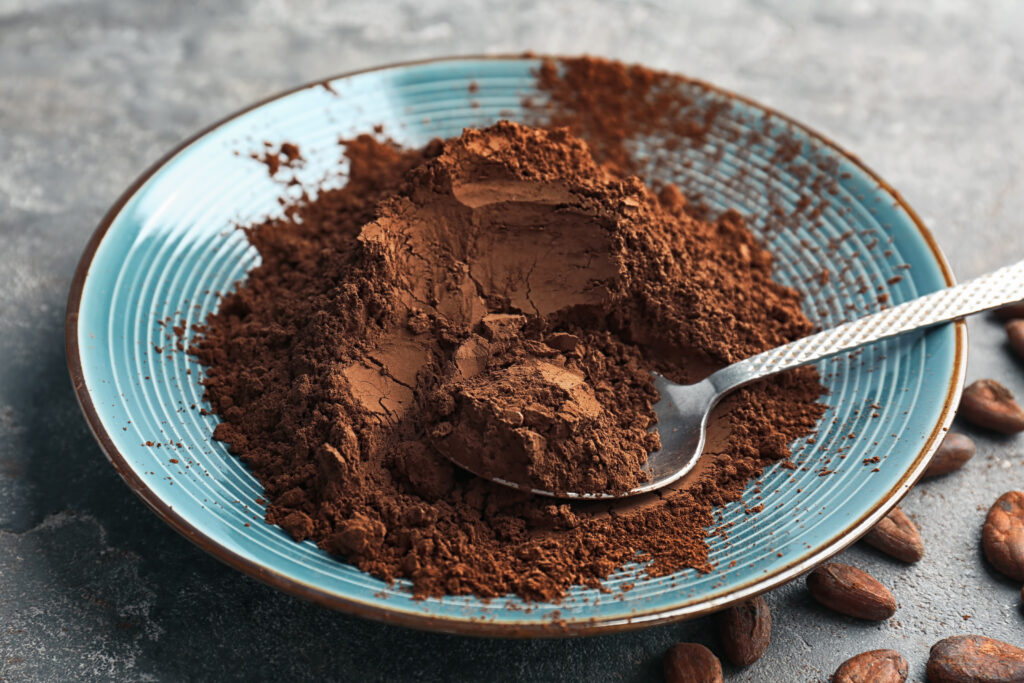
Alkalized Cocoa Powder
Dutch-process powder in light and dark brown for baking, drinks and confectionery.
View Alkalized Cocoa PowderSources and References
1. Cornell University Library, Chocolate: Food of the Gods, Pollination and Pods (pollination and time to ripe pod).
2. UC Botanical Garden at Berkeley, Does Chocolate Grow on Trees? (cauliflory, pollination rate, seeds per pod).
3. National Confectioners Association, Cacao Trees and Pods (pod size, ripening and varieties).
4. Tamil Nadu Agricultural University, Cocoa propagation and cultivation (days to harvest, seed handling, seedling age).
5. Journal of Botany (2017), Effect of mucilage removal and storage on cocoa seed germination.
6. Radad International, Complete guide to cocoa varieties (variety shares, citing ICCO).
Last updated: October 2026