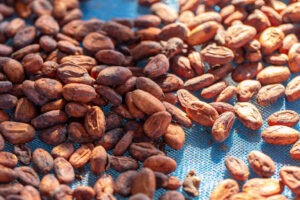
Cocoa Powder Guide
Alkalized cocoa powder and natural cocoa powder come from the same beans, but they behave very differently in a recipe, a beverage line or an ice-cream plant. This guide explains what alkalized (Dutch-process) cocoa powder is, how it is made, how its pH, colour and flavour compare with natural cocoa, and what to check before you buy it in bulk.
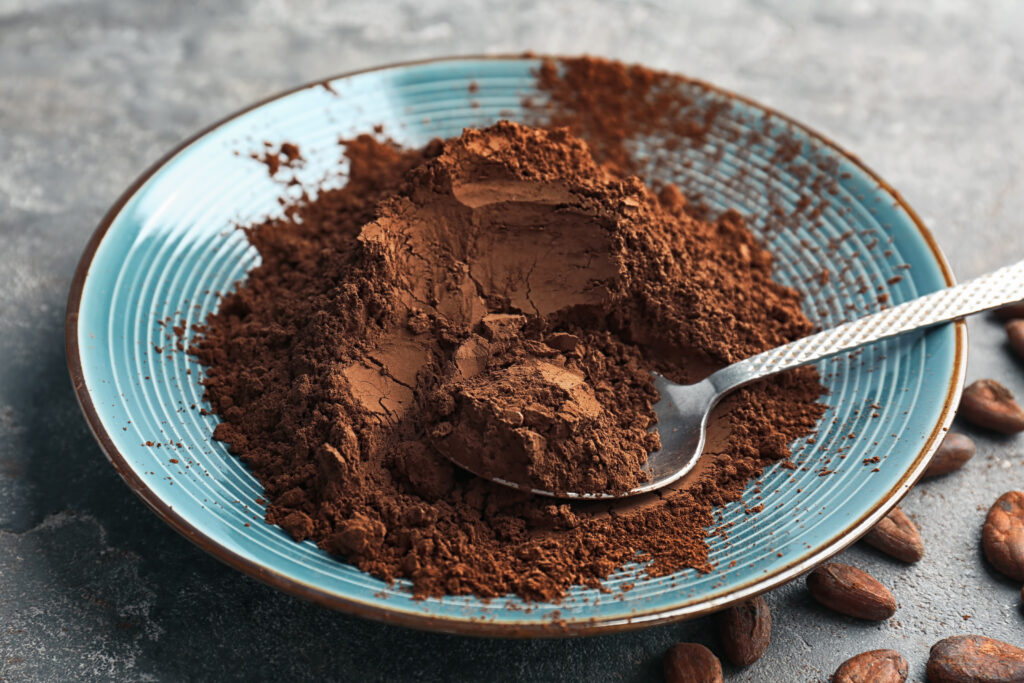
Quick answer
Alkalized cocoa powder is cocoa powder treated with a food-grade alkali, usually potassium carbonate. This raises its pH from about 5.2–5.8 (natural cocoa) to about 6.8–8.5. The result is a darker colour, a milder, smoother flavour and better dispersion in liquids. Natural cocoa stays acidic, lighter and sharper, and reacts with baking soda; alkalized cocoa does not.
At a glance
What it is
Cocoa powder treated with an alkali (the Dutch process)
pH
About 6.8 – 8.5 (natural cocoa: 5.2 – 5.8)
Colour
Reddish-brown to dark brown; near black when heavily alkalized
Flavour
Smooth, mellow and less acidic than natural cocoa
Alkalization
Mainly potassium carbonate, applied to nibs, liquor or cake
Fat content
10 – 12% (standard) or 20 – 22% (high-fat)
Nutrition
Fibre, magnesium, iron and potassium; fewer flavanols than natural cocoa
Baking
Pair with baking powder, not baking soda alone
HS code
1805.00 (cocoa powder, no added sugar)
Shelf life
Up to 24 months in cool, dry storage
What Is Alkalized Cocoa Powder?
Alkalized cocoa powder, also called Dutch-process or Dutched cocoa, is cocoa that has been treated with an alkaline solution to neutralise the natural acids formed during fermentation. The technique is credited to the Dutch chemist Coenraad Johannes van Houten, whose 1828 cocoa press also made modern cocoa powder possible.
The treatment changes the powder in four ways:
Darker colour: from light reddish-brown to deep brown, and to near-black at high pH.
Softer flavour: the sharp, fruity acidity of natural cocoa is reduced to a rounder chocolate taste.
Better dispersion: the powder mixes more evenly into milk, water and batters.
Higher pH: the powder no longer reacts with baking soda the way natural cocoa does.
Today alkalized cocoa is the usual choice for chocolate drinks, ice cream, dark biscuits, coatings and many industrial bakery products. Natural cocoa remains popular for home baking and for recipes built around baking soda.
Key terms
Alkalized cocoa = Dutch-process cocoa = Dutched cocoa. All three names describe the same product.
Natural cocoa: untreated, acidic cocoa powder.
Black cocoa: very heavily alkalized cocoa powder, at a pH of about 8 or higher.
Potassium carbonate (K₂CO₃): the most common alkalizing agent.
How the Dutch Process Works
Alkalization is a controlled treatment, usually carried out on cocoa nibs, cocoa liquor or press cake. Each processor adjusts the alkali dose, temperature and time to reach a target pH and colour.
1
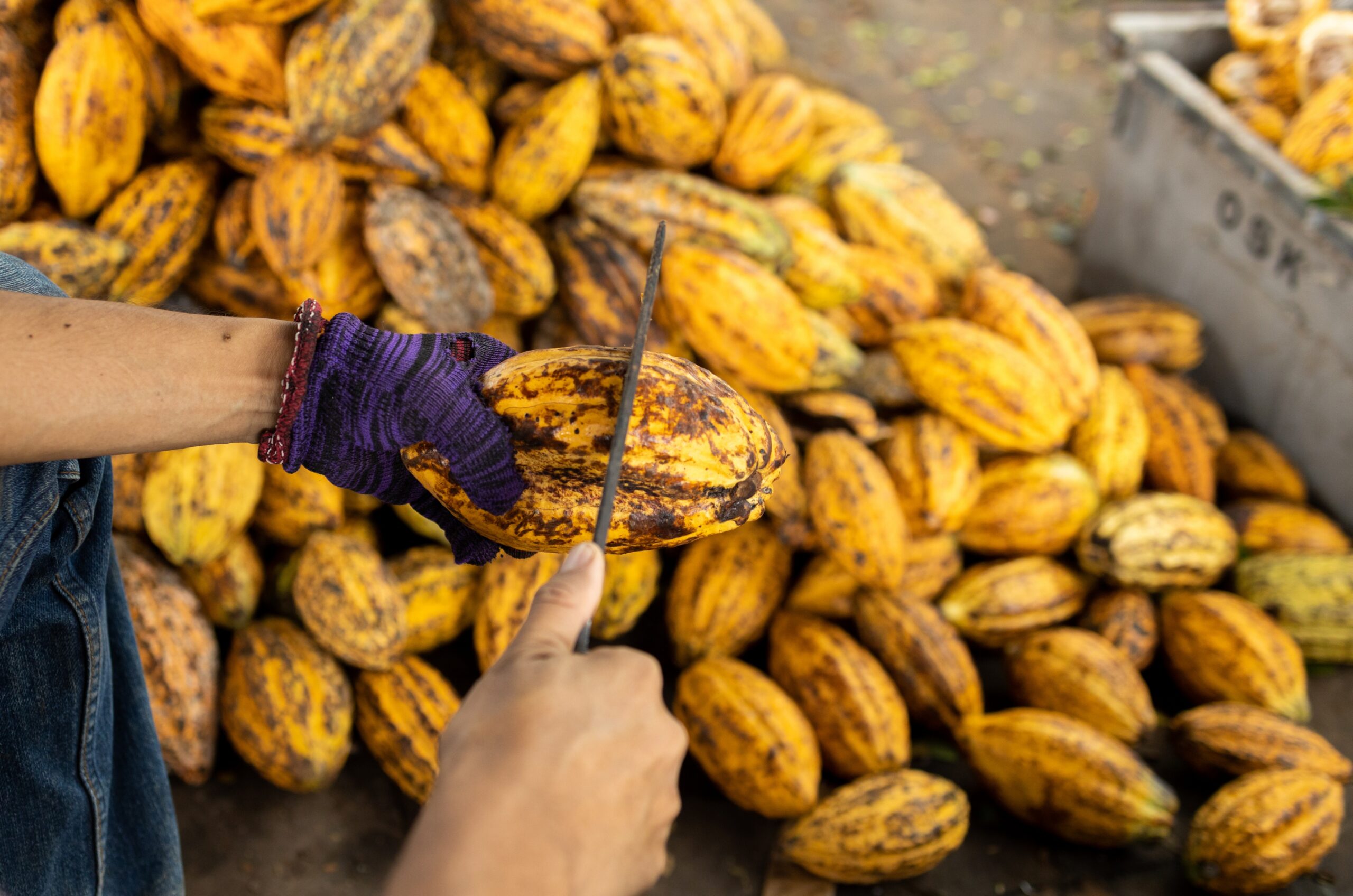
Start with nibs, liquor or cake
Roasted cocoa nibs, ground cocoa liquor or pressed cocoa cake is used as the base. Treating at the nib or liquor stage is the most common route to an even colour.
2
Add the alkali solution
A food-grade alkali, most often potassium carbonate, is added as a solution. Sodium carbonate, sodium hydroxide and ammonium carbonate are also used. In the United States, FDA standards limit the alkali to the neutralising equivalent of 3 parts anhydrous potassium carbonate per 100 parts of cocoa nibs.
3
React under heat
The alkali neutralises organic acids, such as the acetic acid left from fermentation. Heat and time drive the colour change, so a longer or stronger treatment gives a darker powder.
4
Dry and press
The treated material is dried. Liquor is pressed to separate the cocoa butter, leaving cocoa cake with the target fat content.
5
Mill and sieve
The cake is ground into a fine powder and sieved. The finished powder keeps its new pH permanently.
pH Levels and Grades of Cocoa Powder
pH is the clearest way to describe how strongly a cocoa powder has been alkalized. It also predicts the powder's colour, flavour and baking behaviour.
Type
Typical pH
Colour
Flavour
Typical uses
Natural
5.2 – 5.8
Light, reddish-brown
Sharp, fruity, acidic
Home baking with baking soda, brownies, health foods
Lightly alkalized
6.8 – 7.2
Medium brown
Balanced, mild
Bakery fillings, cereals, general food use
Medium alkalized
7.2 – 7.6
Dark brown
Smooth, rounded
Chocolate drinks, ice cream, cakes
Strongly alkalized
7.6 – 8.1
Very dark, red-black
Mellow, low acidity
Biscuits, coatings, dark cakes and desserts
Black cocoa
About 8.0 – 8.5
Near black
Very mild, slightly earthy
Dark sandwich biscuits, colour boosting
Swipe the table sideways to see all columns →
Ranges are typical industry values. Always confirm the exact pH on the supplier's specification or Certificate of Analysis.
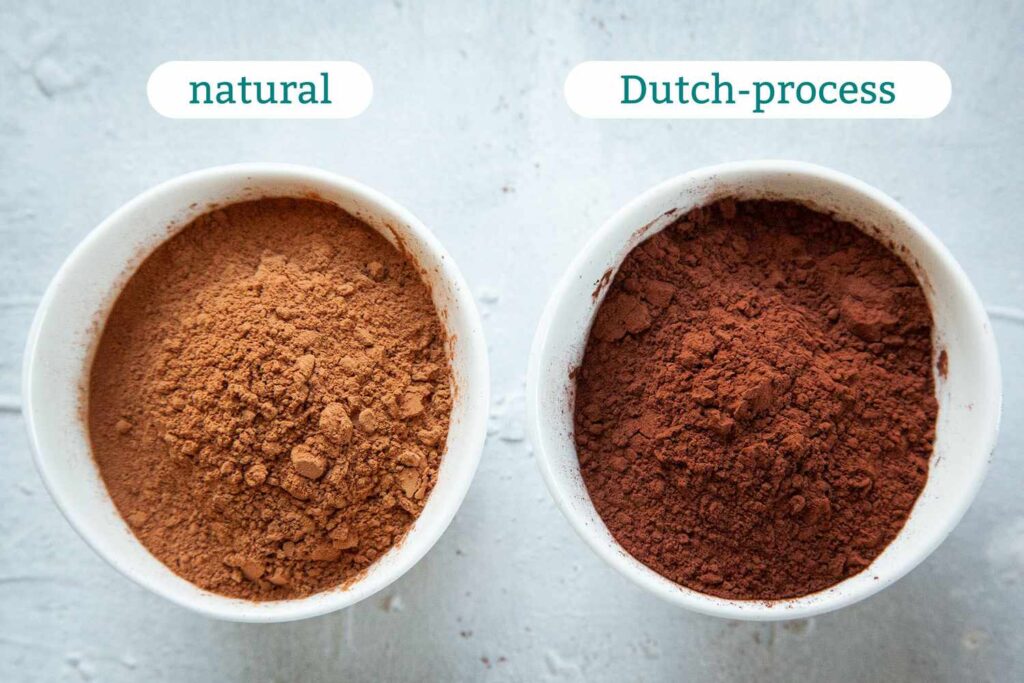
Alkalized vs Natural Cocoa Powder: Side by Side
Both powders are made from the same pressed cocoa cake. The table shows how alkalization changes the finished product.
Feature
Alkalized (Dutch-process)
Natural
pH
6.8 – 8.5 (neutral to alkaline)
5.2 – 5.8 (acidic)
Colour
Dark brown to near black
Light to medium reddish-brown
Flavour
Smooth, mellow, low acidity
Sharp, fruity, acidic
Dispersion in liquids
Very good
Fair; can clump
Leavening partner
Baking powder
Baking soda
Flavanol content
Lower; falls as alkalization increases
Higher
Typical price
Usually slightly higher (extra processing)
Usually lower
Main uses
Drinks, ice cream, biscuits, coatings, industrial bakery
Home baking, brownies, health products
HS code
1805.00
1805.00
Swipe the table sideways to see all columns →
Baking: Baking Soda, Baking Powder and Substitution
Leavening is where the difference between the two powders shows most clearly.
Natural cocoa + baking soda: the acid in the cocoa reacts with the soda and releases carbon dioxide, which lifts the batter.
Alkalized cocoa + baking powder: baking powder carries its own acid, so the neutral cocoa does not need to react.
Alkalized cocoa + baking soda only: there is little acid for the soda to react with, so cakes can rise poorly and taste slightly soapy.
Can you substitute one for the other?
Yes, with care. If a recipe uses baking powder, or no chemical leavening at all (drinks, sauces, frostings), you can usually swap the powders one for one. Expect a change in colour and flavour.
If a recipe relies on baking soda, keep natural cocoa, or add an acid such as buttermilk, yoghurt or a little vinegar when you use alkalized cocoa. On a production line, run a small trial batch before switching grades.
Where Alkalized Cocoa Powder Is Used
Its colour, mild flavour and dispersion make alkalized cocoa the default choice in many food categories:
Beverages: hot chocolate, chocolate milk, vending mixes, mochas and protein shakes.
Ice cream and frozen desserts: deeper colour and a smoother flavour in chocolate ice cream and sorbet.
Biscuits and cookies: dark sandwich biscuits and cookies, often made with strongly alkalized or black cocoa.
Bakery: cakes made with baking powder, fillings, creams and frostings.
Confectionery and coatings: compound coatings, chocolate spreads, syrups and sauces.
Cereals and snacks: coated breakfast cereals, snack bars and chocolate-coated nuts.
For the darkest grade, read our black cocoa powder guide. For the untreated alternative, see our guide to natural cocoa powder.
Nutrition: Does Alkalization Change the Health Value?
Both powders are a good source of fibre and minerals such as magnesium, iron, copper and manganese. Cocoa alkalized with potassium carbonate also contains more potassium.
The main difference is in flavanols, the antioxidant compounds cocoa is known for. Alkalization reduces them, and the loss grows with the strength of the treatment. Published studies have found that lightly alkalized powders keep far fewer flavanols than natural cocoa, and heavily alkalized powders lose most of them.
If antioxidant content is a selling point for your product, choose natural or lightly alkalized cocoa and ask your supplier for polyphenol data. If colour, flavour and solubility matter more, medium to strongly alkalized grades perform better.
Technical Data
Radad Alkalized Cocoa Powder Specifications
For buyers comparing suppliers, these are the specifications Radad International works to for its Dutch-process alkalized cocoa powder, measured against IOCCC and AOAC methods. The full data sheet is on our alkalized cocoa powder product page.
General and chemical
Shades
Light brown and dark brown, depending on the level of alkalization
pH
6.8 – 8.5 across shades; lightly alkalized grade 6.7 – 7.2 (10% solution, IOCCC 15)
Total fat
10 – 12% (IOCCC 37)
Moisture
Maximum 5.0% (IOCCC 1)
Ash
Maximum 12% on fat-free dry matter (IOCCC 16)
Fineness
Particle size below 75 microns; wet sieve residue minimum 98.0% (IOCCC 11)
Shell content
Maximum 1.75% on alkali-free nibs (AOAC 970.23)
Appearance
Free-flowing powder, without lumps or foreign matter
Solubility
High
Microbiology
Total plate count
Maximum 10,000 CFU/g
Moulds and yeast
Maximum 100 CFU/g
Coliforms and E. coli
Negative per g
Salmonella
Negative per 50 g
Packing, storage and supply
Packaging
1 kg retail packs and 25 kg sacks
Shelf life
24 months
Storage
Cool, odourless, ventilated area at 22 – 25 °C and maximum 65% relative humidity
Supply terms
FOB or CIF, to buyers in the UAE and worldwide
Raw cocoa beans are GMO-free, and an allergen declaration is available on request.
Buying Guide: What to Check Before You Order
Two powders both sold as “alkalized” can differ widely. Ask for a specification sheet and a Certificate of Analysis (CoA) for each lot, and compare these points. You can see the specifications Radad works to on our alkalized cocoa powder product page and in the product catalogue.
pH
A stated range, for example 7.0 – 7.5, not just “alkalized”
Fat content
10 – 12% for standard grades, 20 – 22% for high-fat grades
Colour
A named shade (light, medium, dark, black) or a colour reference
Moisture
Maximum 5%
Fineness
Particle size below 75 microns (about 200 mesh)
Microbiology
Salmonella, E. coli and coliforms negative; plate count, yeasts and moulds within stated limits
Origin and traceability
Country of origin and lot traceability; EUDR documents for EU buyers
Packaging
Multi-wall bags with a food-grade liner, commonly 25 kg
Questions to ask your supplier
What is the exact pH range, and which alkali was used?
What is the fat content and the colour grade?
Can you send a CoA with microbiology results for the lot you will ship?
Where were the beans grown, and can you provide traceability documents?
What packaging, shelf life and storage conditions do you recommend?
Can I test a sample in my own recipe before ordering?
HS code, shipping and storage
Cocoa powder without added sugar, natural or alkalized, is classified under HS 1805.00 (often written 18050000 in national tariffs). Cocoa powder with added sugar falls under HS 1806.10.
Store cocoa powder sealed, in a cool, dry place away from strong odours. In hot climates such as the UAE, keep it in air-conditioned storage at low humidity to prevent clumping and fat bloom. Shelf life is commonly up to 24 months from production when stored correctly; always follow the date on the specification.
Frequently Asked Questions
Source From Radad
Need Alkalized Cocoa Powder in Bulk?
Radad International supplies alkalized cocoa powder from Africa in light and dark brown shades, with full specifications and complete export documents, shipped on FOB or CIF terms. Tell us your shade, volume and destination port for a quotation or a free sample.
Or call +971 52 250 1039