In a chocolate spread or filling, cocoa powder supplies the cocoa flavour and the brown colour, while sugar, vegetable fat, nut paste and milk solids form the body of the product. A retail cocoa hazelnut spread is an anhydrous paste, with no added water, and contains around 6 to 7.5% cocoa powder; it is refined until the solid particles are too small to be felt on the tongue. Bakery fillings use the same ingredients, with fats and recipes formulated either for baking with the dough or for injection after baking.
For spread and filling manufacturers, six specification points determine the result: alkalized or natural cocoa, the fat grade, the particle size after refining, the fat and emulsifier system that prevents oil separation, the microbiological limits, and the allergen and labelling requirements. Particle size needs particular attention, because a cocoa powder that passes a 75 micron sieve is still much coarser than the 20 to 30 microns at which a spread feels smooth, so the powder is refined together with the sugar and milk solids. Salmonella is the most serious food-safety hazard: it survives for months in low-moisture foods and becomes far more heat resistant in them, so the cocoa powder has to be free of it when it enters production.
Overview
Alkalized cocoa powder gives spreads and fillings a deep, even brown and a smooth cocoa flavour, and natural cocoa powder gives a lighter reddish-brown and a sharper cocoa note. A fat-reduced 10/12 grade adds cocoa flavour with about half the cocoa butter of a 20/22 grade, which matters because cocoa butter is solid at room temperature and melts at about 30 to 36 °C. Nutella lists 7.4% fat-reduced cocoa, and a published laboratory formula uses 6% cocoa powder with 43% sugar, 19.5% fat, 14.6% hazelnut paste and 16.1% milk and whey powders.
Chocolate is perceived as gritty when its particles exceed about 30 microns and as silky below about 20 microns, and most commercial chocolate is refined to a D90 below 30 microns. A spread holds its oil through its fat blend and emulsifier; the laboratory formula contains 0.7% soy lecithin. Salmonella is the main microbiological hazard, so buy cocoa powder to a Salmonella-negative specification, with a certificate of analysis for every lot.
The label lists every ingredient in descending order of weight and emphasises allergens such as hazelnuts, milk and soy lecithin, and for customs a spread containing cocoa is classified under HS heading 1806. Radad International supplies alkalized and natural cocoa powder, cocoa mass and cocoa butter in 1 kg to 25 kg packs with delivery across the UAE, and in bulk on FOB or CIF terms.
In this guide
- Types of spreads and fillings
- What a cocoa spread is made of
- Alkalized or natural, 10/12 or 20/22
- Fineness and refining
- Oil separation and texture
- Salmonella and cocoa powder
- Labelling, allergens and HS code
- Troubleshooting spreads and fillings
- Cocoa powder specification for spreads
- Prices and specification sheets
- FAQs
- Sources and References

Product types
Types of Chocolate Spreads and Fillings
Manufacturers classify spreads and fillings by their base, fat or water, and by whether they are applied before or after baking. The four main product types are:
Fat-based spread
A smooth, anhydrous paste of sugar, vegetable fat, nut paste, milk powder and cocoa powder, sold in jars for retail and in bulk for bakeries and cafés.
Bake-stable filling
A filling deposited before baking. In open applications such as tarts, it keeps its creaminess and colour at baking temperature; in closed applications such as croissants and muffins, it must also withstand the pressure of the rising dough without flowing out.
After-bake filling
A filling injected after baking, ranging from highly fluid to creamy, used in doughnuts, croissants and muffins.
Chocolate filling with cocoa butter
A filling based on chocolate or cocoa butter. The cocoa butter gives a melting texture and releases the chocolate flavour, and cocoa powder deepens the colour and the cocoa intensity.
Fat-based and water-based fillings
Bakery fillings are produced in fat-based and water-based ranges. In a fat-based filling, the fats determine the texture; water-based fillings include jam-like fruit fillings and creams. Cocoa powder is used in both, while retail cocoa hazelnut spreads are fat-based and anhydrous.
Formulation
What a Cocoa Spread Is Made Of
The ingredient list of a leading retail spread and a published laboratory formula show the proportions involved. Cocoa is one of the smaller ingredients; sugar, fat and milk solids make up most of the product:
Ingredient
Nutella label
Published laboratory formula
Ingredient
Sugar
Nutella label
Listed first (largest share)
Published laboratory formula
43%
Ingredient
Vegetable fat
Nutella label
Palm oil, listed second
Published laboratory formula
19.5% (palm oil in the control recipe)
Ingredient
Hazelnuts
Nutella label
13%
Published laboratory formula
14.6% hazelnut paste
Ingredient
Milk solids
Nutella label
8.7% skimmed milk powder
Published laboratory formula
13.1% skimmed milk powder and 3% whey powder
Ingredient
Cocoa
Nutella label
7.4% fat-reduced cocoa
Published laboratory formula
6% cocoa powder
Ingredient
Emulsifier
Nutella label
Lecithin (soya)
Published laboratory formula
0.7% soy lecithin
Ingredient
Flavour
Nutella label
Vanillin
Published laboratory formula
0.1% vanillin
Because ingredients are listed in descending order of weight, the sugar and the palm oil on the retail label each make up more than the 13% of hazelnuts. In the laboratory, the fat phase was heated to 55 °C, the dry ingredients were mixed into it for 1.5 hours, and the spread was refined in a wet grinder for 3 hours.
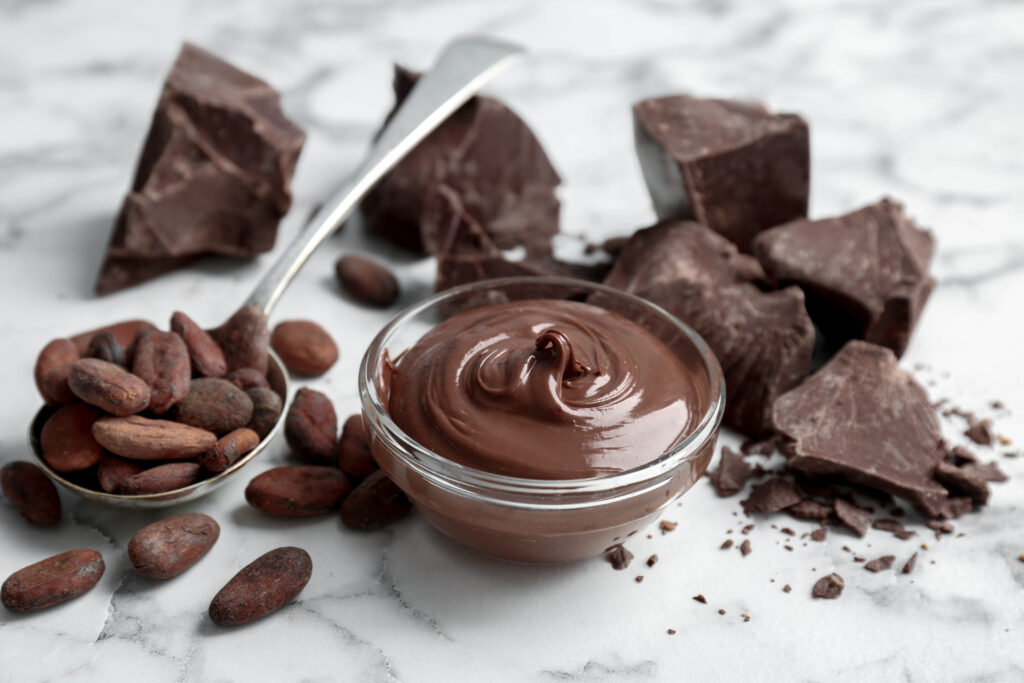
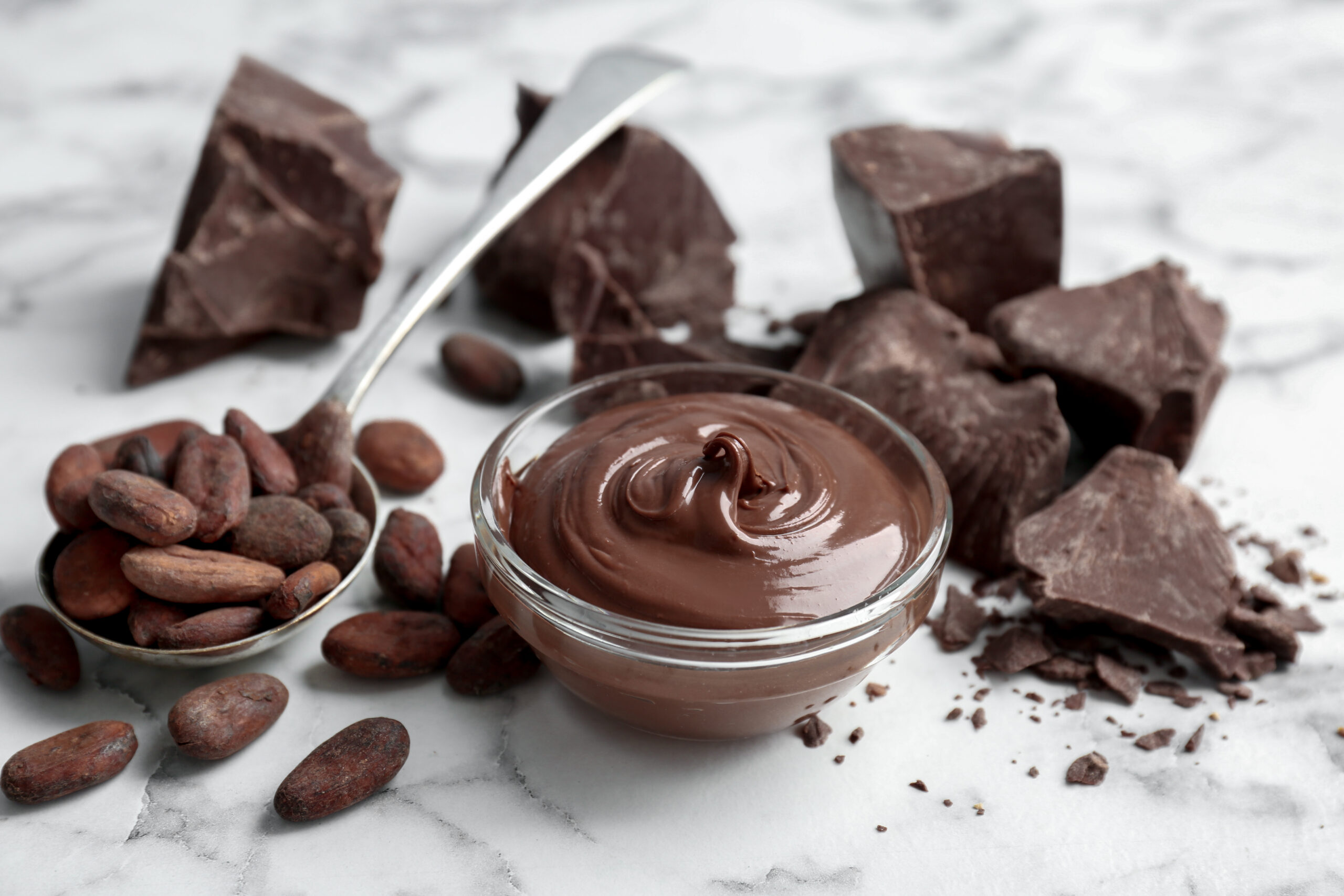
Melted cocoa mass beside a block of cocoa mass and cocoa beans
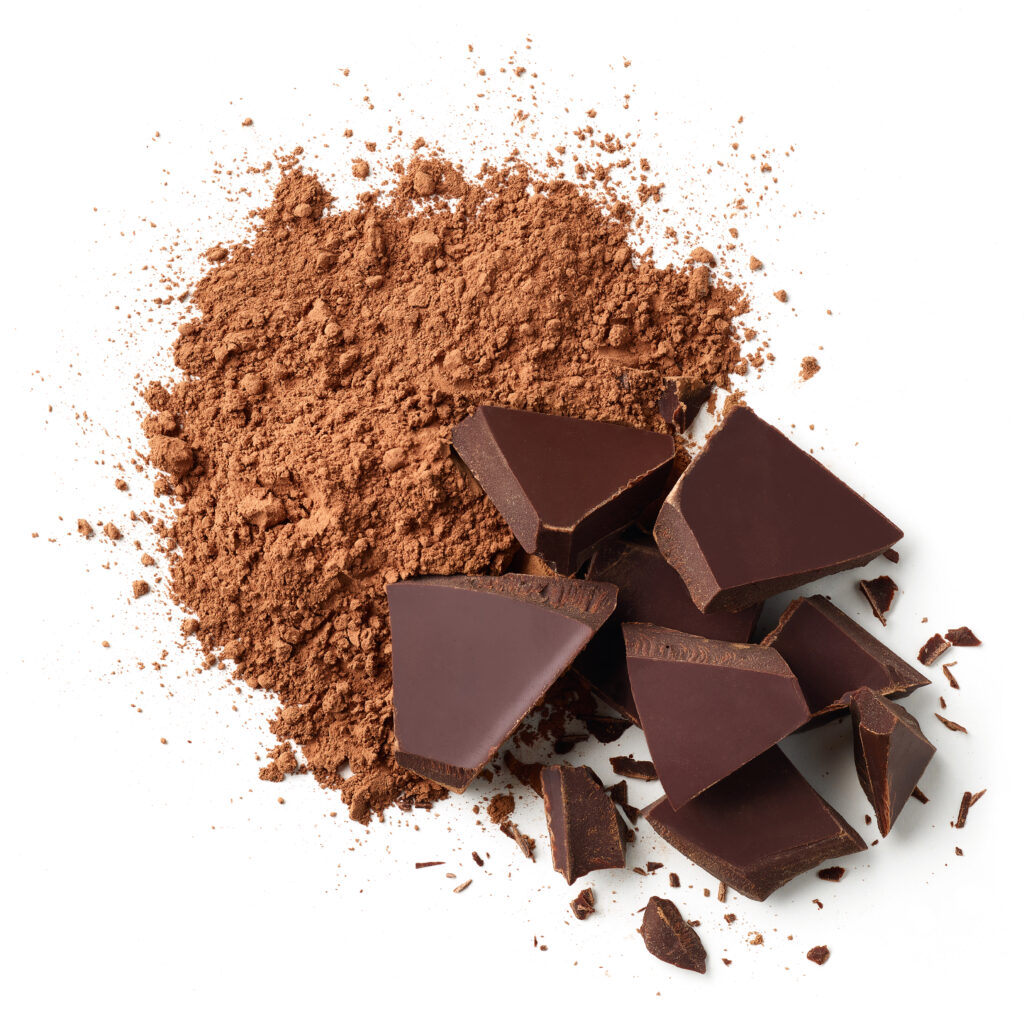
Cocoa powder and chocolate pieces
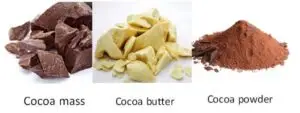
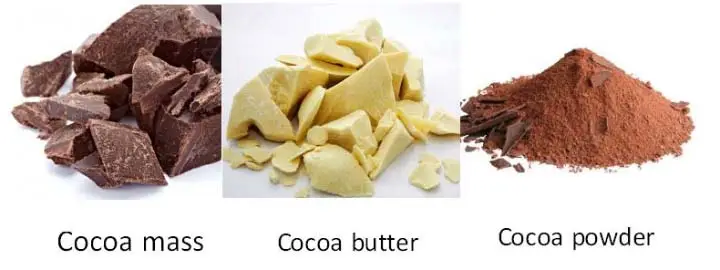
Cocoa mass can replace part of the cocoa powder when a stronger chocolate flavour is required; it contains cocoa butter as well as cocoa solids, so the fat blend must be adjusted. Our guide to the uses of cocoa mass covers it in chocolate, cakes and fillings.
Cocoa choice
Alkalized or Natural, 10/12 or 20/22: Choosing the Cocoa Powder
Alkalized cocoa powder gives a spread or filling a deep, even colour and a smooth cocoa flavour, which suits dark cocoa spreads and chocolate fillings. Natural cocoa powder gives a lighter colour and a sharper cocoa note, which suits spreads in which the nut flavour leads.
Property
Natural cocoa powder
Alkalized cocoa powder
Property
Colour
Natural cocoa powder
Light to medium reddish-brown
Alkalized cocoa powder
Brown to near-black, darker with stronger alkalization
Property
Flavour
Natural cocoa powder
Brighter and sharper
Alkalized cocoa powder
Smoother and rounder
Property
Typical use
Natural cocoa powder
Lighter spreads in which the nut flavour leads
Alkalized cocoa powder
Dark cocoa spreads and chocolate fillings
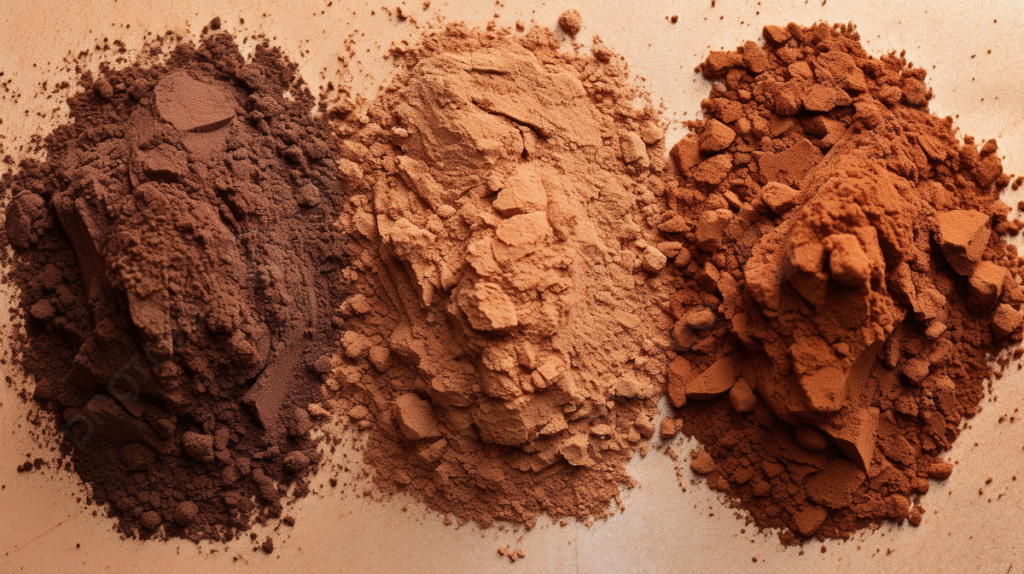
Natural and alkalized cocoa powder side by side

Dark brown alkalized cocoa powder
Fat grade
Cocoa butter is solid at room temperature and melts at about 30 to 36 °C, so the cocoa butter in the cocoa powder adds to the solid fat content of the spread. A fat-reduced 10/12 powder supplies cocoa flavour and colour with about half the cocoa butter of a 20/22 powder:
Point
10/12 grade
20/22 grade
Point
Cocoa butter in the powder
10/12 grade
10 to 12%
20/22 grade
20 to 22%
Point
Cocoa butter added at 7.4% cocoa
10/12 grade
About 0.8% of the spread
20/22 grade
About 1.6% of the spread
Point
Product name on the label
10/12 grade
Fat-reduced cocoa
20/22 grade
Cocoa
The grades are compared across all applications in 10/12 vs 20/22 cocoa powder, and the two types of powder in alkalized vs natural cocoa powder.
Fineness
Fineness and Refining: Why Cocoa Powder Alone Is Not Fine Enough
Cocoa powder specifications state fineness as the share of powder that passes a 75 micron wet sieve, typically at least 98%. This figure confirms that the powder contains no coarse particles. It does not make the powder fine enough for a spread: the tongue detects particles far smaller than 75 microns, and a spread mixed from unrefined cocoa powder and crystal sugar would feel gritty:
Particle size
How it feels or where it applies
Particle size
Below about 20 microns
How it feels or where it applies
Feels silky and smooth
Particle size
Below 30 microns
How it feels or where it applies
The tongue can detect differences of 2 to 3 microns as a change in smoothness
Particle size
Above about 30 microns
How it feels or where it applies
Perceived as gritty or sandy
Particle size
Commercial chocolate
How it feels or where it applies
Most products are refined to a D90 below 30 microns; measured samples ranged from about 19 to 31 microns
Particle size
Laboratory cocoa hazelnut spread
How it feels or where it applies
26 to 33 microns after 3 hours of wet grinding
Spread manufacturers therefore refine the cocoa powder together with the sugar and milk solids in the fat phase, using a ball mill, a wet grinder or a roller refiner, until the particles reach the target size. Measure the particle size of every batch with a particle size analyser or a micrometer, because a difference of a few microns is noticeable in the mouth.

A spread feels smooth only after the cocoa powder has been refined with the sugar and milk solids.
Texture
Oil Separation and Texture in Cocoa Spreads
Oil separation, seen as a layer of oil on the surface of the jar, is the most visible defect in a cocoa spread. The fat blend, the emulsifier and the particle size of the solids determine how well the spread retains its oil:
Oil binding
Spreads are tested by centrifuging a sample and measuring the oil released. In the laboratory study, every recipe released less than 7% oil, and the palm oil control retained 99.95% of its oil.
Fat blend
Palm oil and other hardstock fats, which are solid at room temperature, give the spread its body. When palm oil was fully replaced with an olive oil and monoglyceride oleogel, oil binding fell to about 93%; replacing 50 to 75% kept it close to the control.
Emulsifier
Lecithin helps disperse the sugar, cocoa and milk particles in the fat. The laboratory formula uses 0.7% soy lecithin, and the retail label lists soya lecithin.
Fat bloom in filled products
Filling manufacturers use special fats that resist fat bloom to extend the shelf life of chocolate products with a filling.
Cocoa butter is part of the fat blend
The cocoa butter in cocoa powder, cocoa mass or chocolate forms part of the fat blend of the spread. When you change the cocoa ingredient or its fat grade, test the firmness and the oil binding again.
Food safety
Salmonella and Cocoa Powder in Spreads and Fillings
Fat-based spreads and fillings are low-moisture foods. The laboratory spread was mixed at only 55 °C, far below the heat needed to destroy Salmonella in a low-moisture product: in peanut butter, a 5-log reduction took about 42 minutes at 90 °C. The cocoa powder, milk powder and nut paste must therefore be free of Salmonella when they enter production:
Point
Evidence and guidance
Point
Survival
Evidence and guidance
Salmonella can persist for long periods in dry, low-moisture products, and challenge studies have found it in chocolate after 1 to 9 months at room temperature
Point
Heat resistance
Evidence and guidance
Heat resistance rises sharply at low water activity: in molten chocolate, a D-value of 816 minutes at 66 °C was reported for S. Typhimurium
Point
Infective dose
Evidence and guidance
Illness has been linked to low-moisture products containing less than 1 cell per gram, and fat may protect the bacteria from stomach acid
Point
Past outbreaks
Evidence and guidance
A 1970 outbreak in Sweden linked to cocoa powder contaminated with S. Durham affected 110 people; a 2001 to 2002 outbreak linked to two German chocolate brands caused 439 cases
Point
Control
Evidence and guidance
Buy sensitive ingredients from approved suppliers, validate any heat treatment used to destroy Salmonella, and keep water out of dry processing areas
Write a Salmonella limit into the cocoa powder specification, ask for a certificate of analysis with every lot, and treat any positive finished-product result as a failed lot: the guidance warns that retesting to overturn a positive result increases the chance of releasing contaminated product. Our guide to cocoa microbiological specifications and contaminant limits lists the limits buyers usually apply.
Labelling
Labelling, Allergens and the HS Code for Cocoa Spreads
Cocoa spreads sold in the EU and the UAE carry the same core label information, and the customs classification follows from the cocoa content:
Point
Requirement
Point
Ingredient list
Requirement
All ingredients in descending order of weight
Point
Allergens
Requirement
Hazelnuts and other tree nuts, milk, and soybeans (including soy lecithin) must be emphasised in the ingredient list in the EU
Point
Cocoa wording
Requirement
Fat-reduced cocoa powder is named as such when it has less than 20% cocoa butter on dry matter
Point
UAE labels
Requirement
Arabic only or Arabic and English, with production and expiry dates printed on the original label
Point
Customs
Requirement
Spreads and other food preparations containing cocoa are classified under HS heading 1806; the UK tariff has a separate line, 1806 90 60, for spreads containing cocoa
Classification across all cocoa products, including spreads, is explained in cocoa HS codes.
Troubleshooting
Troubleshooting Cocoa Spreads and Fillings
Most defects in spreads and fillings originate in the cocoa ingredient, the refining step or the fat blend:
Fault
Likely cause
What to check
Fault
Gritty or sandy mouthfeel
Likely cause
Particles above about 30 microns
What to check
Refine longer and measure the particle size on every batch
Fault
Oil layer on top of the jar
Likely cause
Low oil binding in the fat blend
What to check
Review the hardstock fat and the emulsifier, and test oil binding by centrifuge
Fault
Spread too firm in a cool room
Likely cause
Too much solid fat, including cocoa butter from the cocoa ingredient
What to check
Recheck the fat balance when you change the cocoa grade
Fault
Pale or uneven colour
Likely cause
Natural or lightly alkalized cocoa, or too little cocoa
What to check
Test a darker alkalized shade or a higher dose
Fault
Sharp or acidic cocoa note
Likely cause
Natural cocoa powder
What to check
Test an alkalized powder
Fault
Filling flows out of the dough in the oven
Likely cause
Filling not formulated to be bake-stable
What to check
Use a bake-stable recipe for closed applications
Fault
Bloom on a chocolate product with a filling
Likely cause
Fat migration between the filling and the chocolate
What to check
Use filling fats that resist fat bloom
Specification
Cocoa Powder Specification for Spreads and Fillings
Put the following points on the purchase specification and ask for a certificate of analysis with every lot:
Parameter
What to ask for
Radad alkalized cocoa powder
Parameter
Fat
What to ask for
The grade and its range
Radad alkalized cocoa powder
10 to 12% cocoa butter
Parameter
Fineness
What to ask for
Wet sieve result, plus your own particle size target after refining
Radad alkalized cocoa powder
At least 98.0% through the sieve, below 75 microns
Parameter
Moisture
What to ask for
A maximum value
Radad alkalized cocoa powder
Maximum 5.0%
Parameter
Shell content
What to ask for
A maximum value
Radad alkalized cocoa powder
Maximum 1.75% on alkali-free nibs
Parameter
Colour
What to ask for
A reference sample and a tolerance for each lot
Radad alkalized cocoa powder
Light brown and dark brown shades
Parameter
Microbiology
What to ask for
Plate count, yeasts and moulds, coliforms, E. coli and Salmonella limits
Radad alkalized cocoa powder
Total plate count maximum 10,000 CFU/g; yeasts and moulds maximum 100 CFU/g; coliforms and E. coli negative per g; Salmonella negative per 50 g
Parameter
Shelf life
What to ask for
Months from production
Radad alkalized cocoa powder
24 months
Parameter
Packing
What to ask for
Bag size and material
Radad alkalized cocoa powder
25 kg sacks, plus retail packs from 1 kg
Values can vary slightly by batch, and the certificate for your order gives the measured results. Our guide to bulk cocoa powder packaging covers bags, labelling and storage.
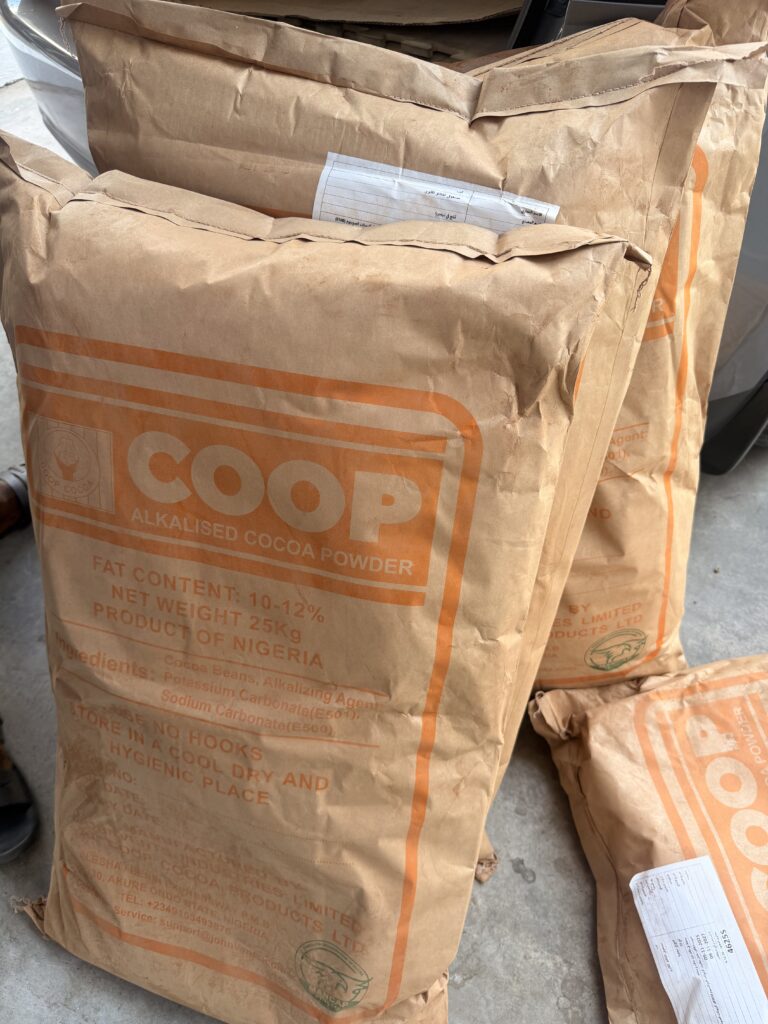
Bulk cocoa powder for spread and filling production is supplied in 25 kg sacks.
Supply
Cocoa Powder for Spreads and Fillings: Prices and Specification Sheets
Radad International sells alkalized and natural cocoa powder in 1 kg, 5 kg, 10 kg and 25 kg packs, or any custom weight up to 100 kg, with delivery all over the UAE, and orders above 100 kg are quoted in bulk on FOB or CIF terms. Both powders are 10 to 12% fat grades:
Pack size
Alkalized cocoa powder
Natural cocoa powder
Pack size
1 kg
Alkalized cocoa powder
AED 59.97
Natural cocoa powder
AED 58.95
Pack size
5 kg
Alkalized cocoa powder
AED 299.85
Natural cocoa powder
AED 294.75
Pack size
10 kg
Alkalized cocoa powder
AED 599.70
Natural cocoa powder
AED 589.50
Pack size
25 kg
Alkalized cocoa powder
AED 1,499.25
Natural cocoa powder
AED 1,473.75
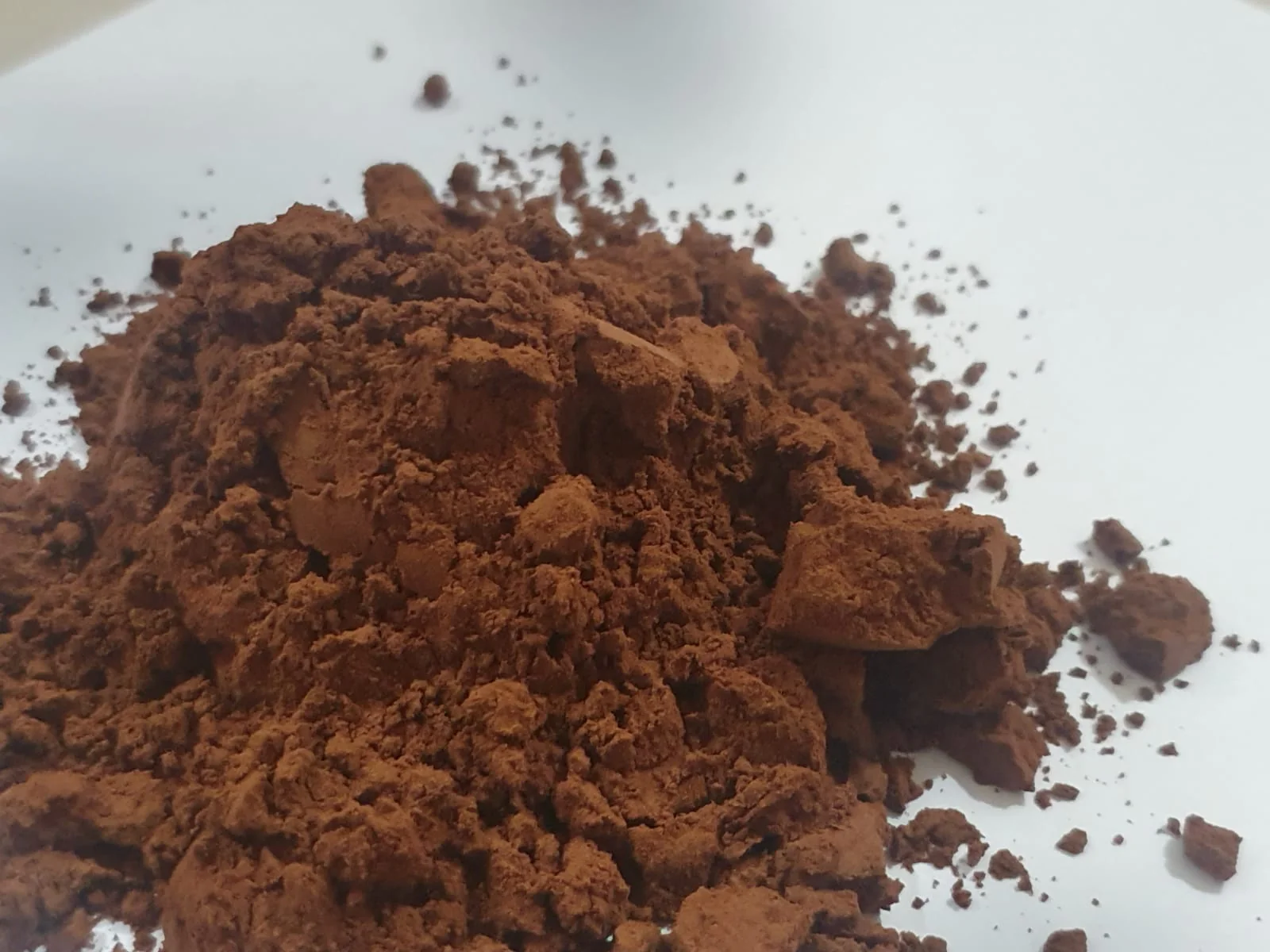
Product
Alkalized Cocoa Powder
Dutch-process 10/12 grade for dark spreads and chocolate fillings.
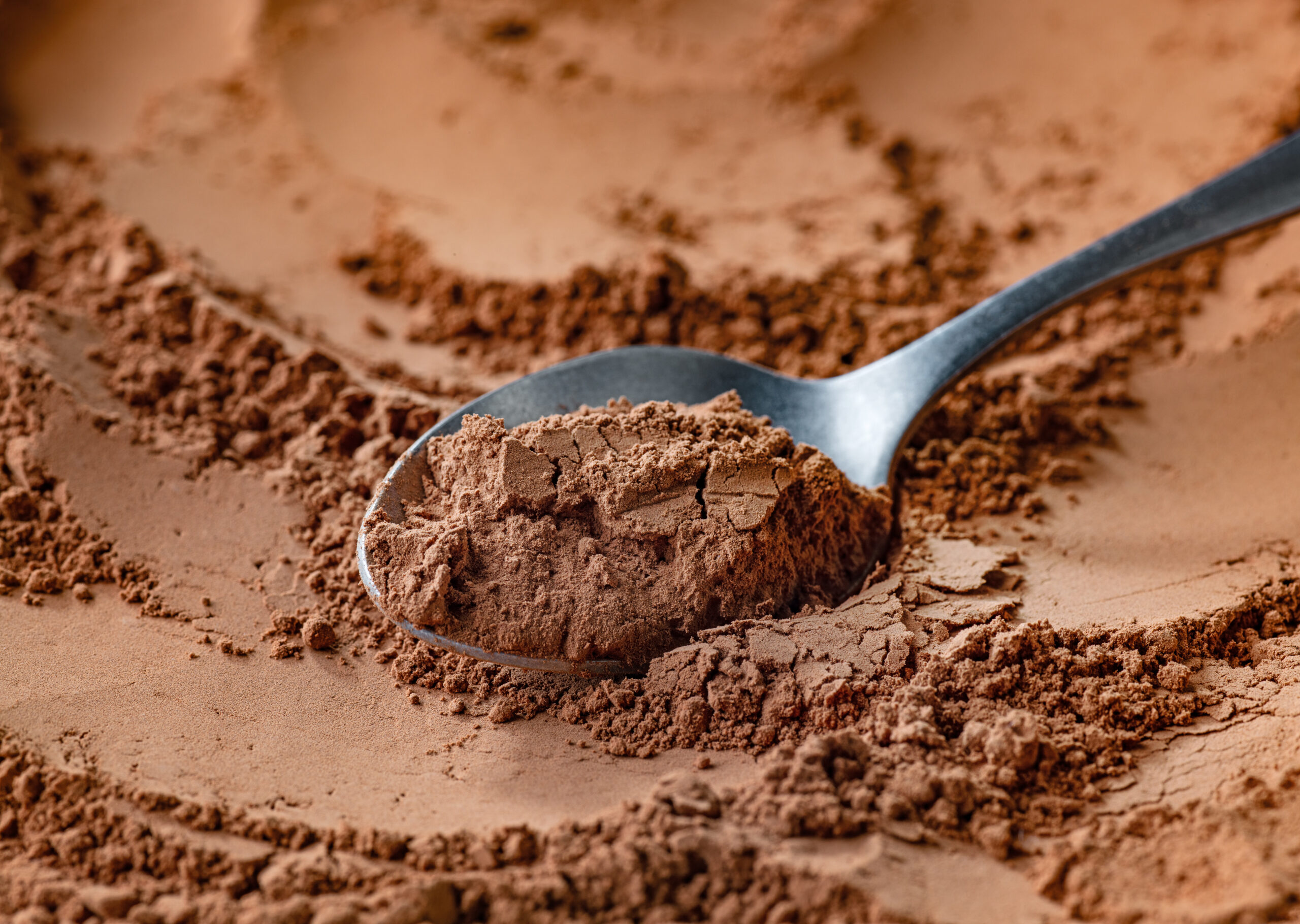
Product
Natural Cocoa Powder
Non-alkalized 10/12 grade for lighter, nut-forward spreads.
Work with Radad International
Request a Cocoa Powder Quote for Your Spread or Filling
Tell us your product, the shade and fat grade you need, your monthly volume and your destination, and we will send the specification and a quote.
Or email info@radadinternational.com · +971 522 501 039
Questions
Cocoa Powder for Chocolate Spreads and Fillings: FAQs
What is the best cocoa powder for chocolate spread?
For a dark cocoa spread or chocolate filling, use alkalized cocoa powder in the 10/12 fat grade: it gives a deep, even colour and a smooth flavour, and adds little cocoa butter. For a lighter spread in which the nut flavour leads, natural cocoa powder is the better match.
How much cocoa powder is in a chocolate hazelnut spread?
Nutella lists 7.4% fat-reduced cocoa, and a published laboratory formula uses 6% cocoa powder. Set your own dose by the colour and cocoa intensity you want, and test it in the refined spread.
Why is fat-reduced cocoa used in spreads?
A 10/12 fat-reduced cocoa adds cocoa flavour and colour with about half the cocoa butter of a 20/22 powder. Cocoa butter is solid at room temperature and melts at about 30 to 36 °C, so a lower cocoa butter content makes the fat blend of the spread easier to control.
Can I use cocoa mass instead of cocoa powder in a spread?
Cocoa mass can replace part of the cocoa powder for a stronger chocolate note. About half its weight is cocoa butter, so the fat blend of the spread has to be adjusted.
How fine does cocoa spread need to be?
Chocolate is perceived as gritty above about 30 microns and silky below about 20 microns, and most commercial chocolate is refined to a D90 below 30 microns. A laboratory cocoa hazelnut spread reached 26 to 33 microns after 3 hours of wet grinding.
Why does my chocolate spread feel gritty?
The solid particles are too large: cocoa powder that passes a 75 micron sieve still has to be refined with the sugar and milk solids, in a ball mill, wet grinder or roller refiner, until the spread is below about 30 microns.
Why does oil separate in chocolate spread?
The fat blend and the emulsifier are not retaining the oil. Review the hardstock fat and the lecithin level, and test oil binding by centrifuging a sample; in a laboratory study, fully replacing palm oil with an oleogel lowered oil binding from 99.95% to about 93%.
Is Salmonella a risk in chocolate spreads?
Salmonella is the main microbiological hazard in spreads. It survives for months in low-moisture foods and becomes far more heat resistant in them, and spreads are mixed at temperatures well below those needed to destroy it. Buy cocoa powder and other dry ingredients with a Salmonella-negative certificate for every lot.
What is a bake-stable chocolate filling?
A bake-stable filling is formulated to be baked with the dough. In open applications such as tarts it keeps its creaminess and colour, and in closed applications such as croissants and muffins it also stays inside the dough as it rises.
Which allergens does a cocoa hazelnut spread declare?
In the EU, hazelnuts, milk and soybeans, including soy lecithin, must be emphasised in the ingredient list, which names every ingredient in descending order of weight.
What is the HS code for chocolate spread?
Spreads containing cocoa are classified under HS heading 1806, and the UK tariff gives them a separate line, 1806 90 60.
Can I buy cocoa powder for spreads in small quantities in the UAE?
Radad International sells alkalized and natural cocoa powder in 1 kg, 5 kg, 10 kg and 25 kg packs, or any weight up to 100 kg, with delivery all over the UAE, and orders above 100 kg are quoted in bulk on FOB or CIF terms.
Keep reading
More Guides from Radad International




Sources and References
- Nutella, product ingredients
- Foods (MDPI), Cocoa hazelnut spread with olive oil and glycerol monostearate oleogels
- Scientific Reports, Oral somatosensory acuity is related to particle size perception in chocolate
- HORIBA, Particle characterization of chocolate
- Control of Salmonella in Low-Moisture Foods, industry guidance (UC Food Safety, UC Davis copy)
- Barry Callebaut, Bakery and pastry fillings
- Cargill, Fillings
- Regulation (EU) No 1169/2011, Annex II: substances or products causing allergies or intolerances
- Regulation (EU) No 1169/2011, Article 18: list of ingredients
- Directive 2000/36/EC, Annex I: cocoa and chocolate products
- US International Trade Administration, UAE labelling and marking requirements
- UK Integrated Online Tariff, heading 1806