Cocoa Applications
Cocoa mass is the ingredient that gives chocolate its flavour, colour and much of its body. This guide shows how cocoa mass is used in dark, milk and couverture chocolate, how much the law requires, how chocolate makers build a recipe around it, and how bakers and pastry chefs use it in cakes, fillings and desserts.

Quick answer
Cocoa mass is used mainly to make chocolate. It supplies all of the chocolate's cocoa flavour and colour and much of its cocoa butter. Chocolate makers combine it with sugar, extra cocoa butter, milk solids and lecithin; bakers and pastry chefs use it in brownies, cakes, fillings and glazes; and cocoa processors press it into cocoa butter and cocoa powder.
At a glance
Main use
Dark and milk chocolate, couverture and coatings
Dark chocolate (US)
Semisweet and bittersweet: at least 35% chocolate liquor
Milk chocolate (US)
At least 10% chocolate liquor
White chocolate
Contains no cocoa mass, only cocoa butter
Bakery and pastry
Brownies, cakes, cookies, ganache, glazes
Fat content
About 52–56% cocoa butter
Melting
Gently, to about 45–50 °C
Storage
Max 25 °C and 70% RH; up to 24 months
Why Cocoa Mass Is the Heart of Chocolate
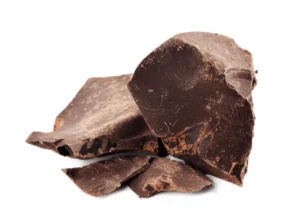
Cocoa mass, also called cocoa liquor, is 100% finely ground roasted cocoa nibs. It brings two things a recipe needs at the same time: non-fat cocoa solids, which give flavour, colour and bitterness, and cocoa butter, which gives melt, gloss and snap. For a full explanation of what it is, how it is made and what it contains, see our guide What is cocoa mass?
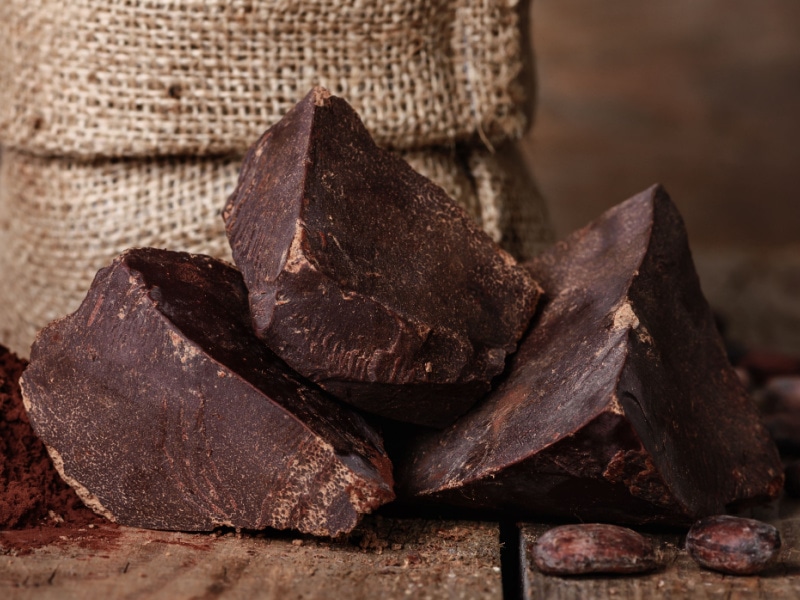
Cocoa mass is unsweetened chocolate in its purest form: nothing but ground cocoa nibs.
Cocoa mass, cocoa powder or finished chocolate?
Recipe developers usually choose between three cocoa ingredients. Cocoa powder gives cocoa flavour with little fat. Cocoa mass gives cocoa flavour plus cocoa butter, with no sugar. Finished chocolate or couverture adds sugar, and sometimes milk, on top. Cocoa mass gives the most control, because you decide exactly how much sugar and fat go into the product.
Cocoa Mass in Chocolate: The Legal Minimums
How much cocoa a product must contain depends on what it is called. In the United States the rules are set in 21 CFR Part 163 and count chocolate liquor directly. In the European Union, Directive 2000/36/EC counts total dry cocoa solids, which come from cocoa mass plus any added cocoa butter or cocoa powder.
Chocolate type
Role of cocoa mass
United States (21 CFR 163)
European Union (2000/36/EC)
Dark (semisweet, bittersweet)
Main ingredient; sets flavour, colour and bitterness
At least 35% chocolate liquor
“Chocolate”: at least 35% total dry cocoa solids, including 18% cocoa butter and 14% non-fat cocoa solids
Sweet chocolate
Lower cocoa share, sweeter taste
At least 15% chocolate liquor; under 12% milk solids
No separate category
Milk chocolate
Cocoa flavour alongside milk
At least 10% chocolate liquor and 12% milk solids
At least 25% total dry cocoa solids, 2.5% non-fat cocoa solids and 14% milk solids
Couverture
Extra cocoa butter for thin coatings and moulding
No separate standard
At least 35% total dry cocoa solids, including 31% cocoa butter
White chocolate
None: uses cocoa butter only
At least 20% cacao fat and 14% milk solids
At least 20% cocoa butter and 14% milk solids
Swipe the table sideways to see all columns →
Minimum percentages by weight, summarised from 21 CFR Part 163 (US) and Directive 2000/36/EC, Annex I (EU). Check the full texts for calculation rules and permitted ingredients.
What the cocoa percentage on a bar means
A “70%” bar contains 70% cocoa-derived ingredients by weight: cocoa mass plus any added cocoa butter or cocoa powder. Two 70% bars can taste quite different. One may use more cocoa mass, giving more flavour and bitterness; the other may use more added cocoa butter, giving a milder, creamier bar.
Example: Building a 70% Dark Chocolate From Cocoa Mass
This simple example shows how a chocolate maker builds a recipe around cocoa mass. Real formulations vary with the maker, the cocoa and the application.
Cocoa mass
60%
Added cocoa butter
10%
Sugar
29.5%
Lecithin (emulsifier)
0.5%
Cocoa content on the label
70% (60% cocoa mass + 10% cocoa butter)
Total fat (approx.)
About 43%: cocoa mass at about 55% fat adds 33%, plus 10% added cocoa butter
Illustrative recipe only. Adjust to your equipment, cocoa mass fat content and target viscosity.
Why add extra cocoa butter?
Cocoa mass on its own is too thick for thin coatings and fine moulding. Extra cocoa butter lowers viscosity, improves gloss and snap and gives a cleaner melt. Couverture for enrobing and hollow figures contains even more. Chocolatiers who want a neutral flavour use deodorized cocoa butter; others prefer natural cocoa butter for its cocoa aroma.
Using cocoa mass in milk chocolate
In milk chocolate the share of cocoa mass is lower, and milk powder, sugar and cocoa butter make up the rest. A strongly flavoured cocoa mass helps the cocoa taste come through the milk, which is why many makers choose robust West African cocoa mass for milk chocolate.
From Cocoa Mass to Chocolate Bar
Once the recipe is set, cocoa mass goes through five stages to become finished chocolate. For the full journey from cocoa pod to bar, see our bean-to-bar guide.
1
Mixing
Melted cocoa mass is mixed with sugar, part of the cocoa butter and, for milk chocolate, milk powder, to form a stiff paste.
2
Refining
The paste passes through roll refiners or ball mills until sugar and cocoa particles are around 20 to 30 microns, too fine for the tongue to detect. This gives chocolate its smooth texture.
3
Conching
The refined mass is kneaded and aerated in a conche for hours, sometimes days. Conching drives off moisture and harsh volatile acids, coats every particle in cocoa butter and rounds out the flavour. The remaining cocoa butter and lecithin are added near the end.
4
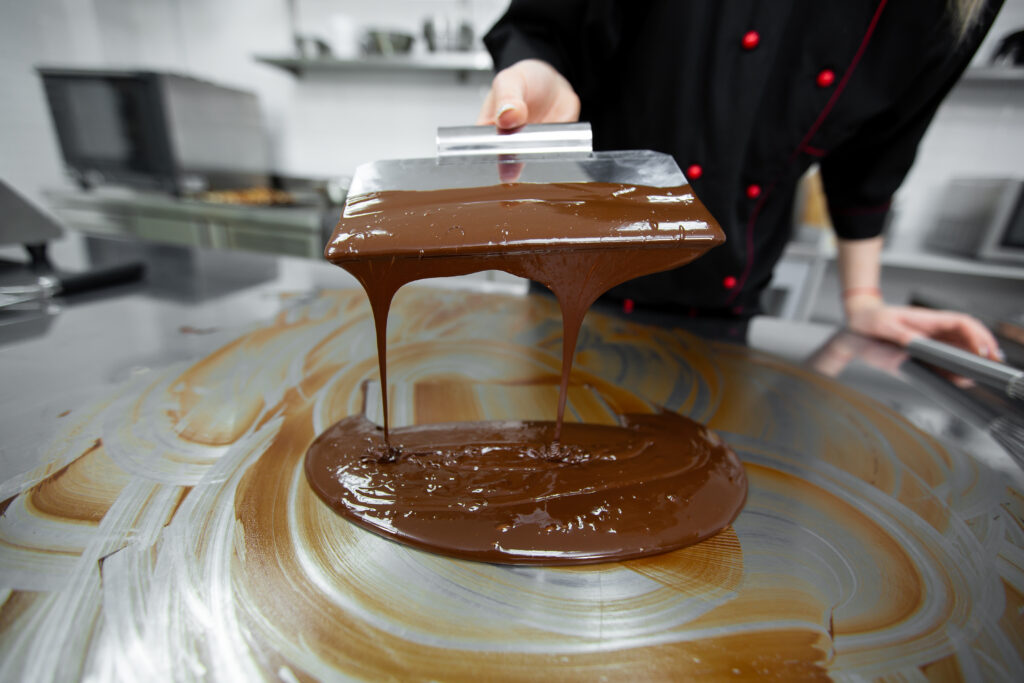
Tempering
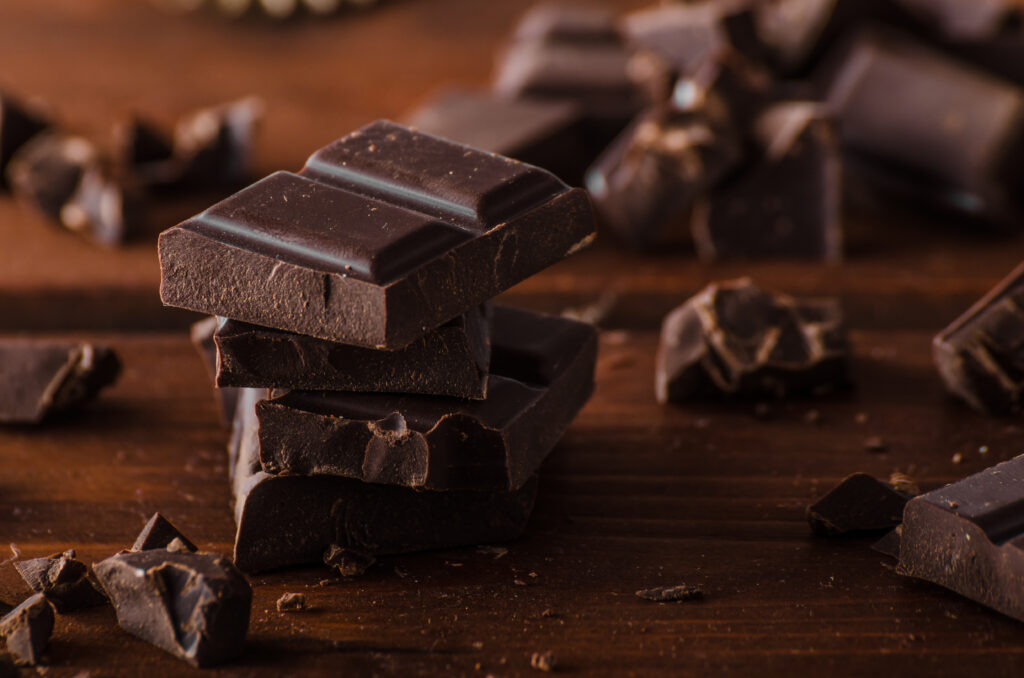
Chocolate is melted, cooled and gently rewarmed so that cocoa butter sets in its stable crystal form. For dark chocolate a common curve is to melt at about 45 to 50 °C, cool to about 27 to 28 °C and work at about 31 to 32 °C. Good tempering gives gloss, a clean snap and resistance to bloom.
5
Moulding, enrobing and cooling
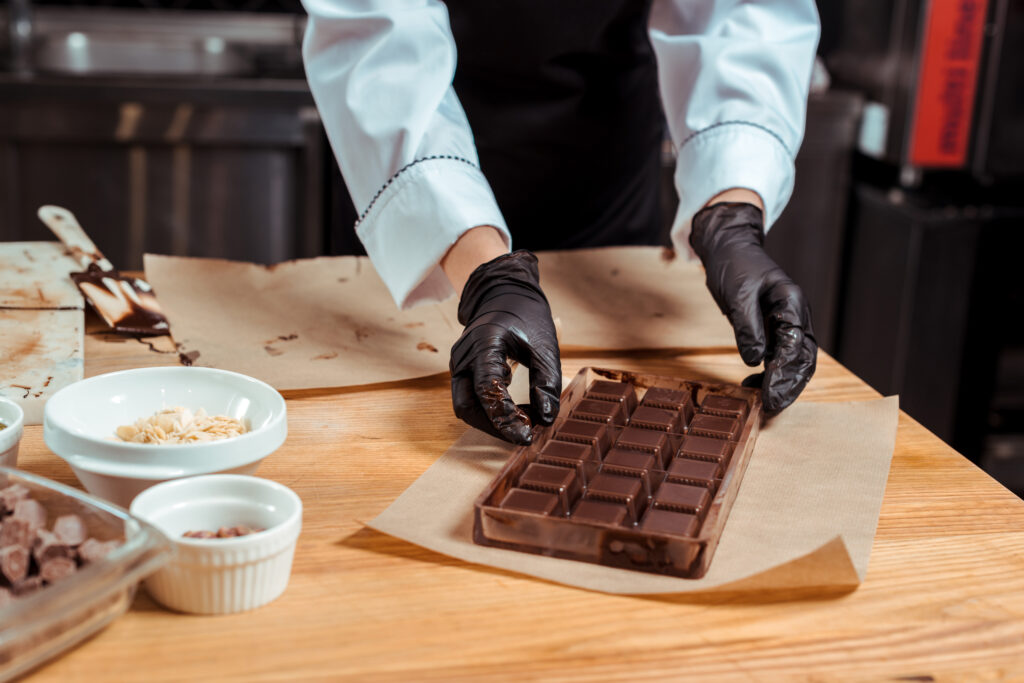
Tempered chocolate is deposited into moulds or used to coat centres such as biscuits, nuts and pralines, then cooled in tunnels and packed.
Cocoa Mass in Baking and Pastry
Pastry chefs and industrial bakeries use cocoa mass when they want deep chocolate flavour without the sugar already built into finished chocolate. Because it contains no sugar, the recipe's sugar does all the sweetening and can be set exactly.
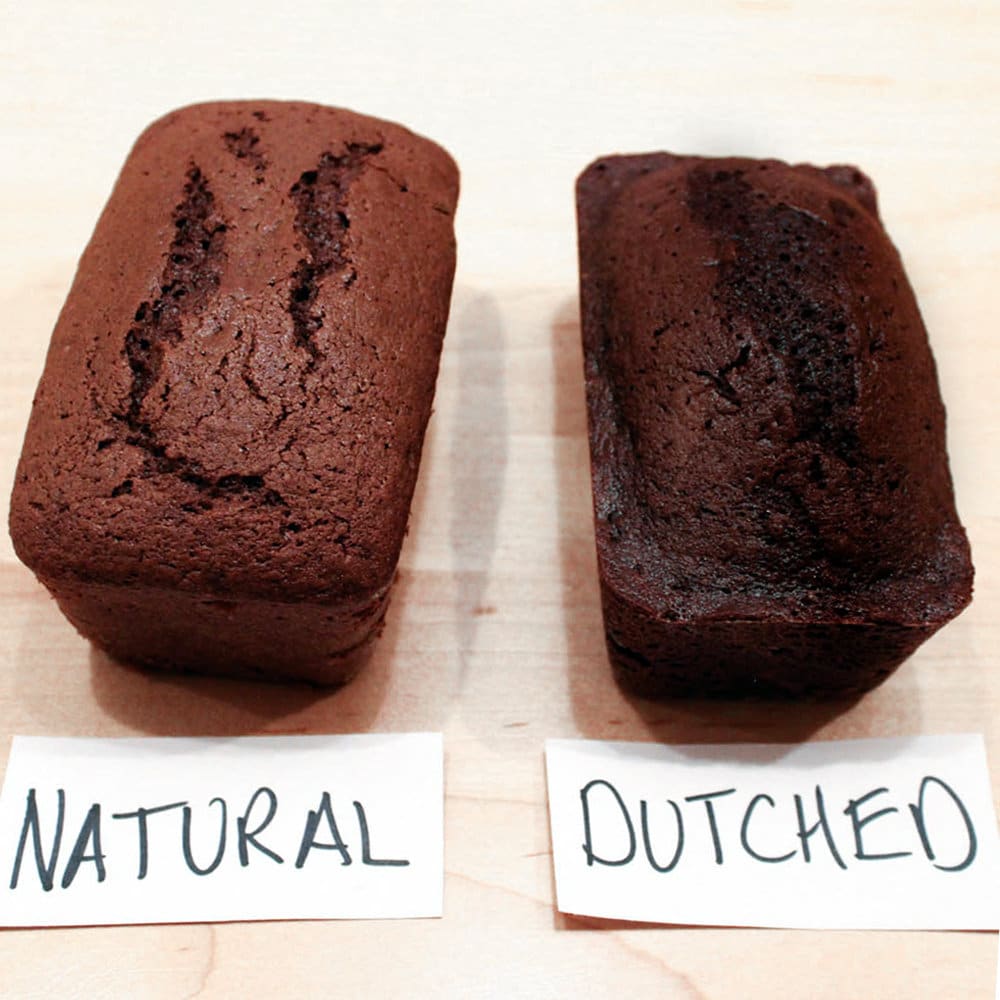
Brownies and fudge cakes: melted cocoa mass gives a dense, fudgy crumb and an intense chocolate flavour.
Cakes, muffins and cookies: replacing part of the cocoa powder with cocoa mass adds richness and moisture from the cocoa butter.
Ganache and fillings: classic ganache is made from chocolate and cream. Cocoa mass on its own would make a very bitter ganache, so chefs use it to intensify a dark chocolate ganache or balance it with sugar or glucose syrup.
Glazes and icings: a little cocoa mass deepens the colour and flavour of mirror glazes, fudge icings and sauces.
Mousses and creams: cocoa mass strengthens chocolate flavour in mousses, crémeux and pastry creams without adding extra sweetness.
Substituting cocoa mass in recipes
To replace 100 g cocoa mass
Use about 50 g cocoa powder plus about 50 g cocoa butter or another fat
To replace 100 g of 70% dark chocolate
Use about 70 g cocoa mass plus about 30 g sugar
To replace cocoa powder with cocoa mass
Use about twice the weight of cocoa mass and reduce the recipe's butter or oil by roughly the weight of the cocoa powder you removed
Rules of thumb only. Texture and flavour will differ slightly, so test and adjust.
Tip for bakers
Chop cocoa mass finely and melt it gently with the recipe's butter or over a water bath, keeping it below about 50 to 55 °C. Overheating scorches the flavour. Add the melted mixture to warm, not hot, batter.
Other Uses of Cocoa Mass
Beyond chocolate bars and bakery, cocoa mass appears in a wide range of products:

Ice cream and frozen desserts: for dark chocolate ice cream bases and chocolate coatings on ice cream bars.
Drinking chocolate: melted with milk and sugar for rich, European-style hot chocolate.
Pralines, spreads and confectionery fillings: where it adds body and a strong cocoa note.
Coatings for biscuits, wafers and bars: as the cocoa base of real chocolate coatings.
Savoury cooking: small amounts deepen Mexican mole sauces, chilli and slow-cooked braises.
Cocoa processing: cocoa processors press cocoa mass to produce cocoa butter and cocoa powder.
For applications across the whole cocoa range, see uses of cocoa: 25+ applications beyond chocolate.
Storing and Handling Cocoa Mass
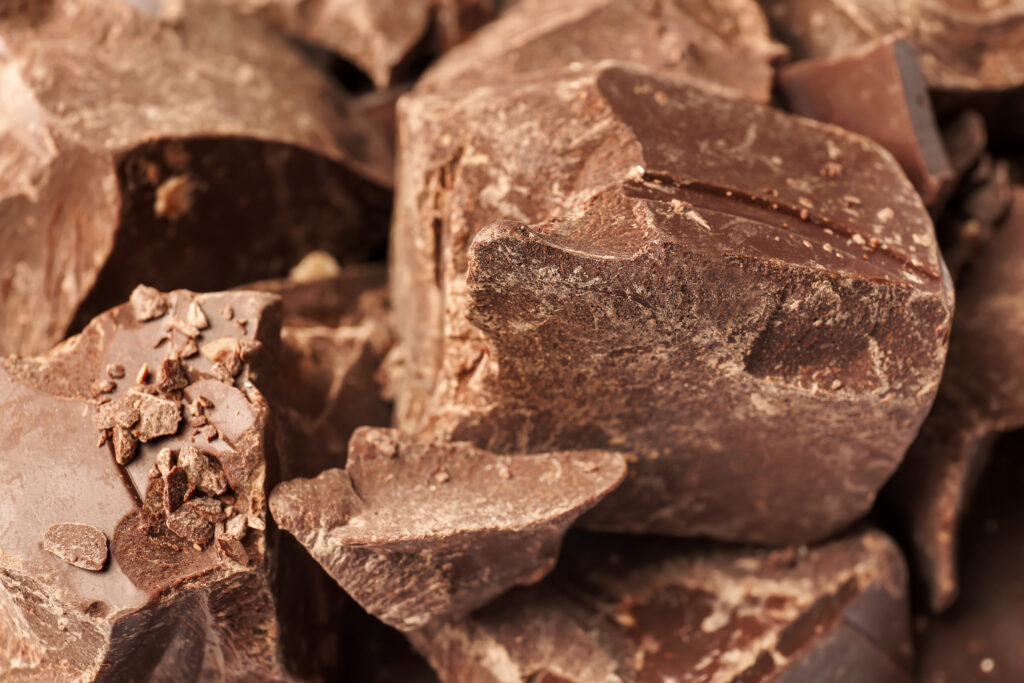
Cocoa mass is stable, but its cocoa butter is sensitive to heat and it absorbs odours easily. These conditions keep it in good condition from delivery to use.
Temperature
Cool and stable, at no more than 25 °C
Humidity
No more than 70% relative humidity
Shelf life
Up to 24 months from production in original, sealed packaging (Radad specification)
Odours
Keep away from spices, coffee, cleaning products and other strong smells
Melting
Melt gently to about 45–50 °C and stir; avoid hot spots that burn the flavour
Bloom
Temperature swings can cause fat bloom, seen as grey streaks. It affects appearance, not safety, and disappears once the mass is melted. Because cocoa mass contains no sugar, it does not get sugar bloom.
Choosing the Right Cocoa Mass for Your Application
Different products need different things from cocoa mass. Use this table when writing a specification or comparing offers.
Application
What to look for
Reason
Dark chocolate and couverture
Fine grind (at least 99% through 75 µm), consistent fat content, clean flavour
Smooth texture and predictable viscosity in production
Milk chocolate
Strong, robust cocoa flavour with low acidity
The cocoa taste has to come through milk and sugar
Bakery, fillings and glazes
Natural or alkalized cocoa mass, chosen for colour; consistent pH
Alkalized mass gives darker colour and a milder flavour, as with alkalized cocoa powder
Cocoa pressing
High fat content, low shell, low free fatty acids
Maximises the yield and quality of cocoa butter
Export and regulated markets
Lot certificate of analysis: Salmonella, aflatoxins, cadmium for the EU
Food safety and legal compliance; see our contaminant specification guide
Swipe the table sideways to see all columns →
Radad's natural cocoa mass specification, including fat, fineness, pH and microbiology, is on our cocoa mass product page. For a buyer's checklist and what drives price, see the buying section of What is cocoa mass?
Frequently Asked Questions
Source From Radad
Cocoa Mass for Your Chocolate and Bakery Production
Radad International supplies natural cocoa mass from Africa in 25 kg cartons, with a full specification and complete export documents, shipped on FOB or CIF terms. Tell us your application, volume and destination port for a quotation or a sample.
Or call +971 52 250 1039