Natural vs Refined Cocoa Butter: Differences, Uses and Which to Choose

Organic cocoa butter from Africa) Food grade used for chocolates and skin care products | Radad International

Natural vs refined cocoa butter is the first choice any buyer has to make. Cocoa butter is one of the most in-demand commodity ingredients in the world, used in everything from premium dark chocolate to luxury skincare, and it comes in two main forms. Natural (unrefined) cocoa butter is pressed from cocoa mass and simply filtered, so it keeps its pale yellow colour, its chocolate aroma and more of its natural antioxidants. Refined cocoa butter, usually sold as deodorized cocoa butter, goes one step further: it is steam-treated, and sometimes bleached, until it is near-white, almost odourless and neutral in taste.

Both are 100% cocoa fat, with the same fatty acid profile, the same melting point of about 34 to 38°C and the same calories. What changes is everything around the fat: aroma and flavour, colour, free fatty acids, the small amounts of vitamin E, polyphenols, theobromine and caffeine, shelf life and price. Those differences decide which one belongs in a dark chocolate bar and which in a white chocolate, which suits a cocoa-scented body butter and which a fragranced lotion or a baby cream.

Chocolate makers, bakers, cosmetic formulators and pharmaceutical buyers all face the same choice. Below we compare natural and refined cocoa butter on every point that matters in production, from processing and nutrition to uses, price and storage, and finish with a clear guide to which one to choose for each product.

Same fat

Identical fatty acid profile and melting point

About 884 kcal

Per 100 g, for both types

USD 17,000 vs 12,000 to 15,000

Natural vs deodorized, per ton, 2026

2 to 3 vs up to 5 years

Shelf life, natural vs deodorized

Overview

Natural cocoa butter tastes and smells like cocoa, is pale yellow, keeps more antioxidants and suits products where cocoa character is wanted: dark and milk chocolate, cocoa-flavoured baking and drinks, raw and natural products, and cocoa-scented skincare. Refined (deodorized) cocoa butter is flavour-neutral, near-white and lower in free fatty acids, lasts longer and suits products where cocoa character would get in the way: white chocolate, fruit and flavoured fillings, fragranced or fragrance-free cosmetics, baby care and pharmaceutical bases.

Nutritionally, they are almost identical. Per 100 g, both provide about 884 kcal and 100 g of fat, mostly stearic, oleic and palmitic acid. Refining removes some vitamin E, polyphenols, theobromine and caffeine, but does not create trans fats. In 2026, natural food-grade cocoa butter is benchmarked at about USD 17,000 per metric ton and deodorized at USD 12,000 to 15,000, with cosmetic-grade deodorized butter at USD 11,000 to 13,500.

Natural

What Is Natural (Unrefined) Cocoa Butter?

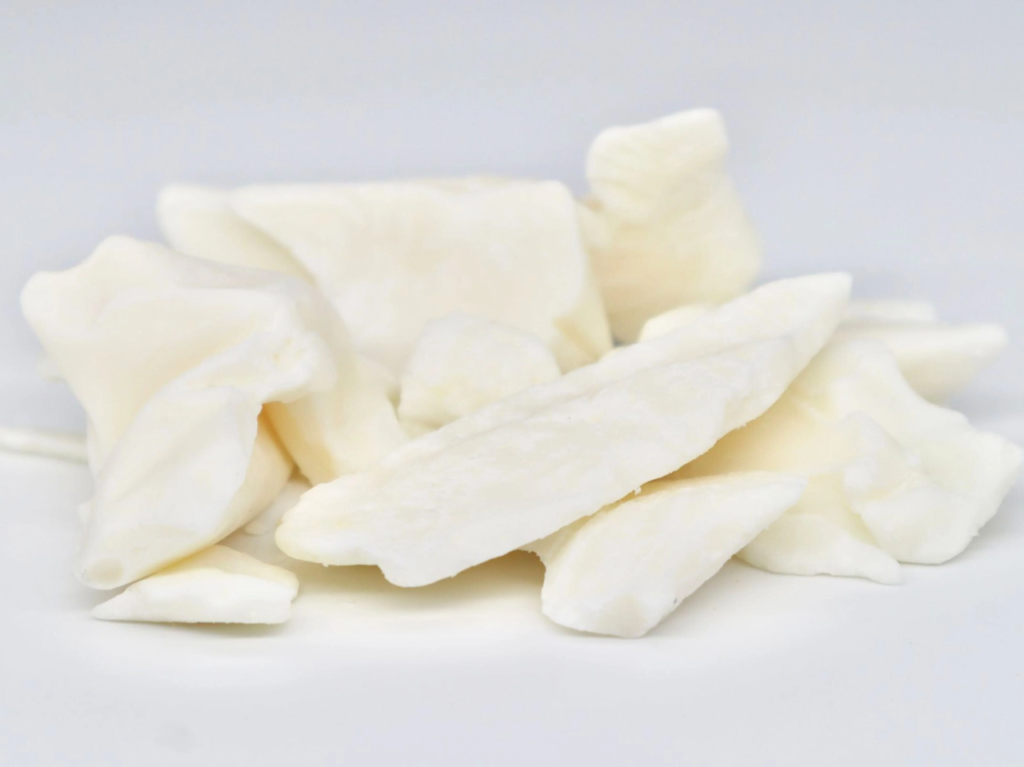
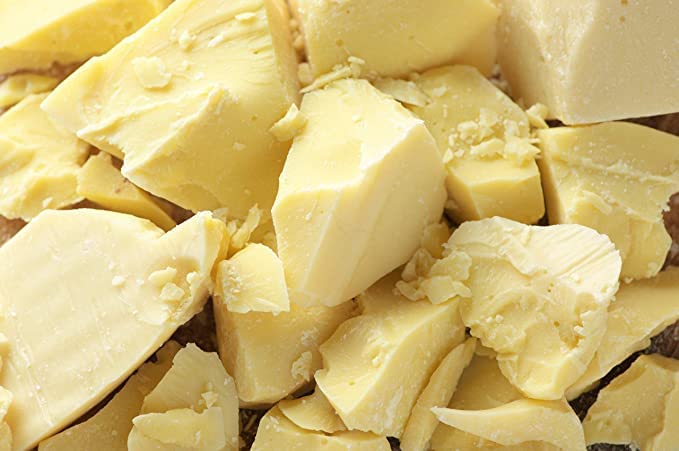
Natural Unrefined, unscented Cocoa Butter with Cream White color Radad International

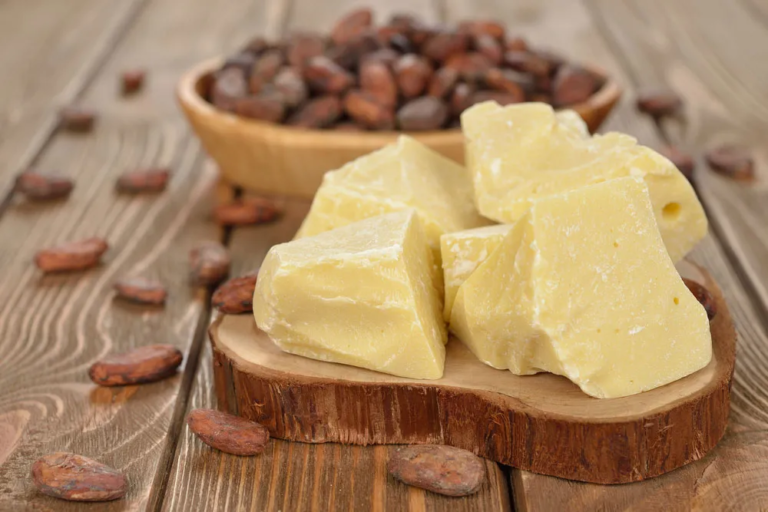
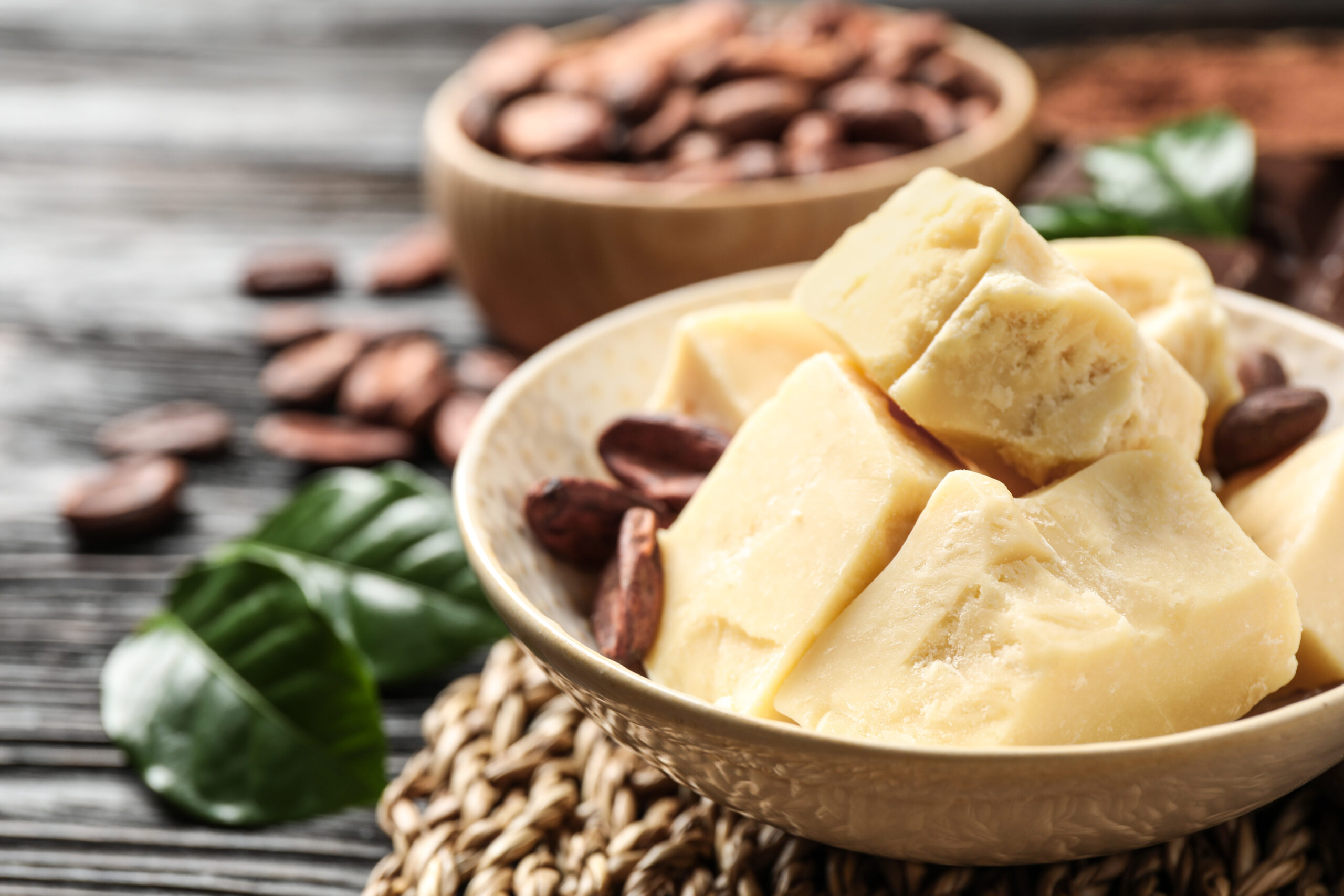
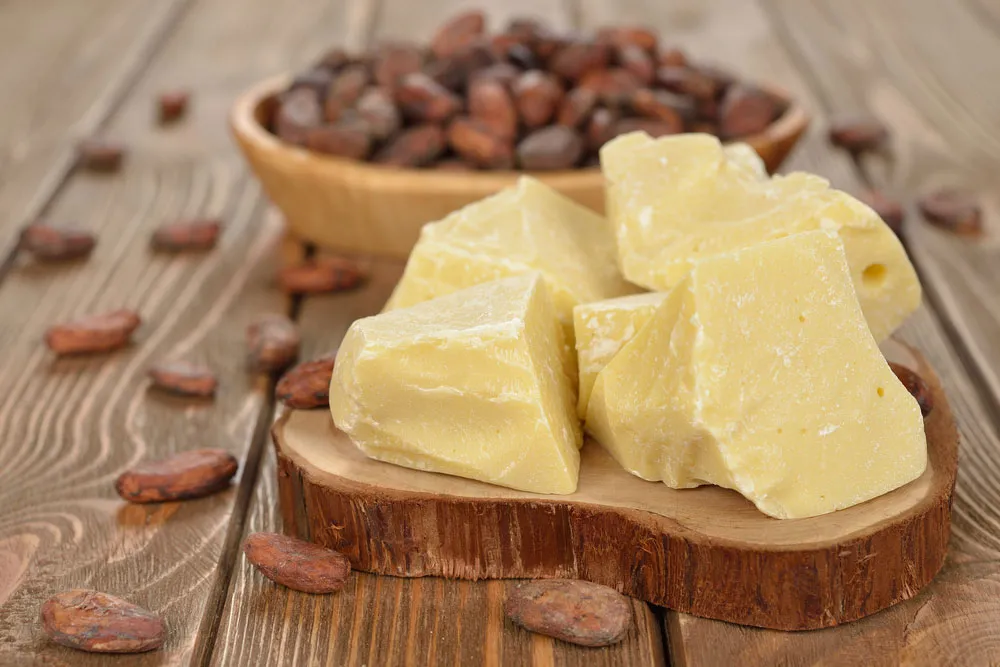
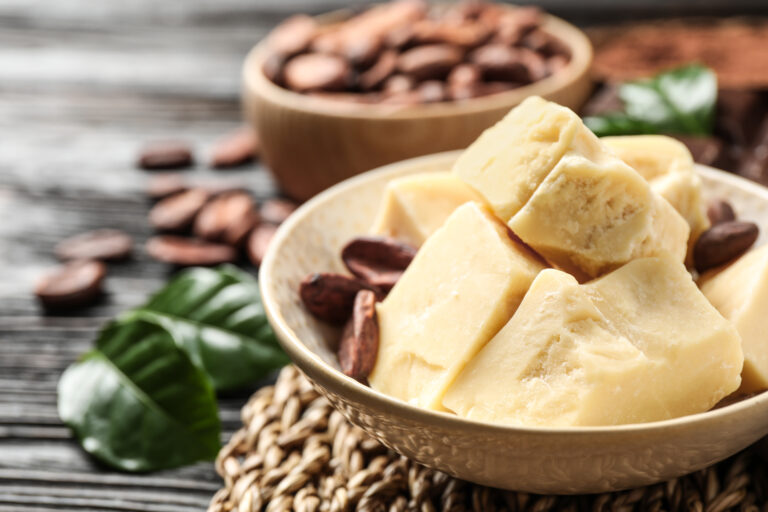
Natural cocoa butter is the fat pressed straight from cocoa mass (liquor) in a hydraulic press, then filtered to remove fine cocoa particles. Nothing else is done to it. Because it has not been heated with steam or bleached, it keeps the volatile aroma compounds formed during fermentation and roasting, its natural pale yellow to ivory colour, and its minor components: vitamin E (tocopherols), polyphenols, phytosterols, and traces of theobromine and caffeine.

Key characteristics

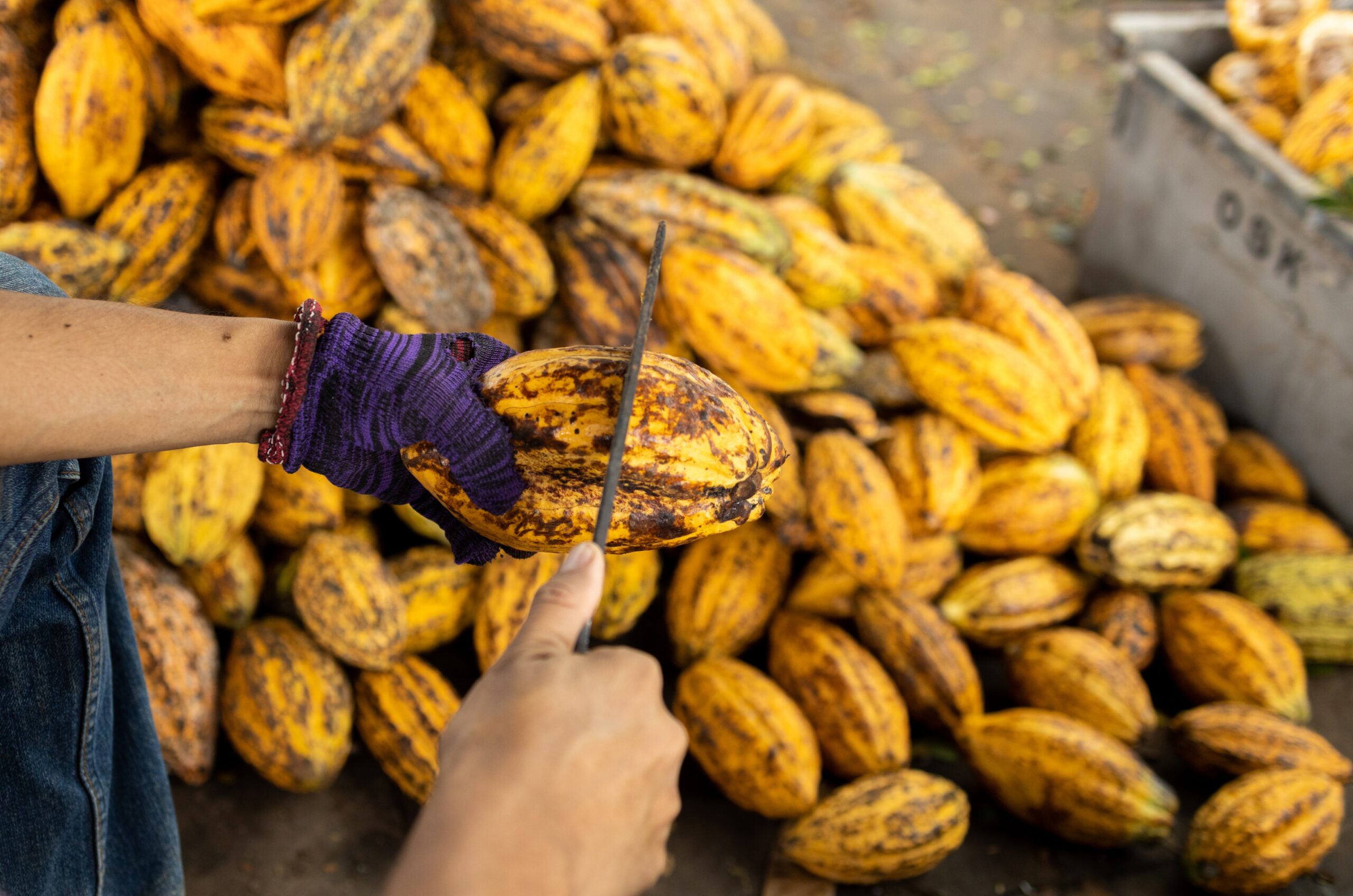
The quality of natural cocoa butter depends heavily on the beans: well-fermented beans give a clean, pleasant cocoa aroma, while smoky or mouldy beans show straight through. That is why premium natural butter is usually pressed from good West African beans.

Our product

Natural Cocoa Butter

Unrefined African cocoa butter with its natural chocolate aroma.

Refined

What Is Refined (Deodorized) Cocoa Butter?

Refined cocoa butter is natural cocoa butter that has been further processed to remove its colour, aroma and flavour. In the trade, “refined” and “deodorized” are used almost interchangeably; the key step is steam deodorization, sometimes with bleaching before it. Butter recovered from press cake with a solvent must always be refined before it can be used in food.

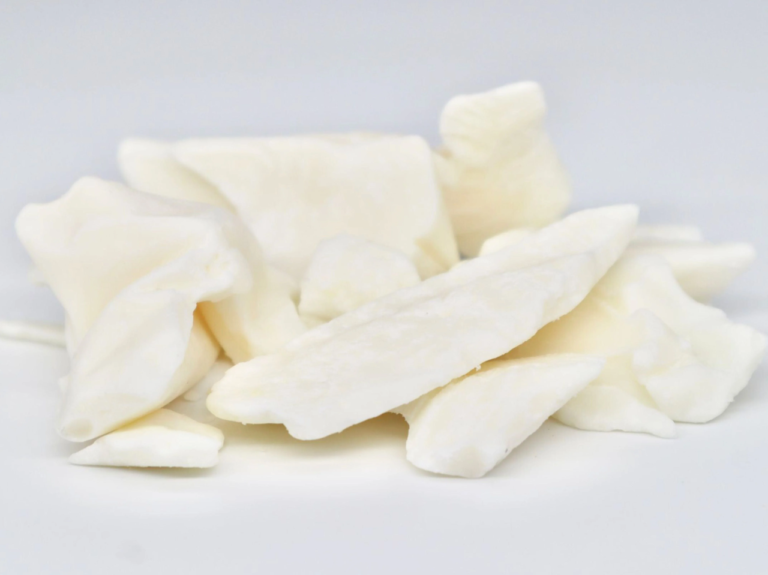
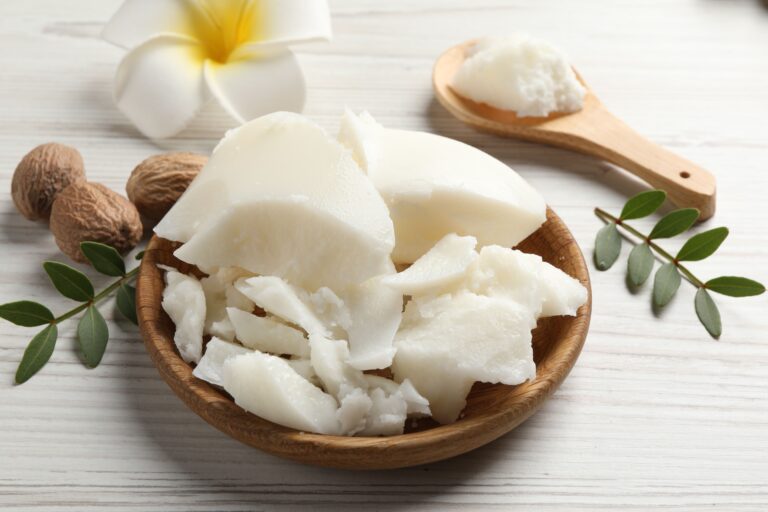
Refined Cocoa Butter with the creamy colour removed due to further processing Radad International

Key characteristics

How cocoa butter is refined

1

Filtration

The pressed butter is filtered, exactly as for natural cocoa butter.

2

Bleaching (optional)

Some refiners mix the butter with bleaching earth or activated carbon and filter it again. This lightens the colour and removes phospholipids, and most of the theobromine and caffeine (around 90 to 95% in trials).

3

Steam deodorization

The butter is heated under vacuum, typically at about 170 to 220°C, while steam is passed through it. The steam carries away aroma compounds and free fatty acids. In trials, free fatty acids fell from about 1.9% to about 0.1% at 220°C, and at least 170°C was needed for a clean, acceptable taste.

4

Cooling and packing

The neutral butter is cooled, moulded into blocks or drops and packed in lined cartons.

What refining does not change

Refining does not alter the fatty acids, so the melting behaviour, crystallisation and “snap” stay the same. Trials found no detectable trans fats formed during bleaching or steam refining. Removing free fatty acids even makes the butter slightly harder at 30°C, which can help in warm climates.

Our product

Deodorized Cocoa Butter

Steam-deodorized cocoa butter with a neutral smell and near-white colour.

Side by side

Natural vs Refined Cocoa Butter: The Differences at a Glance

This table puts every practical difference in one place:

Feature

Natural (unrefined)

Refined (deodorized)

Feature

Processing

Natural (unrefined)

Pressed and filtered only

Refined (deodorized)

Filtered, optionally bleached, steam-deodorized at about 170 to 220°C

Feature

Colour

Natural (unrefined)

Pale yellow to ivory

Refined (deodorized)

Off-white to near-white

Feature

Aroma

Natural (unrefined)

Clear chocolate aroma

Refined (deodorized)

Virtually odourless

Feature

Flavour

Natural (unrefined)

Mild cocoa taste

Refined (deodorized)

Neutral

Feature

Free fatty acids

Natural (unrefined)

Up to about 1.75% (food grade)

Refined (deodorized)

Very low, often around 0.1 to 0.5%

Feature

Vitamin E and polyphenols

Natural (unrefined)

Higher

Refined (deodorized)

Reduced

Feature

Theobromine and caffeine

Natural (unrefined)

Traces present

Refined (deodorized)

Largely removed

Feature

Fatty acid profile

Natural (unrefined)

Stearic, oleic, palmitic

Refined (deodorized)

Same

Feature

Melting point

Natural (unrefined)

About 34 to 38°C

Refined (deodorized)

Same

Feature

Crystallisation and snap

Natural (unrefined)

Normal

Refined (deodorized)

Same, slightly harder when FFA is very low

Feature

Oxidative stability

Natural (unrefined)

Good, helped by natural antioxidants

Refined (deodorized)

Good, helped by very low FFA

Feature

Shelf life

Natural (unrefined)

About 2 to 3 years

Refined (deodorized)

Up to about 5 years

Feature

Smoke contaminants (PAHs)

Natural (unrefined)

Depend on bean drying; test each lot

Refined (deodorized)

Refining with activated carbon can help reduce them

Feature

Price (2026, per ton)

Natural (unrefined)

About USD 16,500 to 17,500

Refined (deodorized)

About USD 12,000 to 15,000

Feature

Best for

Natural (unrefined)

Products where cocoa character is wanted

Refined (deodorized)

Products where cocoa character would get in the way

Nutrition

Nutritional Content: Natural vs Refined Cocoa Butter

Because both types are pure fat with the same fatty acids, their nutrition labels are practically identical. The differences are in the minor compounds, which matter more for marketing claims and skincare than for calories:

Per 100 g of cocoa butter

Nutrient

Natural cocoa butter

Refined cocoa butter

Nutrient

Energy

Natural cocoa butter

884 kcal

Refined cocoa butter

Same

Nutrient

Total fat

Natural cocoa butter

100 g

Refined cocoa butter

Same

Nutrient

Saturated fat

Natural cocoa butter

59.7 g

Refined cocoa butter

Same

Nutrient

Monounsaturated fat

Natural cocoa butter

32.9 g

Refined cocoa butter

Same

Nutrient

Polyunsaturated fat

Natural cocoa butter

3.0 g (omega-6 2.8 g, omega-3 0.1 g)

Refined cocoa butter

Same

Nutrient

Cholesterol, carbohydrate, protein

Natural cocoa butter

0

Refined cocoa butter

Same

Nutrient

Vitamin E

Natural cocoa butter

1.8 mg

Refined cocoa butter

Lower (partly lost in deodorization)

Nutrient

Vitamin K

Natural cocoa butter

24.7 µg

Refined cocoa butter

Similar

Nutrient

Polyphenols

Natural cocoa butter

Small amounts

Refined cocoa butter

Lower

Nutrient

Theobromine and caffeine

Natural cocoa butter

Traces

Refined cocoa butter

Largely removed

Fatty acid profile (both types)

Fatty acid

Share of total fat

What it does

Fatty acid

Stearic acid (saturated)

Share of total fat

About 33%

What it does

Hardness and snap; does not raise blood cholesterol like other saturated fats

Fatty acid

Oleic acid (monounsaturated)

Share of total fat

About 33%

What it does

The same fatty acid as in olive oil; softness and skin feel

Fatty acid

Palmitic acid (saturated)

Share of total fat

About 25%

What it does

Body and structure

Fatty acid

Linoleic acid (polyunsaturated)

Share of total fat

About 3%

What it does

An essential fatty acid; supports the skin barrier

Is refined cocoa butter less healthy?

Not meaningfully, as a food. Both are 100% fat with the same fatty acids; refined butter simply has less vitamin E and fewer polyphenols. No trans fats are formed during refining.

Which suits “natural” claims?

Natural, unrefined cocoa butter. If you market a product as raw, unrefined or minimally processed, natural cocoa butter is the honest choice.

Allergens and diets

Both are plant-based, vegan, dairy-free and gluten-free. People allergic to cocoa should avoid both, although refined butter contains fewer cocoa compounds.

Food

Uses Compared: Food, Chocolate and Baking

In food, the choice comes down to one question: should the product taste of cocoa or not?

Product

Best choice

Why

Product

Dark chocolate and couverture

Best choice

Natural

Why

Adds cocoa aroma and depth

Product

Milk chocolate

Best choice

Natural, or a blend

Why

Natural for cocoa notes; some refined for a milder, creamier taste

Product

White chocolate

Best choice

Refined (deodorized)

Why

Clean, milky flavour and pale colour; natural for a “cocoa-forward” white

Product

Fruit, nut and flavoured fillings

Best choice

Refined

Why

Lets fruit, nut and spice flavours show

Product

Pralines and ganache

Best choice

Either

Why

Natural with dark chocolate; refined for delicate flavours

Product

Chocolate coatings for ice cream and bars

Best choice

Either

Why

Natural for chocolate coatings; refined for coloured or flavoured coatings

Product

Baking and glazes

Best choice

Either

Why

Natural in chocolate baking; refined in neutral pastry, glazes and cookie doughs

Product

Hot chocolate and cocoa drinks

Best choice

Natural

Why

Rounds out cocoa flavour

Product

Raw, vegan and health bars

Best choice

Natural (raw or unrefined)

Why

Supports natural and minimally processed claims

Product

Coloured chocolate and decorations

Best choice

Refined

Why

Pale base takes colours cleanly

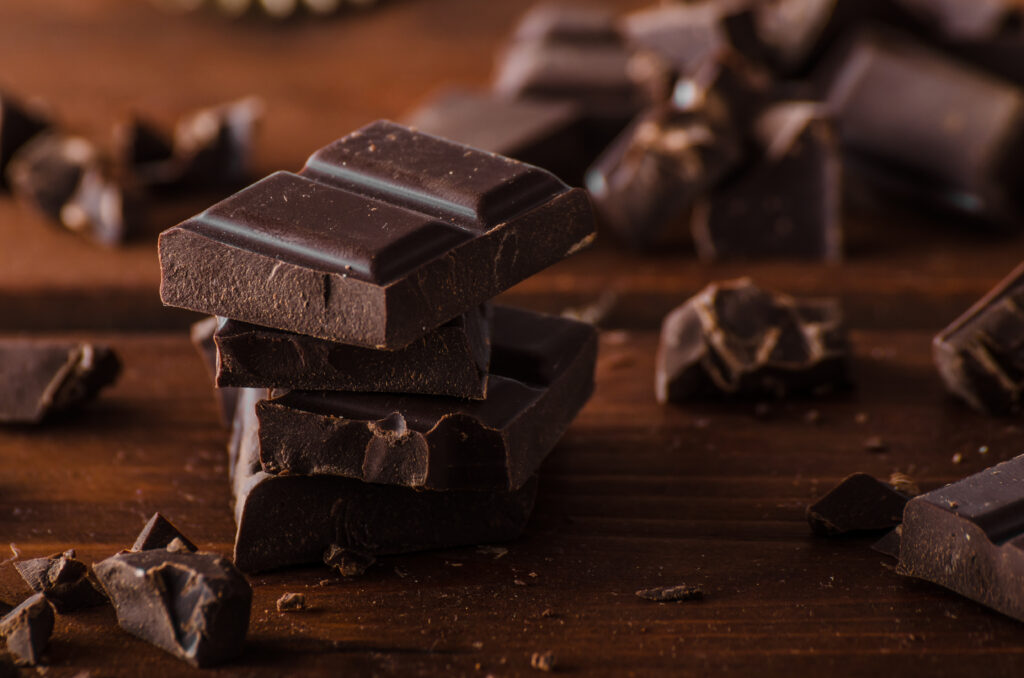
Dark chocolate pieces on a wooden table

When natural wins

Dark and milk chocolate, cocoa drinks and chocolate baking all gain from the cocoa aroma of natural butter.

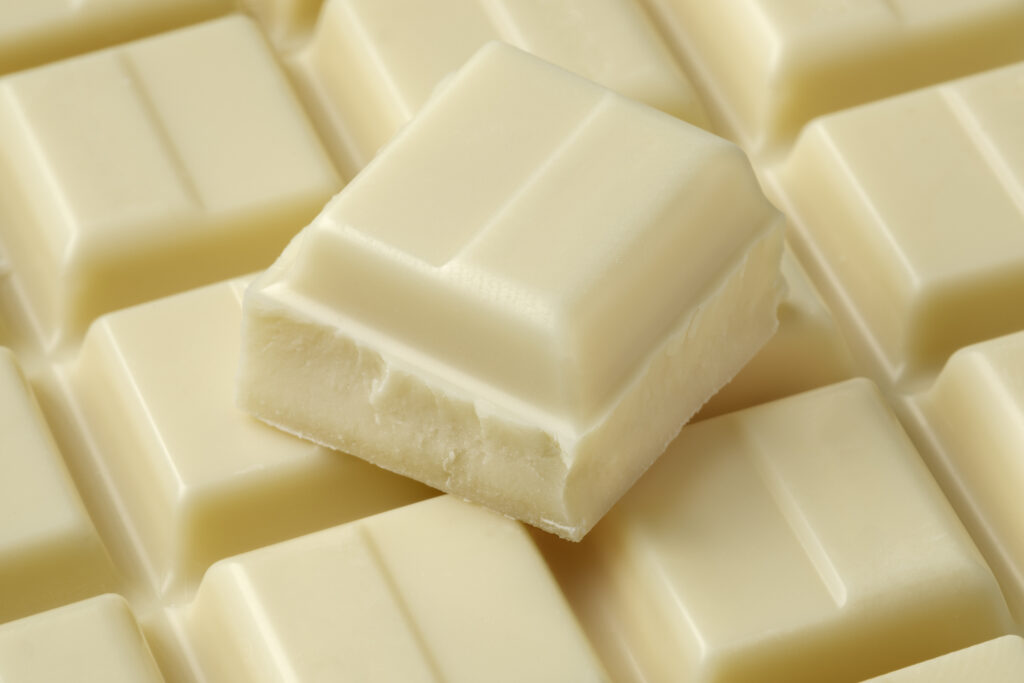
White chocolate squares in rows

When refined wins

White chocolate, fruit and flavoured fillings and coloured decorations need the neutral taste and pale colour of refined butter.

Cosmetics and pharma

Uses Compared: Cosmetics, Personal Care and Pharmaceuticals

In skincare the question is about scent, colour and claims. Both types moisturise in the same way, because the fat is the same:

Product

Best choice

Why

Product

Lip balms and lipsticks

Best choice

Either

Why

Natural for chocolate-flavoured balms; refined for flavoured or fragranced ones

Product

Body butters and creams

Best choice

Natural or refined

Why

Natural if a cocoa scent is a selling point; refined if adding fragrance

Product

Fragranced lotions and serums

Best choice

Refined

Why

Neutral base that does not clash with the fragrance

Product

Fragrance-free and sensitive-skin products

Best choice

Refined

Why

No cocoa scent, fewer minor compounds

Product

Baby creams and balms

Best choice

Refined

Why

Mild, neutral and consistent

Product

Soap bars

Best choice

Either

Why

The natural cocoa scent fades in soap; refined gives a whiter bar

Product

Hair masks and conditioners

Best choice

Either

Why

Natural for “chocolate” ranges; refined for fragranced lines

Product

Sun care and after-sun

Best choice

Refined

Why

Neutral base for fragranced formulas

Product

Natural and organic skincare

Best choice

Natural

Why

Supports “unrefined” and natural-origin claims

Product

Suppositories and ointments

Best choice

Refined (pharmaceutical grade)

Why

Consistent, neutral, tightly specified base

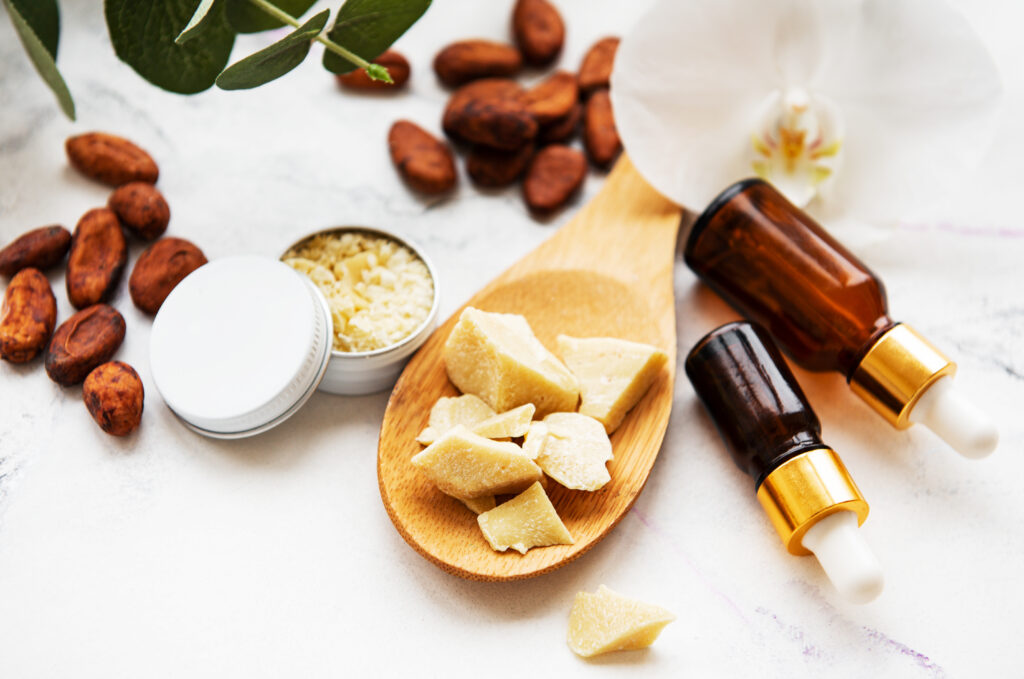
Cocoa butter, cocoa beans and essential oil for skincare

Tips for formulators

  • List both types as Theobroma Cacao (Cocoa) Seed Butter on the ingredient label
  • Natural butter can tint very white formulas slightly yellow
  • Refined butter gives more consistent colour and scent from lot to lot
  • Blend with shea butter for softer, more spreadable body butters

Natural scent vs added fragrance

Natural cocoa butter’s chocolate scent is part of its appeal in “cocoa butter” lotions and lip balms, and can reduce the need for added fragrance. But it competes with other fragrances and essential oils, and its strength varies by lot. If your product has its own fragrance, or must be fragrance-free, choose refined.

Shea butter

Natural Cocoa Butter vs Shea Butter vs Refined Cocoa Butter

Shea butter is the other big African butter in food and cosmetics, and buyers often weigh it against both types of cocoa butter. All three are plant fats that melt around body temperature, but they behave very differently:

Feature

Natural cocoa butter

Refined cocoa butter

Shea butter

Feature

Source

Natural cocoa butter

Pressed from cocoa beans

Refined cocoa butter

Pressed from cocoa beans, then deodorized

Shea butter

Extracted from shea tree nuts (West Africa)

Feature

Colour

Natural cocoa butter

Pale yellow to ivory

Refined cocoa butter

Off-white to near-white

Shea butter

Ivory to pale yellow (refined: white)

Feature

Aroma

Natural cocoa butter

Chocolate

Refined cocoa butter

Virtually none

Shea butter

Nutty, slightly smoky (refined: none)

Feature

Texture at room temperature

Natural cocoa butter

Hard and brittle

Refined cocoa butter

Hard and brittle

Shea butter

Soft, creamy and spreadable

Feature

Melting

Natural cocoa butter

About 34 to 38°C, sharp melt

Refined cocoa butter

Same as natural

Shea butter

About 35 to 40°C, but softens gradually

Feature

Main fatty acids

Natural cocoa butter

Stearic, oleic and palmitic in about equal thirds

Refined cocoa butter

Same as natural

Shea butter

Mostly oleic (about 34 to 62%) and stearic (about 25 to 56%), little palmitic

Feature

Unsaponifiable matter

Natural cocoa butter

Low (under 0.7%)

Refined cocoa butter

Low

Shea butter

High (about 5 to 7%): triterpenes, vitamin E, phytosterols

Feature

Skin feel

Natural cocoa butter

Firm, rich, protective

Refined cocoa butter

Firm, rich, neutral

Shea butter

Soft, deeply nourishing, absorbs more slowly

Feature

In chocolate

Natural cocoa butter

The real thing

Refined cocoa butter

The real thing, neutral

Shea butter

Only as a cocoa butter equivalent, in limited amounts where allowed

Feature

Best for

Natural cocoa butter

Chocolate, cocoa-scented skincare, natural products

Refined cocoa butter

White chocolate, fragranced or fragrance-free products, pharma

Shea butter

Body butters, hair care, balms, soaps, sensitive and very dry skin

Feature

Relative price

Natural cocoa butter

Highest

Refined cocoa butter

Lower than natural

Shea butter

Usually the lowest of the three

Choose cocoa butter when…

You need structure and a firm set: chocolate, lip balms, solid lotion bars and soaps that must stay hard in warm climates.

Choose shea butter when…

You need softness and spreadability: whipped body butters, hair masks, creams for very dry or sensitive skin.

Blend the two when…

You want the best of both: cocoa butter for firmness and gloss, shea for a soft, creamy glide. Many body butters use both, often with refined cocoa butter so the shea and fragrance come through.

Also from Radad

Shea Butter

Natural West African shea butter for skincare, hair care, soaps and cosmetic formulations.

Decision guide

Natural or Refined Cocoa Butter: Which Should You Choose?

Choose natural cocoa butter if…

Choose refined cocoa butter if…

Not sure? Test both

Many manufacturers keep both: natural for chocolate lines and refined for white chocolate or fragranced cosmetics. Ask for samples of each and make a small batch of your product with both before deciding.

Identification

Natural or Refined? How to Check the Cocoa Butter You Have

Look

Natural is pale yellow to ivory; refined is off-white to near-white. Very white butter is almost always refined.

Smell

Warm a small piece in your hand: natural smells clearly like chocolate, while refined has almost no smell.

Taste

Natural tastes mildly of cocoa; refined is neutral. (Food grade only.)

Certificate of analysis

Check the product name and the free fatty acid value: refined butter is usually well below natural butter. The COA should also state odour and colour.

Melting test

Both melt at about 34 to 38°C, so melting does not tell them apart, but a much lower melting point suggests blending with other fats.

Label

Look for “natural”, “unrefined”, “pure prime pressed” or “raw” versus “deodorized” or “refined”. Ask the supplier how the butter was processed.

Grades

Grades, Extraction Methods and Forms

Natural and refined describe how the butter is processed; grade describes what it is tested and certified for. Both natural and refined cocoa butter are available in different grades:

Food grade

Made under a food-safety system, with free fatty acids no higher than 1.75% and testing for contaminants and microbiology. Safe to eat and also suitable for cosmetics.

Cosmetic grade

Made for skin, hair and soap in cosmetic GMP facilities; free fatty acids up to about 2.5% are accepted. Never use cosmetic grade in food.

Pharmaceutical grade

Usually refined, with the tightest purity limits, for suppositories, ointments and coatings.

Organic and raw

Organic cocoa butter comes from certified organic farms and is usually sold natural; raw cocoa butter is pressed from unroasted or lightly roasted beans.

By Extraction Method

Suppliers also describe cocoa butter by how the fat was taken out of the bean. Natural cocoa butter is almost always prime pressed; expeller and solvent-extracted butters are normally refined before sale.

Type

How it is made

Character

Typical use

Type

Prime pressed

How it is made

Hydraulic pressing of cocoa liquor, then filtering

Character

Keeps its natural colour and aroma; the standard for chocolate

Typical use

Chocolate, confectionery, premium cosmetics

Type

Expeller

How it is made

Screw-pressing whole beans or nibs, often with some shell

Character

Stronger, less clean flavour; usually deodorized afterwards

Typical use

Cosmetics, soaps, compound coatings

Type

Solvent-extracted

How it is made

Solvent extraction of press cake or low-grade beans

Character

Must be refined before use

Typical use

Industrial and cosmetic uses

Prime pressed cocoa butter is often sold as pure prime pressed (PPP) cocoa butter.

By Form

Blocks

Solid blocks in 25 kg cartons, the usual form for chocolate factories and large cosmetic producers.

Chips, pellets and wafers

Small pieces that melt quickly and weigh out easily, popular with chocolatiers, bakeries and small cosmetic batches.

Unscented cocoa butter

A trade name for butter whose aroma has been removed, usually refined (deodorized) cocoa butter sold for fragrance-free products.

For food-safety standards and contaminant limits, see our guide to food grade cocoa butter from Africa.

Prices

Price: Natural vs Refined Cocoa Butter

It surprises many buyers that natural cocoa butter usually costs more than refined, even though refining is an extra step. Natural butter has to be pressed from well-fermented, clean-tasting beans, because any flavour fault shows. Deodorization removes those faults, so refined butter can be made from a wider range of butter qualities, and the market prices it lower. Indicative 2026 prices per metric ton:

Type

Grade

Price (USD per MT)

Type

Natural cocoa butter

Grade

Food grade

Price (USD per MT)

USD 16,500 to 17,500

Type

Deodorized (refined) cocoa butter

Grade

Food grade

Price (USD per MT)

USD 12,000 to 15,000

Type

Deodorized cocoa butter

Grade

Cosmetic grade

Price (USD per MT)

USD 11,000 to 13,500

Type

Organic natural cocoa butter

Grade

Food or cosmetic

Price (USD per MT)

USD 18,500 to 22,000

Type

Raw / unrefined

Grade

Artisan or specialty

Price (USD per MT)

USD 14,000 to 19,000

Both types are priced from the cocoa bean market, so prices move with bean futures; always ask for a dated quote. Our cocoa bean price guide follows the bean market, and our guide to cocoa butter suppliers in the UAE covers buying, packaging and delivery in the Emirates.

Storage

Storage and Shelf Life of Natural and Refined Cocoa Butter

Natural cocoa butter

About 2 to 3 years. Its aroma slowly fades over time, so use the freshest stock for chocolate.

Refined cocoa butter

Up to about 5 years, thanks to its very low free fatty acids and neutral profile.

Both types

Store sealed at about 15 to 20°C, below 60% humidity, away from light and strong odours (cocoa butter absorbs smells). Use first in, first out.

In hot climates

Both types melt at about 34 to 38°C. In the Gulf summer, ship in reefer or insulated containers and keep stock in air-conditioned stores; repeated melting and re-setting can cause bloom and texture changes.

Radad International

Buy Natural and Deodorized Cocoa Butter From African Origins

We supply both natural and deodorized cocoa butter, in food and cosmetic grades, with a certificate of analysis for every lot and halal documents for GCC markets. Ask for samples of both to test in your product, from 25 kg cartons for trials to full containers, on FOB or CIF terms.

Questions

Natural vs Refined Cocoa Butter: FAQs

Natural (unrefined) cocoa butter is only pressed and filtered, so it keeps its pale yellow colour, chocolate aroma and more antioxidants. Refined (deodorized) cocoa butter is steam-treated, and sometimes bleached, to remove colour, aroma, flavour and free fatty acids, leaving a near-white, odourless, neutral fat. The fatty acids, melting point and calories are the same.
In practice, yes. “Refined” describes any extra processing after pressing, and steam deodorization is the main step, so the terms are used almost interchangeably. Some refined butter is also bleached.

Neither is better overall; they suit different products. Natural is best where cocoa aroma is wanted and for natural or unrefined claims. Refined is best where the product must not taste or smell like cocoa, such as white chocolate or fragranced cosmetics, and it lasts longer.

Almost. Both provide about 884 kcal and 100 g of fat per 100 g, with the same saturated (59.7 g) and monounsaturated (32.9 g) fat. Refined butter has less vitamin E and fewer polyphenols, and its theobromine and caffeine are largely removed. No trans fats are formed.

Steam deodorization uses only heat, vacuum and steam. Bleaching, when used, adds bleaching earth or activated carbon, which is filtered out. Butter extracted from press cake with a solvent must be refined, and food standards limit any hexane residue to 1 mg/kg.

Refined (deodorized) cocoa butter, because it gives white chocolate its clean, milky flavour and pale colour. Some makers use natural butter on purpose for a cocoa-forward white chocolate.

Both moisturise in the same way because the fat is the same. Choose natural if you want a cocoa scent and natural claims, and refined for fragranced, fragrance-free, sensitive-skin or baby products.

Yes, one for one by weight. The texture, melting and setting will be the same; only the cocoa flavour, aroma and colour will change.

Natural butter must come from well-fermented, clean-tasting beans because flavour faults show, while deodorization removes those faults and can use a wider range of butter. In 2026, natural food grade is about USD 17,000 per ton and deodorized USD 12,000 to 15,000.

Natural cocoa butter lasts about 2 to 3 years and refined up to about 5 years, stored sealed, cool and dry, away from light and strong odours.

Natural is pale yellow and smells like chocolate; refined is near-white and almost odourless. The certificate of analysis should name the type, and refined butter usually shows a much lower free fatty acid value.

Raw cocoa butter is a type of natural cocoa butter pressed from unroasted or lightly roasted beans. All raw cocoa butter is natural, but not all natural cocoa butter is raw.

Facebook
Twitter
LinkedIn
Pinterest