Every cocoa product traded across a border is declared under a Harmonized System (HS) code, and almost all of them sit in Chapter 18 of the HS, which runs from heading 1801 for cocoa beans to heading 1806 for chocolate and other food preparations containing cocoa. The first six digits are the same in every country that uses the HS. The UAE adds further digits under the GCC Unified Customs Tariff, and the code on the declaration sets the customs duty, the trade statistics and any controls that apply to the shipment.
For importers, customs brokers, traders and food manufacturers in the UAE, most classification errors happen at the boundaries between headings: whether nibs are beans, whether a sweetened powder is still cocoa powder, when a chocolate product weighs enough to count as bulk, and when a product containing cocoa leaves Chapter 18 altogether. The duty owed follows from the code, so the same boundaries decide what an importer pays: in the UAE, cocoa products carry the standard 5% customs duty on the CIF value, followed by 5% import VAT, and the country is moving its declarations from 8-digit to 12-digit tariff codes.



Overview
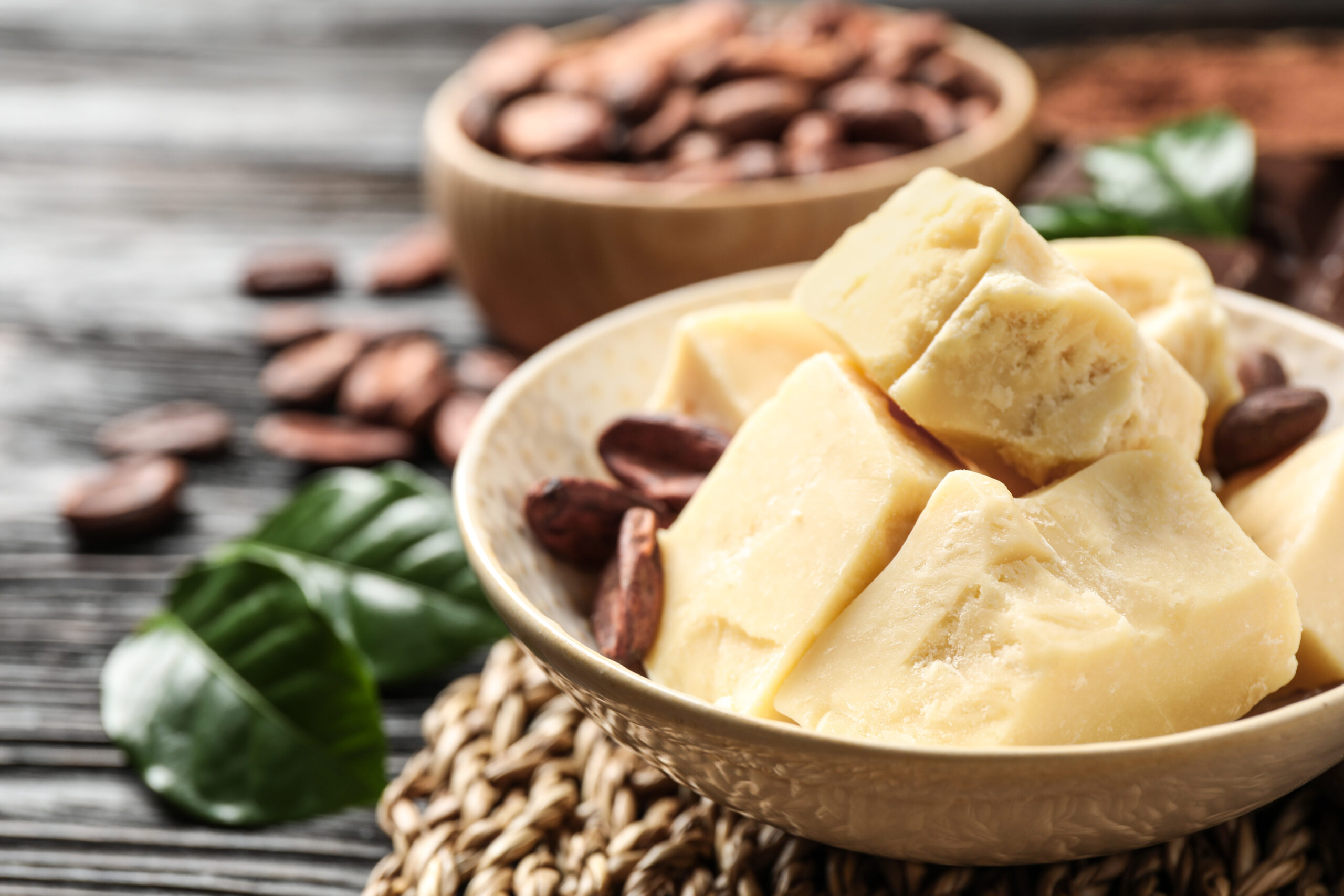
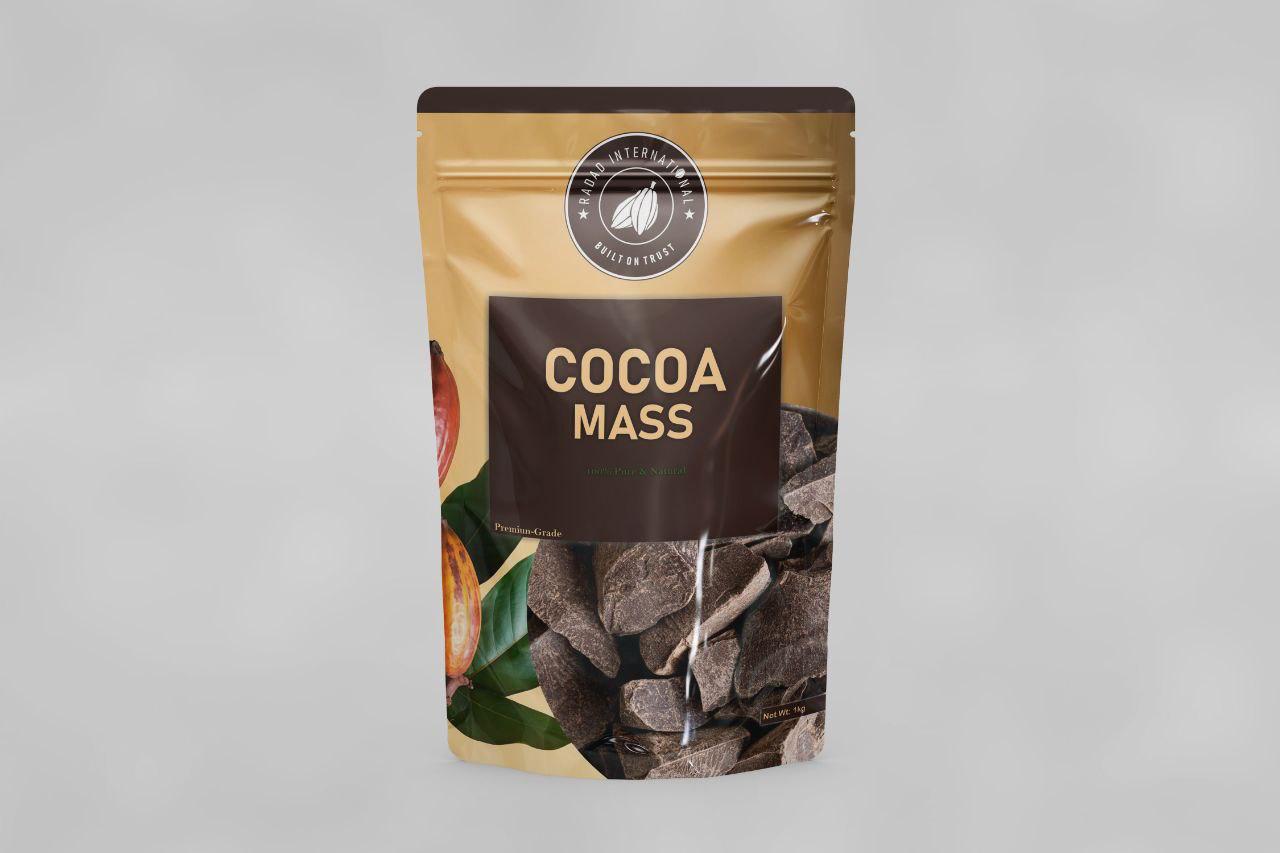
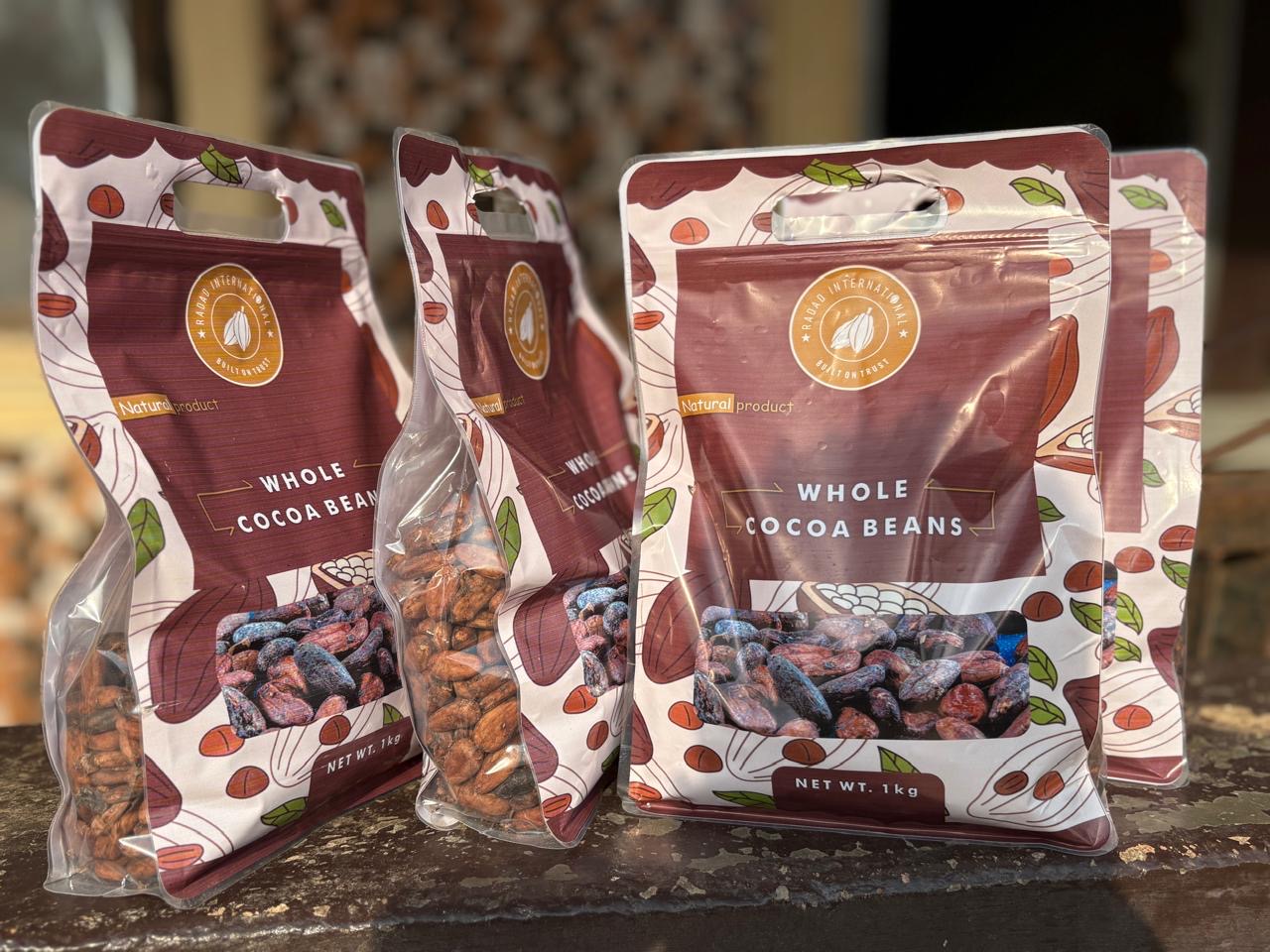
Cocoa beans, whole or broken and raw or roasted, are 1801.00, and cocoa nibs fall under the same heading as broken beans. Shells, husks, skins and other cocoa waste are 1802.00. Cocoa paste (cocoa mass or liquor) is 1803.10 when it is not defatted and 1803.20 when it is wholly or partly defatted, and cocoa butter, fat and oil, natural or deodorized, is 1804.00. Cocoa powder with no added sugar or other sweetening matter is 1805.00, whatever its fat grade or degree of alkalization, while sweetened cocoa powder moves to 1806.10.
Chocolate and other food preparations containing cocoa are 1806.20 in bulk packs over 2 kg, 1806.31 or 1806.32 as filled or unfilled blocks, slabs and bars, and 1806.90 for other products. Note 1 to Chapter 18 sends several cocoa-containing products to other chapters, including milk and flour-based preparations under heading 1901, bakery products under 1905, ice cream under 2105 and beverages under 2202.
In the UAE, cocoa products pay the standard customs duty of 5% of the CIF value, and import VAT of 5% is charged on the CIF value plus duty. Goods held in a free zone are exempt from duty until they enter the mainland. Dubai Customs is moving from 8-digit to 12-digit codes, and under Customs Notice 02/2026 it continues to accept 8-digit codes until further notice.
In this guide
- Cocoa HS codes at a glance
- How customs decides the code
- Beans, nibs, shells and cocoa cake
- Cocoa mass and cocoa butter
- Cocoa powder: 1805 or 1806.10
- Chocolate and cocoa preparations
- Cocoa products classified outside Chapter 18
- UAE tariff codes: 8 and 12 digits
- Customs duty and VAT on cocoa in the UAE
- Common classification mistakes
- HS codes for Radad cocoa products
- FAQs
- Sources and References
Reference
Cocoa HS Codes at a Glance
Chapter 18 of the Harmonized System is titled Cocoa and cocoa preparations. Its six headings divide into eleven six-digit codes, which are the same in the UAE, the rest of the GCC and every other country that uses the HS:
HS code
Official description
What it covers in trade
HS code
1801.00
Official description
Cocoa beans, whole or broken, raw or roasted
What it covers in trade
Fermented and dried beans, roasted beans, cocoa nibs
HS code
1802.00
Official description
Cocoa shells, husks, skins and other cocoa waste
What it covers in trade
Shells and husks; cocoa cake not suitable for making powder
HS code
1803.10
Official description
Cocoa paste, not defatted
What it covers in trade
Cocoa mass or cocoa liquor
HS code
1803.20
Official description
Cocoa paste, wholly or partly defatted
What it covers in trade
Defatted paste and cocoa press cake suitable for making powder
HS code
1804.00
Official description
Cocoa butter, fat and oil
What it covers in trade
Natural and deodorized cocoa butter
HS code
1805.00
Official description
Cocoa powder, not containing added sugar or other sweetening matter
What it covers in trade
Natural, alkalized and black cocoa powder in any fat grade
HS code
1806.10
Official description
Cocoa powder, containing added sugar or other sweetening matter
What it covers in trade
Sweetened cocoa powder and cocoa and sugar drink mixes
HS code
1806.20
Official description
Other preparations in blocks, slabs or bars over 2 kg, or in liquid, paste, powder, granular or other bulk form in containers over 2 kg
What it covers in trade
Bulk chocolate, couverture, coatings and cocoa preparations for industry
HS code
1806.31
Official description
Other, in blocks, slabs or bars: filled
What it covers in trade
Filled chocolate bars and blocks up to 2 kg
HS code
1806.32
Official description
Other, in blocks, slabs or bars: not filled
What it covers in trade
Plain chocolate bars and blocks up to 2 kg
HS code
1806.90
Official description
Other
What it covers in trade
Other chocolate and cocoa preparations, including retail chocolate products that are not blocks, slabs or bars
The descriptions in the second column are the official HS wording. The third column shows the traded products that customs normally places under each code.
Classification rules
How Customs Decides the HS Code for a Cocoa Product
Customs classifies goods by applying the General Interpretative Rules of the Harmonized System in order. Three of them settle almost every cocoa shipment:
Headings and notes first
Under General Interpretative Rule 1, classification is decided by the wording of the headings and of the section and chapter notes. The two notes to Chapter 18 decide which cocoa products stay in the chapter.
Subheadings next
Under General Interpretative Rule 6, the subheading is chosen by the same method, comparing only subheadings at the same level, for example 1806.31 against 1806.32.
Packing follows the goods
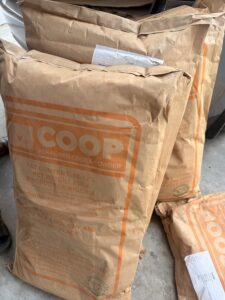
Under General Interpretative Rule 5(b), normal packing such as sacks, cartons and bags is classified with the goods it holds, so a 25 kg sack of cocoa powder is declared as cocoa powder.
Note 1 to Chapter 18 excludes the preparations of headings 0403, 1901, 1902, 1904, 1905, 2105, 2202, 2208, 3003 and 3004, and food preparations containing more than 20% by weight of meat, fish, insects or other animal products of Chapter 16. Note 2 states that heading 1806 includes sugar confectionery containing cocoa and, subject to Note 1, other food preparations containing cocoa.
Describe the goods the way the tariff does
The commercial invoice and the specification should state the facts that decide the code: whether the powder contains added sugar, whether the paste is defatted, the net weight of each pack, and the cocoa content of any preparation. A description that matches the tariff wording speeds up clearance and supports the code you declare.
Beans and by-products
HS Codes for Cocoa Beans, Nibs, Shells and Cocoa Cake
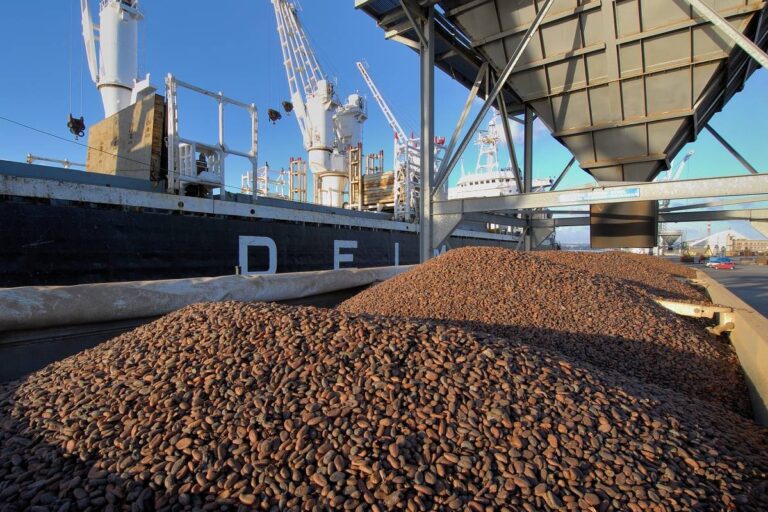
Heading 1801 covers cocoa beans whole or broken, raw or roasted. Fermenting, drying, roasting and breaking the beans into nibs leave them in the same heading, which is why a UK advance tariff ruling placed a cocoa mass flake, made by fermenting, drying, roasting and grinding the whole internal fruit of the cocoa pod, including the beans, pulp and pith, under 1801.00.
Product
HS code
Reason
Product
Fermented, dried cocoa beans
HS code
1801.00
Reason
Whole beans, raw
Product
Roasted cocoa beans
HS code
1801.00
Reason
The heading covers beans raw or roasted
Product
Cocoa nibs
HS code
1801.00
Reason
Nibs are the broken pieces of shelled beans, and the heading covers beans whole or broken
Product
Cocoa shells, husks and skins
HS code
1802.00
Reason
Removed during winnowing; sold for tea, mulch, feed and extraction
Product
Cocoa cake not suitable for powder
HS code
1802.00
Reason
Listed with cocoa waste in national tariffs such as the US Schedule B
Product
Cocoa press cake suitable for powder
HS code
1803.20
Reason
Classified as wholly or partly defatted cocoa paste

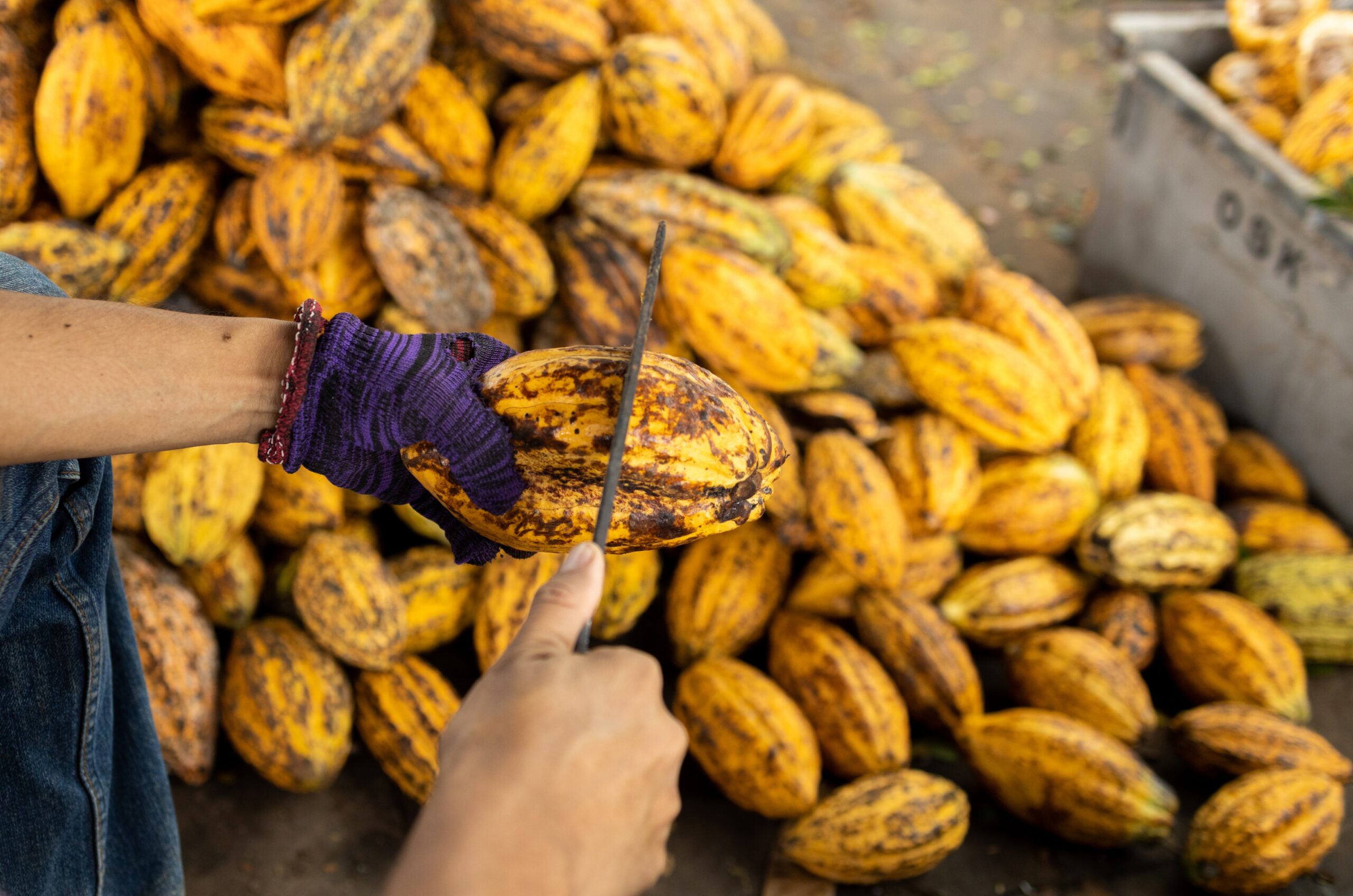
Cocoa beans and a cocoa pod, classified under HS 1801
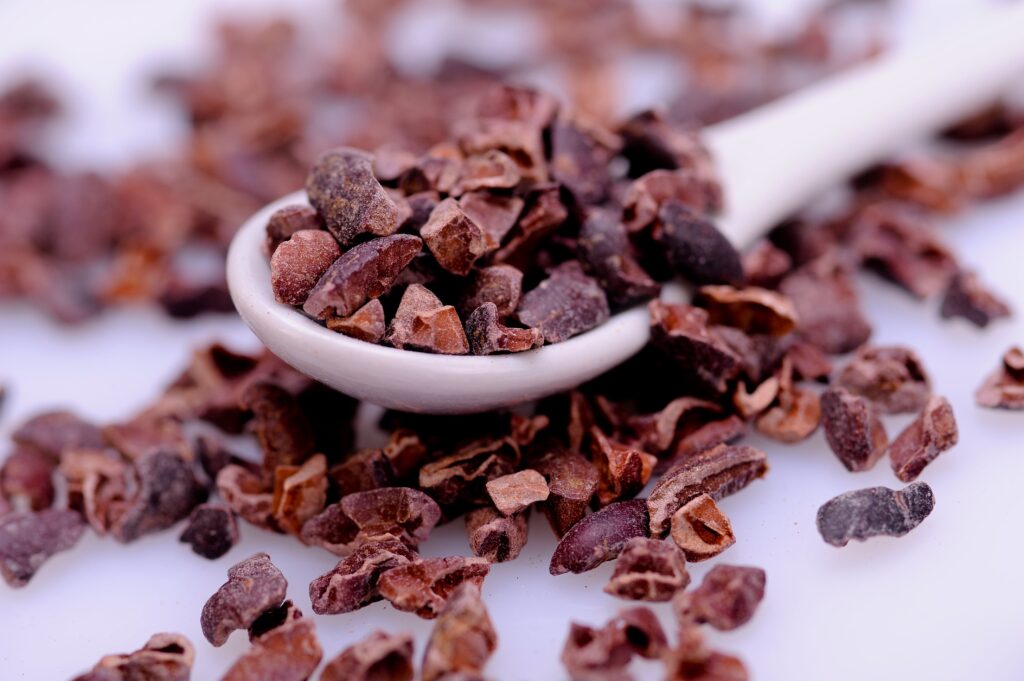
Cocoa nibs on a spoon, classified under HS 1801 as broken beans
Shells and husks have their own heading, 1802, and a separate trade. Our guide to uses of cocoa bean shells and husks covers the HS 1802 market, and how to buy and import bulk cocoa beans covers bean imports step by step.
Mass and butter
HS Codes for Cocoa Mass and Cocoa Butter
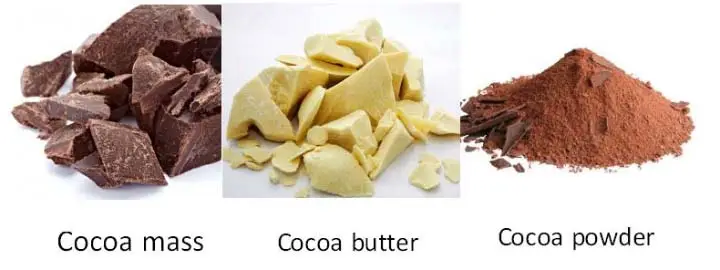
Cocoa mass and cocoa butter come from the same nibs and are declared under neighbouring headings. The split between 1803.10 and 1803.20 depends only on whether fat has been removed from the paste, and heading 1804 covers the fat itself:
Product
HS code
Reason
Product
Cocoa mass or cocoa liquor
HS code
1803.10
Reason
Ground nibs with their natural cocoa butter, not defatted
Product
Partly defatted cocoa paste or press cake
HS code
1803.20
Reason
Cocoa butter has been pressed out, wholly or partly
Product
Natural cocoa butter
HS code
1804.00
Reason
Heading 1804 covers cocoa butter, fat and oil
Product
Deodorized cocoa butter
HS code
1804.00
Reason
Deodorizing changes the flavour and odour, and the product is still cocoa butter
Product
Cocoa butter substitutes and equivalents made from other vegetable fats
HS code
Outside heading 1804
Reason
They are not cocoa butter, and their code depends on the fat they are made from
Fat removed, code changed
Pressing cocoa mass separates it into cocoa butter (1804.00) and press cake. The cake is classified as defatted paste under 1803.20 when it is suitable for making powder, and once it is ground into unsweetened powder it moves to 1805.00.
Cocoa powder
HS Code for Cocoa Powder: 1805 or 1806.10
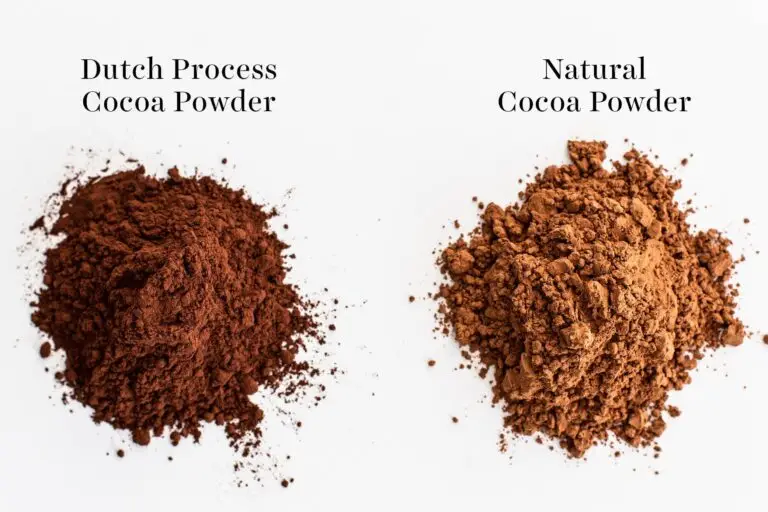
One question decides the code for cocoa powder: does it contain added sugar or other sweetening matter? Heading 1805 covers cocoa powder not containing added sugar or other sweetening matter, and subheading 1806.10 covers cocoa powder containing it. The fat grade, the shade and the degree of alkalization do not change the code, so natural, alkalized and black cocoa powder are all declared under 1805.00.
Product
HS code
Reason
Product
Natural cocoa powder, 10/12 or 20/22 fat
HS code
1805.00
Reason
No added sugar or sweetening matter
Product
Alkalized (Dutch-process) cocoa powder
HS code
1805.00
Reason
Heading 1805 sets no condition on alkalization
Product
Black cocoa powder
HS code
1805.00
Reason
A heavily alkalized powder with no added sugar
Product
Cocoa powder with added sugar or sweetener
HS code
1806.10
Reason
Any added sugar or other sweetening matter moves the powder out of 1805
Product
Cocoa powder mixed with sugar and vegetable oil, in bulk sacks for industrial bakeries
HS code
1806.20
Reason
A US Customs ruling classified a cocoa powder, sugar and vegetable oil mix, imported in 2 kg and 1 tonne sacks for industrial bakeries, under subheading 1806.20
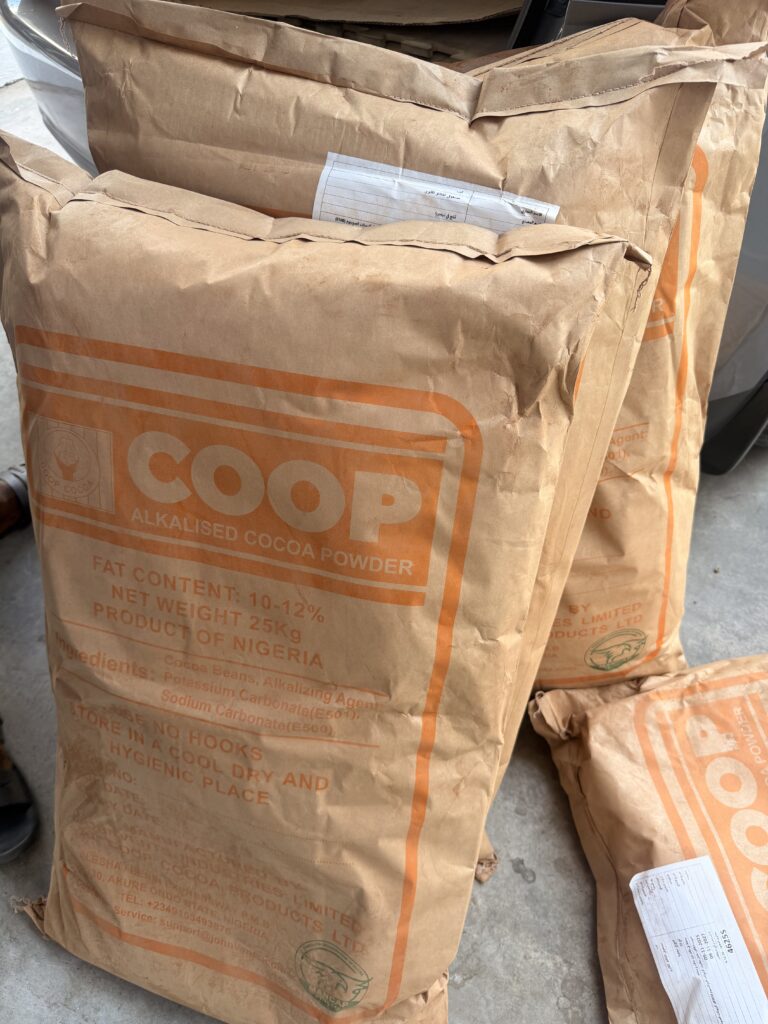
A 25 kg sack of unsweetened alkalized cocoa powder is declared under 1805.00, and the sack is classified with the powder.
The difference between the two types of powder is explained in alkalized vs natural cocoa powder.
Chocolate
HS Codes for Chocolate and Cocoa Preparations
Heading 1806 covers chocolate and other food preparations containing cocoa. The pack weight is the first test: preparations in blocks, slabs or bars weighing more than 2 kg, or in liquid, paste, powder, granular or other bulk form in containers of more than 2 kg, go to 1806.20. Smaller blocks, slabs and bars are split into filled (1806.31) and not filled (1806.32), and everything else falls to 1806.90.
Product
HS code
Test applied
Product
Couverture or compound chocolate in 5 kg or 10 kg bags
HS code
1806.20
Test applied
Bulk form in containers over 2 kg
Product
Chocolate blocks over 2 kg for industry
HS code
1806.20
Test applied
Blocks, slabs or bars weighing more than 2 kg
Product
Liquid chocolate delivered in tanks or containers over 2 kg
HS code
1806.20
Test applied
Liquid bulk form in containers over 2 kg
Product
Filled chocolate bar up to 2 kg
HS code
1806.31
Test applied
Block, slab or bar, filled
Product
Plain chocolate bar up to 2 kg
HS code
1806.32
Test applied
Block, slab or bar, not filled
Product
Other chocolate and cocoa preparations, such as boxed pralines and other retail products that are not blocks, slabs or bars
HS code
1806.90
Test applied
Not covered by the earlier subheadings
Weigh the pack, not the shipment
The 2 kg threshold applies to each block, slab, bar or immediate container. A pallet holding a tonne of 100 g bars is still declared under 1806.31 or 1806.32, while the same chocolate delivered in 5 kg bags is declared under 1806.20.
Exclusions
Cocoa Products Classified Outside Chapter 18
A product can contain cocoa and still be declared outside Chapter 18. Note 1 to the chapter excludes the preparations of the headings below, so these goods are classified by their main character, such as a biscuit, an ice cream or a drink:
Heading
What the heading covers
Cocoa product example
Heading
0403
What the heading covers
Yoghurt, kefir and other fermented milk products, including those containing cocoa
Cocoa product example
Chocolate yoghurt
Heading
1901
What the heading covers
Food preparations of flour, groats, meal, starch or malt extract with less than 40% cocoa, and preparations of milk products (headings 0401 to 0404) with less than 5% cocoa, in both cases calculated on a totally defatted basis
Cocoa product example
Malted chocolate drink powders and milk-based mixes with a low cocoa content
Heading
1904
What the heading covers
Prepared foods obtained by swelling or roasting cereals
Cocoa product example
Cocoa-flavoured breakfast cereals
Heading
1905
What the heading covers
Bread, pastry, cakes, biscuits and other bakers’ wares
Cocoa product example
Chocolate biscuits, cakes and wafers
Heading
2105
What the heading covers
Ice cream and other edible ice, whether or not containing cocoa
Cocoa product example
Chocolate ice cream
Heading
2202
What the heading covers
Waters and other non-alcoholic beverages
Cocoa product example
Ready-to-drink chocolate milk and chocolate protein shakes
Heading
2208
What the heading covers
Spirits, liqueurs and other spirituous beverages
Cocoa product example
Chocolate liqueur
Heading
3003 and 3004
What the heading covers
Medicaments
Cocoa product example
Medicines in a cocoa or chocolate base
A UK advance tariff ruling classified a ready-to-drink chocolate-flavoured protein shake under heading 2202, subheading 2202.99, which shows how a drink containing cocoa leaves Chapter 18 once it is a beverage.
Hot chocolate and drink mixes
Drink powders fall on three sides of the boundary. A mix of cocoa powder and sugar is sweetened cocoa powder under 1806.10. A malt or milk-powder based mix whose cocoa content is below the 40% or 5% limits of heading 1901, calculated on a totally defatted basis, is classified under 1901, and a mix above those limits stays in heading 1806. Record the cocoa content of each mix on the specification, because the percentage decides the heading.
For the cocoa side of drink formulation, see cocoa powder for hot chocolate.
UAE tariff
UAE Tariff Codes for Cocoa: 8 Digits and 12 Digits
The UAE applies the GCC Unified Customs Tariff, which builds national lines on the six-digit HS codes. UAE Cabinet Resolution No. 119 of 2024 approved an Integrated Customs Tariff with 12-digit codes, and Dubai Customs Notice No. 10/2025 started its use on 1 August 2025 for declarations destined for other GCC countries, with a six-month flexible period alongside the 8-digit codes and Abu Dhabi Customs adopting the same structure. Where an 8-digit line is unchanged, the 12-digit code is the same eight digits followed by four zeros; where a line has been subdivided, the last four digits identify the more specific product, and products that were not classified before receive new codes.
Dubai Customs set out the roll-out in phases:
Period
Scope of the 12-digit codes
Period
August 2025 to January 2026
Scope of the 12-digit codes
12-digit classification for customs declarations destined for other GCC countries
Period
February 2026 to July 2026
Scope of the 12-digit codes
Extension to imports from free zones and customs warehouses to the mainland
Period
August 2026 to January 2027
Scope of the 12-digit codes
12-digit codes mandated for all mainland imports from the rest of the world
Period
From February 2027
Scope of the 12-digit codes
Roll-out to temporary trade flows, such as imports for re-export and temporary admission
Customs Notice No. 02/2026, issued on 30 January 2026, extended the flexibility period, and Dubai Customs continues to accept declarations with 8-digit codes until further notice. Check the latest customs notices before each shipment, and use the Dubai Customs correlation table or its Al Munassiq classification tool to find the 8-digit and 12-digit lines for your product.
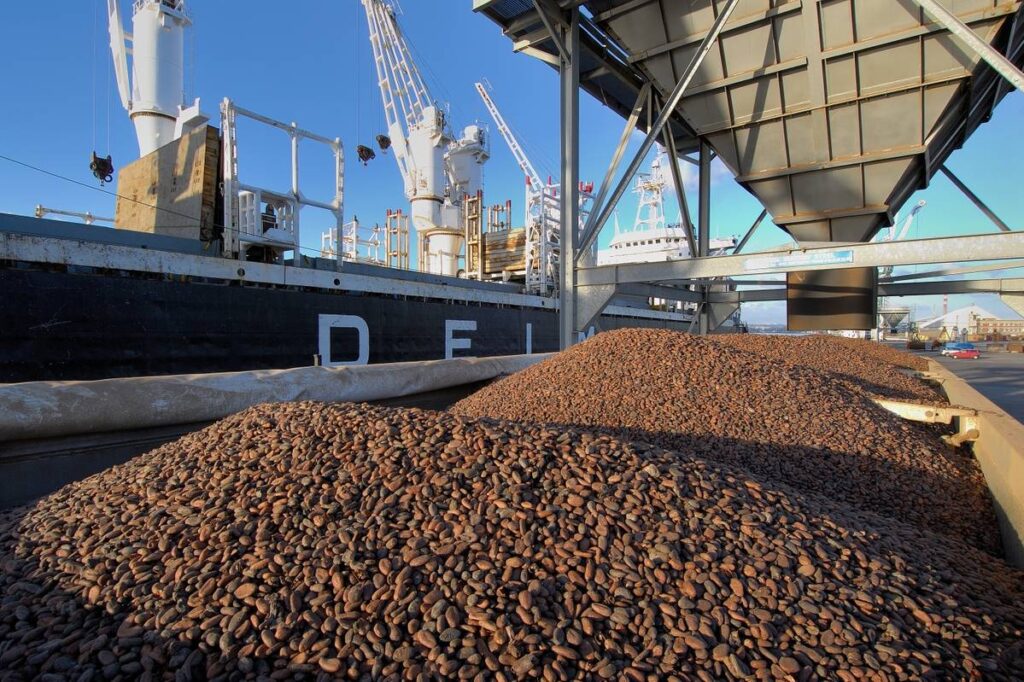
The tariff code on the declaration sets the duty, the statistics and any controls applied at the port of entry.
Duty and VAT
Customs Duty and VAT on Cocoa Imports in the UAE
The UAE charges customs duty at 5% of the value of the goods plus cost, freight and insurance (CIF). Import VAT is charged at the standard rate of 5% on the import value, which is the customs value including freight and insurance plus the customs duty. A shipment of cocoa powder with a CIF value of AED 100,000 works out as follows:
Item
Amount
Item
CIF value of the goods (price, freight and insurance)
Amount
AED 100,000
Item
Customs duty at 5% of CIF
Amount
AED 5,000
Item
VAT base: CIF value plus duty
Amount
AED 105,000
Item
Import VAT at 5%
Amount
AED 5,250
Item
Total duty and VAT
Amount
AED 10,250
VAT-registered importers account for import VAT through their VAT return, while importers who are not registered pay it before the goods are released, through a registered clearing company or the Federal Tax Authority’s e-services. Where the goods end up decides when duty is paid:
Mainland import
Duty and VAT are due when the goods are cleared into the UAE mainland.
Free zone
Goods imported into a free zone are exempt from duty while they stay there; duty is due when they move to the mainland.
Re-export outside the GCC
Re-exports from free zones to markets outside the GCC customs zone are exempt from duty. For goods imported for re-export, a deposit or guarantee equal to the duty is lodged in place of payment.
Onward to another GCC state
Goods move between GCC customs offices, and a set-off arrangement known as the Makasa stamp prevents the duty from being paid twice.
Confirm the rate for your line
The 5% rate applies to goods in general. Check the duty for your exact tariff line in the Dubai Customs Al Munassiq classification tool, which shows the HS code, the duty rate and any permits required, and ask your customs broker whether a trade agreement applies to the country of origin.
Registration, Arabic labelling and the other UAE rules for selling cocoa are covered in cocoa suppliers in the UAE and UAE cocoa demand, and the price terms that set the CIF value are explained in FOB vs CIF cocoa.
Mistakes
Common Cocoa Classification Mistakes
A wrong code changes the duty paid and the statistics recorded, and it can hold up clearance. These are the errors seen most often with cocoa products:
Mistake
Correct treatment
Mistake
Declaring sweetened cocoa powder under 1805.00
Correct treatment
Any added sugar or sweetener moves the powder to 1806.10
Mistake
Giving alkalized cocoa powder a different code from natural powder
Correct treatment
Both are 1805.00 when unsweetened
Mistake
Declaring cocoa nibs as a cocoa preparation
Correct treatment
Nibs are broken beans under 1801.00
Mistake
Declaring cocoa mass under 1804 or 1805
Correct treatment
Cocoa mass is cocoa paste, 1803.10 when not defatted
Mistake
Classifying chocolate by the weight of the shipment
Correct treatment
The 2 kg test in 1806.20 applies to each block or immediate container
Mistake
Keeping a drink, biscuit or ice cream in Chapter 18
Correct treatment
Note 1 sends these to headings 2202, 1905 and 2105
Mistake
Assuming 8-digit codes will always be accepted
Correct treatment
Dubai Customs accepts 8-digit codes only until further notice, so check the latest customs notice before each shipment
Radad International
HS Codes for Radad Cocoa Products
Radad International exports cocoa products from Africa and supplies buyers across the UAE. The six-digit HS codes for our range are:
Product
HS code
Product
Cocoa beans
HS code
1801.00
Product
Cocoa nibs
HS code
1801.00
Product
Cocoa shells
HS code
1802.00
Product
Cocoa mass (cocoa liquor)
HS code
1803.10
Product
Natural cocoa butter
HS code
1804.00
Product
Deodorized cocoa butter
HS code
1804.00
Product
Natural cocoa powder
HS code
1805.00
Product
Alkalized cocoa powder
HS code
1805.00
Product
Black cocoa powder
HS code
1805.00
Product
Chocolate bars
HS code
1806.31 (filled) or 1806.32 (not filled)
An export shipment of cocoa normally travels with a commercial invoice, packing list, bill of lading, certificate of analysis and certificate of origin, and the product description on the invoice should match the code declared. Our guide on how to import cocoa powder explains each document.
Work with Radad International
Request a Quote for Cocoa Products
Tell us the product, grade, quantity and destination, and whether you buy FOB or CIF, and we will send a quote and the shipping documents your broker needs to clear the goods.
Or email info@radadinternational.com · +971 522 501 039
Questions
Cocoa HS Codes: FAQs
What is the HS code for cocoa powder?
Cocoa powder with no added sugar or other sweetening matter is HS 1805.00, whether it is natural, alkalized or black and whatever its fat grade. Cocoa powder with added sugar or sweetener is HS 1806.10.
What is the HS code for cocoa beans?
Cocoa beans are HS 1801.00, which covers beans whole or broken, raw or roasted.
What is the HS code for cocoa nibs?
Cocoa nibs are the broken pieces of shelled cocoa beans, so they are declared under heading 1801, which covers beans whole or broken, raw or roasted.
What is the HS code for cocoa butter?
Cocoa butter, fat and oil are HS 1804.00, for natural and deodorized cocoa butter alike. Substitutes and equivalents made from other vegetable fats are classified outside heading 1804.
What is the HS code for cocoa mass or cocoa liquor?
Cocoa mass is cocoa paste: HS 1803.10 when it is not defatted and HS 1803.20 when it is wholly or partly defatted, including press cake suitable for making powder.
What is the HS code for cocoa shells?
Cocoa shells, husks, skins and other cocoa waste are HS 1802.00, and national tariffs such as the US Schedule B also place cocoa cake that is not suitable for making powder under this code.
Does alkalized cocoa powder have a different HS code from natural cocoa powder?
Both are declared under HS 1805.00 when they contain no added sugar, because heading 1805 sets no condition on alkalization. Only added sugar or sweetener changes the code, to 1806.10.
What is the HS code for chocolate?
Chocolate is under heading 1806: 1806.20 for blocks over 2 kg or bulk containers over 2 kg, 1806.31 for filled blocks, slabs and bars, 1806.32 for unfilled ones, and 1806.90 for other chocolate products.
What is the HS code for hot chocolate mix?
A mix of cocoa powder and sugar is HS 1806.10. A malt or milk-powder based mix with less than 40% or 5% cocoa respectively, calculated on a totally defatted basis, is classified under heading 1901, while ready-to-drink chocolate milk is a beverage under heading 2202.
What is the customs duty on cocoa in the UAE?
The standard UAE customs duty is 5% of the CIF value, and import VAT of 5% is charged on the CIF value plus duty. Confirm the rate for your exact tariff line in the Dubai Customs tariff before you price a shipment.
Are cocoa products duty-free in UAE free zones?
Goods imported into a free zone are exempt from duty while they stay there, and re-exports from free zones to markets outside the GCC are exempt. Duty is due when the goods enter the UAE mainland.
Does the UAE use 8-digit or 12-digit HS codes?
The UAE is moving to 12-digit codes under the GCC Integrated Customs Tariff, starting 1 August 2025. Under Customs Notice 02/2026, Dubai Customs continues to accept 8-digit codes until further notice, so check the latest notice before each shipment.
Who decides the HS code on a cocoa shipment?
The importer and its customs broker declare the code, and customs can review it at clearance. Base the code on the tariff wording and the chapter notes, keep the product specification on file, and use the Dubai Customs classification tools when a product sits near a boundary.
Keep reading
More Guides from Radad International

Sources and References
- Australian Border Force, Customs Tariff Schedule 3, Chapter 18: Cocoa and cocoa preparations (HS notes and subheadings)
- Canada Border Services Agency, Customs Tariff 2026, Chapter 18
- Australian Border Force, Customs Tariff Schedule 3, Chapter 19 (heading 1901)
- US Census Bureau, Schedule B 2022, Chapter 18
- HMRC Advance Tariff Ruling 600013769, cocoa mass flake (1801)
- HMRC Advance Tariff Ruling 600011867, ready-to-drink chocolate protein shake (2202)
- US Customs and Border Protection Ruling N308289, cocoa powder and vegetable oil mix (1806.20)
- Dubai Customs, Integrated Customs Tariff
- Dubai Customs, Integrated Customs Tariff: 12-digit HS codes presentation
- Dubai Customs, 12-digit HS codes implementation phases
- Dubai Customs, Customs Notice No. 02/2026
- PwC Middle East, Dubai and Abu Dhabi announce the implementation of the 12-digit Integrated Tariff
- UAE Government Portal, Rate of customs duty
- Federal Decree-Law No. 8 of 2017 on Value Added Tax, Articles 3 and 35
- UK Integrated Online Tariff, heading 1806: chocolate and other food preparations containing cocoa
- Federal Tax Authority, VAT guide for importers
- Meydan Free Zone, VAT on imported goods: worked example
- US International Trade Administration, UAE Country Commercial Guide: customs regulations