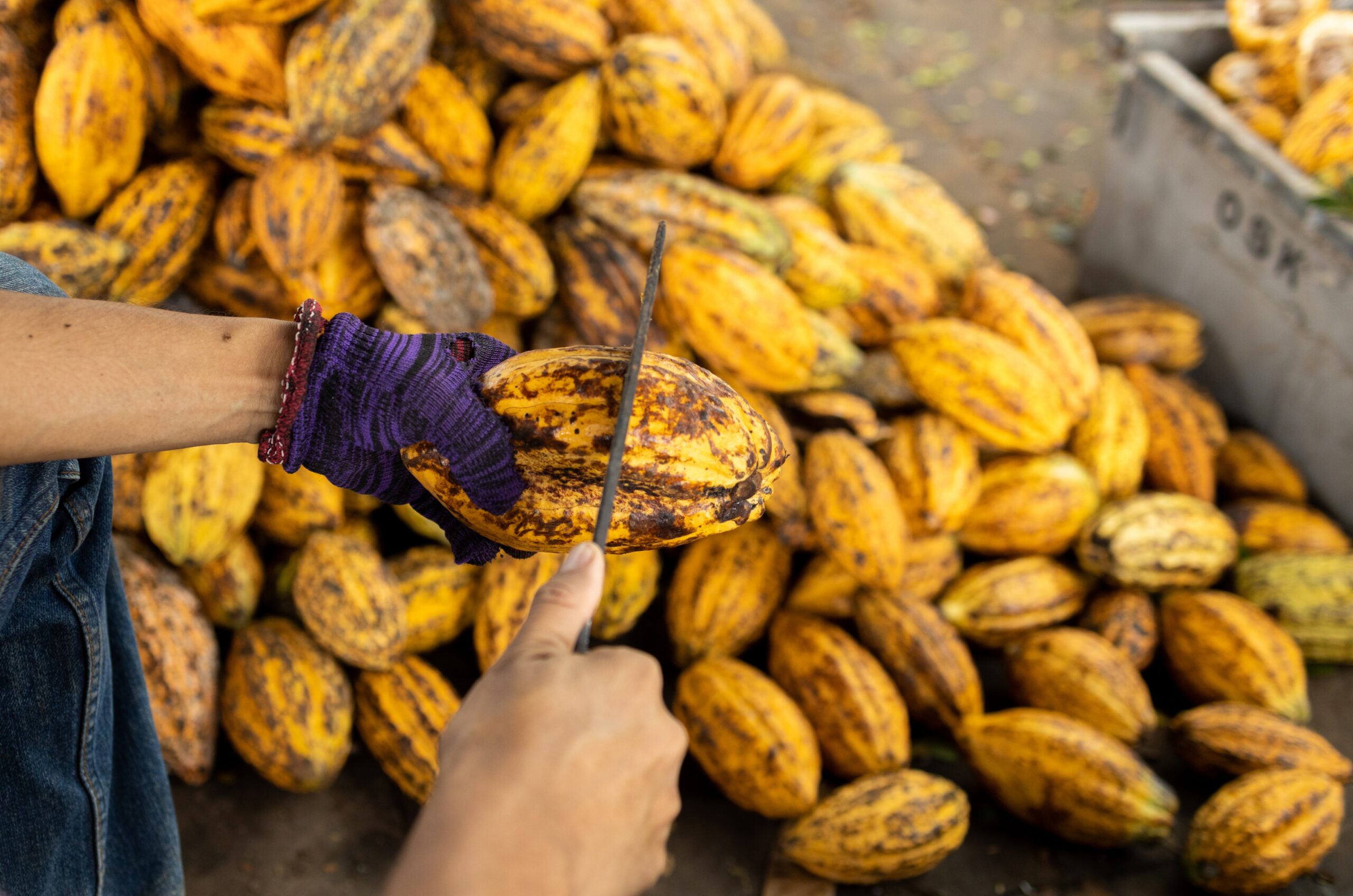
From 30 December 2026, every shipment of cocoa beans, cocoa paste, cocoa butter, cocoa powder and chocolate placed on the EU market must be traceable to the farm plots where the cocoa was grown. This requirement comes from the EU Deforestation Regulation (EUDR), Regulation (EU) 2023/1115, and it applies to cocoa importers, chocolate and food manufacturers, distributors and traders who supply European customers, including those buying through hubs such as Dubai.
For EUDR cocoa compliance, each lot must meet three conditions: the cocoa was not grown on land deforested after 31 December 2020, it was produced legally in its country of origin, and the company that first places it on the EU market has filed a due diligence statement. The filing duty lies with EU companies, and they need plot coordinates and legality evidence from the exporter in the producing country to complete it. Importers therefore have to require this data in the purchase contract for every shipment, alongside the specification sheet and the certificate of origin.
Overview
The EUDR applies to large and medium-sized operators, and to all downstream operators and traders, from 30 December 2026, and to micro and small operators from 30 June 2027. It covers cocoa under HS 1801 to 1806: beans, shells, paste, butter, powder and chocolate. Only the operator who first places the cocoa on the EU market, or exports it from the EU, submits a due diligence statement in the EU Information System; downstream companies pass on its reference number. That statement must carry the geolocation of every plot that supplied the lot, as a GPS point for plots up to 4 hectares and a polygon for larger ones, with the harvest period and country of production.
Cocoa without plot data cannot be sold in the EU. Cocoa from an unknown plot cannot be blended into a compliant lot, and processing beans into powder or butter does not remove the need to trace them. Only four countries are rated high risk, and none is a major cocoa producer; most cocoa origins, including Côte d’Ivoire, are rated standard risk, which requires a full risk assessment. Under national penalty rules, the maximum fine must be at least 4% of a company’s annual EU turnover, alongside confiscation of goods and exclusion from public contracts. Goods sold within the UAE are outside the EUDR, but cocoa re-exported from Dubai into the EU is fully covered.
In this guide
- Key EUDR dates for cocoa
- Which cocoa products are covered
- The three conditions every lot must meet
- Who files what in the cocoa chain
- What to get from your cocoa supplier
- Country risk ratings for cocoa origins
- Beans, powder and butter: traceability through processing
- Penalties for non-compliance
- Buying through Dubai and re-exporting to the EU
- How to prepare before 30 December 2026
- FAQs
- Sources and References
Timeline
Key EUDR Dates for Cocoa Importers
The EUDR was due to apply from December 2024. It was postponed twice and amended in December 2025. In May 2026 the European Commission confirmed there will be no further delay, and the dates below apply:
Date
What happens
Date
29 June 2023
What happens
Regulation (EU) 2023/1115 enters into force
Date
31 December 2020
What happens
Deforestation cut-off date: cocoa from land cleared after this date cannot be sold in the EU
Date
December 2025
What happens
Regulation (EU) 2025/2650 delays application by one year and simplifies duties for downstream companies
Date
30 December 2026
What happens
Rules apply to large and medium-sized operators, and to downstream operators and traders of all sizes
Date
30 June 2027
What happens
Rules apply to micro and small operators
Note
A July 2026 update to the product list added soluble coffee and some palm oil derivatives and removed leather and some rubber goods. Cocoa products were not changed.
Scope
Which Cocoa Products the EUDR Covers
Coverage follows the customs code of the product, not its ingredients. Every cocoa product in HS chapter 18 is covered, while finished goods classified elsewhere fall outside, even when they contain cocoa:
HS code
Product
In scope
HS code
1801
Product
Cocoa beans, whole or broken, raw or roasted
In scope
Yes
HS code
1802
Product
Cocoa shells, husks, skins and other cocoa waste
In scope
Yes
HS code
1803
Product
Cocoa paste (cocoa mass or liquor), whether or not defatted
In scope
Yes
HS code
1804
Product
Cocoa butter, fat and oil
In scope
Yes
HS code
1805
Product
Cocoa powder, not containing added sugar or other sweetening matter
In scope
Yes
HS code
1806
Product
Chocolate and other food preparations containing cocoa
In scope
Yes
HS code
1905
Product
Biscuits, cakes and other bakery products containing cocoa
In scope
No
HS code
1704
Product
White chocolate
In scope
No
HS code
3304
Product
Cosmetics such as lip balms and body creams made with cocoa butter
In scope
No
For chocolate and other mixed products under HS 1806, due diligence covers the cocoa they contain. Samples used for testing and analysis, packaging material and waste are exempt. When a code is unclear, a Binding Tariff Information ruling from an EU customs authority confirms the classification.
Conditions
The Three Conditions Every Cocoa Lot Must Meet
A cocoa product can be placed on the EU market, or exported from it, only if it meets all three conditions:
1. Deforestation-free
The cocoa was grown on land that has not been deforested since 31 December 2020. Forest degradation also counts for wood products but not for cocoa. Planting cocoa on land that was already farmland before the cut-off date is allowed.
2. Legally produced
The cocoa was produced in line with the laws of the country of production on land use rights, environmental protection, labour and human rights, free prior and informed consent, tax, anti-corruption, and trade and customs rules.
3. Covered by a due diligence statement
The operator has collected the required information, assessed and reduced any risk, and filed a statement in the EU Information System. The reference number must be quoted in the customs declaration when the cocoa enters or leaves the EU.

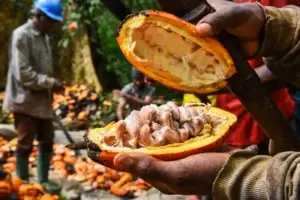
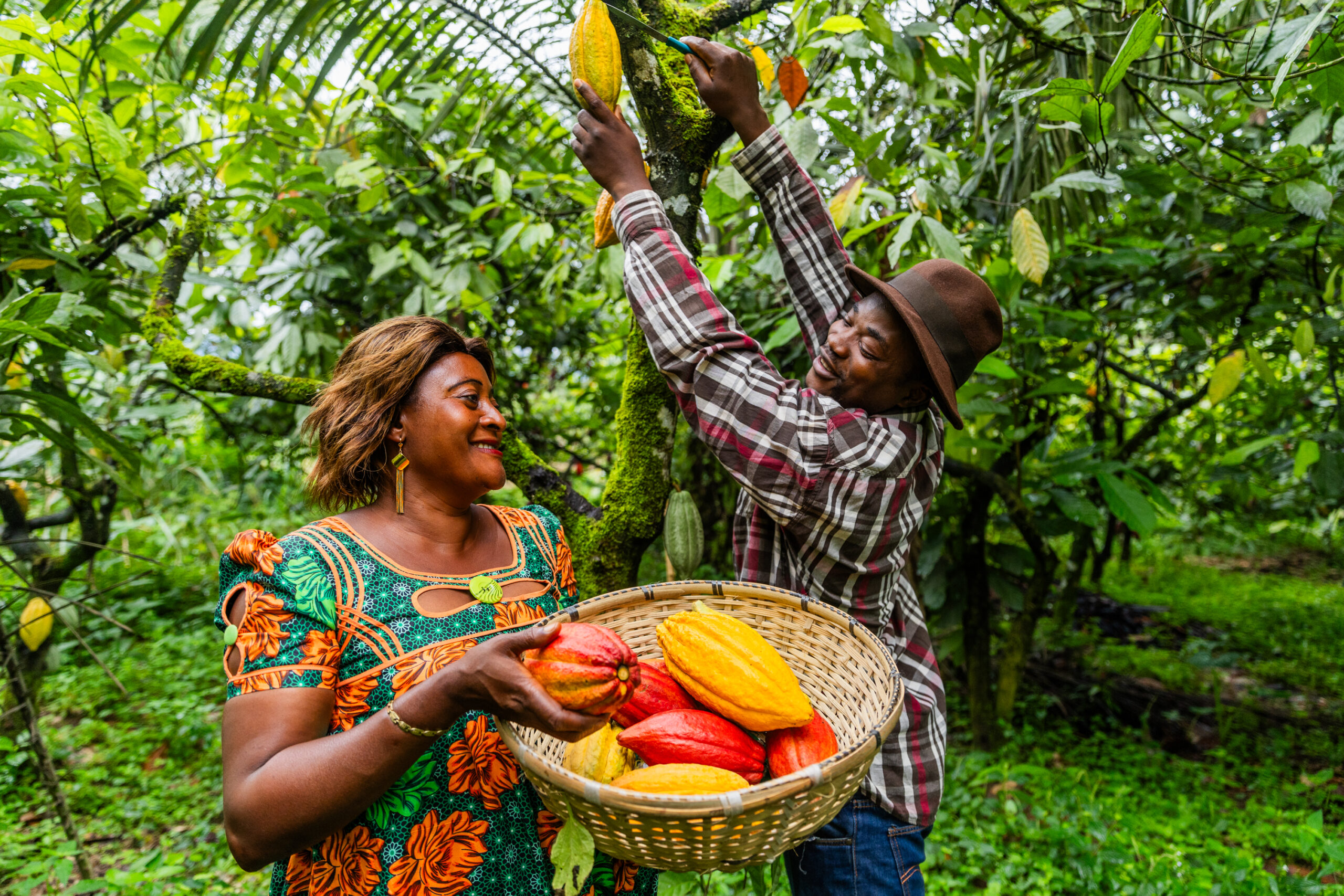
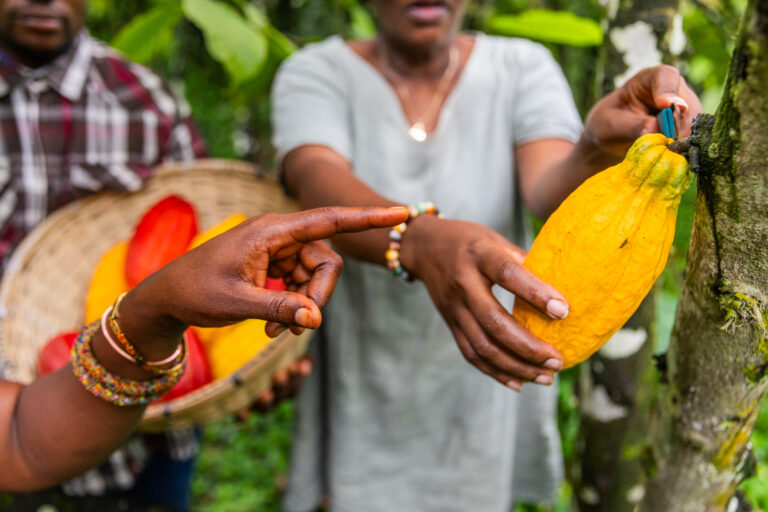
Cocoa pods on the tree: each farm plot must be mapped

Most African cocoa comes from smallholder farms, and each farm plot must be mapped
Roles
Who Files What in the Cocoa Supply Chain
The December 2025 amendment concentrated the filing duty on the first company in the EU chain. The duties now differ by role:
Role
Who it is
EUDR duties
Role
Exporter or supplier outside the EU
Who it is
Collects plot coordinates, harvest dates and legality evidence; passes them to the EU buyer
EUDR duties
No filing duty under the EUDR, but without this data the cocoa cannot be sold in the EU
Role
Operator
Who it is
The company that first places cocoa on the EU market or exports it, usually the EU importer
EUDR duties
Runs full due diligence and submits the due diligence statement; keeps records for 5 years
Role
Downstream operator
Who it is
An EU processor or manufacturer using cocoa already covered by a statement, such as a chocolate maker buying cocoa butter in Europe
EUDR duties
Collects and keeps the reference number from its supplier; files no statement of its own; companies that are not SMEs register in the Information System
Role
Trader
Who it is
An EU company reselling cocoa products without processing them
EUDR duties
Collects and keeps reference numbers from suppliers; keeps records of who it buys from and sells to
Every company in the chain, whatever its size, must keep supplier and customer records for five years so that authorities can follow a lot back to its statement.
Supplier documents
What to Get From Your Cocoa Supplier
An EU operator can only file a complete statement if the exporter supplies this information for each shipment. Put these items in the purchase contract and ask for them before the cocoa is loaded:
- Geolocation of every plot that supplied the lot: latitude and longitude with six decimal places, as a single point for plots up to 4 hectares and a polygon of the boundary for larger plots
- Date or time range of harvest for the cocoa in the lot
- Country of production and, where relevant, region
- Product description, HS code and quantity (net mass)
- Name, postal address and email of the supplier
- Evidence that the cocoa is deforestation-free, such as plot maps checked against satellite imagery from before and after 31 December 2020
- Evidence of legal production: land tenure or use rights, farm or cooperative registration, and export licences
- The due diligence statement reference number, when the cocoa has already been placed on the EU market by an earlier operator
Smallholder cocoa
A single container of African cocoa usually combines beans from many small farms. Every plot behind the lot must be geolocated, and beans from an unmapped plot cannot be mixed into a compliant lot. Ask suppliers how they keep mapped and unmapped cocoa apart, from the buying centre to the warehouse.
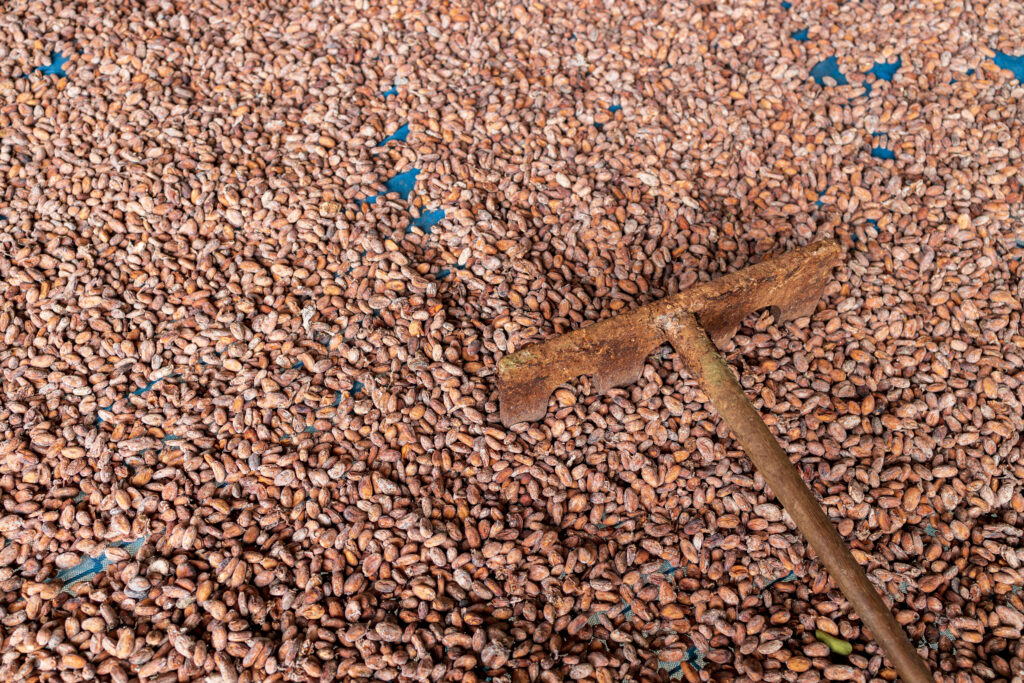
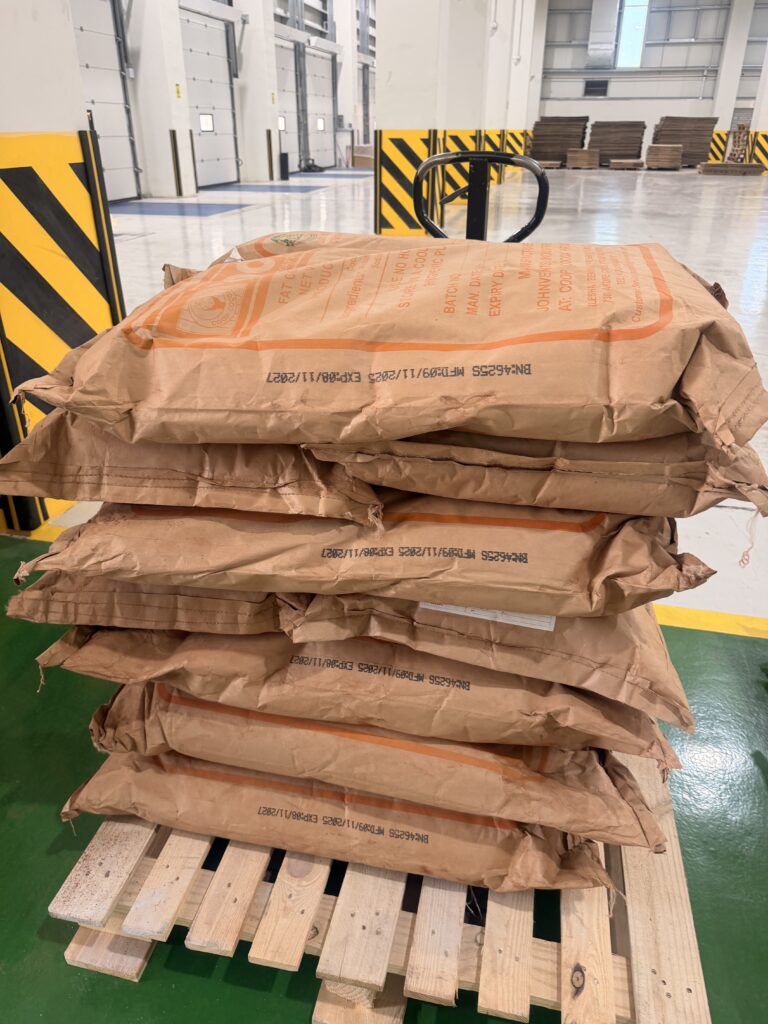
Each lot must stay traceable through drying, bagging and bulking at the buying centre.
Country benchmarking
Country Risk Ratings for Cocoa Origins
In May 2025 the European Commission rated every country as low, standard or high risk. The rating decides how much work the operator must do and how often authorities inspect its imports:
Rating
What it means for the operator
Countries
Rating
Low risk
What it means for the operator
Due diligence still applies, but the operator may skip risk assessment and mitigation unless it has information pointing to a risk of non-compliance
Countries
EU member states, the UK, the US, Canada, China, Japan, Australia and about 140 countries in total
Rating
Standard risk
What it means for the operator
Full due diligence: information collection, risk assessment and risk mitigation
Countries
Most cocoa-producing countries, including Côte d’Ivoire
Rating
High risk
What it means for the operator
Full due diligence and the most frequent checks by EU authorities
Countries
Belarus, Myanmar, North Korea and Russia only
A low rating does not remove the need for plot geolocation or legality evidence, and a standard rating does not block trade. The Commission reviews the list, so check the current rating of each origin before you contract, especially when you buy from several African countries.
Processing
Beans, Powder and Butter: Traceability Through Processing
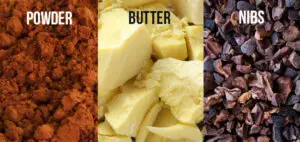
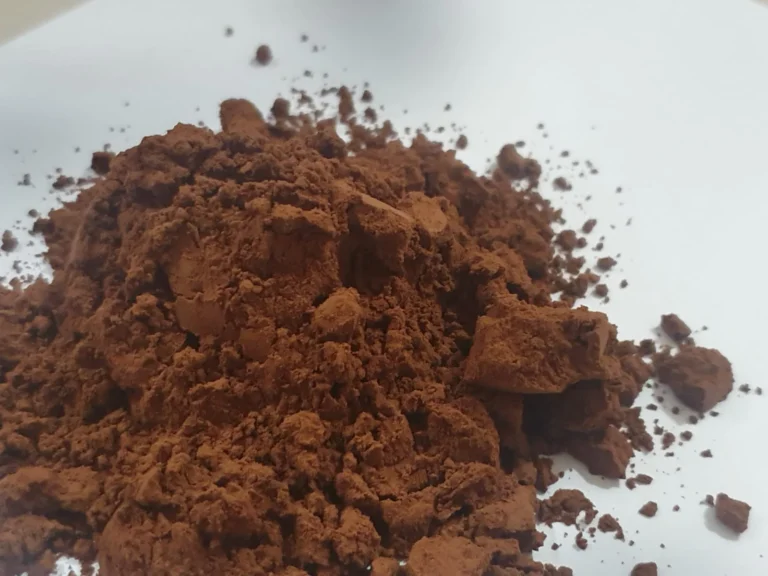
Grinding, pressing and alkalizing do not remove the traceability requirement. Cocoa powder or cocoa butter made from African beans needs the same plot data as the beans themselves, so a processor must link each production batch to the bean lots that went into it:
Product placed on the EU market
Geolocation needed for
Product placed on the EU market
Cocoa beans (1801)
Geolocation needed for
Plots that supplied the beans
Product placed on the EU market
Cocoa mass and paste (1803)
Geolocation needed for
All plots behind the beans that were ground
Product placed on the EU market
Cocoa butter (1804) and cocoa powder (1805)
Geolocation needed for
All plots behind the beans that were pressed
Product placed on the EU market
Chocolate (1806)
Geolocation needed for
All plots behind the cocoa ingredients used
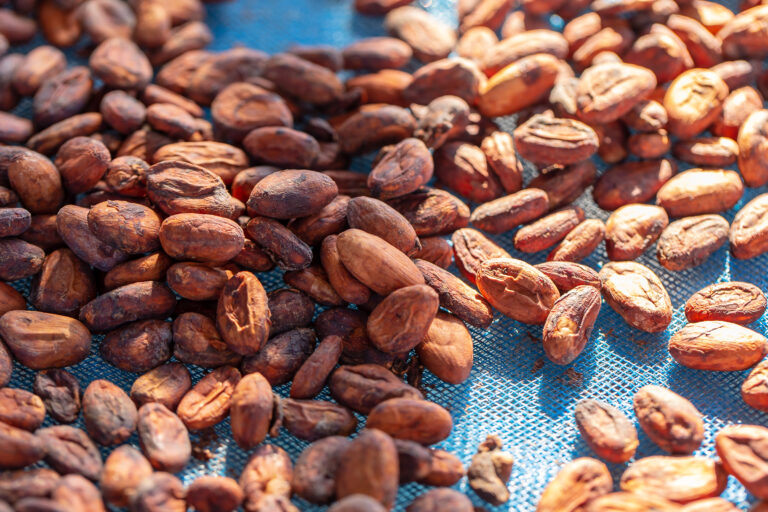
For processors in producing countries, this means segregating mapped beans before roasting and keeping batch records that tie each bag of powder or block of butter to its bean lots. Mass balance, where compliant and unknown cocoa are mixed and allocated on paper, does not meet the EUDR.

Enforcement
Penalties for EUDR Non-Compliance
National authorities in each EU country enforce the EUDR through checks on operators and traders and on the goods themselves. Sanctions must be proportionate and dissuasive, and include:
Fines
Member states set the penalties. The maximum fine must be at least 4% of the company’s total annual EU turnover, rising for repeat breaches.
Confiscation
Authorities can seize the non-compliant cocoa and the revenue earned from selling it.
Exclusion
Companies can be barred for up to 12 months from public procurement and from access to public funding.
Market ban
For serious or repeated breaches, a company can be temporarily banned from placing products on the EU market or exporting them.
Member states report final rulings against companies to the Commission, which publishes them on its website.
Middle East buyers
Buying Cocoa Through Dubai and Re-Exporting to the EU
The EUDR is an EU law. Cocoa bought and used in the UAE, Saudi Arabia or any other non-EU market is outside its scope, and no due diligence statement is needed for those sales.
The EUDR applies once the cocoa is sold into the EU. A Dubai trader selling cocoa powder to a bakery group in Germany, or a UAE chocolate maker exporting bars to France, supplies an EU operator that must file a statement. That operator needs plot geolocation for every lot, so the UAE company has to obtain it from the origin exporter and keep the link between each lot and its data intact through storage and repacking.
Practical step
If any share of your cocoa may reach the EU, buy it with full plot data from the start. Plot data cannot be assigned to cocoa after lots from different farms have been mixed in a warehouse.
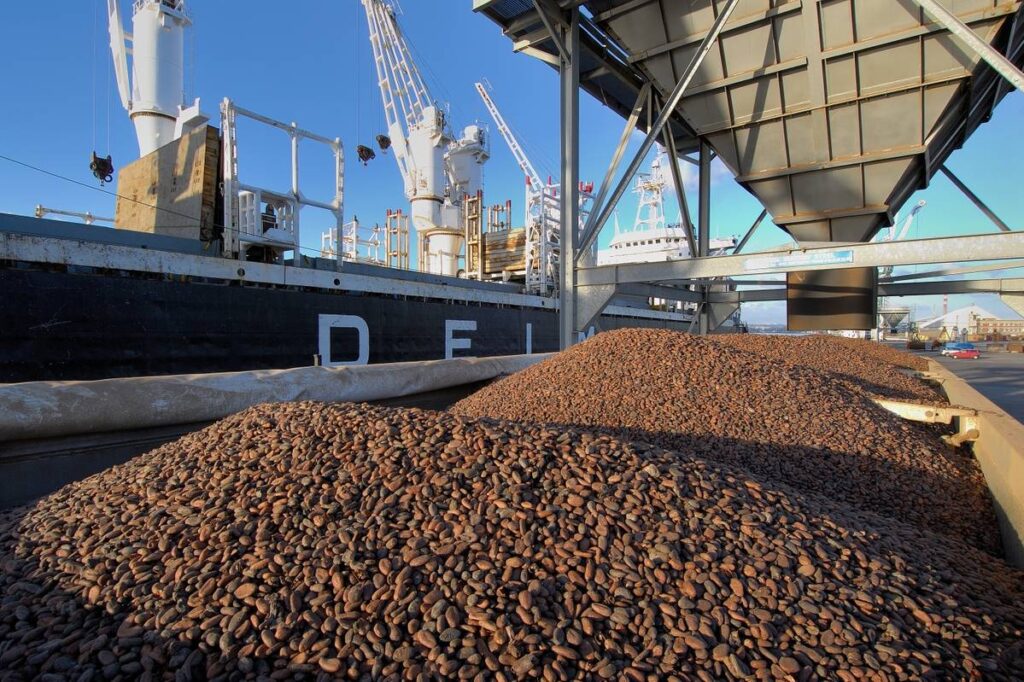
Each lot’s plot data must be passed on with the cocoa, from the African port to the final buyer.
Action plan
How to Prepare Before 30 December 2026
The rules apply to large and medium importers from 30 December 2026. These six steps prepare a cocoa supply chain for that date:
1
Map your EU exposure
List which products, customers and volumes go to the EU, and confirm the HS code of each product.
2
Confirm your role
Decide whether you are an operator, downstream operator or trader for each flow, and register in the EU Information System where required.
3
Write EUDR terms into contracts
Require plot geolocation, harvest dates and legality evidence for every shipment, and the right to reject cocoa without them.
4
Check supplier readiness
Ask each exporter how farms are mapped, how mapped cocoa is kept separate, and how data is delivered, ideally as a GeoJSON file.
5
Test the data
Screen plot coordinates against forest-cover maps for the 31 December 2020 cut-off, and check legality documents against the rules of the origin country.
6
Run a trial on one lot
Before 30 December 2026, assemble the complete statement data for one real lot to find gaps while there is still time to close them.
Work with Radad International
Plan Your EU-Bound Cocoa Orders With Us
Tell us the product, grade, volume and EU destination, and we will confirm the origin and traceability documents available for your order before you sign, with a market-linked quote on FOB or CIF terms.
Or email info@radadinternational.com · +971 522 501 039
Questions
EUDR Cocoa Compliance: FAQs
When does the EUDR apply to cocoa?
From 30 December 2026 for large and medium-sized operators and for all downstream operators and traders, and from 30 June 2027 for micro and small operators. The Commission confirmed in May 2026 that there will be no further postponement.
Which cocoa products are covered by the EUDR?
All cocoa products in HS chapter 18: cocoa beans (1801), shells and husks (1802), cocoa paste (1803), cocoa butter (1804), cocoa powder (1805) and chocolate (1806). Bakery products, white chocolate and cosmetics are classified elsewhere and fall outside.
Does an African cocoa exporter have to file a due diligence statement?
No. The statement is filed by the company that first places the cocoa on the EU market, usually the EU importer. The exporter must supply the plot geolocation, harvest dates and legality evidence the importer needs to file it.
What geolocation is required for cocoa farms?
Coordinates with six decimal places for every plot that supplied the lot: a single point for plots up to 4 hectares and a polygon of the plot boundary for larger plots.
What is the EUDR cut-off date?
31 December 2020. Cocoa grown on land deforested after that date cannot be placed on the EU market or exported from it.
Can compliant and non-compliant cocoa be mixed?
No. Every plot behind a lot must be known and compliant. Mass-balance systems that mix traced and untraced cocoa do not meet the EUDR.
Does the EUDR apply to cocoa powder and cocoa butter?
Yes. Processed products need geolocation for all the plots that supplied the beans used to make them.
Are certifications enough to comply?
No. Certification schemes can support a risk assessment, but they do not replace the operator’s own due diligence or the plot data in the statement.
What are the penalties for breaking the EUDR?
National authorities set them. They must include a maximum fine of at least 4% of annual EU turnover, confiscation of goods and revenue, and temporary exclusion from public procurement and funding.
Does the EUDR apply to cocoa sold in the UAE?
No. It applies only to cocoa placed on the EU market or exported from it. Cocoa re-exported from the UAE into the EU is covered, so the EU buyer will need full plot data.
Keep reading
More Guides from Radad International
Sustainability
Ethical Sourcing and Sustainability in Cocoa
Farming, labour and environmental practice.
Sources and References
- Regulation (EU) 2023/1115 on deforestation-free products
- Regulation (EU) 2025/2650 amending Regulation (EU) 2023/1115
- European Commission, Access2Markets: Delay until December 2026 and other developments in the implementation of the EUDR
- European Commission (July 2026), Commission updates product scope and tools to support EUDR
- Hogan Lovells (May 2026), Commission publishes simplification package ahead of December 2026 application date
- Fieldfisher, European Commission classifies countries as high, low or standard risk
- CMS, The EUDR benchmarking list is here
- European Forest Institute (2026), Geolocation factsheet for cocoa
- Fairtrade (2026), EUDR product guide on coffee and cocoa scope