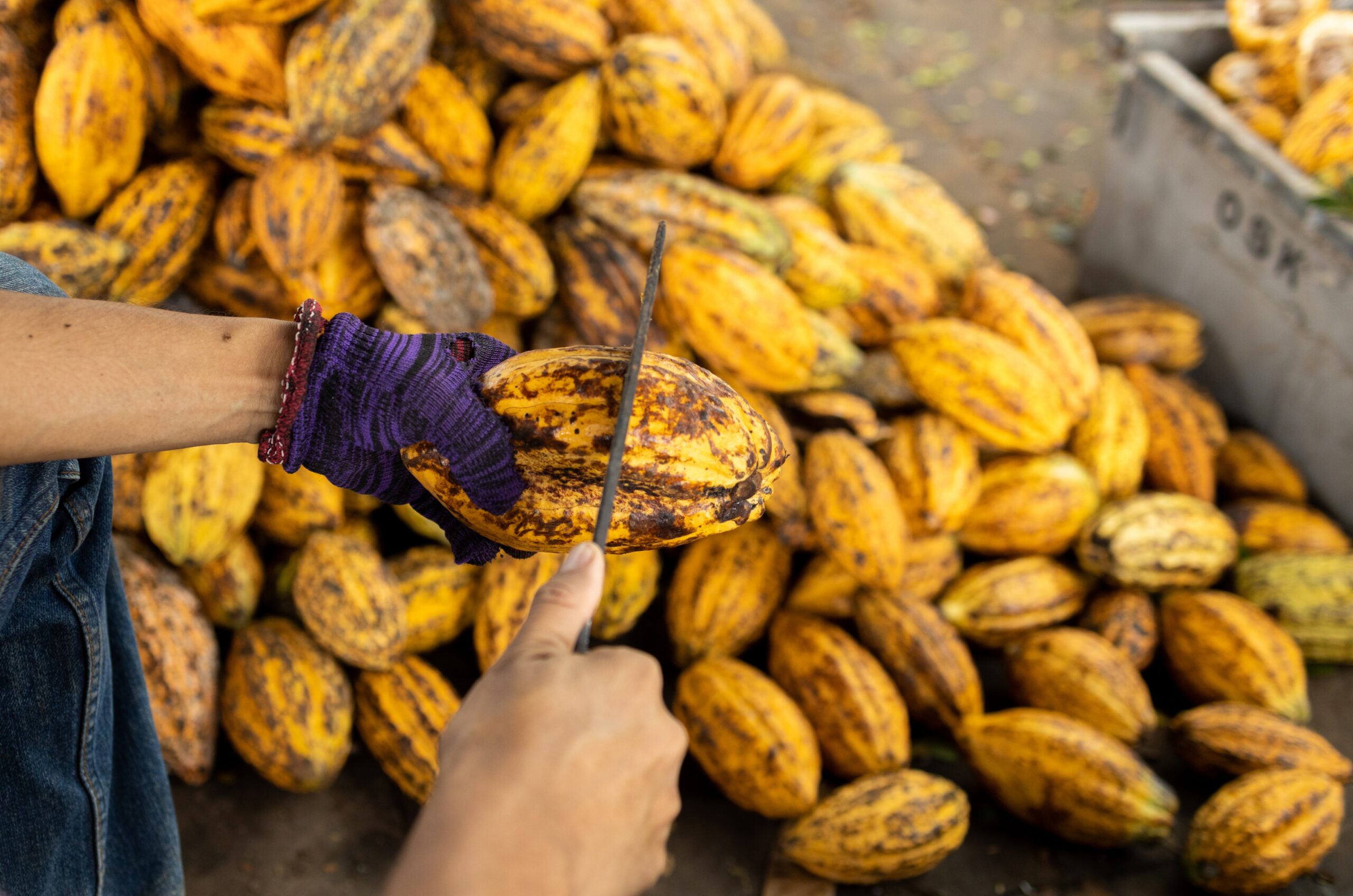
Cocoa powder for ice cream and gelato is used at about 2 to 4% of the mix by weight. Four choices decide how the finished product looks and tastes: the degree of alkalization, the fat grade, the fineness of the powder, and the stage of the process at which the cocoa goes in. Most chocolate ice cream is made with alkalized (Dutch-process) cocoa containing 10 to 12% fat, and super-premium recipes often move to 22 to 24% fat.
Cocoa changes a mix more than most flavours do. It adds bulk and solids, raises viscosity, makes the mix harder to whip and needs extra sweetness to offset its bitterness. For ice cream and gelato producers, from factories and dairies to gelaterias, hotels and café kitchens in the UAE, the right cocoa powder is therefore a specification decision as well as a flavour decision.
Overview
Start with alkalized cocoa powder at 10 to 12% fat, use it at about 2 to 4% of the mix, and raise the sweetness by about 1 to 3% compared with a vanilla mix to balance the bitterness. Light to medium alkalization gives a deeper brown colour and a rounder taste than natural cocoa, while heavily alkalized grades give the darkest colour at the cost of flavour. The 10/12 grade gives the strongest cocoa flavour per gram. A 22 to 24% fat grade gives a creamier body but needs a higher dose and costs more, because cocoa butter carries no flavour.
Specify fineness as well as flavour: coarse particles make ice cream mealy and reduce whippability. Add the cocoa before pasteurization so that it is heat-treated with the mix, because anything added afterwards must already be free of pathogens. Radad International supplies alkalized and natural cocoa powder in 1 kg to 25 kg packs with delivery across the UAE, and in bulk on FOB or CIF terms.
In this guide
- Alkalized or natural cocoa powder
- Fat grade: 10/12 or 20/22
- How much cocoa powder to use
- Adjusting the mix for cocoa
- When to add cocoa powder
- Dispersing cocoa powder without lumps
- Cocoa powder or cocoa mass
- Troubleshooting chocolate ice cream
- Cocoa powder specification for ice cream
- Buying cocoa powder for ice cream in the UAE
- FAQs
- Sources and References
Cocoa type
Alkalized or Natural Cocoa Powder for Ice Cream
Alkalized cocoa powder is the usual choice for chocolate ice cream. It gives the deeper brown colour, a smoother flavour and easier dispersion that most chocolate ice cream recipes are built around. Natural cocoa powder is a valid choice when you want a lighter colour and a brighter, fruitier cocoa note.
Property
Natural cocoa powder
Alkalized cocoa powder
Property
Colour
Natural cocoa powder
Light to medium reddish-brown
Alkalized cocoa powder
Light brown to near-black, darker with stronger alkalization
Property
Flavour
Natural cocoa powder
Sharp, fruity, slightly acidic
Alkalized cocoa powder
Smoother and milder; the cocoa note is rounder
Property
Acidity
Natural cocoa powder
Stays acidic
Alkalized cocoa powder
Neutralised, with a pH closer to neutral
Property
Dispersion
Natural cocoa powder
Disperses less easily in liquids
Alkalized cocoa powder
Dissolves and disperses more easily
Property
Usual role in ice cream
Natural cocoa powder
Lighter colour and a fruitier, brighter cocoa note
Alkalized cocoa powder
The standard choice for chocolate ice cream and gelato
The degree of alkalization sets the shade and the taste:
Light alkalization
A warm light brown that keeps more of the natural cocoa character. It suits products where you want a clear chocolate colour without a very dark result.
Medium alkalization
A deeper brown colour and a rounded, mellow flavour. In super-premium ice cream, a medium alkalized cocoa at a higher use level can give a milk-chocolate-like effect.
Heavy alkalization
Strong, dark colour, but the flavour becomes less desirable. Super-alkalized powders give the most colour and the least cocoa character.
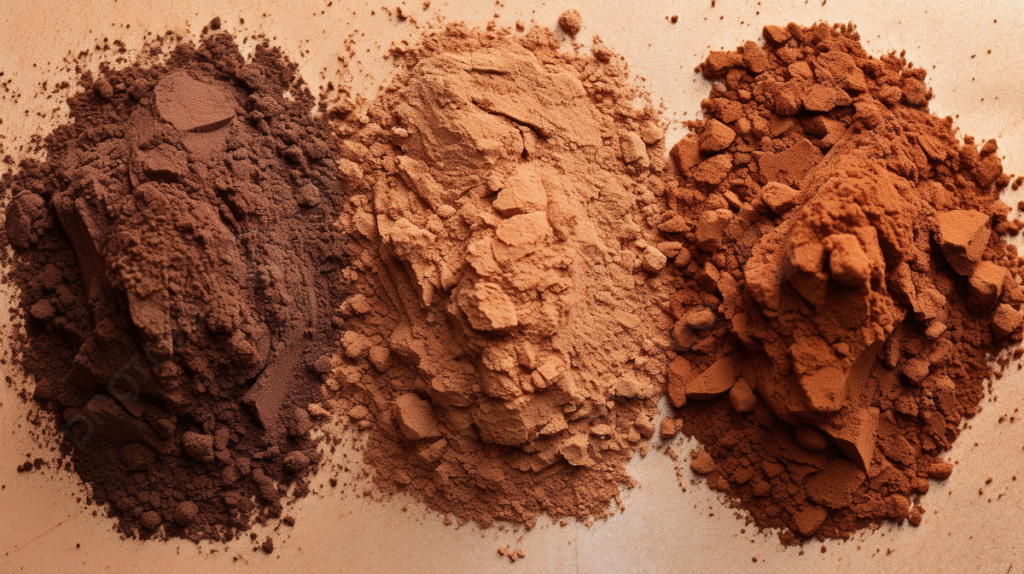
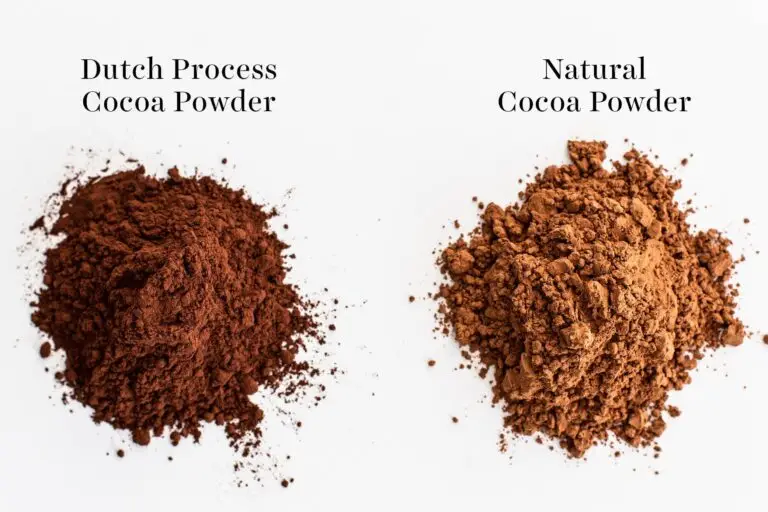
Natural and alkalized cocoa powder side by side: alkalization darkens the colour
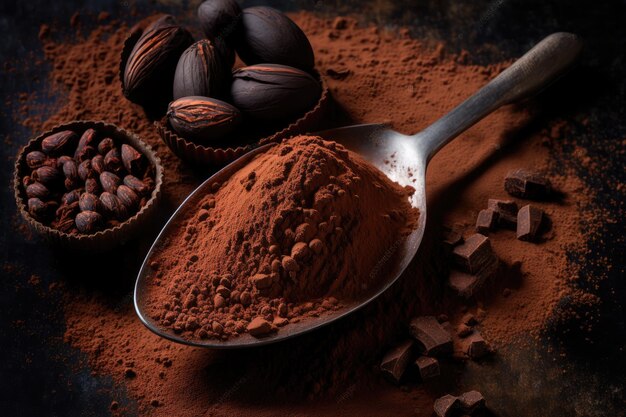
Dark brown alkalized cocoa powder
The baking rule does not apply here
In baking, the choice between natural and alkalized cocoa is tied to the leavening: acidic natural cocoa reacts with baking soda, while alkalized cocoa is paired with baking powder. Ice cream and gelato contain no chemical leavening and are not baked, so that reaction plays no part. Choose the cocoa on colour, flavour and how well it disperses in the mix.
Judge colour wet, not dry
The colour of the dry powder shifts once it is blended into a mix, and a low-fat powder looks darker than a high-fat powder alkalized to the same degree. The finished shade also depends on the other ingredients, the processing and the overrun, so judge a cocoa on a frozen test batch run at your normal overrun rather than on the powder in the bag.
Plant-based bases
Oat, almond, coconut and soy bases carry cocoa differently from a dairy base, and each one changes the flavour balance, so the shade and origin that worked in a dairy recipe are worth re-testing rather than carried over. Supplier ranges list different powders for almond, coconut and soy bases for this reason.
For the full comparison, see alkalized vs natural cocoa powder.
Fat grade
Fat Grade: 10/12 or 20/22 Cocoa Powder for Ice Cream
Cocoa powder is graded by its cocoa butter content: 10/12 means 10 to 12% fat and 20/22 means 20 to 22%. The flavour of cocoa powder comes from the non-fat part, so the leaner grade tastes stronger per gram. The 10 to 12% grade is the most common in chocolate ice cream, and grades with 22 to 24% fat are used in super-premium recipes for their rounder taste.
Property
10/12 grade
22/24 grade
Property
Cocoa butter
10/12 grade
10 to 12%
22/24 grade
22 to 24%
Property
Cocoa flavour per gram
10/12 grade
Strongest; more intense and slightly harsher
22/24 grade
Can give about 10% less flavour in ice cream, because fat carries none
Property
Mouthfeel
10/12 grade
Strong, direct cocoa note
22/24 grade
Rounder, creamier body
Property
Dose needed
10/12 grade
Lower
22/24 grade
Higher
Property
Cost per unit of flavour
10/12 grade
Lower
22/24 grade
Higher
Property
Colour at the same alkalization
10/12 grade
Looks darker
22/24 grade
Looks lighter
Property
Typical use
10/12 grade
Most chocolate ice cream, gelato, low-fat and slow-churn products
22/24 grade
Super-premium ice cream
The cocoa butter in a high-fat grade adds to the fat of the mix, so re-balance the other fats when you change grade, and run a test batch before scaling up. Our guide to 10/12 vs 20/22 cocoa powder compares the grades across all applications.
Dosage
How Much Cocoa Powder to Use in Chocolate Ice Cream
Chocolate ice cream uses cocoa powder at about 2 to 4% of the mix by weight, which is 200 to 400 g for every 10 kg of mix. Cocoa is used at a higher level than cocoa mass because cocoa butter adds texture but little flavour. These are starting points for test batches:
Cocoa source
Typical level
Result
Cocoa source
Cocoa powder only
Typical level
About 2 to 4% of the mix (usable range 2 to 6%)
Result
Standard approach; 3% is a common starting point, and supplier guidance for an intense dark chocolate goes to about 5%
Cocoa source
Cocoa powder and cocoa mass
Typical level
About 2.5% cocoa powder and 1.5% cocoa mass
Result
Adds the chocolate depth that powder alone cannot give
Cocoa source
Cocoa mass only
Typical level
About 5% cocoa mass
Result
Fuller chocolate flavour at higher cost and with more processing
Small-batch and artisan recipes are usually written in spoons rather than percentages, at about 2 to 4 tablespoons of cocoa powder per quart or litre of base, often alongside 80 to 100 g of melted dark chocolate. Convert to a percentage of the total mix weight before you scale a recipe up, because a recipe that also carries melted chocolate needs less cocoa powder than one built on cocoa alone.
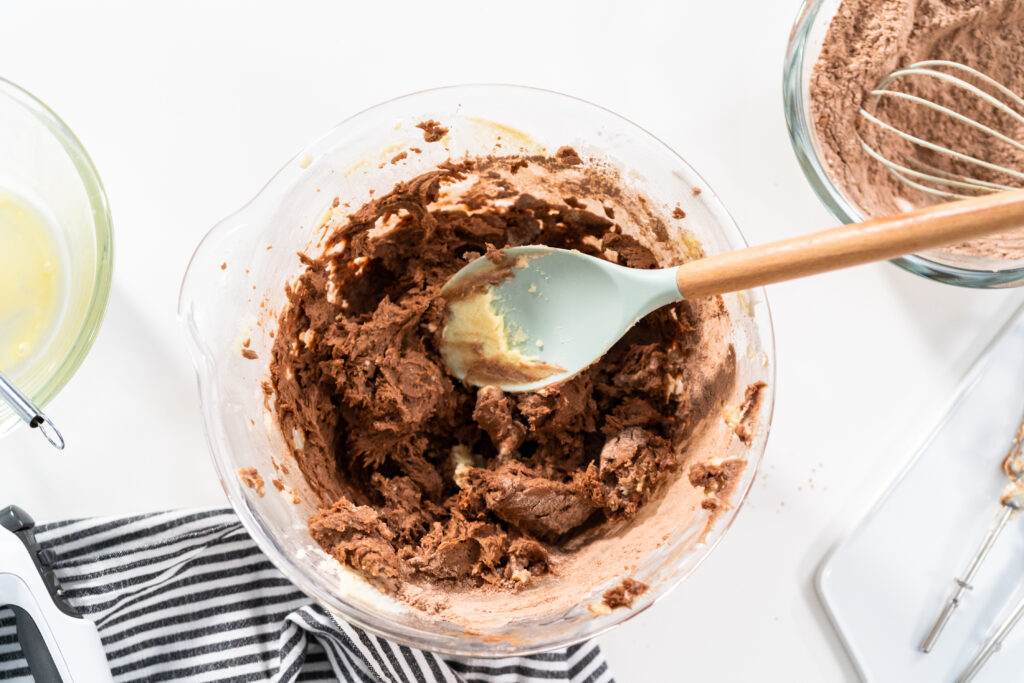
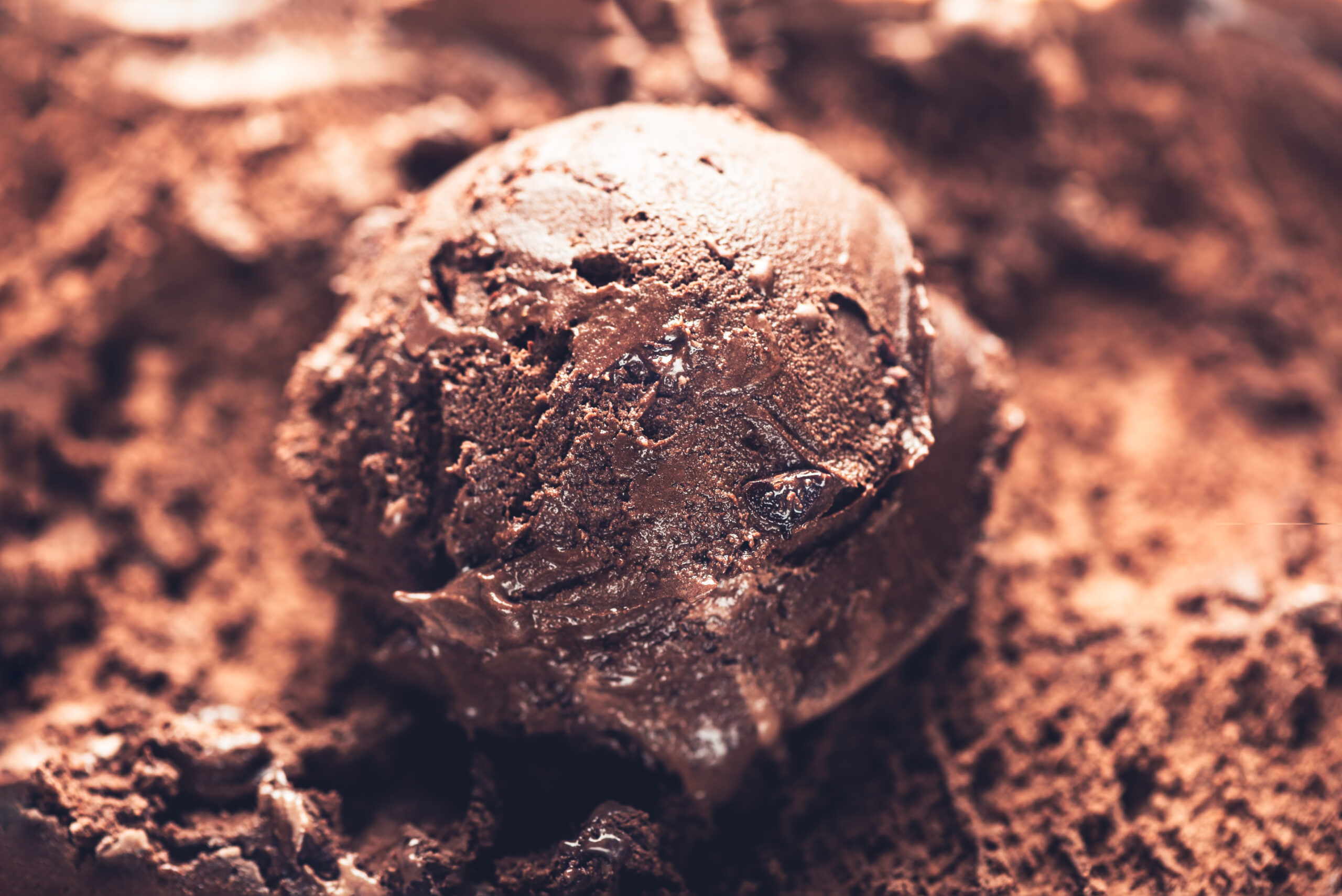
Chocolate ice cream made with cocoa powder.
Labelling in the US
In the United States, cocoa counts as a bulky flavouring at 2.5 times its weight. In a mix with 4% cocoa, the bulky flavour is 10%, the remaining 90% must meet 10% milk fat and 20% total milk solids, and the finished product therefore carries at least 9% milk fat and 18% total milk solids. Check the rules of each market you sell in before you fix the formula.
Formulation
Adjusting the Mix for Cocoa
Adding cocoa powder changes more than the flavour. These are the adjustments producers make when they move from a white mix to a chocolate mix:
Factor
Adjustment
Factor
Sweetness
Adjustment
Increase by about 1 to 3% compared with a vanilla mix, because cocoa is bitter. Sucrose is the usual sweetener in chocolate ice cream.
Factor
Solids
Adjustment
Cocoa adds bulk, so chocolate formulas usually use lower levels of milk solids-not-fat and corn sweetener to make room for it, and total solids end up several points higher than in other flavours.
Factor
Viscosity
Adjustment
Chocolate mixes are thicker and harder to whip. Adjust the stabilizer level and the homogenizing pressure, and test the effect of citrate or phosphate on viscosity.
Factor
Freezing point
Adjustment
Sweetness and salt both move it. Dark chocolate recipes that carry less sugar freeze harder, and 0.1% salt lowers the freezing point by about 0.2 °F and raises the amount of water frozen at draw temperature by up to about 6%.
Factor
Overrun
Adjustment
Adjust freezer capacity and the amount of air introduced to reach the overrun you want.
Factor
Flavour balance
Adjustment
Standard vanilla at about half the level used in vanilla ice cream rounds off the bitterness. Salt can be added up to 0.1% of total solids.
Process
When to Add Cocoa Powder in Ice Cream Production
Ice cream producers add cocoa in one of three ways:
Separate chocolate mix
The preferred route. The cocoa is added to a dedicated mix that is pasteurized and homogenized with the other ingredients, so the flavour is fully integrated and the cocoa is heat-treated.
Chocolate syrup at the flavour tank
A white mix is converted to chocolate by adding syrup at the flavour tank. This saves manufacturing steps, but the flavour is less integrated than in a pasteurized chocolate mix.
Syrup injected into finished ice cream
Syrup is blended in line at the freezer outlet, which controls the visual effect and the amount of chocolate. Keep the syrup temperature controlled so that it mixes with the ice cream without heat shock.
Food safety
In the United States, anything added to ice cream after pasteurization must already have been made pathogen-free by an approved process. Cocoa powder added to the mix before pasteurization is heat-treated with the rest of the mix. Confirm the requirement that applies in your market.
Dispersion
Dispersing Cocoa Powder Without Lumps
Only about 35% of cocoa powder dissolves. The rest is suspended solids held up by milk protein, the stabilizer, heat and pH, which is why cocoa is one of the harder powders to work into a mix and why poor dispersion shows up in the cup as grit. Dispersion is controlled at four points:
Wet the powder properly
Cocoa must be fully wetted and heated into the mix. Cocoa that is only partly wetted leaves a gritty or floury texture in the finished ice cream.
Control the rate of addition
Cocoa powder is cohesive and clumps when it hits liquid too fast. Feeding it through a powder funnel into recirculating liquid, or adding it slowly under rapid agitation, keeps agglomerates from forming.
Dry-blend with the sugar
Mixing the cocoa with the sugar before it meets the liquid separates the particles and adds weight to the powder, so it wets more easily. This is the usual answer where no high-shear mixer is available.
Use shear where you have it
A high-shear mixer draws powder and liquid into the workhead and breaks agglomerates apart, which removes the need to pre-blend and gives a lump-free mix quickly.
Small batches
In a gelateria or test kitchen, sift the cocoa, whisk it into the warm base rather than a cold one, and finish with about 30 seconds of immersion blending before the base goes to chill. Grittiness in a small batch almost always comes from cocoa that never dissolved.
Carrageenan is the stabilizer most often used to keep cocoa solids in suspension. Cocoa also raises the viscosity of the mix, so the stabilizer level and the homogenizing pressure usually need to be re-set when a white mix becomes a chocolate mix.
Cocoa mass
Cocoa Powder or Cocoa Mass in Ice Cream
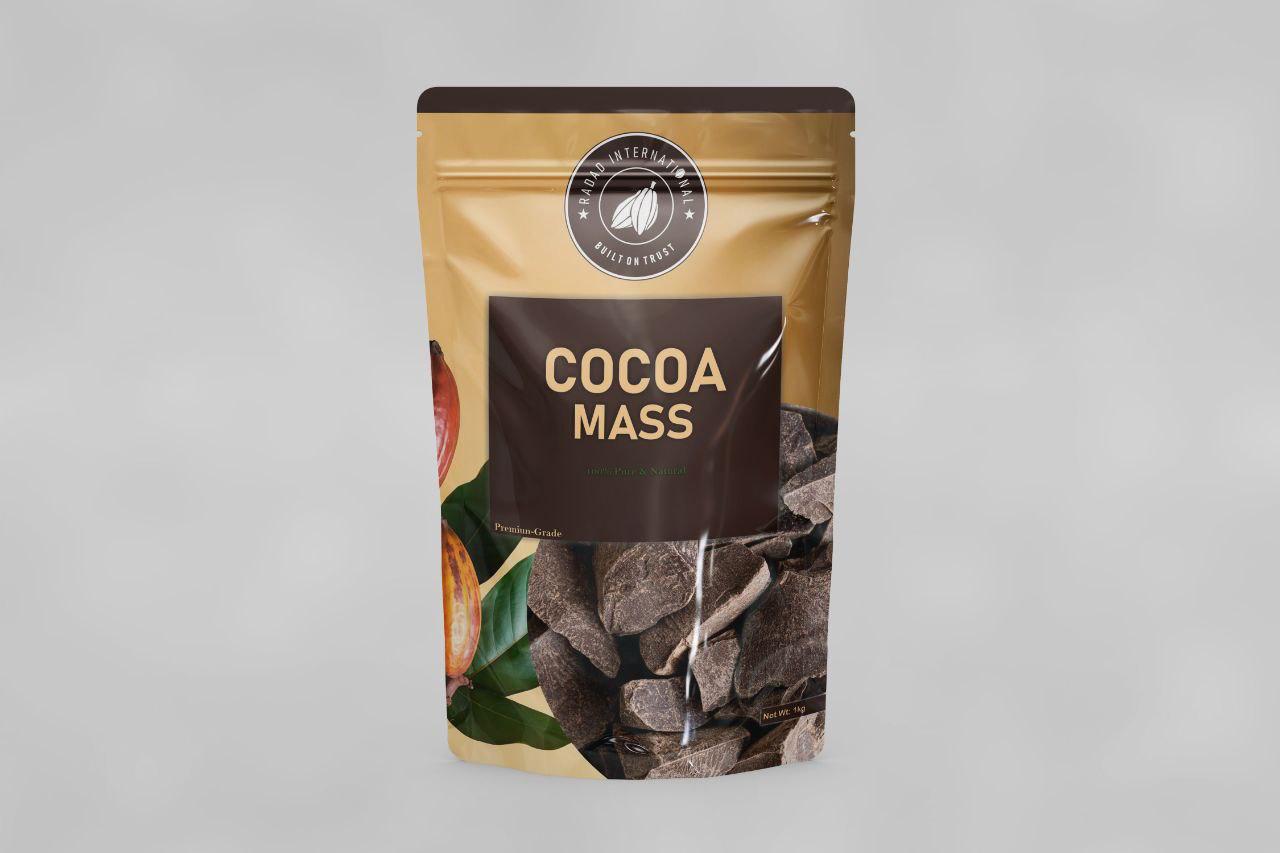
Cocoa mass (cocoa liquor) is pure ground cocoa with about 50 to 55% cocoa butter. It adds chocolate flavour that cocoa powder alone cannot reach, which is why some recipes use both. Cocoa butter melts over a narrow range of 30 to 36 °C, so cocoa mass has to be melted and mixed thoroughly before it is added to the mix.
Cocoa mass costs more and takes more care to process, so many producers use it only in premium products and build the base flavour with cocoa powder. Radad International supplies cocoa mass from African cocoa for producers who want to test the combination.
Troubleshooting
Troubleshooting Chocolate Ice Cream
Most chocolate ice cream faults trace back to the cocoa powder or to a mix that was not adjusted for it:
Fault
Likely cause
What to check
Fault
Mealy or gritty texture
Likely cause
Coarse cocoa particles
What to check
Ask for the fineness result and choose a powder milled below 75 microns
Fault
Poor whipping or low overrun
Likely cause
Large particles and the higher viscosity of chocolate mixes
What to check
Check particle size, freezer capacity and air, and the effect of citrate or phosphate
Fault
Specks in soft serve
Likely cause
Cocoa fibres trapped in the churned fat
What to check
Choose a fine powder and ask for the shell-content limit
Fault
Harsh, bitter taste
Likely cause
Lean cocoa is more intense and harsher
What to check
Raise sweetness by 1 to 3%, add vanilla, or test a higher-fat grade or some cocoa mass
Fault
Pale colour
Likely cause
Shade too light, or colour diluted by overrun
What to check
Test a darker alkalized shade and judge colour at your usual overrun
Fault
Dark colour but flat flavour
Likely cause
Heavy alkalization lowers flavour quality
What to check
Test a medium shade, or a blend with a lighter one
Fault
Mix too thick
Likely cause
Cocoa adds bulk and solids
What to check
Adjust the stabilizer level and the homogenizing pressure
Specification
Cocoa Powder Specification for Ice Cream Manufacturers
Put the following points on the purchase specification and ask for a certificate of analysis with every lot:
Parameter
What to ask for
Radad alkalized cocoa powder
Parameter
Fat
What to ask for
The grade and its range
Radad alkalized cocoa powder
10 to 12% cocoa butter
Parameter
Fineness
What to ask for
Wet sieve result, not a general claim of “fine”
Radad alkalized cocoa powder
At least 98.0% through the sieve, below 75 microns
Parameter
Moisture
What to ask for
A maximum value
Radad alkalized cocoa powder
Maximum 5.0%
Parameter
Shell content
What to ask for
A maximum value, because fibre causes specks
Radad alkalized cocoa powder
Maximum 1.75% on alkali-free nibs
Parameter
Colour
What to ask for
A reference sample and a tolerance for each lot
Radad alkalized cocoa powder
Light brown and dark brown shades
Parameter
Microbiology
What to ask for
Plate count, yeasts and moulds, coliforms, E. coli and Salmonella limits
Radad alkalized cocoa powder
Total plate count maximum 10,000 CFU/g; yeasts and moulds maximum 100 CFU/g; coliforms and E. coli negative per g; Salmonella negative per 50 g
Parameter
Shelf life
What to ask for
Months from production
Radad alkalized cocoa powder
24 months
Parameter
Packing
What to ask for
Bag size and material
Radad alkalized cocoa powder
25 kg sacks, plus retail packs from 1 kg
Values can vary slightly by batch, and the certificate for your order gives the measured results. Our guide to cocoa microbiological specifications and contaminant limits sets out the limits buyers usually apply.
- Store sealed bags in a cool, dry place at about 15 to 25 °C, off the floor and away from strong smells
- Reseal opened bags or move the powder into airtight containers
- Use stock first in, first out, and check the production date on arrival
- In hot climates such as the Gulf, keep cocoa powder in an air-conditioned store, never outdoors or in vehicles
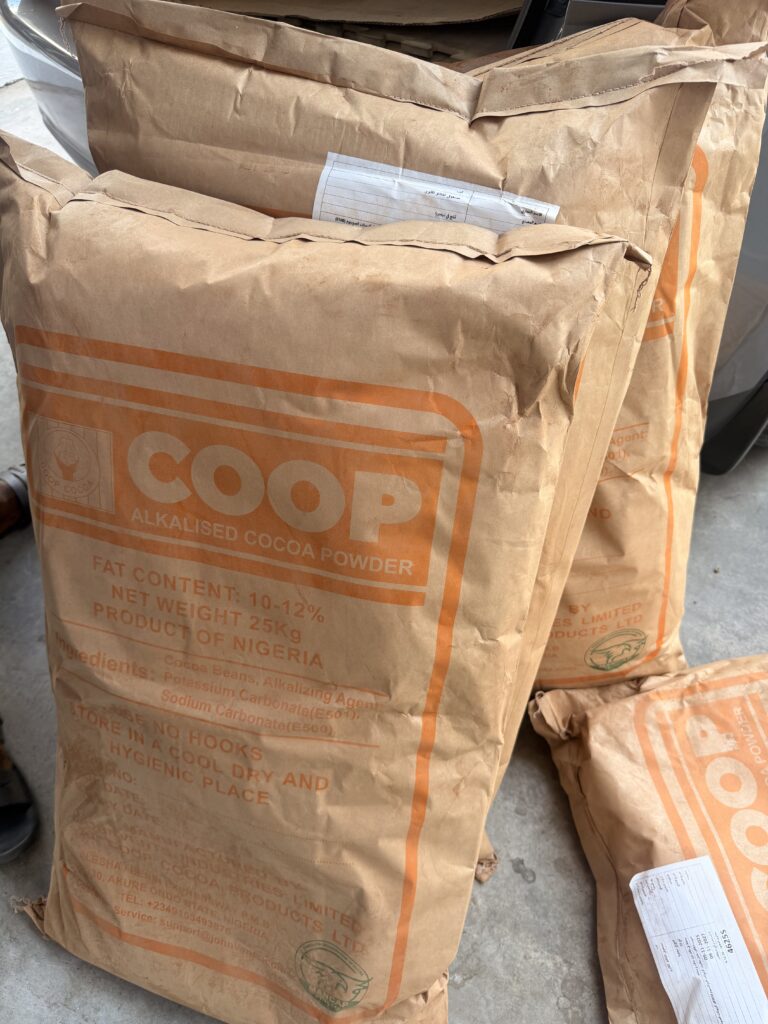
Bulk cocoa powder is supplied in 25 kg sacks.
Supply
Buying Cocoa Powder for Ice Cream in the UAE
Radad International sells alkalized and natural cocoa powder in 1 kg, 5 kg, 10 kg and 25 kg packs, or any custom weight up to 100 kg, with delivery all over the UAE. For ice cream and gelato, the alkalized powder is the usual choice; the natural powder suits recipes that need a lighter colour and a fruitier note. Both are 10 to 12% fat grades.
Pack size
Alkalized cocoa powder
Natural cocoa powder
Pack size
1 kg
Alkalized cocoa powder
AED 59.97
Natural cocoa powder
AED 58.95
Pack size
5 kg
Alkalized cocoa powder
AED 299.85
Natural cocoa powder
AED 294.75
Pack size
10 kg
Alkalized cocoa powder
AED 599.70
Natural cocoa powder
AED 589.50
Pack size
25 kg
Alkalized cocoa powder
AED 1,499.25
Natural cocoa powder
AED 1,473.75

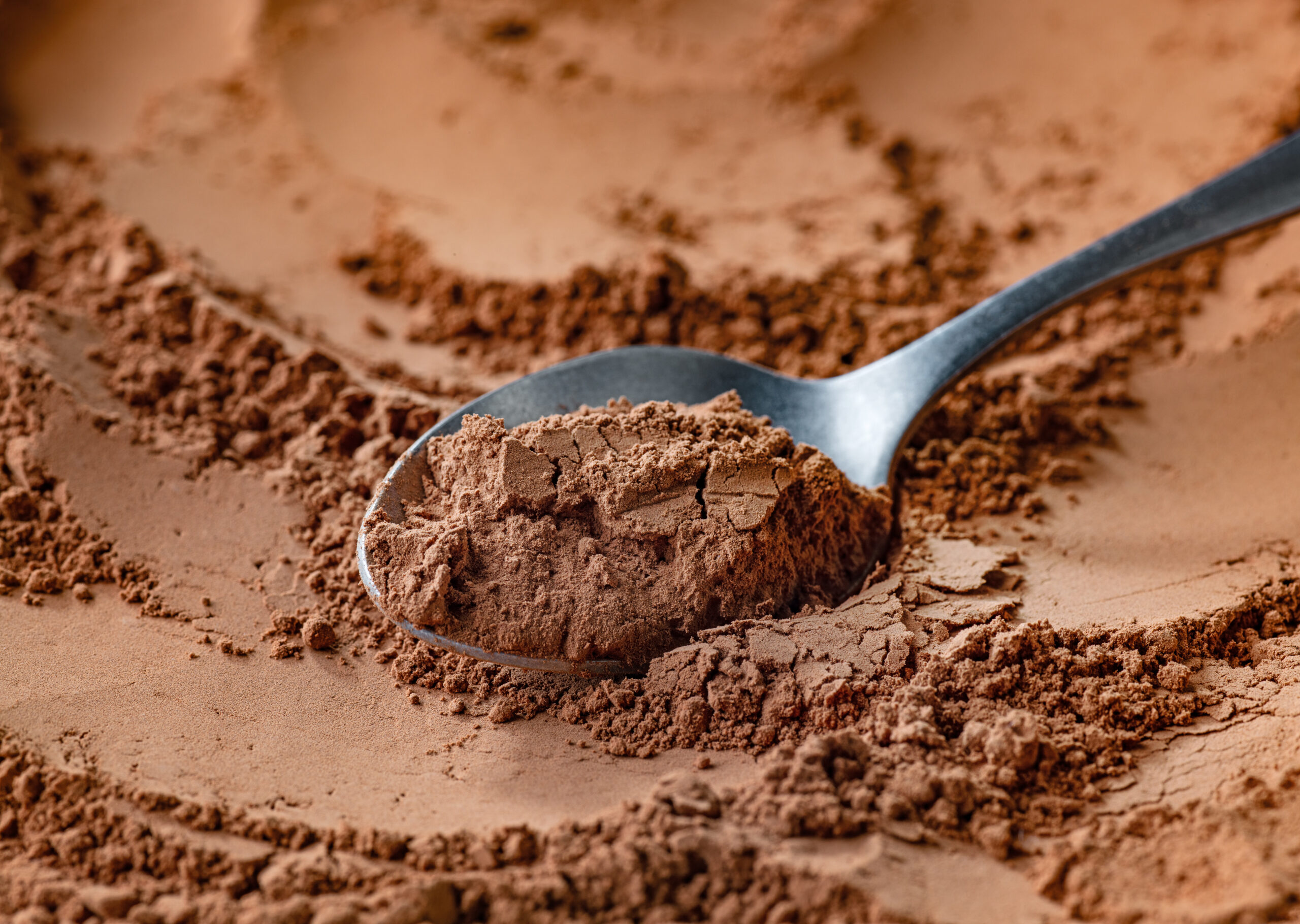
Product
Alkalized Cocoa Powder
Dutch-process 10/12 grade: deeper colour and a smoother flavour.
Product
Natural Cocoa Powder
Non-alkalized 10/12 grade: lighter colour and a fruitier note.
Work with Radad International
Request a Cocoa Powder Quote for Ice Cream
Tell us your product, the shade and fat grade you need, your monthly volume and your destination, and we will send the specification and a quote.
Or email info@radadinternational.com · +971 522 501 039
Questions
Cocoa Powder for Ice Cream: FAQs
Does cocoa acidity matter in ice cream?
No. The acid-and-alkali rule that governs cocoa in baking exists because natural cocoa reacts with baking soda. Ice cream has no chemical leavening and is not baked, so the reaction never happens. Choose the cocoa on colour, flavour and how well it disperses.
How do I stop cocoa powder from going lumpy in an ice cream mix?
Only about 35% of cocoa powder dissolves, and the powder is cohesive, so it clumps when it meets liquid too quickly. Dry-blend it with the sugar first, add it slowly under rapid agitation or through a powder funnel, and make sure it is fully wetted and heated. A high-shear mixer removes the need to pre-blend. In small batches, sift the cocoa, whisk it into a warm base and blend for about 30 seconds.
What is the best cocoa powder for chocolate ice cream?
Alkalized (Dutch-process) cocoa powder with 10 to 12% fat is the usual starting point. It gives a deeper brown colour and a smoother flavour than natural cocoa, and most chocolate ice cream recipes are built around it. Choose the shade by testing a frozen batch at your normal overrun.
How much cocoa powder do I need per kilogram of ice cream mix?
About 20 to 40 g per kilogram of mix, which is 2 to 4%. Three per cent is a common starting point, and the usable range runs from 2 to 6%. Add 1 to 3% more sweetness than in a vanilla mix to balance the bitterness.
Can I use natural cocoa powder in ice cream?
Yes. Natural cocoa gives a lighter colour and a fruitier, more acidic note. Most chocolate ice cream uses alkalized cocoa for its deeper colour and smoother taste, so test a small batch before changing a recipe.
Should I use 10/12 or 20/22 cocoa powder for ice cream?
10/12 is the most common grade and gives the strongest cocoa flavour per gram. 22 to 24% fat grades give a rounder, creamier body in super-premium ice cream but need a higher dose and cost more, because cocoa butter carries no flavour.
Why does my chocolate ice cream taste gritty?
Coarse cocoa particles make ice cream mealy. Choose a fine powder, check the wet sieve result on the certificate of analysis, and keep shell content low. Radad alkalized cocoa powder is milled below 75 microns.
Should cocoa powder go in before or after pasteurization?
Before is preferred. A separate chocolate mix that is pasteurized and homogenized gives the best flavour integration and heat-treats the cocoa. Anything added after pasteurization must already be free of pathogens.
Should I use cocoa powder or cocoa mass?
Cocoa powder is the base of most chocolate ice cream. Cocoa mass adds chocolate depth that powder alone cannot give, but it costs more and needs melting and thorough mixing, so many producers use a blend such as 2.5% cocoa powder with 1.5% cocoa mass.
Does chocolate ice cream need more sugar?
Yes. Chocolate mixes are usually sweetened about 1 to 3% higher than a vanilla mix, because cocoa is bitter. Cocoa also adds bulk, so total solids end up several points higher than in other flavours.
What should an ice cream cocoa powder specification include?
Fat grade, fineness by wet sieve, moisture, shell content, colour against a reference sample, microbiological limits including Salmonella, shelf life and packing, with a certificate of analysis for every lot.
How long does cocoa powder keep?
Radad alkalized cocoa powder has a shelf life of 24 months from production, and natural cocoa powder 18 to 24 months, in sealed packaging stored cool, dry and airtight at about 15 to 25 °C.
Can I buy cocoa powder for a gelateria in small quantities in the UAE?
Yes. Radad International sells alkalized and natural cocoa powder online in 1 kg, 5 kg, 10 kg and 25 kg packs, or any weight up to 100 kg, with delivery all over the UAE. For more than 100 kg, request a bulk quote.
Keep reading
More Guides from Radad International
Sources and References
- University of Guelph, Ice Cream Technology: Chocolate and cocoa
- Dairy Foods, Working with cocoa in ice cream
- Dairy Foods, Formulating chocolate ice cream
- Dairy Foods, Chocolate challenges
- Dairy Foods, Chocolate heaven
- Silverson, Preparation of ice cream mixes
- University of Guelph, Ice Cream Technology: Blending
- Tasting Table, The best type of cocoa powder to use for chocolate ice cream
- Barry Callebaut (Bensdorp), Cocoa powders for ice cream
- Cargill (Gerkens), Cocoa powder for ice cream