Importing cocoa powder for the first time involves more than agreeing a price. You need a clear spec, a supplier whose documents you can check, an approved sample, the right delivery terms and a set of papers that match from the factory to your warehouse. This guide takes you through the 8 steps in the order they should happen, with the checks that protect you at each stage.
Reviewed by Funui Donard · Updated October 2026 · 12 min read

Quick summary
To import cocoa powder, write down the spec you need, check the supplier’s documents, approve a sample, agree FOB or CIF terms, confirm the order on a proforma invoice, follow production and shipping, then clear customs and store the goods correctly. The order matters, because each step protects the next one.
For the export to happen at all, these things must be in place:
- The exporter: a registered company with a valid export registration or licence, a food-safety record for the product, and batch test results.
- The shipment papers: commercial invoice, packing list, bill of lading, certificate of analysis, certificate of origin and, under CIF, an insurance certificate.
- Certifications: only the ones your market asks for (for example HACCP, ISO 22000 or FSSC 22000, Halal, Kosher or organic), each as a copy you can check, never just a claim.
- The importer: an import registration or permit where your country requires one, the right tariff code, a customs broker, and a label that meets local rules.
8steps, from spec to storage
FOB or CIFdelivery terms
HS 1805.00cocoa powder, no added sugar
24 monthsshelf life, stored correctly
1 kg + 25 kgpack sizes
10 to 12%fat content, alkalized powder
pH 6.8 to 8.5alkalized powder
4core shipping documents
In this guide
Overview
The 8 Steps to Import Cocoa Powder
Here is the full path in short. Each step has its own section below, with a checklist you can use as you go.
- Define the specType, fat, colour, pH, pack size and quantity, written down before you ask for prices.
- Vet the supplierAsk for the spec sheet, certificate of analysis, safety data and company registration.
- Approve a sampleTest it in your own product and approve it in writing.
- Agree the termsPrice, quantity and a delivery term: FOB or CIF.
- Confirm the orderA proforma invoice that states the product, terms, payment and timing.
- Follow production and packingBatch certificate, labelling and a pre-shipment check.
- Ship with the right papersInvoice, packing list, bill of lading, certificate of analysis and origin.
- Clear customs and storeDuties, delivery checks and correct storage on arrival.
1Step 1
Step 1: Define the Cocoa Powder Spec You Need
Before you contact any supplier, decide exactly what you are buying. A written spec stops quotes being compared on price alone, and every later step refers back to it.
Decide these five things
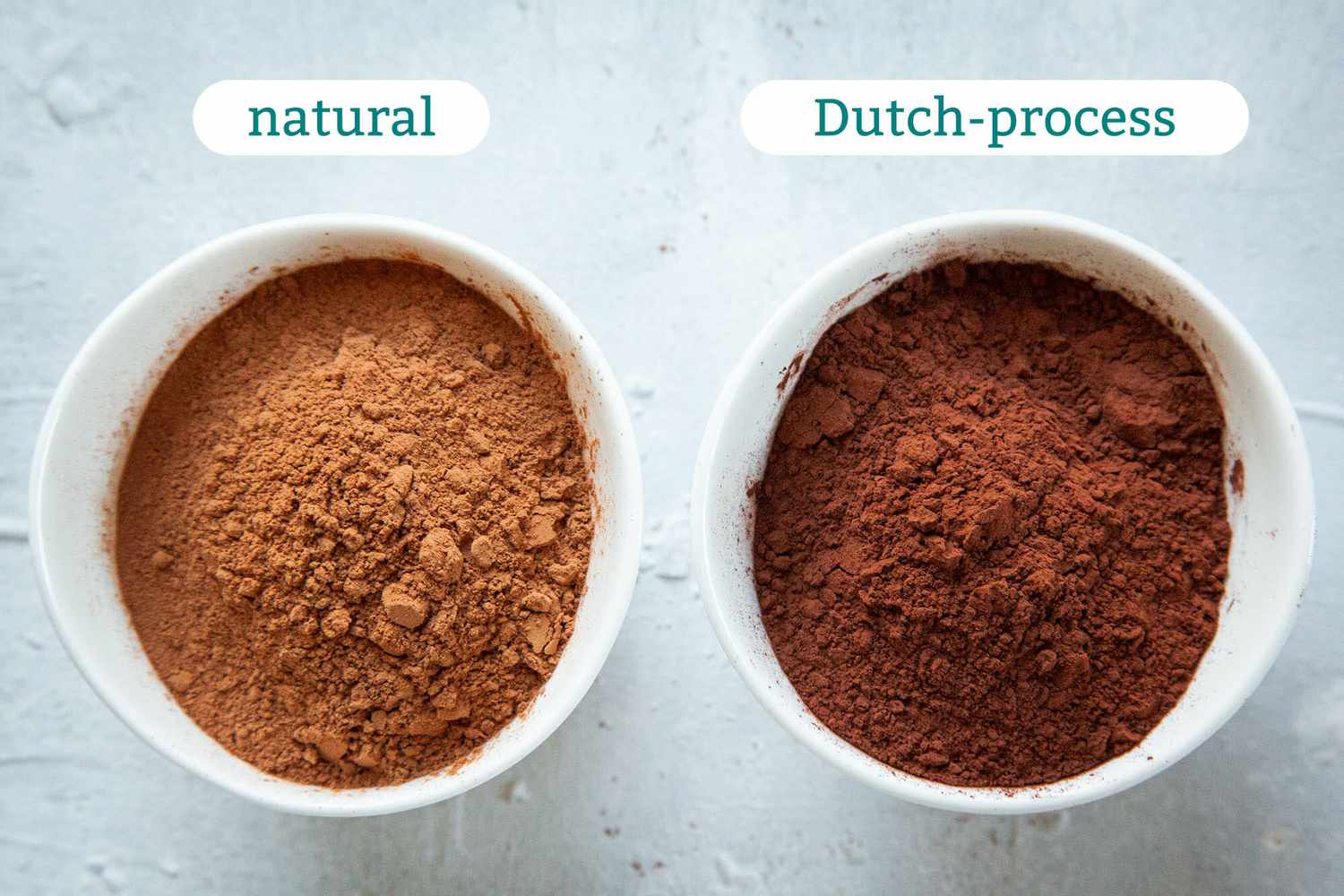
- Type: alkalized cocoa powder (darker, milder, dissolves well) or natural cocoa powder (lighter, more acidic, reddish-brown). Our guide to alkalized vs natural cocoa powder explains how to choose.
- Fat content: 10 to 12% is the most common range for bakery, beverages and general food use. Higher-fat grades suit some chocolate and coating work.
- Colour and pH: Radad alkalized cocoa powder has a pH of 6.8 to 8.5. A darker shade usually means a higher pH.
- Pack size: 1 kg packs for retail and small production, 25 kg sacks for industrial use.
- Quantity and frequency: a single trial order or a monthly programme.
Tip
Not sure which grade fits your recipe? Our product range lists everything we supply, and the catalogue has the full specification tables.
2Step 2
Step 2: Check the Supplier and Ask for Their Documents
A supplier’s paperwork tells you more than their website does. Ask for documents before you ask for a price, and read them against the spec you wrote in step 1.
Ask every supplier for
- A technical spec sheet with fat, moisture, pH, fineness and shelf life
- A certificate of analysis from a recent batch
- Microbiological and contaminant limits (see our guide to cocoa microbiological and contaminant specifications)
- The safety data sheet and any food-safety declarations your market requires
- Company registration details and trade references
Only trust a certification you can see
If a supplier says they hold a certificate, ask for a copy and check the issuing body and the expiry date. For example, Radad International is registered in Nigeria with the Corporate Affairs Commission and holds a free zone trade licence in Ras Al Khaimah, UAE, and we share copies on request. You can read more on the About Us page, and the catalogue shows the specifications we publish for each product.
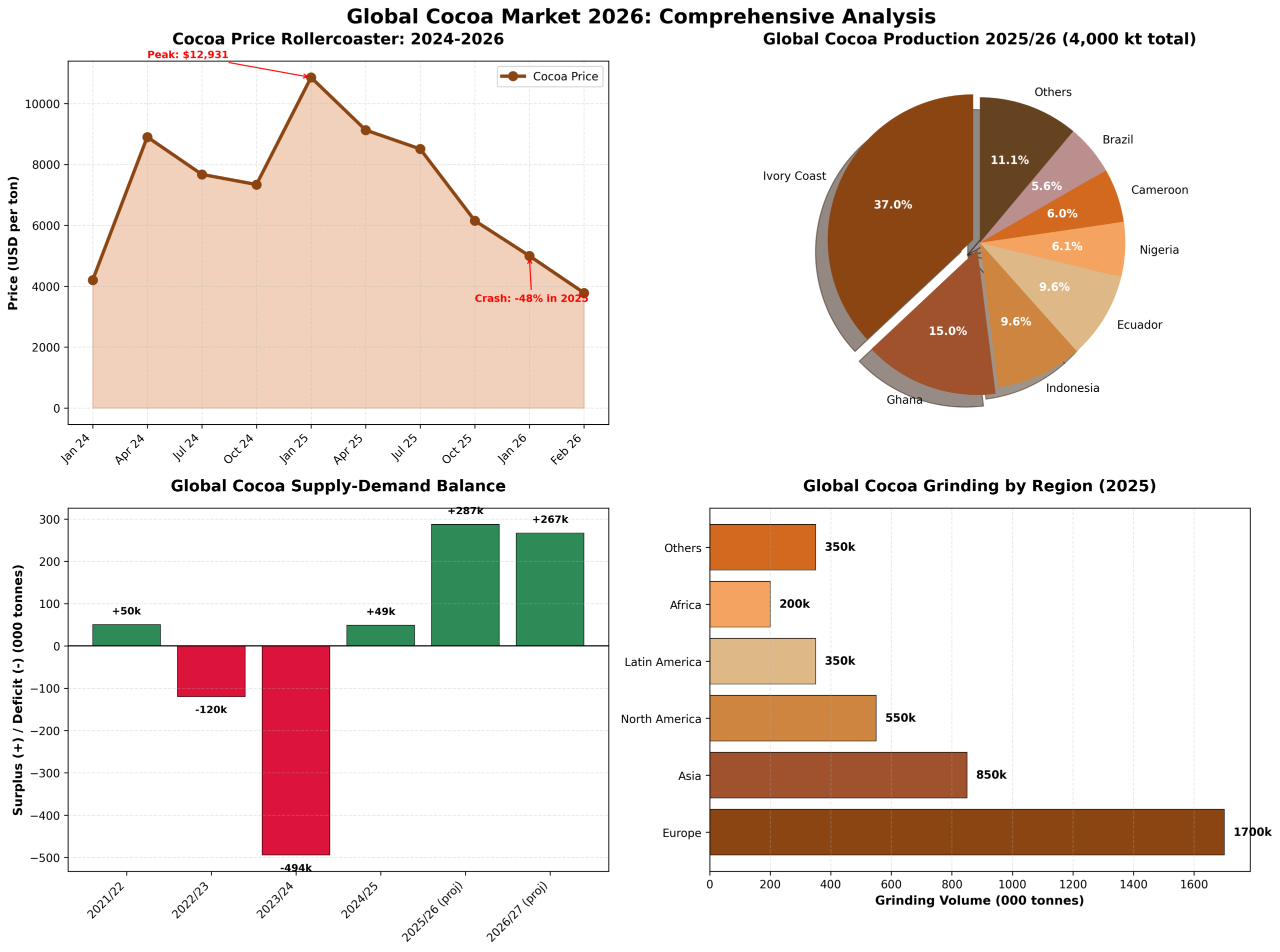
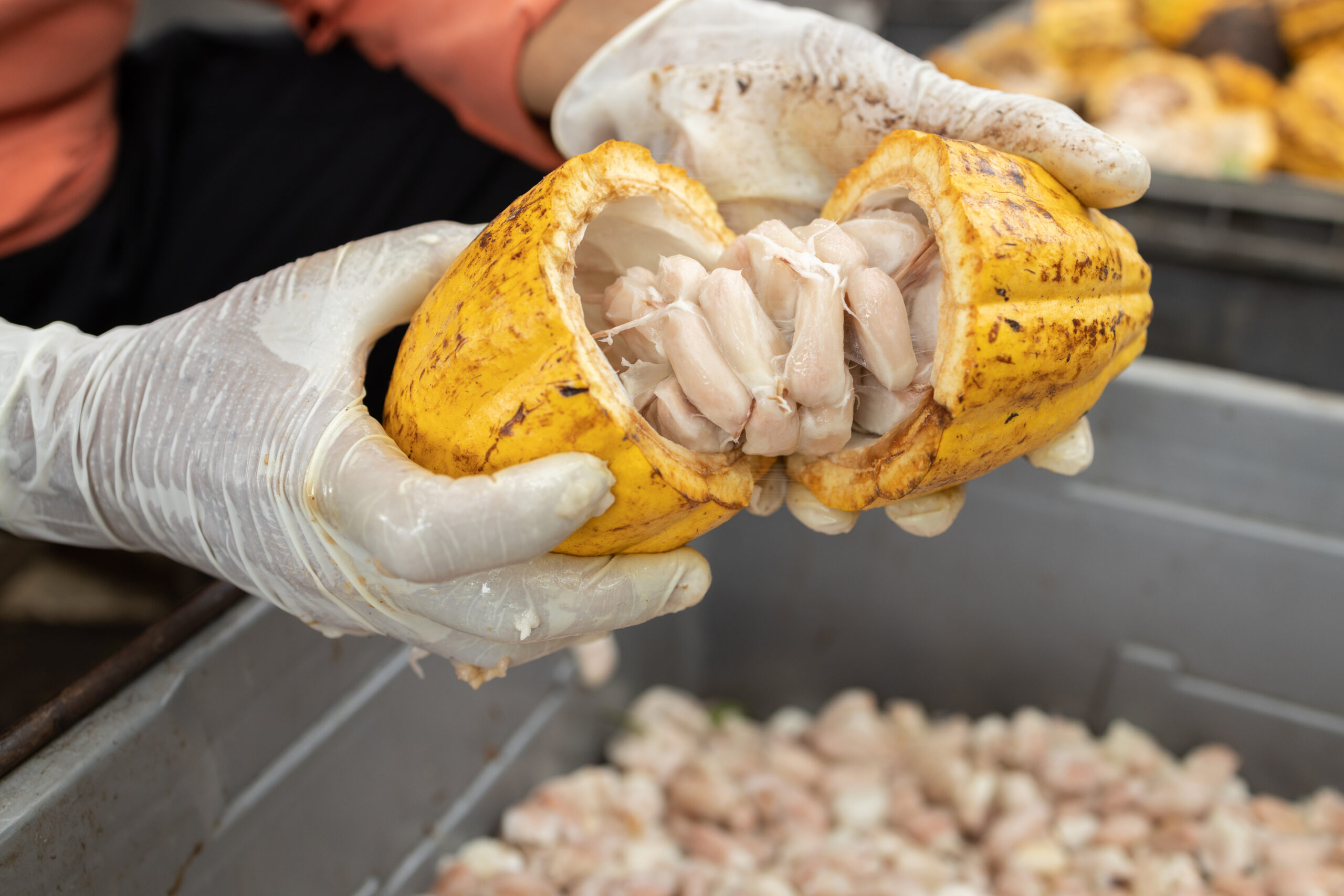
Also ask where the cocoa comes from. African cocoa from Ghana, Nigeria, Côte d’Ivoire, Cameroon, Sierra Leone and Uganda has different bean profiles, and origin affects flavour and traceability paperwork. For background, read the global cocoa market in 2026.
3Step 3
Step 3: Request a Sample and Approve It Before You Order
A sample is the cheapest insurance in the whole process. Test it in your own recipe or on your own line, and compare it with the certificate of analysis that came with it.
When the sample arrives
- Check colour against your reference, in the same light each time
- Test taste and solubility in your own product, not in plain water
- Note the batch number so the sample can be matched to the bulk order
- Send your written approval, including any tolerance you accept
Tell us the product, the quantity and the destination through our contact page. For a first-time import, approve the sample in writing before you pay for anything else.
4Step 4
Step 4: Agree the Commercial Terms: Price, Quantity and FOB or CIF
With an approved sample, you can ask for a firm quotation. Compare quotes line by line, because two prices are only comparable when the quantity, pack size and delivery term are the same.
Radad quotes on two delivery terms. The difference decides who arranges and pays for sea freight and insurance.
| Term | What the seller does | What you do | Best for |
|---|---|---|---|
| FOB | Delivers the goods on board the ship at the port of loading and clears them for export | Books the shipping line, pays freight and arranges insurance | Buyers who already have a freight forwarder and want control of shipping cost |
| CIF | Pays freight and insurance to your destination port | Pays import duties and clears the goods at the destination port | First-time importers who want one price that includes the sea journey |
Under both terms, the risk of loss passes to you once the goods are loaded on the ship. That is why insurance matters even when the seller arranges it.
Our general conditions of sale are on the Terms of Trade page. Read them before you accept a quotation.
Quotes from Radad
Want a quote on FOB or CIF terms?
Tell us the product, pack size, quantity and destination port. We will send a quotation that states the delivery term clearly, so you can compare it line by line.
Or call +971 52 250 1039
5Step 5
Step 5: Confirm the Order With a Proforma Invoice
The proforma invoice turns the quotation into an agreement. It should state the product and spec, quantity, unit price, delivery term and port, payment terms, and the expected production and shipping time for your order.
Check before you pay
- The product description matches the approved sample and spec sheet
- The delivery term names the port, for example “CIF Jebel Ali”
- The bank details belong to the company named on the invoice
- Payment terms and the production date are written, not promised by message
Watch for fraud
Confirm bank details by phone, using a number you found yourself and not one that appears only on the invoice. Fraudulent payment requests target first-time importers more often than anyone else. Our FAQs answer the questions buyers ask most about ordering and payment.
6Step 6
Step 6: Follow Production, Packing and Pre-Shipment Checks
After payment terms are met, the powder is produced or drawn from tested stock and packed. This is the stage where you can still catch a problem cheaply.
- Packing: food-grade liners in sealed sacks or cartons, labelled with product name, batch number, production date and best-before date. Agree the bag type and weight on the proforma invoice.
- Batch testing: ask for the certificate of analysis of the exact batch being shipped, and compare it with the certificate that came with the sample.
- Inspection: ask whether you can appoint an independent inspector to check quantity, packing and labelling before the container is sealed.
- Photos: ask for photos of the loaded container and the seal number.
7Step 7
Step 7: Ship With the Right Export and Import Documents
Missing or inconsistent paperwork is the most common reason a container is held at the port. Every document must carry the same product name, weight, consignee and invoice number.
| Document | Issued by | Used for |
|---|---|---|
| Commercial invoice | Seller | Customs value and payment |
| Packing list | Seller | Contents, weights and pack count |
| Bill of lading | Shipping line | Proof of shipment; releases the cargo |
| Certificate of analysis | Seller or laboratory | Proves the batch meets the spec |
| Certificate of origin | Chamber of commerce or authority | Origin and, where applicable, duty treatment |
| Insurance certificate | Insurer | Cover during transit (issued by the seller under CIF) |
Your customs broker will also need the correct tariff code. Cocoa powder with no added sugar falls under HS 1805.00, and cocoa butter under HS 1804. Confirm the code and any import permit your country requires before the vessel sails.

8Step 8
Step 8: Clear Customs, Receive the Goods and Store Them Correctly
Once the vessel arrives, your broker presents the documents, pays duties and taxes, and arranges delivery. Check the goods on arrival, before you sign for them.
On delivery
- Check the container seal number against the bill of lading
- Count the sacks or cartons and compare with the packing list
- Look for torn packaging, moisture or odours, and photograph any damage
- Report any problem to the seller and the insurer in writing, straight away
Storage
Cocoa powder absorbs moisture and strong smells. Store it in a cool, dry, well-ventilated place away from chemicals and strong-smelling goods. The conditions we recommend for our powder are a relative humidity of 65% or lower and a temperature of 22 to 25 °C. Stored this way, sealed alkalized cocoa powder keeps for up to 24 months.
Before you commit
What Must Be in Place Before Export Can Happen
Many first-time buyers only look at the price and the sample. A shipment also needs the right paperwork and approvals on both sides. Use this table as a checklist when you speak to any supplier, including us.
| Area | Exporter (seller) | Importer (you) |
|---|---|---|
| Business status | Registered company; valid exporter registration or licence with the national export authority (in Nigeria, for example, exporters register with the Nigerian Export Promotion Council) | Registered company; import registration or licence where your country requires one |
| Product safety | Spec sheet, certificate of analysis for the batch, microbiological and contaminant results, safety data sheet | Product registration or food-safety approval if your authority asks for it; a label that meets local rules |
| Certifications | Copies of any held: HACCP, ISO 22000 or FSSC 22000, Halal, Kosher, organic. Verify the issuing body and expiry date | Tell the supplier early which ones your customers require |
| Origin and traceability | Certificate of origin; records showing where the cocoa came from | If you sell into the EU, ask for traceability data in line with the EU deforestation rules |
| Shipping | Export declaration, commercial invoice, packing list, container loading and seal | Booking (FOB) or port arrival plan (CIF), customs broker, tariff code, duty and tax payment |
| Money | Proforma invoice with bank details and terms | Verified bank details, agreed payment method, insurance cover |
Requirements differ by country and change over time. Check with your customs authority and your supplier before you commit to a shipment.
Budget
What Importing Cocoa Powder Really Costs
The price per tonne on a quotation is only part of the cost. Build a landed-cost sheet before you decide, so two quotes can be compared fairly.
- Product price: by pack size and quantity.
- Sea freight and insurance: included under CIF, paid by you under FOB.
- Origin charges: inspection, packing and export handling, if they are not in the price.
- Destination charges: port handling, unloading and storage fees.
- Duty and tax: import duty and VAT or sales tax, based on the tariff code and the declared value.
- Broker and delivery: customs broker fee and inland transport to your warehouse.
- Bank charges and currency: transfer fees and exchange-rate movement between order and payment.
Avoid these
Seven Mistakes First-Time Importers Make
- Choosing on price alone. Compare quotes on the same spec, pack size and delivery term.
- Skipping the sample. A shade that looked right on a screen can look wrong in your product.
- Accepting vague terms. “Delivery in a few weeks” is not a date. Get it written on the proforma invoice.
- Forgetting insurance. Risk passes at loading under both FOB and CIF.
- Using the wrong tariff code. It changes the duty you pay and can delay clearance.
- Mismatched documents. A different spelling of the consignee on two papers is enough to cause a hold.
- Storing the powder badly. Heat and humidity cause lumps and off-flavours long before the best-before date.
Checklist
Your Pre-Order Checklist
Print this or copy it into your own notes. If you can tick every line, you are ready to place a first order.
- Spec written down: type, fat, colour, pH, pack size, quantity
- Spec sheet and certificate of analysis received and read
- Certifications checked against your market’s requirements, with copies
- Sample tested in your own product and approved in writing
- Delivery term chosen (FOB or CIF) and landed cost calculated
- Proforma invoice checked: product, port, payment terms, timing
- Bank details confirmed by phone
- Customs broker appointed; tariff code and import permit confirmed
- Insurance arranged or confirmed in the CIF price
- Warehouse space ready: cool, dry, away from strong odours
Questions
Frequently Asked Questions
What is the first step in importing cocoa powder?
Write down the spec you need: type (alkalized or natural), fat content, colour and pH, pack size and quantity. Every quote, sample and contract refers back to it.
Should I choose FOB or CIF as a first-time importer?
CIF is usually simpler for a first order, because the seller arranges freight and insurance to your port. FOB suits buyers who already work with a freight forwarder. Both are available from Radad.
Can I get a sample before placing a bulk order?
Yes, and you should. Approve the sample in writing and keep it as the reference for the bulk order. Contact us with the product, quantity and destination.
Which documents do I need to import cocoa powder?
At minimum: commercial invoice, packing list, bill of lading and certificate of analysis. Many countries also ask for a certificate of origin and an import permit. Check your customs authority’s list before the vessel sails.
What is the HS code for cocoa powder?
Cocoa powder with no added sugar is classified under HS 1805.00. Confirm the code with your customs broker, because duty rates are set by each country.
What pack sizes are available?
Alkalized cocoa powder is available in 1 kg packs and 25 kg sacks. See the alkalized cocoa powder page for the full specification.
How long does cocoa powder last?
Sealed alkalized cocoa powder keeps for up to 24 months when stored at 65% relative humidity or below and 22 to 25 °C.
Is there a minimum order quantity?
It depends on the product and pack size. Tell us what you need through the contact page and we will confirm the minimum when we quote.
Do you ship to my country?
Radad ships worldwide on FOB and CIF terms. Tell us your destination port and we will confirm the route.
Do I need certifications to import cocoa powder?
That depends on your market and your customers. Some buyers require HACCP, ISO 22000, Halal, Kosher or organic certificates. Ask the supplier for copies and check the issuing body and expiry date.
Sources and references
- International Chamber of Commerce. Incoterms 2020 (FOB and CIF rules). iccwbo.org
- World Customs Organization. Harmonized System Nomenclature, Chapter 18: Cocoa and cocoa preparations, heading 18.05 (cocoa powder, not containing added sugar). wcoomd.org
- European Union. Regulation (EU) 2023/1115 on deforestation-free products. eur-lex.europa.eu
- European Union. Regulation (EU) 2023/915 on maximum levels for certain contaminants in food (including cadmium in cocoa products). eur-lex.europa.eu
Source From Radad
Ready to Import Cocoa Powder?
Radad International supplies alkalized and natural cocoa powder from Africa in 1 kg packs and 25 kg sacks, on FOB or CIF terms, with a spec sheet and certificate of analysis for every batch. See the full range or tell us what you need and we will send a quotation.
Or call +971 52 250 1039
More guides
Keep Reading
Cocoa powder
Alkalized vs Natural Cocoa Powder
How pH changes colour, flavour and use.
Quality
Cocoa Microbiological and Contaminant Specifications
Limits to ask for in a certificate of analysis.

Business
How to Start a Craft Chocolate Business
The complete ingredient sourcing guide.