How to Start a Craft Chocolate Business: The Complete Ingredient Sourcing Guide
From your first cocoa bean purchase to your first finished bar: everything a chocolate maker needs to launch, source, cost, and comply.
Starting a craft chocolate business requires six foundational decisions: choosing your core ingredients, selecting your bean variety and origin, investing in the right equipment, finding a reliable cocoa supplier, understanding minimum order quantities, and meeting the legal and labeling requirements of your market. Done right, the bean-to-bar chocolate business is one of the most rewarding food manufacturing ventures available today, combining culinary craft with a genuinely global supply chain.
The global craft chocolate market has grown significantly over the past decade, and nowhere more so than in the Middle East. Dubai and the UAE have become a genuine hub for artisan chocolate, with a sophisticated, international consumer base, strong food event culture, and a favorable trading environment for importing cocoa directly from Africa and other origins. Whether you are starting a home-based chocolate brand, a premium gift business, or a full production facility, the sourcing fundamentals are the same.
This guide covers every step: the full artisan chocolate ingredients list, equipment needed, how to source and vet a cocoa supplier, what minimum order quantities (MOQs) look like for a small business, how to price your product, and what legal requirements apply in the UAE and other key markets. Radad International, based in Dubai with direct farm-sourcing in Nigeria, and Africa at large supports small and medium chocolate makers with flexible cocoa supply from first sample to full container.
8 Steps to Launch Your Chocolate Business
- 1 Source your ingredients: cocoa beans, cocoa butter, sugar, milk powder, lecithin, and vanilla
- 2 Choose your bean type and origin: single-origin vs. blended; raw vs. pre-processed
- 3 Invest in core equipment: roaster, cracker/winnower, melanger, and tempering machine
- 4 Vet and select a cocoa supplier: request samples before committing to bulk orders
- 5 Understand MOQs: start with LCL orders or flexible suppliers willing to sell small batches
- 6 Cost your product: ingredient, packaging, equipment, and labour costs all factor into your price
- 7 Meet legal and labeling requirements: origin, allergens, and certifications for your target market
- 8 Scale with the right partner: work with a flexible direct-source exporter who grows with your business
1 What You Need to Make Chocolate from Scratch
Bean-to-bar chocolate making starts with a surprisingly short list of core ingredients. Understanding exactly what each one does, and where to source it, is the foundation of your entire product formulation. Here is the complete artisan chocolate ingredients list broken down by category.
Supporting Ingredients and Inclusions
Beyond the core six, many craft chocolate makers add inclusions and flavourings to create product range depth. Common additions include: sea salt (enhances sweetness and chocolate intensity), dried fruit and nuts (for textured bars), spices such as cardamom, chilli, or cinnamon, freeze-dried fruit powder for flavoured bars, and cacao nibs as a crunchy inclusion. These are all add-on decisions that come after you have nailed your base chocolate recipe.
2 Understanding Your Bean Options
Not all cocoa beans are the same, and the choice you make here is the single most important creative and commercial decision in your entire business. Your bean defines your flavour profile, your brand story, and in many ways, your price point.
Single-Origin vs. Blended Beans
| Approach | What It Means | Flavour Profile | Brand Story | Best For |
|---|---|---|---|---|
| Single-Origin | Beans sourced from one specific country, region, or even farm | Distinctive, unique, terroir-driven. Nigerian beans: earthy and bold. Tanzanian: fruity and complex. | Very strong. Allows you to name the origin and tell the farmer’s story. | Premium bars, gift chocolate, craft positioning, storytelling brands |
| Blended Beans | Beans from two or more origins combined for consistency | More balanced and neutral. Consistent across batches. | Moderate. Focus shifts to recipe craft rather than origin. | House chocolate base, high-volume production, cost management |
For a new craft chocolate business, single-origin is almost always the right starting point. It gives you a clear brand story, a distinctive flavour profile that sets you apart from mass-market chocolate, and a connection to the farming communities behind your product that resonates powerfully with today’s conscious consumer.
Raw vs. Pre-Fermented and Dried Beans
When buying from an exporter, you will almost always be purchasing fermented and sun-dried beans. This is the standard commercial form: the beans have completed fermentation (5 to 7 days) and sun-drying (7 to 14 days) at origin, achieving a moisture content below 7.5%. They are ready for your roaster the moment they arrive.
You may occasionally encounter “raw cacao beans” marketed in the health food space. These are typically unroasted, minimally processed beans. While they retain higher levels of certain enzymes and flavanols, they require more skill to process into palatable chocolate and are generally not the starting point for a commercial craft chocolate operation.
How Much Volume Do You Need to Start?
| Business Stage | Recommended Starting Volume | Container Type | Notes |
|---|---|---|---|
| Home testing / R&D | 2 to 10 kg | Postal / courier shipment | Sample packs from supplier |
| Small batch / market stall | 25 to 100 kg | LCL (shared container) | Minimum many exporters offer |
| Small production facility | 500 kg to 2 MT | LCL or small FCL | Enough for 3 to 6 months production |
| Growing brand | 5 to 20 MT | 20ft FCL (full container) | Standard full container load |
3 Equipment Overview
The good news for first-time chocolate makers is that you do not need an expensive industrial setup to produce excellent craft chocolate. The four core machines below form the complete bean-to-bar production line, and all are available at small-scale prices suited to a startup budget.
Roasting is the primary flavour development stage. A drum roaster gives you precise control over temperature and duration. Convection roasters work well at small scale.
Small-batch drum roasters (1 to 5 kg capacity) are a practical starting point. Some makers begin with a modified coffee roaster or countertop oven before investing in dedicated equipment.
Entry level: USD 500 to 3,000 | Professional: USD 3,000 to 15,000+
Cracks the roasted beans into nibs and uses an airflow system to separate the lightweight husk (shell) from the heavier nibs. Essential for producing clean nibs before grinding.
Small tabletop models are available for artisan operations. Some makers build DIY setups using a hair dryer and a series of bowls at the prototype stage.
Entry level: USD 300 to 1,500 | Professional: USD 2,000 to 8,000+
The melanger is the heart of the craft chocolate operation. Rotating granite stones grind cocoa nibs and other ingredients over many hours, reducing particle size and developing smoothness through friction-generated heat.
Brands like Santha, CocoaTown, and Premier are popular with craft makers. Run time: 24 to 72 hours per batch depending on quality level.
Entry level: USD 400 to 800 | Professional: USD 2,000 to 10,000+
Guides chocolate through the precise heating and cooling sequence needed to form stable cocoa butter crystals (Form V), giving finished bars their gloss, snap, and clean melt.
Tabletop tempering machines (1 to 3 kg capacity) are ideal for small operations. Some makers hand-temper on a marble slab at small scale before investing in a machine.
Entry level: USD 200 to 800 | Professional: USD 2,000 to 20,000+
Additional Equipment to Budget For
Beyond the four core machines, budget for: a digital precision scale (essential for recipe accuracy), chocolate moulds (polycarbonate for professional finish), a refrigeration unit for setting and storing chocolate, heat gun or hairdryer for warming moulds, food-safe work surfaces, and a packaging station (heat sealer, wrapping materials, labels).
4 How to Find and Vet Your Cocoa Supplier
Your cocoa supplier is arguably your most important business partner. The quality, consistency, and traceability of the beans they provide will define the quality ceiling of every bar you make. For a small chocolate maker, finding the right supplier early saves enormous time, money, and frustration.
What to Look for in a Cocoa Supplier
- Direct-source or origin-based: Suppliers who source directly from farms or cooperatives can provide traceability documentation, consistent quality, and genuine origin stories for your brand.
- Willingness to sell small quantities: Many large exporters have MOQs of 18 to 20 MT (a full container). For a startup, you need a supplier willing to sell 25 kg to 500 kg at a time.
- Transparent quality documentation: Ask for a Certificate of Origin, a pre-shipment inspection report, and fermentation and moisture data with every lot.
- Sample availability: Any serious cocoa supplier will offer samples before bulk purchase. If a supplier refuses to send samples, that is a significant red flag.
- Responsive communication: In cocoa sourcing, speed of response matters. A supplier who takes a week to reply to a basic enquiry will cause problems when you need to place urgent reorders.
Key Questions to Ask a Potential Supplier
Supplier Vetting Checklist: Questions to Ask Before You Buy
- What is your minimum order quantity for new customers, and do you offer smaller trial orders?
- Can you provide a 500g to 2kg sample before I place a bulk order?
- What country and specific region do these beans come from?
- What fermentation method and duration is used (box fermentation, heap fermentation)?
- What is the typical fermentation percentage, moisture content, and bean count per 100g?
- Can you supply a Certificate of Origin and a third-party quality inspection report?
- Do you offer certified beans (Fairtrade, Rainforest Alliance, organic)?
- What are your typical lead times from order placement to delivery in the UAE?
- What payment terms do you offer for new customers?
- Can you provide references from existing small-scale chocolate maker customers?
The Sampling Process: Never Skip This Step
Before committing any budget to a bulk cocoa purchase, always evaluate a physical sample. Request 500g to 2kg from your prospective supplier, roast a small test batch at your standard profile, grind it in your melanger, and taste the result before adding any other ingredients. A good bean roasted simply will reveal its character immediately. Compare samples from two or three origins side by side if you can: the difference between a well-fermented Nigerian Forastero and a mediocre bean from the same region is extraordinary.
5 Understanding MOQs for a Small Business
Minimum order quantities are one of the most common early frustrations for new chocolate makers. Most major West African cocoa exporters structure their business around full container loads of 18 to 20 metric tons, which is completely impractical for a startup producing 50 to 500 bars per week. Here is how to navigate MOQs at every stage of your business.
What Minimum Orders Look Like from an Exporter
| Supplier Type | Typical MOQ | Suitable For | Trade-offs |
|---|---|---|---|
| Large African exporter (farm-direct) | 18 to 20 MT (full 20ft container) | Established brands, growing businesses | Best price per kg; not accessible for startups |
| Mid-size exporter with LCL option | 500 kg to 2 MT | Growing small businesses | Good price; may require more documentation handling |
| Flexible direct-source exporter (e.g. Radad) | 25 kg to 500 kg for new customers | Startups, home-based makers, R&D stage | Slightly higher per-kg cost; ideal entry point |
| Specialty cocoa trading company | 1 to 25 kg bags (retail/wholesale) | Home hobbyists, very early stage | Highest price per kg; widest variety for sampling |
Working with a Trading Company vs. Direct from Farm
Buying from a trading company (a middleman between the farm and you) is often the easiest starting point. They typically offer a wide selection of origins, small MOQs, and pre-sorted, quality-checked beans. The trade-off is price: you pay a margin on top of origin cost, which compresses your chocolate’s profit margin. As your volume grows, the premium becomes harder to justify.
Buying directly from an origin-based exporter like Radad International removes one or more layers of the supply chain, giving you better pricing, direct traceability, and a supplier relationship you can grow with. The best direct exporters now offer flexible MOQs for small businesses, understanding that today’s small maker is tomorrow’s growth customer.
6 Costing Your Chocolate: Ingredient Budget Guide
Understanding your ingredient cost structure from day one is critical to building a profitable chocolate business. Many first-time makers price their bars based on what they feel the market will bear rather than starting from a true cost-up calculation. This leads to chronic under-pricing that becomes harder to correct as your brand grows.
Estimated Ingredient Costs for a 100g Dark Chocolate Bar (70% cocoa)
| Ingredient | % of 100g Bar | Qty (grams) | Approx. Cost per kg (USD) | Cost per Bar (USD) |
|---|---|---|---|---|
| Whole Cocoa Beans | 70% (pre-roasting) | ~85g raw (yields ~70g processed) | $7 to $12/kg | $0.60 to $1.02 |
| Cocoa Butter (added) | 5 to 10% | 5 to 10g | $12 to $18/kg | $0.06 to $0.18 |
| Sugar | 25 to 30% | 25 to 30g | $0.80 to $1.20/kg | $0.02 to $0.04 |
| Lecithin | 0.3 to 0.5% | 0.3 to 0.5g | $5 to $8/kg | Under $0.01 |
| Vanilla | 0.1 to 0.5% | 0.1 to 0.5g | $30 to $80/kg (pure extract) | $0.01 to $0.04 |
| Total Ingredient Cost | 100g finished bar | $0.69 to $1.29 | ||
| Packaging (wrapper, label, foil) | N/A | $0.30 to $0.80 | ||
| Labour and overheads (allocated) | N/A | $0.50 to $1.50 | ||
| Total Cost of Goods per Bar | $1.49 to $3.59 |
With a total cost of goods in the range of USD 1.50 to 3.60 per 100g bar, a craft chocolate maker targeting a retail price of USD 8 to 15 per bar is working with a healthy gross margin, typically 60 to 75%, sufficient to cover distribution, marketing, wastage, and still generate profit. Your single biggest lever on margin is your cocoa bean price, which is why sourcing directly from an origin exporter matters so much.
7 Legal and Labeling Requirements
Before you sell a single bar, you need to understand the legal and food labeling requirements that apply in your market. Getting this wrong is expensive and can result in product recalls, regulatory fines, or loss of your trading license. Here is a clear breakdown of what you need to know.
Origin Labeling
If you are marketing your chocolate as “single-origin,” you are making a specific claim about where the cocoa beans came from. This claim must be accurate and verifiable. You should hold your supplier’s Certificate of Origin for every lot of beans used in bars carrying an origin label. In many markets, including the EU and UK, “bean-to-bar” and “single-origin” claims are subject to trading standards enforcement if they cannot be substantiated.
Allergen Declaration
Chocolate contains several of the most common food allergens. Your label must clearly declare:
- Milk (in milk chocolate and any dark chocolate made in shared equipment)
- Soy (if using soy-based lecithin)
- Tree nuts (if using any nut inclusions or in a facility handling nuts)
- Gluten (if inclusions or processing environment introduce cross-contamination risk)
Even if your dark chocolate contains no milk, if it is made in a facility that also processes milk chocolate, you must declare “may contain milk” or “produced in a facility that handles milk.” This is not optional in the EU, UK, USA, or UAE.
Organic and Fairtrade Label Licensing
You cannot put an “organic” or “Fairtrade” logo on your packaging simply because you buy organic or Fairtrade-certified beans. You must hold the relevant license or certification yourself:
Certification Requirements for Common Label Claims
- Organic (EU, USDA, UAE): Your production facility and processes must be certified organic by an accredited body (e.g. Control Union, ECOCERT, CCOF). Annual audit required. Your bean supplier must also hold valid organic certification.
- Fairtrade: To use the Fairtrade mark, you must be licensed by Fairtrade International or Fairtrade USA. Your cocoa must be sourced from a Fairtrade-certified cooperative and you must pay the Fairtrade minimum price and premium.
- Rainforest Alliance: Similar licensing process. Your beans must come from a Rainforest Alliance-certified source and your supply chain must be documented and auditable.
- “Bean-to-Bar” claim: Not a formal certification but implies you roast, grind, and produce your own chocolate from whole beans. Do not make this claim if you start from couverture (pre-made chocolate).
- “Single-Origin” claim: Must be backed by a verifiable Certificate of Origin from your supplier for every batch used.
Food Business Registration and Manufacturing License
In every market, producing and selling food commercially requires registration with the relevant food safety authority. In the UAE, this means obtaining a Food Manufacturing License from Dubai Municipality (for Dubai-based businesses) or the relevant emirate authority. In the EU, you register with your national food safety body. In the UK, with the local council’s Environmental Health office. In the USA, with your state’s Department of Agriculture or FDA depending on scale and distribution scope.
8 Starting a Chocolate Business in Dubai and the UAE
Dubai has emerged as one of the most exciting locations in the world to launch a craft chocolate brand. The combination of a wealthy, internationally-minded consumer base, a world-class food event scene, strong gifting culture, zero personal income tax, and world-leading logistics infrastructure makes the UAE a genuinely compelling market for artisan food businesses.
The Dubai Chocolate Market: Why Now
Dubai’s “Dubai chocolate” viral moment in 2024 put the city firmly on the global map as a chocolate destination. The Knafeh pistachio chocolate bar became an international sensation, driving enormous consumer interest in premium, locally-made chocolate. This created a sustained wave of demand for artisan and specialty chocolate brands operating in Dubai, and the market appetite has not diminished.
Key distribution channels for a craft chocolate business in Dubai include: specialty retail stores such as Kibsons, Jones the Grocer, and Grandiose; hotel and restaurant gifting programmes; online direct-to-consumer through noon, Talabat Mart, and your own Shopify store; corporate gifting programmes (one of the highest-revenue channels in the UAE); and food market participation at Ripe Market, Farmers Market on the Terrace, and Night Souk events.
Importing Cocoa Beans into the UAE
Importing raw cocoa beans into the UAE is straightforward compared to EU or US markets. There are no specific deforestation regulations (such as EUDR) in the UAE, import duties on raw agricultural commodities are low (typically 0 to 5%), and Dubai’s Jebel Ali Port is one of the most efficient container ports in the world for receiving shipments from West Africa. Transit time from Lagos, Nigeria to Jebel Ali is approximately 12 to 18 days.
You will need: a valid Food Import License from your emirate authority, a Certificate of Origin from the exporting country, a Phytosanitary Certificate confirming the beans are pest and disease free, and a commercial invoice and packing list for customs clearance. Radad International, operating from Dubai, can support all documentation requirements for UAE-based buyers and deliver directly to your Dubai facility.
How Radad International Supports Small and Medium Chocolate Makers
Radad International was built with both ends of the cocoa supply chain in mind: the farmers in Nigeria who grow the beans, and the chocolate makers worldwide who transform them into finished products. We understand that the most important customer relationship we can build is a long-term one, which means supporting you when your business is small and growing with you as it scales.
Ready to Start Your Chocolate Business?
Whether you need a small sample batch to test your recipe or a regular supply of premium Nigerian cocoa for your growing brand, Radad International is your partner from first bar to full production.
Request a Sample or Quote Order OnlineFrequently Asked Questions
Here are honest answers to the questions we hear most often from people starting a craft chocolate business, especially those based in Dubai and the UAE.
A basic bean-to-bar setup producing small batches can be started for as little as USD 5,000 to 15,000, covering entry-level equipment (roaster, winnower, melanger, tempering machine), your first cocoa bean order, packaging materials, and food business registration. A more serious small-scale production facility, capable of producing 500 to 2,000 bars per week, typically requires USD 20,000 to 60,000 in initial investment once you account for professional equipment, kitchen fit-out, licensing, branding, and working capital.
In Dubai and the UAE, the additional costs to budget for include a food manufacturing license from Dubai Municipality (typically AED 10,000 to 30,000 depending on facility size), trade license fees, and import documentation for your cocoa supply. Starting from a licensed commercial kitchen on a rental basis is a practical lower-cost option before committing to a dedicated production space.
You have two distinct business models to choose from. Bean-to-bar means you start from whole cocoa beans: you roast, crack, winnow, grind, and refine your own chocolate from scratch. This gives you full creative control, a compelling origin story, and the ability to truthfully call your product “bean-to-bar.” It requires more equipment and expertise but commands a premium price.
Starting from couverture (pre-made, ready-to-melt chocolate from a commercial supplier) is faster and simpler. You melt, flavour, temper, and mould the chocolate. This is perfectly legitimate for a confectionery or bonbon business but you cannot claim “bean-to-bar” or “single-origin” on your packaging. Many successful chocolate businesses in Dubai use couverture, particularly for gifting and confectionery products. However, if your brand story centres on craft and origin, starting from beans is the stronger long-term position.
There is no single “best” origin; it depends on the flavour profile and brand story you want to build. That said, here is a practical guide for a new maker:
Nigerian Forastero (supplied by Radad International) offers a bold, classic dark chocolate character with earthy depth. It is a strong value-for-money choice with an authentic, traceable West African origin story. Ghanaian beans are clean and consistent, popular with buyers wanting a dependable base. Ecuadorian Nacional is prized for floral, fruity notes and is popular in the premium craft market. Tanzanian beans offer complex red fruit and wine notes loved by single-origin enthusiasts. For a first business, a well-sourced Nigerian or Ghanaian bean gives you high quality at accessible pricing, and a strong origin narrative for the Middle Eastern market where African cocoa is still a relatively novel story.
A full bean-to-bar batch takes between 2 to 5 days from start to finished bars, though most of this time is hands-off machine running time rather than active labour. The typical timeline looks like this: roasting (1 to 3 hours), cooling and cracking/winnowing (1 to 2 hours), melanging/grinding (24 to 72 hours running overnight), tempering and moulding (2 to 4 hours), and setting and unmoulding (30 minutes to 2 hours in the refrigerator). Packaging typically adds another hour per 50 to 100 bars. The melanger is the rate-limiting step: a 3 to 5 kg melanger running for 48 hours yields approximately 60 to 100 finished 50g bars per cycle.
Yes. Importing whole cocoa beans into Dubai is achievable for small businesses. You need a valid trade license covering food trading or food manufacturing, a food import permit from Dubai Municipality, and standard shipping documentation from your exporter (Certificate of Origin, Phytosanitary Certificate, commercial invoice, and packing list). Raw cocoa beans enter the UAE at very low or zero import duty rates.
For smaller initial orders, working with a Dubai-based cocoa supplier like Radad International simplifies the process significantly. Because we operate from Dubai, we can supply directly to your facility with local invoicing, removing the complexity of managing an international import for your first orders. As your volume grows and you are ready to import full containers directly, we can support that transition as well.
Craft chocolate in Dubai commands some of the highest retail prices in the world. A typical pricing structure for a 50g to 100g artisan bar in the Dubai market is AED 25 to 55 (USD 7 to 15) for 50g and AED 40 to 120 (USD 11 to 33) for 100g, depending on the retail channel, packaging quality, and brand positioning.
Start by calculating your full cost of goods per bar (ingredients, packaging, and allocated labour and overheads), then apply a minimum gross margin of 60 to 70% for direct-to-consumer sales and 40 to 50% for wholesale to retailers. Do not underprice at launch. Craft chocolate buyers in Dubai are sophisticated and understand that premium quality commands a premium price. Underpricing actually signals lower quality in this market. A starting retail price of AED 45 to 65 for a well-packaged 80g single-origin bar is entirely realistic and expected.
To legally produce and sell chocolate in Dubai you will need: a Trade License from the Department of Economic Development (DED) covering food manufacturing or food trading, a Food Manufacturing Permit from Dubai Municipality’s Food Safety Department covering your production facility, a Food Handler Certificate for yourself and any staff involved in production, and a Product Registration with Dubai Municipality for each chocolate product you intend to sell commercially.
If you intend to export your chocolate outside the UAE, you will additionally need an export permit and Certificate of Origin from the Dubai Chamber of Commerce. If you want to sell in Abu Dhabi or other emirates, each emirate has its own food authority requirements. The entire licensing process in Dubai typically takes 4 to 8 weeks and costs between AED 8,000 and 25,000 depending on your business structure and facility. Engaging a local business setup consultant can significantly speed this process.
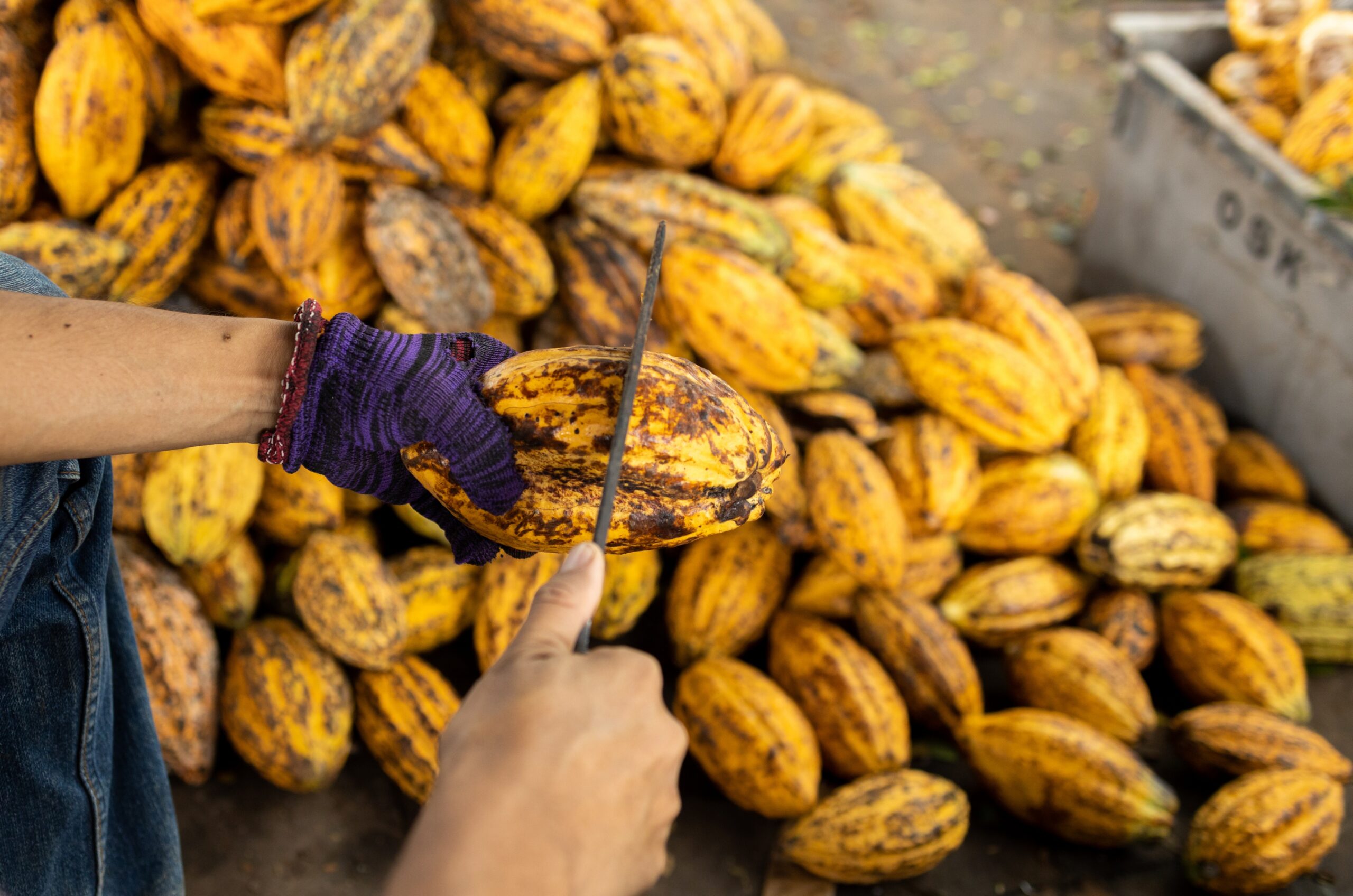
Whole cocoa beans are the complete fermented and dried bean with the outer shell intact. They require roasting, cracking, and winnowing before you can grind them into chocolate. Starting from whole beans gives you full control over the roast profile, which is the primary flavour development stage.
Raw cocoa nibs are whole beans that have already been cracked and had the shell removed. They skip the winnowing step but are typically sold unroasted, so you still roast them before grinding. For a business with limited equipment or space, starting with nibs instead of whole beans removes one piece of machinery (the cracker/winnower) from your setup, which can meaningfully reduce startup costs and complexity at the early stage.
Related Reading from Radad International
Continue your learning with these detailed guides from the Radad International blog, covering the full cocoa supply chain from farm to finished chocolate.
Conclusion: Your Craft Chocolate Business Starts with the Right Beans
Starting a craft chocolate business is one of the most rewarding food ventures you can pursue. The market is growing, consumers are willing to pay premium prices for quality and story, and the barrier to entry at the small scale is lower than ever. Success comes down to a small number of critical decisions made well from the beginning:
- Source genuinely high-quality, well-fermented cocoa beans from a verified, direct-source exporter
- Start simple: master a two or three-ingredient dark chocolate before adding complexity
- Invest in your four core machines progressively: roaster, cracker/winnower, melanger, and tempering machine
- Never skip the sample evaluation stage before committing to any bulk bean purchase
- Cost your product honestly: ingredient cost, packaging, labour, and overheads all go in, not just beans
- Price for the value of your craft, not the cost of your ingredients: USD 10 to 15 per bar is entirely reasonable for artisan craft chocolate
- Get your labeling right from day one: origin claims, allergens, and certification marks all require documentation to back them up
- In Dubai and the UAE, lean into the gifting and premium retail channels where craft chocolate commands its highest price and recognition
The world has more than enough mass-market chocolate. What it needs is more makers who care deeply about every step of the process, starting with the farmers who grow the beans. That is exactly the kind of chocolate business worth building, and exactly the kind of maker Radad International exists to supply.