
Cocoa Origins
Cocoa grows only in a narrow tropical belt, and a handful of countries supply most of the world's beans. This guide ranks the top 10 cocoa producing countries using the latest International Cocoa Organization (ICCO) figures, explains why different sources disagree, and profiles each origin's regions, bean types and flavour.

Quick answer
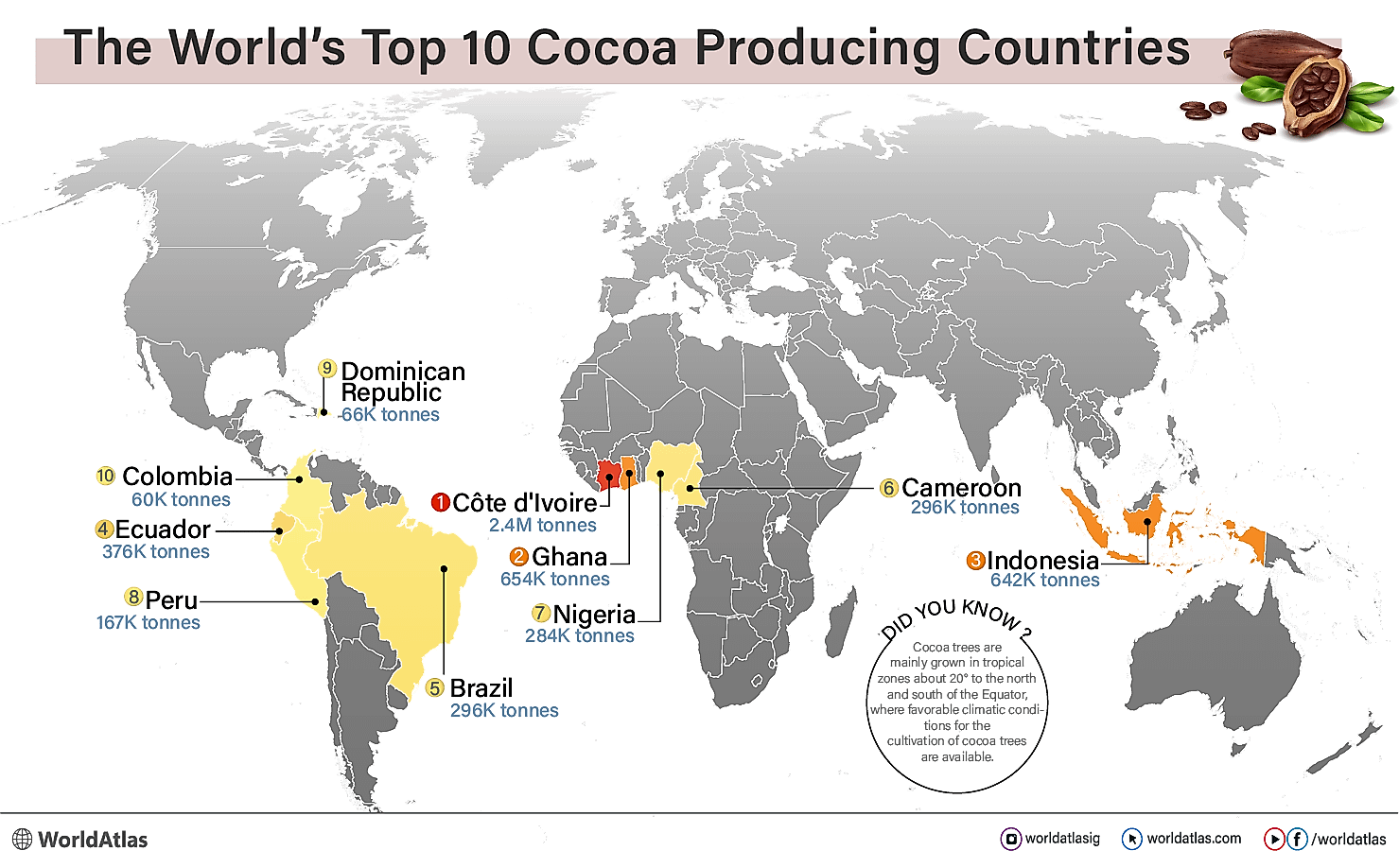
Côte d'Ivoire is the largest cocoa producer in the world, with about 1.68 million tonnes in the 2024/25 season, or roughly 36% of global output. Ghana (600,000 t) and Ecuador (570,000 t) follow, then Nigeria, Cameroon, Indonesia, Brazil, Peru, Colombia and the Dominican Republic. Africa produces about 69% of the world's cocoa.
At a glance (2024/25 season)
World production
4.73 million tonnes, up 8.5% on 2023/24
Largest producer
Côte d'Ivoire, about 36% of world output
Africa's share
About 69% of world production
Fastest riser
Ecuador, up from 419,000 t to 570,000 t in one season
World grindings
4.65 million tonnes, down 3.3%
Market balance
Small surplus of about 37,000 t, after a 2023/24 deficit
Record price
US$12,931 per tonne on ICE New York, 18 Dec 2024
EU deforestation rules
EUDR applies from 30 Dec 2026 for large and medium firms
Top 10 Cocoa Producing Countries in the World (2024/25)
The ranking below uses ICCO country estimates for the 2024/25 cocoa year, which runs from October to September. Production is shown in thousand tonnes of cocoa beans.
Rank
Country
2024/25 ('000 t)
Share of world
2023/24 ('000 t)
1
Côte d'Ivoire
1,681
35.8%
1,674
2
Ghana
600
12.8%
449
3
Ecuador
570
12.1%
419
4
Nigeria
330
7.0%
350
5
Cameroon
310
6.6%
320
6
Indonesia
200
4.3%
180
7
Brazil
190
4.0%
182
8
Peru
165
3.5%
–
9
Colombia
75
1.6%
–
10
Dominican Republic
72
1.5%
–
Swipe the table sideways to see all columns →
Source: ICCO country estimates for 2024/25 (ICCO Annual Report 2024/25) and 2023/24 (Quarterly Bulletin of Cocoa Statistics, May 2025). Shares are of the 4.70 million tonne world total these country estimates add up to; ICCO's latest world figure for 2024/25 is 4.73 million tonnes (August 2026). “–” means no separate ICCO figure was published. Papua New Guinea (45,000 t) is the next-largest producer.
ICCO vs FAOSTAT: Why Cocoa Production Figures Differ
If you compare rankings online, you will see different numbers. The two main sources measure different things. ICCO reports by cocoa season (October to September) and focuses on beans that reach the market. FAOSTAT, from the UN Food and Agriculture Organization, reports by calendar year using national statistics and its own estimates. The biggest gaps are for Indonesia and Brazil:
Country
ICCO 2024/25 (t)
FAOSTAT 2024 (t)
Indonesia
200,000
632,702
Ghana
600,000
530,000
Ecuador
570,000
403,699
Brazil
190,000
297,509
On FAOSTAT figures, Indonesia ranks second in the world; on ICCO figures it ranks sixth. This guide uses ICCO because it is the industry's reference for the current season and is what traders and processors follow. Whichever source you use, quote the season or year with the figure.
Profiles of the Top 10 Cocoa Producing Countries
Volume is only part of the story. Each origin has its own growing regions, bean types, harvest calendar, industry structure and flavour, and buyers choose origins to match the product they are making. For the genetics behind these differences, see our guide to cocoa varieties.
1. Côte d'Ivoire (Ivory Coast)
Côte d'Ivoire has been the world's largest cocoa producer since 1978, when it overtook Ghana, and cocoa earns around 40% of the country's export income. The crop is grown by smallholders, mostly on farms of 1 to 3 hectares, across the south-west and centre-west, with San-Pédro, Soubré (Nawa) and Daloa (Haut-Sassandra) among the key zones. Ivorian beans are West African Forastero (Amelonado and improved hybrids) with a full, classic cocoa flavour, and they form the base of most mass-market chocolate. Output fell in 2023/24 after heavy rains, black pod (brown rot) disease and ageing trees, then held at about 1.68 million tonnes in 2024/25. Côte d'Ivoire is also the world's largest grinder: the ICCO forecast about 730,000 tonnes ground there in 2024/25, more than the Netherlands.
Harvest
Main crop from October; mid-crop from about April
Industry body
Conseil du Café-Cacao (CCC), which sets the farmgate price
Farmgate price 2026/27
1,200 CFA francs/kg (record 2,800 in 2025/26)
Local grinding
About 730,000 t (ICCO forecast, 2024/25), the world's largest
Export ports
San-Pédro, Abidjan
Cocoa type
Bulk cocoa
2. Ghana
Ghana was the world's leading producer for much of the 20th century and is still the benchmark for quality. The Ghana Cocoa Board (COCOBOD), set up as the Cocoa Marketing Board in 1947, controls buying, grading and export, and its strict quality checks are why Ghanaian cocoa has traditionally earned a premium. The crop supports more than 800,000 farming households, mainly in the Western North, Western, Ashanti, Eastern and Central regions. Output fell from over 1 million tonnes in 2020/21 to 449,000 t in 2023/24. Industry reports in 2024 estimated that swollen shoot virus had infected around 500,000 hectares, including most of the Western North region, while illegal gold mining (galamsey) has destroyed farmland. The crop recovered to about 600,000 t in 2024/25, but COCOBOD expects 2026/27 to be at least 16% smaller.
Harvest
Main crop from October; light crop from about July
Industry bodies
Ghana Cocoa Board (COCOBOD); Cocoa Research Institute of Ghana (CRIG)
Farmgate price 2026/27
GH₵42,400 per tonne
Local grinding
About 210,000 t (ICCO forecast, 2024/25)
Export ports
Tema, Takoradi
Cocoa type
Bulk cocoa, traditionally sold at a quality premium
3. Ecuador
Ecuador is the great success story of the last decade. Its output rose from 419,000 t to 570,000 t in a single season, and the industry expected exports of around 600,000 t, worth about US$4.5 billion, in 2025. About 180,000 farmers work roughly 600,000 hectares, and average yields have risen above 1 tonne per hectare, roughly double the West African average. The growth comes from CCN-51 (Colección Castro Naranjal), a high-yielding, disease-tolerant clone bred in Ecuador, while the native Nacional (Arriba) variety gives the country its name for floral, fruity fine-flavour cocoa. The ICCO classes 75% of Ecuador's cocoa exports as fine or flavour.
Farmers and area
About 180,000 farmers on roughly 600,000 ha
Average yield
Over 1 tonne per hectare
Exporters' body
Anecacao (Asociación Nacional de Exportadores de Cacao)
Fine-flavour share (ICCO)
75% of exports
Export port
Guayaquil
Main markets
Europe, United States, Asia
4. Nigeria
Nigeria was one of the world's leading cocoa producers in the 1960s, and cocoa was one of its main export earners before oil. Cocoa is grown across the south-west, with Ondo the leading producing state followed by Osun, Ogun, Ekiti and Oyo, and in Cross River in the south-south. Since the commodity marketing boards were abolished in 1986, buying and export have been handled by private traders. Research and seedling supply are led by the Cocoa Research Institute of Nigeria (CRIN) in Ibadan. Nigerian beans are Forastero types with a full, robust cocoa flavour, well suited to cocoa mass, butter and powder. In July 2026 the government confirmed that raw bean exports remain permitted while it encourages more local processing. Nigeria is one of the origins Radad International sources cocoa beans from.
Harvest
Main crop from October; light crop from about April
Leading states
Ondo, Osun, Ogun, Ekiti, Oyo, Cross River
Research body
Cocoa Research Institute of Nigeria (CRIN), Ibadan
Trade
Private exporters since 1986; raw bean exports permitted
Export ports
Lagos (Apapa, Tin Can Island)
Cocoa type
Bulk cocoa with a robust flavour
5. Cameroon
Cameroon's government reported 309,518 t of cocoa sold through formal channels in 2024/25, plus an estimated 70,000 t that never entered them, much of it sold across the border. Cocoa grows mainly in the Centre, South, South-West and East regions, and the beans are a mix of Forastero and Trinitario types. Cameroon cocoa is known for the warm, reddish colour it gives to cocoa powder. Local grinding hit a record 109,431 t in 2024/25, about 35% of the traceable crop, with Atlantic Cocoa (Kribi), SIC Cacaos (Douala) and Neo Industry (Kékem) the main processors.
Season opens
August
Regulator
National Cocoa and Coffee Board (ONCC)
Local grinding
109,431 t in 2024/25, a national record
Export ports
Douala, Kribi
Cocoa type
Bulk cocoa; reddish beans valued for powder colour
6. Indonesia
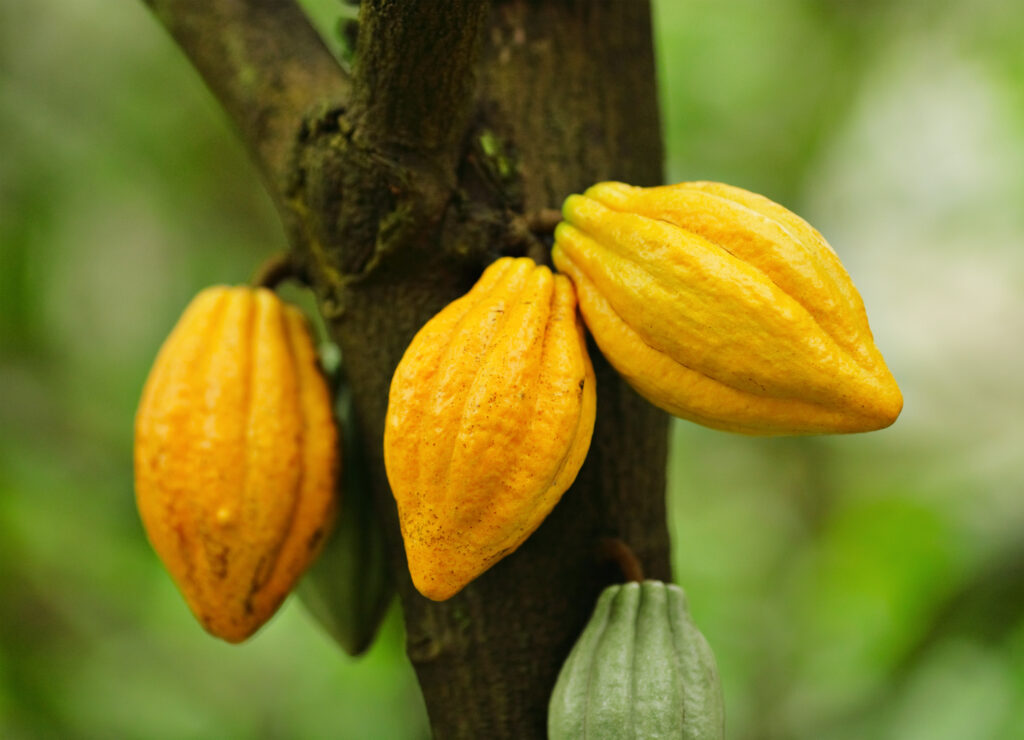
Asia's largest producer. Indonesia's statistics agency (BPS) reported 641,700 t for 2023, far above the ICCO's 200,000 t estimate (see why sources differ, above). Four Sulawesi provinces (Central, Southeast, South and West Sulawesi) grow about 60% of the crop, almost all on smallholdings. In 2010 Indonesia introduced an export tax on cocoa beans to keep beans at home for processing. Bean exports fell sharply and grinding capacity expanded, and the ICCO forecast about 390,000 t ground in 2024/25, making Indonesia one of the world's largest grinding countries and a regular importer of beans.
Main areas
Central, Southeast, South and West Sulawesi (about 60%)
National estimate (BPS)
641,700 t in 2023
Local grinding
About 390,000 t (ICCO forecast, 2024/25)
Trade policy
Export tax on cocoa beans since 2010
Fine-flavour share (ICCO)
1% of exports
7. Brazil
Brazil was once among the world's top producers, until witches' broom disease reached the Bahia cocoa belt in 1989 and output collapsed. Production has since shifted north. Pará's state government reported 154,000 t of Brazil's 287,000 t in 2024, mostly from agroforestry farms along the Transamazon highway around Medicilândia and Altamira. Bahia remains important and is known for its cabruca system, where cocoa grows under thinned native forest. Brazil is also a large grinder and chocolate market (around 230,000 t ground in 2024/25, according to ICCO forecasts) and imports beans to keep its factories supplied.
Main states
Pará, Bahia
Pará output (2024)
154,000 t (state government)
Local grinding
About 230,000 t (ICCO forecast, 2024/25)
Disease history
Witches' broom in Bahia from 1989
Farming systems
Agroforestry in Pará; cabruca shade forest in Bahia
8. Peru
Peru has about 90,000 small cocoa farmers across 16 regions. San Martín leads, and together with Junín, Ucayali, Huánuco and Cusco it grows 86% of the crop. In 2024 Peru exported about 160,000 t worth US$1.28 billion, making it the world's 8th-largest cocoa bean exporter, with the United States, Malaysia, Indonesia, the Netherlands and Belgium as main buyers. Cocoa has been promoted in Amazon valleys as an alternative to coca, and native types such as Chuncho from Cusco are prized by craft chocolate makers. The ICCO classes 75% of Peru's exports as fine or flavour.
Farmers
About 90,000 smallholders in 16 regions
Exports (2024)
About 160,000 t, worth US$1.28 billion
Main buyers
USA, Malaysia, Indonesia, Netherlands, Belgium
Fine-flavour share (ICCO)
75% of exports
Speciality
Organic and native fine-flavour cocoa
9. Colombia
Colombia recorded its largest crop ever in 2024: 67,678 t according to Fedecacao, the national cocoa growers' federation, plus about 6,000 t that left the country informally. Santander alone grew 41%, followed by Antioquia (11%) and Arauca (10%). The ICCO classes 95% of Colombia's cocoa exports as fine or flavour, one of the highest shares among producers. Much of the crop is used by Colombia's own chocolate industry, and cocoa is widely used in rural development and crop-substitution programmes.
Production (2024)
67,678 t, a national record (Fedecacao)
Leading departments
Santander 41%, Antioquia 11%, Arauca 10%
Growers' federation
Fedecacao (Federación Nacional de Cacaoteros)
Fine-flavour share (ICCO)
95% of exports
Main use
Largely the domestic chocolate industry
10. Dominican Republic
The Dominican Republic is a world leader in organic cocoa. According to IICA, about 40,000 producers farm roughly 150,000 hectares, and organic cocoa makes up around 60% of export volume. Beans are sold in two styles: unfermented Sánchez, which made up about 70% of exports and goes mainly to the United States, and fermented Hispaniola, favoured by European chocolate makers. The United States, the Netherlands and Belgium are the main markets. The ICCO classes 40% of exports as fine or flavour, and cooperatives such as CONACADO handle a large share of the crop.
Producers and area
About 40,000 producers on roughly 150,000 ha (IICA)
Organic share
About 60% of export volume
Bean styles
Sánchez (unfermented), Hispaniola (fermented)
Main markets
United States, Netherlands, Belgium
Fine-flavour share (ICCO)
40% of exports
Cocoa Flavour by Origin
Bean genetics, soil, climate and post-harvest fermentation all shape flavour. Bulk West African cocoa gives the strong, familiar chocolate base used in most products, while Latin American origins are better known for fine-flavour beans. Processing matters too: alkalizing darkens cocoa and mellows its acidity, as explained in our guide to alkalized vs natural cocoa powder.
Origin
Main bean types
Typical flavour profile
Commonly used for
Côte d'Ivoire
Forastero
Full, classic cocoa; mild acidity
Mass-market chocolate, butter, powder, liquor
Ghana
Forastero (Amelonado)
Rich, well-rounded, consistent
Milk and dark chocolate, premium blends
Nigeria / Cameroon
Forastero; Trinitario in Cameroon
Robust, strong cocoa; Cameroon gives reddish powders
Cocoa butter, powder, liquor, blends
Ecuador
Nacional (Arriba), CCN-51
Floral and fruity (Nacional); stronger, more astringent (CCN-51)
Fine dark chocolate, single-origin bars, bulk blends
Peru / Colombia / Dominican Rep.
Trinitario, Criollo types, fine-flavour clones
Fruity, nutty or spicy notes depending on region
Craft, organic and fair-trade chocolate
Indonesia / Brazil
Forastero hybrids, Trinitario
Varied; often used after local grinding
Regional grinding, butter and powder
Swipe the table sideways to see all columns →
Flavour descriptions are general. Actual flavour depends heavily on fermentation, drying and the processor.
Does Origin Change Cocoa's Quality and Nutrition?
You will often see claims that cocoa from one country is “healthier” than another. There is no reliable evidence for a country-by-country nutrition ranking: fat, protein, fibre and minerals in fermented, dried cocoa beans are broadly similar across the main origins. What does change from one origin to another, and matters to buyers, is set out below.
Flavanols and polyphenols
Set mainly by fermentation and processing, not by country. Unfermented beans, such as Dominican Sánchez cocoa, keep more polyphenols than well-fermented beans, and alkalizing lowers them further. See alkalized vs natural cocoa powder.
Cocoa butter hardness
Beans grown in warm, stable tropical climates such as West Africa generally give harder cocoa butter than beans from cooler or more seasonal areas such as southern Brazil. Harder butter tempers and sets more easily in chocolate. See our natural cocoa butter.
Flavour
Shaped by genetics (Forastero, Trinitario, Criollo, Nacional) and by how carefully beans are fermented and dried. Fine-flavour origins such as Ecuador, Colombia and Peru command premiums; West African bulk cocoa gives the strong, familiar chocolate base.
Bean size and defects
Bean count (beans per 100 g) and cut-test results for mouldy, slaty and insect-damaged beans depend on the crop and on post-harvest handling. Ghana's grading system is widely seen as one of the strictest.
Cadmium
Some volcanic soils in Latin America, including parts of Ecuador, Peru and Colombia, give beans higher natural cadmium levels. EU limits on cadmium in cocoa and chocolate products have applied since 2019. See our contaminant specifications guide.
Buyer tip
Ask for a lot-specific certificate of analysis rather than relying on the country of origin. Fat content, moisture, free fatty acids, bean count and contaminant results vary from shipment to shipment within the same origin.
Cocoa Market Trends, 2024–2026
After a severe shortage in 2023/24, world supply recovered in 2024/25. The ICCO's latest balance sheet shows how quickly the market swung back.
World balance (ICCO)
2023/24
2024/25
Production
4.37 million t
4.73 million t (+8.5%)
Grindings
4.81 million t
4.65 million t (−3.3%)
Surplus / deficit
−489,000 t (deficit)
+37,000 t (surplus)
Stocks-to-grindings ratio
26.4%
28.2%
Africa's share of production
71.3%
69.2%
Source: ICCO Quarterly Bulletin of Cocoa Statistics, August 2026. The ICCO has not yet published figures for 2025/26.
From record prices to a correction
The 2023/24 deficit, driven by poor weather, swollen shoot virus and ageing farms in Côte d'Ivoire and Ghana, pushed ICE New York cocoa futures to a record of US$12,931 per tonne on 18 December 2024. The ICCO's average price for the 2024/25 season was about US$6,612 per tonne. As supply recovered and grindings fell, prices eased, and New York futures traded at roughly US$5,000–5,700 per tonne in early October 2026.
Farmgate prices and the 2026/27 outlook
West African governments raised farmgate prices sharply during the price spike. Côte d'Ivoire set a record 2,800 CFA francs per kg for 2025/26, then cut it by 57% to 1,200 CFA francs per kg for the 2026/27 main crop as world prices fell. Ghana set its 2026/27 price at 42,400 cedis per tonne, while COCOBOD warned that the coming crop could be at least 16% smaller. Analysts expect Côte d'Ivoire to produce around 1.77–1.8 million tonnes in 2026/27.
Grinding is moving to origin
Producing countries are processing more of their own beans. Côte d'Ivoire is now one of the world's largest grinders, and Ghana, Nigeria, Cameroon, Indonesia and Brazil all have significant processing capacity. For buyers this means more choice of semi-finished products such as cocoa liquor, butter and powder direct from origin.
Who grinds the most cocoa?
Growing cocoa and processing it are two different rankings. Grinding turns beans into cocoa mass, cocoa butter and cocoa powder, and several of the biggest grinders grow little or no cocoa themselves.
1. Côte d'Ivoire
About 730,000 t
2. Netherlands
About 580,000 t
3. Germany
About 440,000 t
4. Indonesia
About 390,000 t
5. Malaysia
About 350,000 t
6. United States
About 280,000 t
7. Brazil
About 230,000 t
8. Ghana
About 210,000 t
ICCO forecasts of 2024/25 grindings by country, Quarterly Bulletin of Cocoa Statistics, February 2025. Figures are rounded.
EU Deforestation Regulation (EUDR)
Cocoa sold into the EU must be shown to be deforestation-free and traceable to the plot of land where it was grown. The rules apply from 30 December 2026 for large and medium operators and from 30 June 2027 for micro and small operators. Exporters shipping to Europe should expect to provide geolocation and due-diligence data with every lot.
Sourcing Cocoa from West Africa
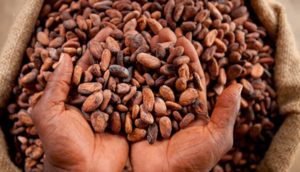
West Africa grows about two-thirds of the world's cocoa, which makes it the natural starting point for most bulk buyers. When comparing suppliers, check the following:
Origin and bean type: confirm the country, region and crop season of the lot.
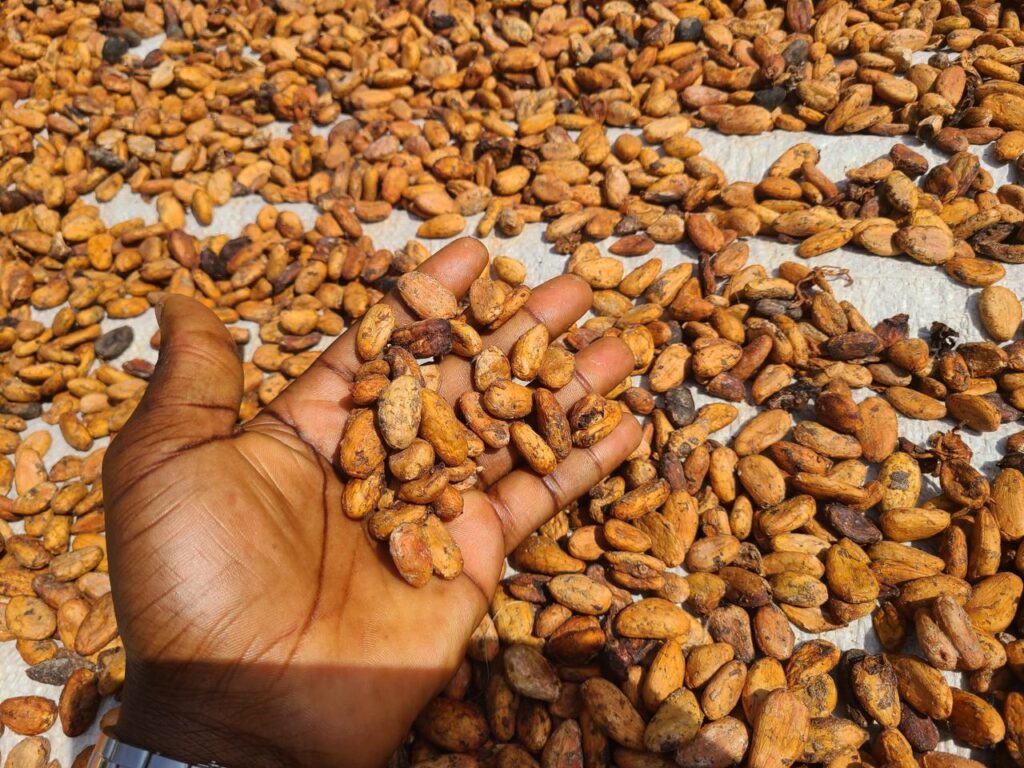
Quality data: bean count, moisture, cut-test results (mouldy, slaty and insect-damaged beans) and fat content.
Documents: certificate of origin, phytosanitary certificate, quality and weight certificates, and EUDR data if you sell into the EU.
Shipping terms: FOB or CIF, port of loading, container size and lead time.
Samples: test a pre-shipment sample before you commit to a full container.
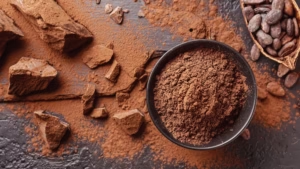
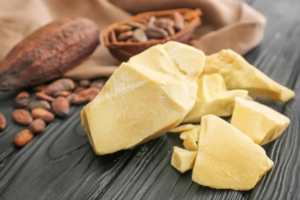
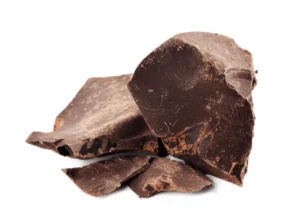
Radad International supplies whole cocoa beans and semi-finished cocoa products sourced from Africa, including cocoa mass, natural and deodorized cocoa butter, and natural and alkalized cocoa powder. Export documents are prepared for each shipment on FOB or CIF terms.
Further reading
How to buy and import bulk cocoa beans: a 7-step guide
The global cocoa market in 2026
Cocoa varieties: Forastero, Criollo, Trinitario, Nacional and CCN-51
From bean to bar: how chocolate is made
All Radad cocoa products: beans, mass, butter, powder, nibs and shells
Frequently Asked Questions
Source From Radad
Looking for a Reliable Cocoa Supplier?
Radad International supplies cocoa beans, cocoa mass, butter and powder sourced from Africa, with complete export documents, shipped on FOB or CIF terms. Tell us the product, volume and destination port for a quotation or a sample.
Or call +971 52 250 1039

2 Responses
Great post! We are linking to this great post on our site.
Keep up the great writing.
Thank you so much. It means a lot to us and gives us the courage to do more