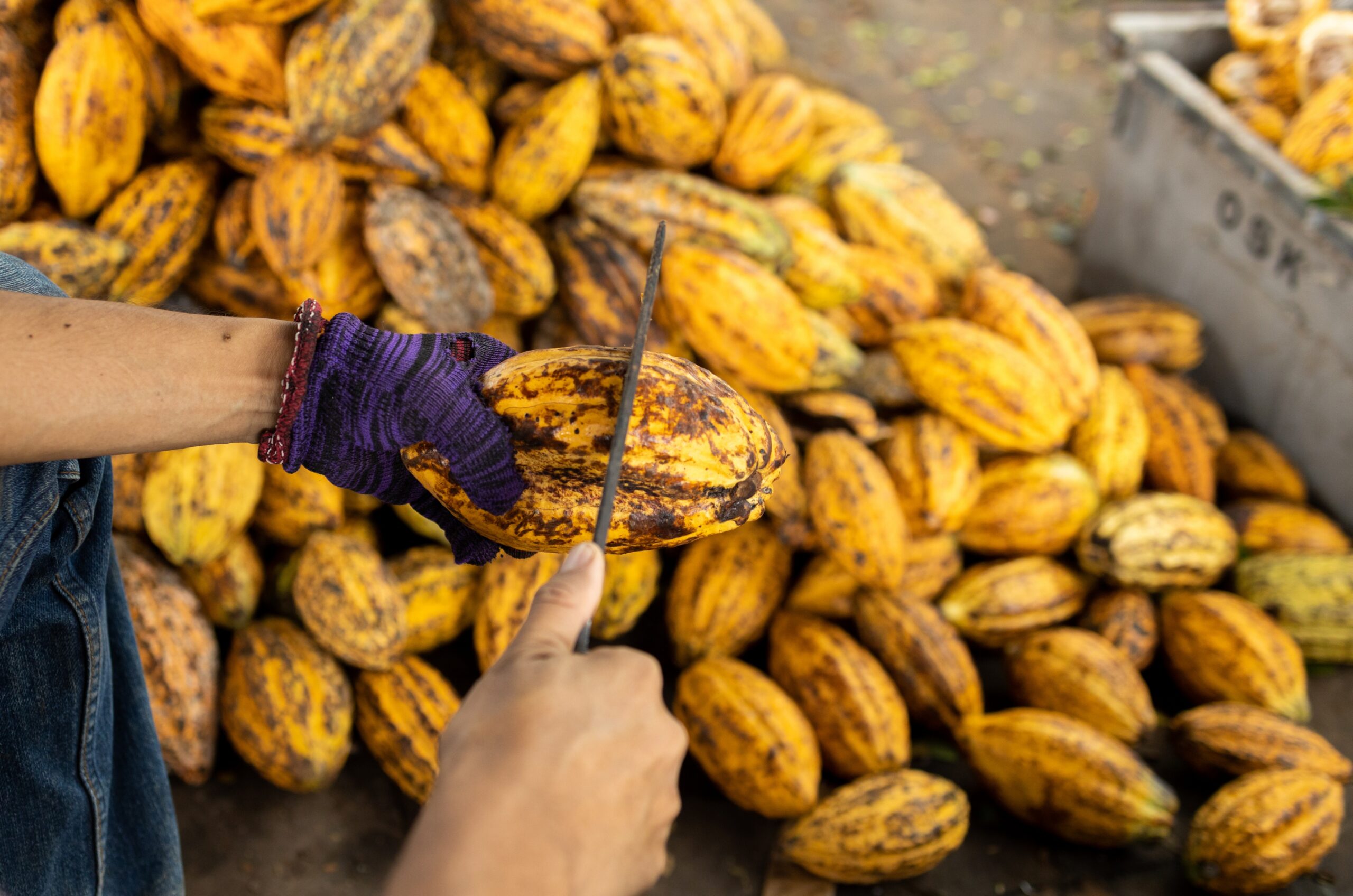
Cocoa beans are the foundation of an entire global value chain that spans agriculture, food processing, logistics, and retail. For businesses that work with cocoa, particularly at scale, sourcing beans in bulk is not just about filling containers or securing volumes. It’s about building a supply that is reliable, traceable, and aligned with both quality standards and business objectives.
If you’re involved in manufacturing, trading, or distribution, especially within regions like the UAE, Asia, or Europe, bulk cocoa beans represent a key ingredient in your broader production or export strategy. But to make informed decisions, it’s important to understand what you’re actually buying and how the industry works: where the beans come from, why so much of the trade now passes through Dubai, and what to check before you commit to a supplier.
Overview
Most of the world’s cocoa comes from West Africa, where Ivory Coast, Ghana, Nigeria and Cameroon account for over 70% of global output. Ghanaian beans are prized for consistent quality and fermentation, Nigerian beans for competitive pricing and high butter content, and Ivorian beans for volume and growing traceability. Most bulk orders are Forastero beans, valued for their availability and processing stability.
The UAE grows no cocoa, but Dubai has become a transit and re-export hub thanks to its location between Africa, Asia and Europe, ports such as Jebel Ali and Port Rashid, and free zones such as DMCC. Before choosing a supplier, weigh quality and grading, certifications (organic, Fair Trade, halal, phytosanitary), packaging, delivery timelines and transparency, not price alone. Good African export beans have a bean count of about 80 to 100 per 100 g, no more than 7.5% moisture, under 3% mouldy beans and well-fermented interiors.
The basics
What Are Bulk Cocoa Beans?
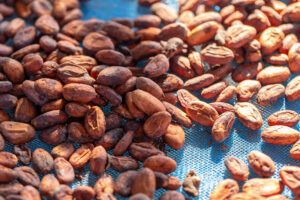
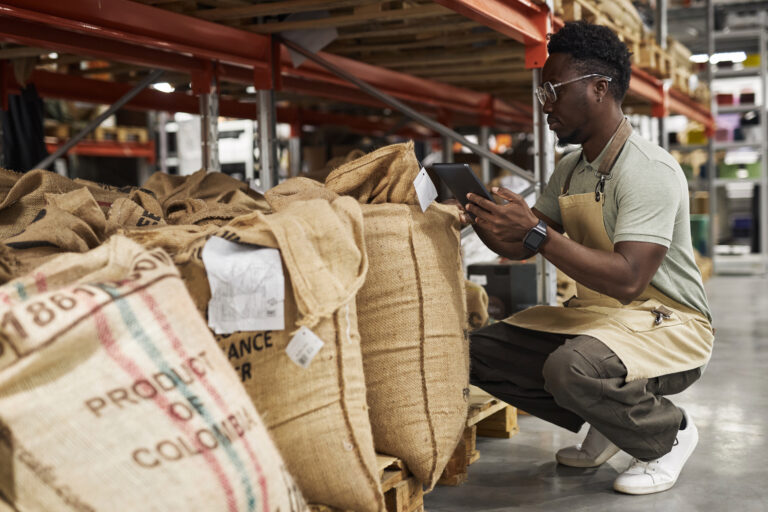
Bulk cocoa beans refer to unprocessed, dried, and fermented seeds from the cacao tree. They’re typically traded in large quantities, commonly in 25 kg to 70 kg jute or burlap sacks, and are used by:
Chocolate makers and processors
Roast, grind and press beans into chocolate, cocoa mass, cocoa butter and cocoa powder.
Wholesalers and ingredient companies
Buy in volume and supply beans or semi-finished cocoa to food manufacturers.
Re-exporters and commodity traders
Hold and move beans between producing and consuming markets, often through hubs like Dubai.
Unlike processed cocoa products such as powder or butter, bulk cocoa beans are in their raw, natural form, making them the starting point of the entire cocoa supply chain.
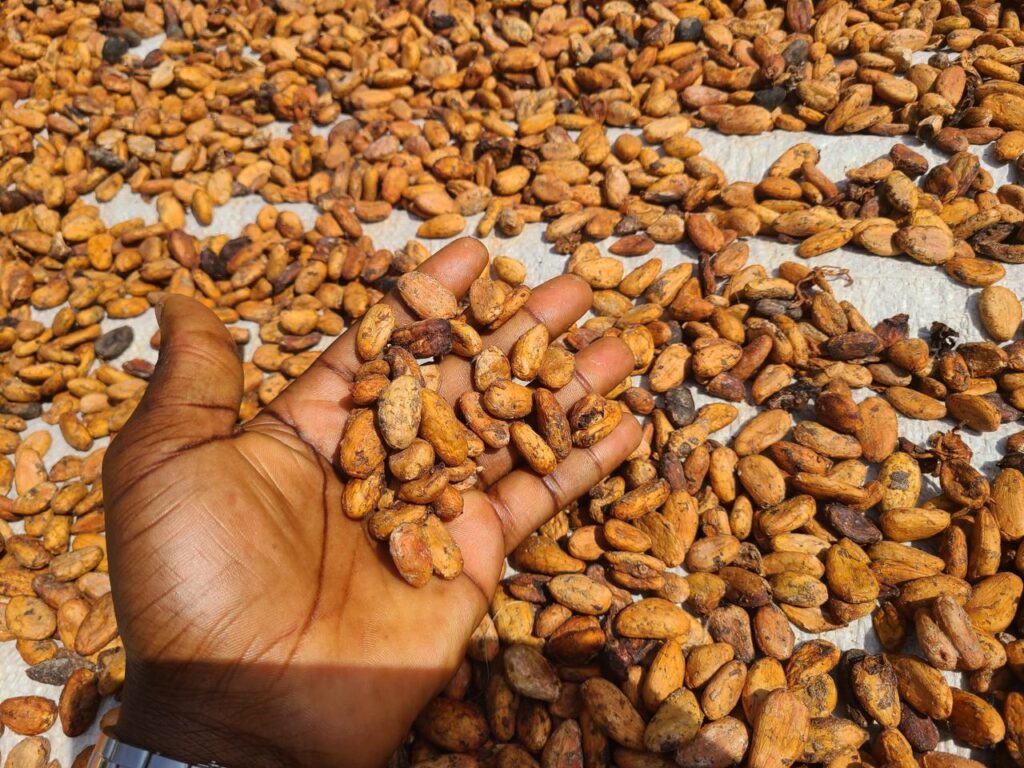
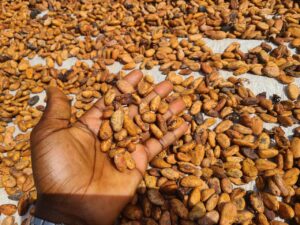
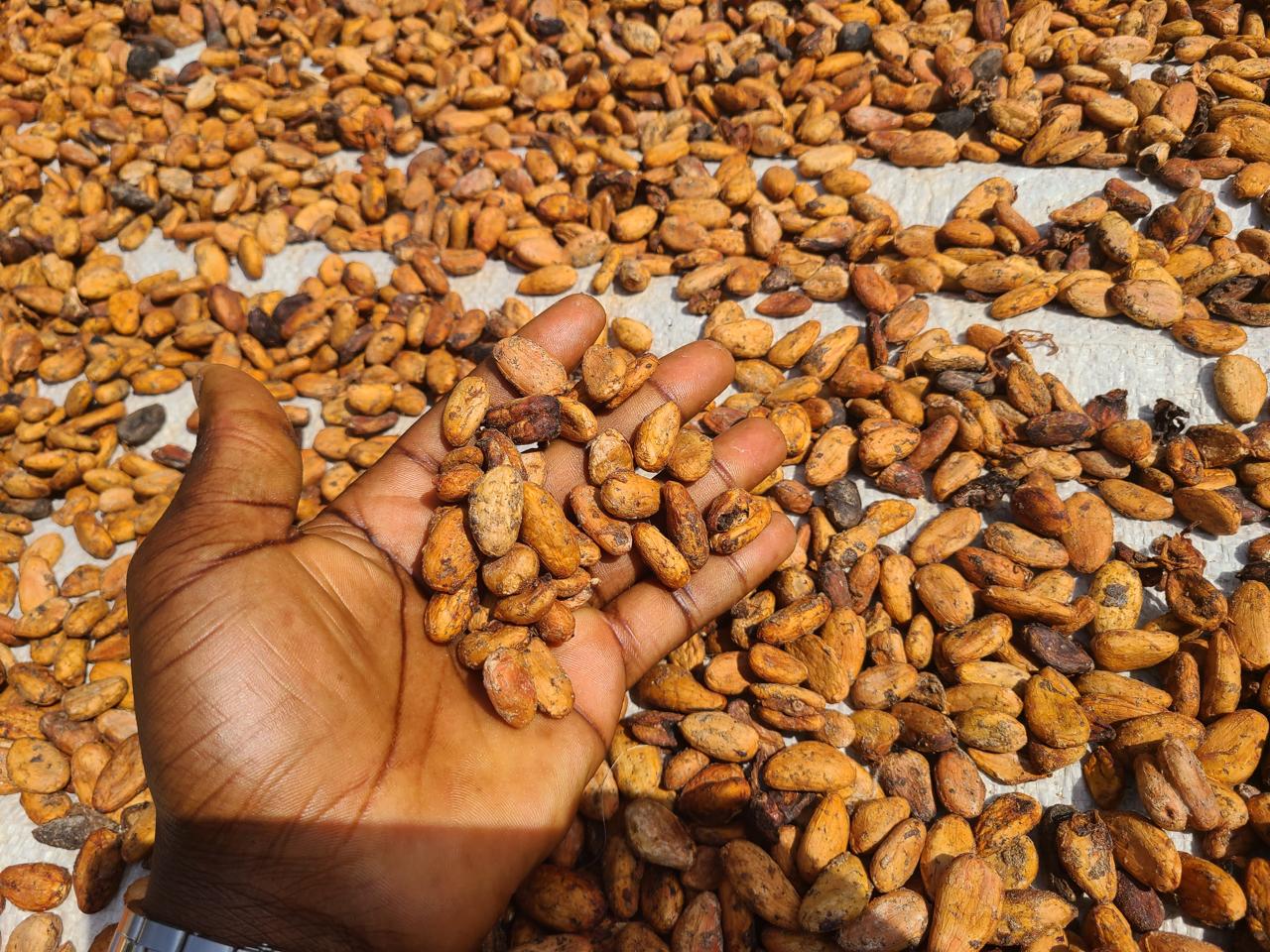
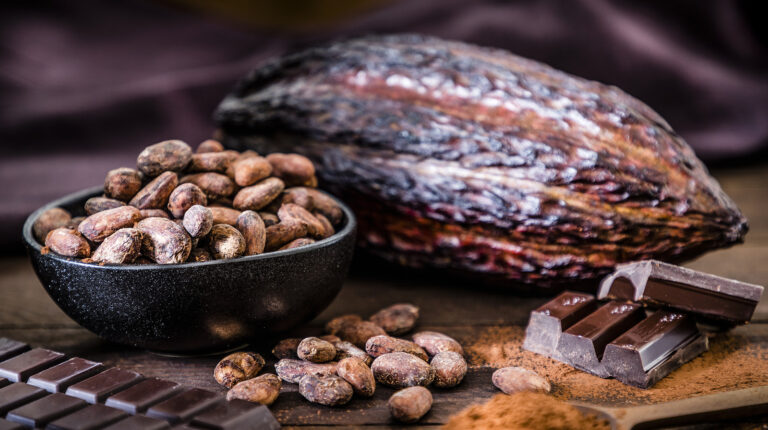
Natural, sun-dried African cocoa beans in Dubai.
Origins
Where Do the World’s Cocoa Beans Come From?
The majority of global cocoa production is concentrated in West Africa, where countries like Ivory Coast, Ghana, Nigeria and Cameroon account for over 70% of global output. Each country has its own post-harvest processing methods, flavour profiles, and grading standards. These differences affect everything from pricing and availability to how the beans perform in production.
Over 70%
Share of world cocoa grown in Africa (about 71% in the 2024/25 forecast)
1.85 million t
Ivory Coast, the largest producer (2024/25 forecast)
600,000 t
Ghana (2024/25 forecast)
350,000 t
Nigeria (2024/25 forecast)
320,000 t
Cameroon (2024/25 forecast)
4.72 million t
World cocoa production, 2024/25
How the main origins compare. On the international cocoa futures market, Ghana, Ivory Coast and Nigeria sit in the top quality group (a premium of USD 160 per tonne) and Cameroon in the second group (USD 80 per tonne):
Origin
What it is known for
Futures quality group
Harvest
Origin
Ghana
What it is known for
Prized for its consistent quality and high fermentation standards
Futures quality group
Group A
Harvest
About October to March (main), April to August (light)
Origin
Nigeria
What it is known for
Competitive pricing and known for its high butter content, an essential factor for manufacturers
Futures quality group
Group A
Harvest
About October to March (main), April to August (light)
Origin
Ivory Coast
What it is known for
Leads in sheer volume, offering both quantity and a growing focus on traceability
Futures quality group
Group A
Harvest
About October to March (main), April to August (light)
Origin
Cameroon
What it is known for
Fruity, slightly acidic beans often used in blends and for cocoa mass
Futures quality group
Group B
Harvest
About August to January (main), with a smaller mid crop
Main crop or light crop?
West African cocoa has a main crop and a smaller light (mid) crop. Main-crop beans are usually larger, with fewer beans per 100 g and more butter per tonne; light-crop beans are smaller and more variable. Nigeria’s export standard, for example, expects 300 main-crop beans to weigh more than 310 g.
Varieties
What Types of Cocoa Beans Exist?
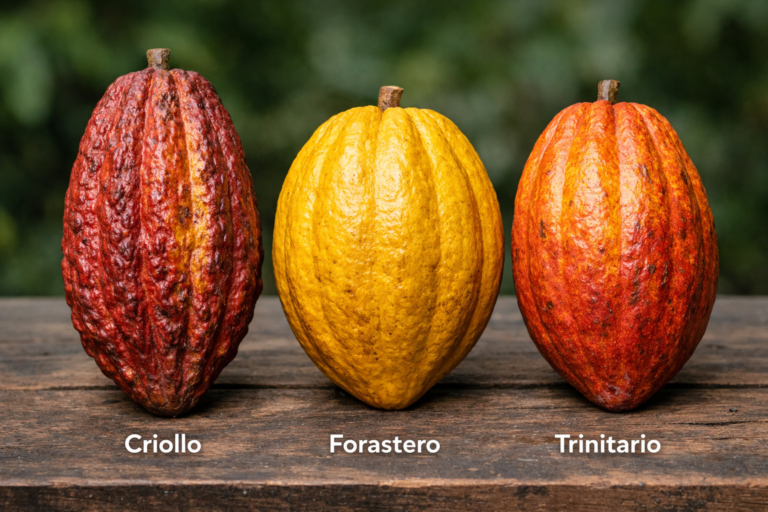
There are three main genetic varieties of cocoa beans:
Forastero
- Most widely cultivated
- Strong yield, robust flavour
- Dominates the commercial cocoa trade
Criollo
- Rare, mild flavour, more delicate
- Used in high-end chocolate products
Trinitario
- A hybrid of Criollo and Forastero
- Offers balanced flavour and disease resistance
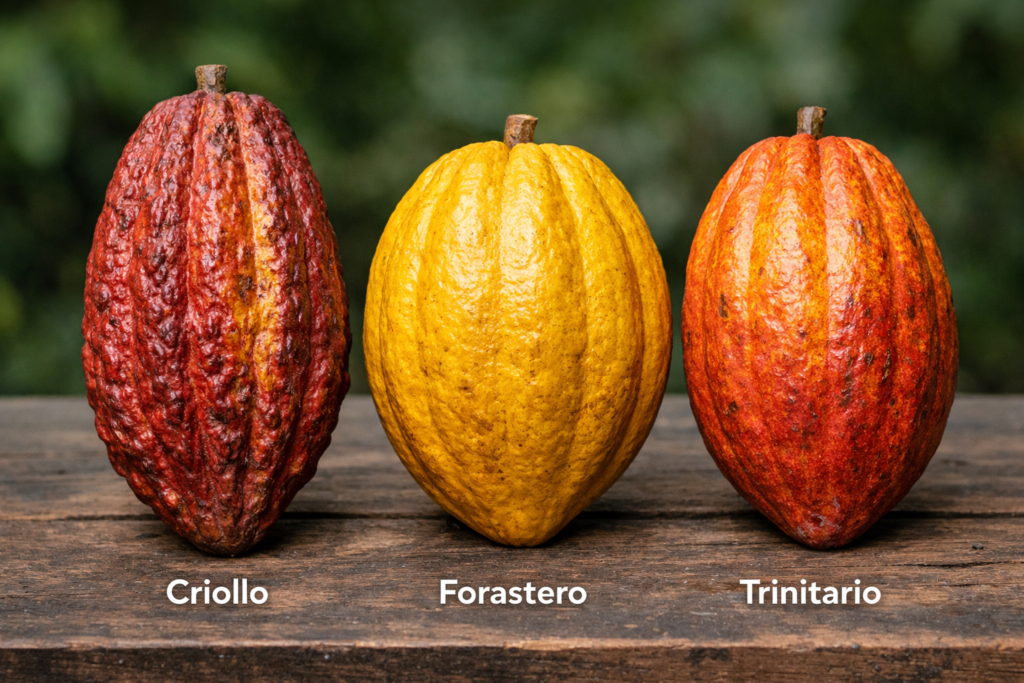
Criollo, Forastero and Trinitario pods differ in shape and colour.
Most bulk orders on the global market involve Forastero beans, due to their availability and processing stability. Nearly all West African cocoa is Forastero-type. For the newer genetic groups and where each variety is grown, see our guide to cocoa varieties and global supply.
The UAE
Why the UAE Has Become a Key Cocoa Trade Hub
In recent years, the United Arab Emirates, particularly Dubai, has grown into a central point for global commodity movement, and cocoa is no exception. While the country itself is not a cocoa producer, its strategic position between Africa, Asia, and Europe has made it an ideal transit and redistribution hub for cocoa bean trade.
For businesses looking to import, export, or repackage cocoa beans, the UAE offers several logistical and commercial advantages that are difficult to ignore.
Geographic Advantage for Global Trade
The UAE sits at the crossroads of major global trade routes. Its proximity to West Africa, the heartland of cocoa production, means shorter transit times from cocoa-origin countries like Ghana, Nigeria, and Ivory Coast. From Dubai’s ports, cocoa beans can be efficiently rerouted to:
Southeast Asia
Indonesia, Malaysia, India
Europe
Germany, Belgium, Netherlands
North Africa and the Levant
Egypt, Jordan, Lebanon
GCC markets
Saudi Arabia, Kuwait, Bahrain
This has turned Dubai into a re-export centre for bulk cocoa shipments.
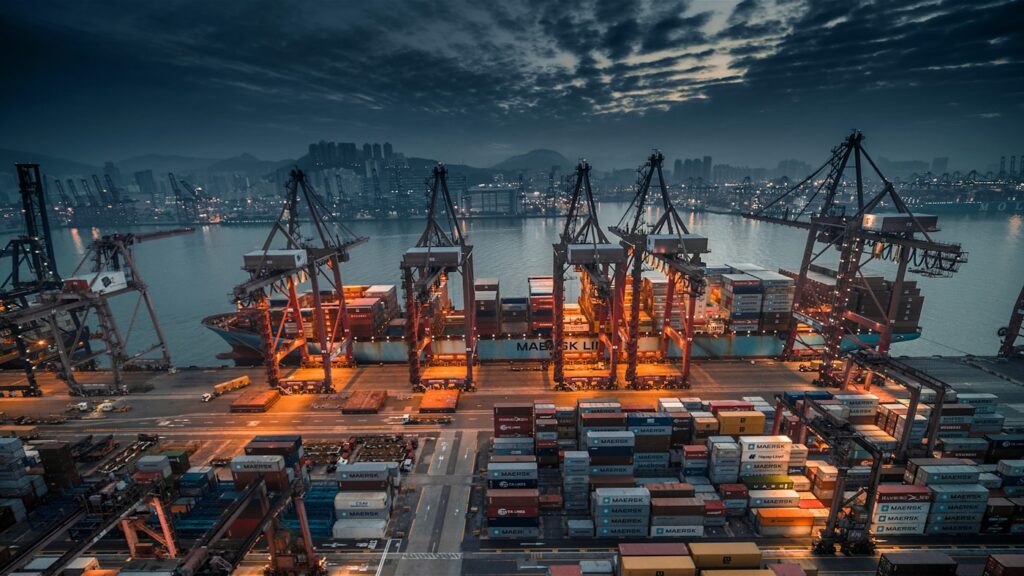
Jebel Ali handles more than 12 million TEUs a year and connects African origins with markets in Asia, Europe and the Gulf.
Infrastructure That Supports Scale
Dubai’s logistics infrastructure is built for volume. Ports like Jebel Ali, the largest port in the Middle East with more than 12 million TEUs a year, and Port Rashid offer:
- Efficient customs clearance
- Cold storage and warehouse access
- Strong connections with air and sea freight operators
For businesses dealing in bulk agricultural products, this setup translates into faster throughput, fewer delays, and better cost control.
Business Environment That Encourages Trade
With favourable tax structures, simplified import/export procedures, and the presence of multiple free zones (like DMCC, the Dubai Multi Commodities Centre), the UAE has created an environment where international buyers and suppliers can do business more easily. For cocoa traders and distributors, this means:
- Setting up operations with 100% foreign ownership
- Access to international banking and logistics networks
- A stable regulatory environment with global reach
It receives cocoa
Dubai receives cocoa beans from producing countries, often in raw or semi-processed form.
It re-distributes cocoa
It re-distributes cocoa to consuming countries, manufacturers, and other trading hubs with minimal downtime.
That dual role is what makes Dubai particularly effective in cocoa trading. This combination of strategic geography, built infrastructure, and supportive trade policies has made the UAE not just a buyer, but an enabler of global cocoa movement.
In the numbers
In 2023 the UAE imported 7,053 tonnes of cocoa beans worth USD 17.4 million, almost all from Ivory Coast, and exported 6,916 tonnes, showing how much of the trade is re-export. In April 2026, DMCC announced a Cacao Centre to add grading, storage, blending and processing of beans in Dubai.
Due diligence
Key Things to Consider Before Choosing a Cocoa Bean Supplier
Sourcing cocoa beans in bulk isn’t just a matter of finding the best price. While cost is important, it should be balanced with quality assurance, supplier reliability, product traceability, and logistics. These factors directly affect the performance of the beans in your production, the quality of your final product, and even your long-term reputation in the market.
Whether you’re sourcing from within the UAE or through international suppliers, here are some essential considerations before committing to a purchase:
1
Quality and Grading Standards
The quality of cocoa beans can vary widely based on:
- Fermentation (affects flavour and acidity)
- Drying methods (sun-dried vs. artificial)
- Moisture content (affects storage and mould risk)
- Bean size and uniformity
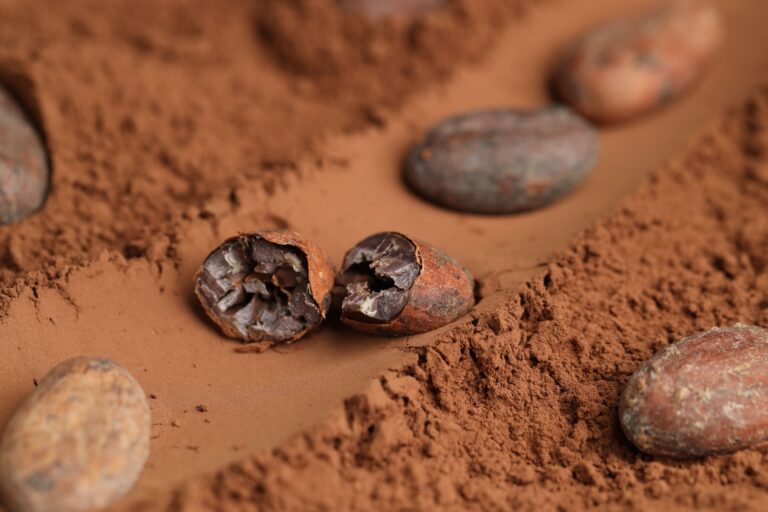
You’ll want to request samples and grade reports if possible. A reputable supplier should be able to provide documentation or even third-party lab test results on request. A cut test on the sample shows fermentation quality at a glance.
2
Certifications and Compliance
For many buyers, especially those serving regulated markets or health-conscious consumers, certification matters. Look for suppliers that can provide:
- Organic certification
- Fair Trade or UTZ certification (UTZ is now part of Rainforest Alliance)
- Halal certification (important in the UAE and surrounding markets)
- Phytosanitary certificates (for customs and food safety compliance)
These documents ensure not only the product’s quality but also ethical sourcing and regulatory clearance. For organic beans, check that the certificate comes from an accredited body and covers the exact lot you buy; UAE authorities accept USDA Organic certificates. See our EU, USDA organic and halal certified cocoa.
3
Packaging and Storage Standards
Bulk cocoa beans are typically packed in 25 kg to 70 kg jute or burlap bags, which help regulate airflow. However, packaging methods should be adapted based on your shipping needs and climate conditions. Ask about:
- Protection from moisture and pests
- Container loading practices
- Whether fumigation is done or available
- Use of pallets or bulk bag liners (especially for long-distance transport)
In the UAE, add cool, dry storage to the list: beans take up moisture from humid air, so keep them on pallets, away from walls and strong odours, and air-conditioned in summer.
4
Delivery Timelines and Logistics Capacity
Cocoa bean sourcing is sensitive to timing. Beans must be shipped and received during specific harvest windows, and any delay can affect production planning. You’ll want to clarify:
- Lead times (from order to delivery)
- Port of origin and destination
- Whether the supplier handles FOB, CIF, or EXW terms
- Availability of real-time shipment tracking or updates
Suppliers with integrated logistics partnerships are more likely to deliver reliably and with fewer delays.
5
Supplier Transparency and Communication
Good suppliers don’t just deliver a product; they provide clarity, documentation, and consistent communication throughout the process. Look for suppliers who are:
- Responsive to inquiries
- Open about sourcing origins
- Willing to share harvest schedules and volumes
- Transparent with pricing and payment terms
This builds long-term reliability and reduces risk for buyers managing complex supply chains. If you plan to sell into Europe, also ask about farm-level traceability: the EU Deforestation Regulation applies from 30 December 2026 for large operators and 30 June 2027 for small ones.
Prices in 2026
Price still matters, and it moves fast. Cocoa futures went above USD 12,000 a tonne in December 2024 and fell back towards USD 3,000 in early 2026. Ivory Coast set its 2026/27 farmgate price at 1,200 CFA francs per kilo, 57% below 2025/26, and Ghana set 42,400 cedis per tonne. See our guide to the price of cocoa beans.
Specifications
Specifications and Grading of African Cocoa Beans
African cocoa beans, especially those sourced from West Africa (Nigeria, Ghana, Ivory Coast), are globally respected for their strong flavour profile, high fat content, and consistent quality. Radad International sources beans that meet or exceed standard international specifications, in accordance with the International Organization for Standardization (ISO 2451):
Typical Specifications
Parameter
Typical value
What it means
Parameter
Bean count
Typical value
Typically 80 to 100 beans per 100 g
What it means
A lower bean count means larger beans, generally more desirable for high-end chocolate
Parameter
Moisture content
Typical value
Not more than 7.5%
What it means
Lower moisture means better shelf life and less risk of mould in transit
Parameter
Mouldy beans
Typical value
Less than 3% in high-quality shipments
What it means
Beans with excessive mould are rejected or reprocessed, as they affect flavour and safety
Parameter
Slaty beans
Typical value
Ideally less than 4 to 5%
What it means
Unfermented or poorly fermented beans have a bitter flavour and poor aroma
Parameter
Foreign matter
Typical value
Not more than 0.5% in premium shipments
What it means
Twigs, husks, stones and similar
How Cocoa Beans Are Graded
Cocoa beans are graded on several quality parameters:
Grade
Mouldy beans
Slaty beans
Insect-damaged beans
Grade
Grade 1 (Premium)
Mouldy beans
Less than 3%
Slaty beans
Less than 3%
Insect-damaged beans
Less than 1.5%
Grade
Grade 2 (Standard Export Quality)
Mouldy beans
Up to 4%
Slaty beans
Less than 4%
Insect-damaged beans
Less than 2%
Grade
Substandard
Mouldy beans
Outside these ranges
Slaty beans
Outside these ranges
Insect-damaged beans
Not accepted for export without reconditioning
Radad International exports cocoa beans that meet both international grading standards and buyer-specific criteria. The beans are typically fermented and sun-dried, enhancing flavour and reducing bitterness.
Exact limits differ by origin and contract, so write them into your specification. For reference, ISO 2451 classes beans with no more than 5% slaty and 5% defective beans as well fermented, and sets 7.5% maximum moisture for export; Nigeria’s official Grade I allows 3% mouldy, 3% slaty and 3% other defects; and beans above 4% mouldy or 4% insect-damaged cannot be delivered on the cocoa futures market.
How Fermentation Affects Quality
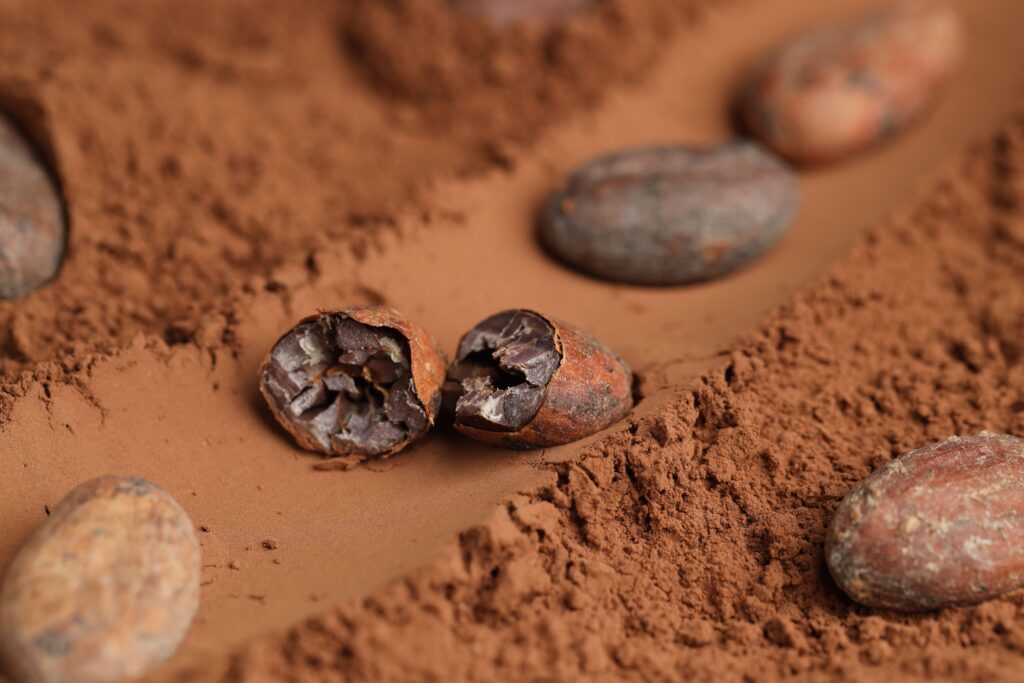
Fermentation is a critical step that transforms the raw bean into a flavourful product. It develops cocoa aroma, reduces bitterness, and prepares the bean for drying. Properly fermented beans have:
- Rich brown colour inside (when cut)
- Pleasant chocolate-like aroma
- Reduced bitterness
- Improved grindability for processors
Nutritional Composition
Cocoa beans are a rich source of antioxidants, fats, and minerals. On average, African cocoa beans contain:
Component
Typical content
Component
Fat (cocoa butter)
Typical content
50 to 55%, depending on variety and origin; ideal for both chocolate and cosmetic applications
Component
Protein
Typical content
Around 10 to 15%
Component
Carbohydrates
Typical content
15 to 25%, including dietary fibre
Component
Theobromine and caffeine
Typical content
Natural stimulants contributing to cocoa’s energising effect
Component
Minerals
Typical content
High in magnesium, iron, potassium and zinc
Component
Polyphenols
Typical content
Potent antioxidants, especially flavanols, linked to cardiovascular and cognitive health benefits
Radad International ensures proper post-harvest handling, including optimal fermentation (typically 5 to 7 days), to meet high-quality export standards.
Radad International
Why Choose Radad International as Your Cocoa Beans Supplier?
Radad International plays a pivotal role in the global cocoa supply chain, bridging the gap between cocoa producers and international markets with efficiency and reliability.
Sourcing
Radad International works closely with trusted cocoa farmers and cooperatives, primarily in West Africa, to source high-quality cocoa beans. The company emphasises sustainable and ethical sourcing practices to ensure the quality and traceability of its products.
Processing
Once sourced, Radad International oversees the initial processing stages, including sorting, cleaning, and quality assessment. This ensures that only the best beans proceed for export, maintaining consistent standards that meet global market demands.
Export and Distribution
With headquarters in Nigeria and a major operational hub in Dubai, Radad International manages the export of cocoa products to markets worldwide. The Dubai base allows efficient distribution to the Middle East, Asia, Europe, and beyond, ensuring timely delivery and competitive logistics.
Customer-Centric Approach
By offering a wide range of cocoa products, including beans, nibs, and alkalized powder, Radad International caters to diverse customer needs across confectionery, beverages, and pharmaceuticals. Supply chain integration minimises delays and maximises product freshness and quality.
In essence, Radad International serves as a critical link in the cocoa supply chain, committed to sustainability, quality assurance, and customer satisfaction.
First-time buyers
Tips for First-Time Bulk Cocoa Buyers
Buying cocoa in bulk can be a complex process, especially for those new to the cocoa industry. Here are some key tips to help you navigate your first bulk purchase with confidence.
1. How to Request a Sample and What to Check For
Before committing to a large order, always request a sample from your supplier. This helps you verify the product’s quality first-hand. When you receive a sample, inspect it carefully:
Visual inspection
Look for uniform colour, absence of mould, and minimal broken beans or nibs.
Smell
The cocoa should have a rich, characteristic chocolate aroma without any off or sour odours.
Taste (if applicable)
For nibs and powders, a clean, slightly bitter chocolate flavour is expected. Any off-flavours could indicate poor processing or contamination.
2. Understanding Incoterms (FOB, CIF, EXW)
International Commercial Terms (Incoterms) define who is responsible for shipping, insurance, and customs at different stages of delivery:
Term
Who does what
Term
FOB (Free On Board)
Who does what
The seller delivers the goods onto the ship at the port of origin. The buyer assumes responsibility after that point.
Term
CIF (Cost, Insurance and Freight)
Who does what
The seller covers the cost, insurance, and freight to the buyer’s port. This is common for bulk commodities like cocoa.
Term
CFR (Cost and Freight)
Who does what
Like CIF, but the buyer arranges cargo insurance.
Term
EXW (Ex Works)
Who does what
The buyer is responsible for all transportation costs from the seller’s premises onward.
Understanding these terms clearly will help you avoid unexpected costs and clarify liability.
3. Verifying Documents
When importing cocoa, proper documentation is crucial for customs clearance and ensuring product authenticity:
Document
Purpose
Document
Certificate of Origin (COO)
Purpose
Confirms where the cocoa was grown and processed. This is vital for tariffs and trade compliance.
Document
Phytosanitary Certificate
Purpose
Verifies that the product meets health and safety standards to prevent pests and contamination.
Document
Laboratory Reports
Purpose
Include details on quality, moisture content, and contaminants to confirm the product meets buyer specifications.
Always cross-check these documents with your supplier before finalising your purchase. Organic, halal and Fair Trade certificates should also match the lot you receive.
4. Choosing Between Cocoa Beans, Nibs, Powder, and Butter
Each cocoa product serves different purposes, and choosing the right one depends on your intended use:
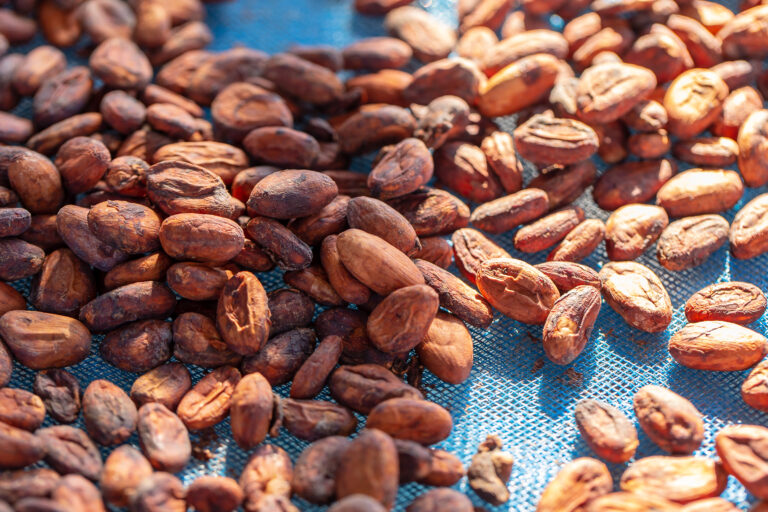
Cocoa Beans
Raw or fermented whole beans for roasting or further processing. Ideal if you want control over flavour development.
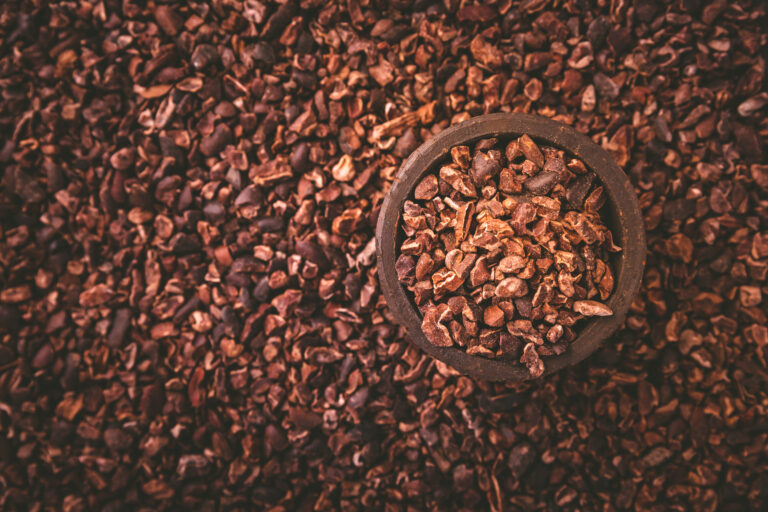
Cocoa Nibs
Crushed roasted beans, used in baking or as toppings. They retain intense cocoa flavour and are less processed.
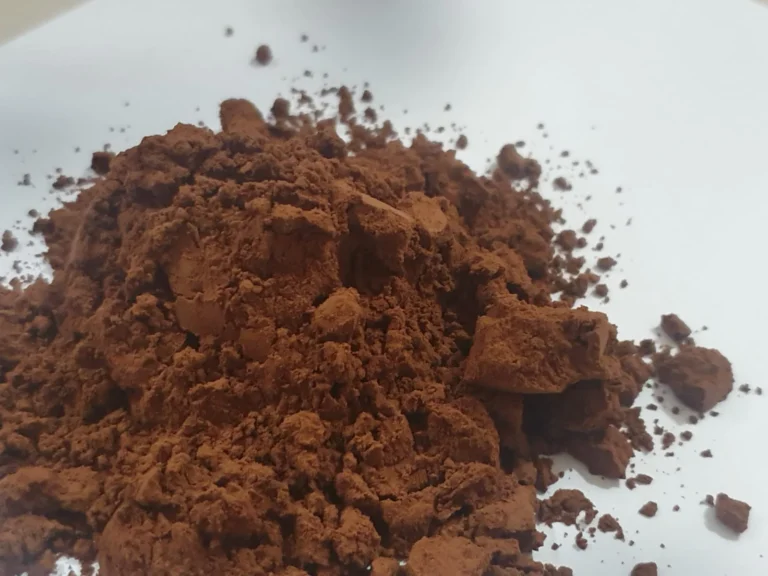
Cocoa Powder
Processed powder used in baking, beverages, and confections. Alkalized (Dutched) powder has a milder taste and darker colour.
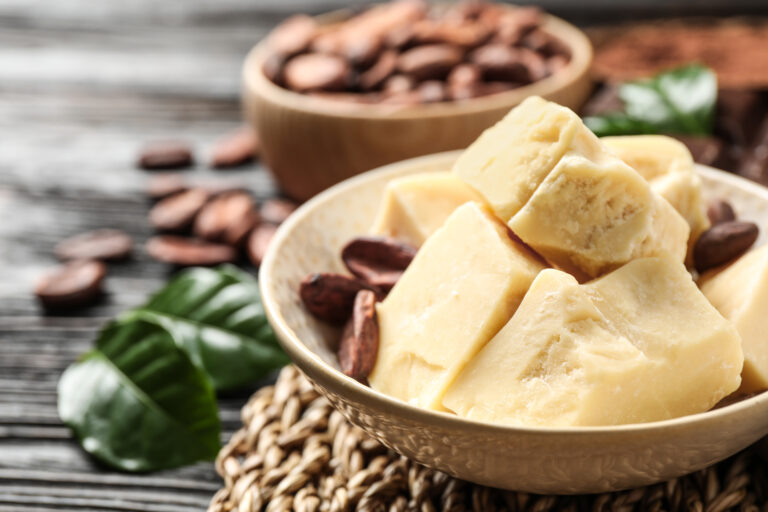
Cocoa Butter
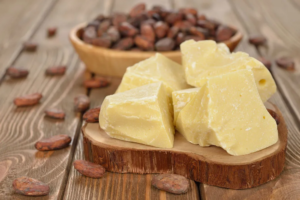
Fat extracted from the beans, widely used in chocolate making, cosmetics, and pharmaceuticals.
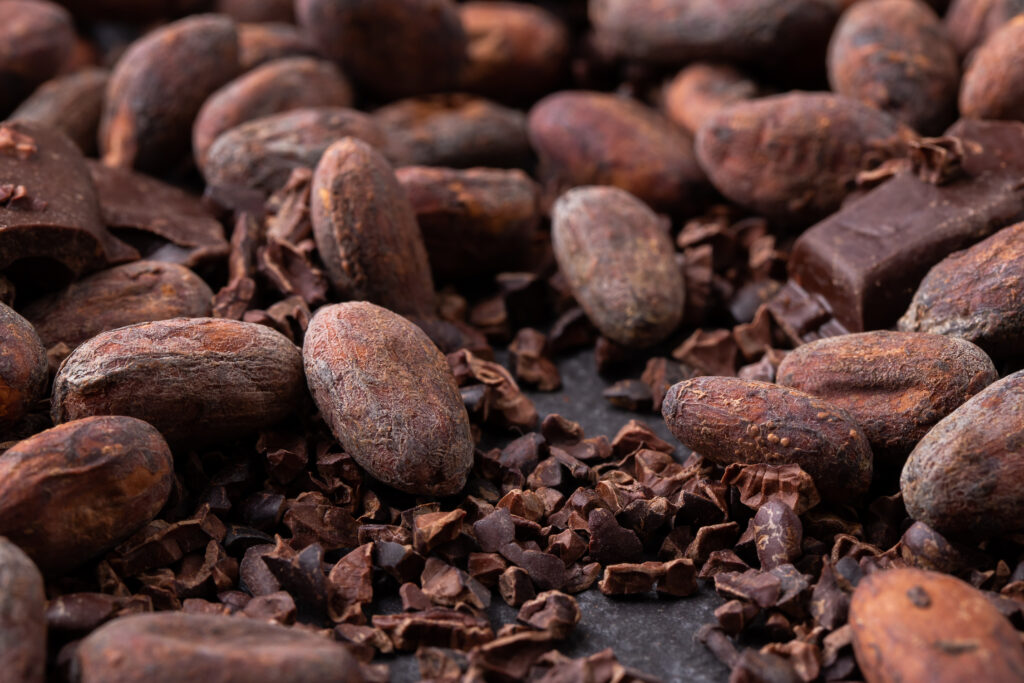
Whole beans give you control over roasting; nibs are ready to use in baking and snacks.
Knowing your end product requirements will help you select the right form and grade of cocoa.
Questions
Frequently Asked Questions (FAQs)
What types of cocoa products does Radad International supply?
Radad International offers a range of cocoa products including raw and fermented cocoa beans, cocoa nibs, alkalized (Dutched) cocoa powder, and cocoa butter. These products cater to industries such as confectionery, beverages, cosmetics, and pharmaceuticals.
How does Radad International ensure the quality of its cocoa products?
The company sources beans directly from trusted farmers and cooperatives, following strict quality control procedures at every stage, from harvesting and fermentation to processing and packaging. Quality is verified through laboratory testing and compliance with international standards.
Can I request samples before placing a bulk order?
Yes. Radad International provides samples for prospective buyers to assess product quality before committing to bulk purchases. Sample requests typically take 3 to 7 business days to process.
What are the common Incoterms used for shipping bulk cocoa, and what do they mean?
Common Incoterms include FOB (Free On Board), where the buyer assumes responsibility once goods are on the shipping vessel; CIF (Cost, Insurance and Freight), where the seller covers shipping and insurance to the destination port; and EXW (Ex Works), where the buyer handles all logistics from the seller’s premises. Choosing the right term depends on your logistics preferences.
How do I verify the authenticity and compliance of the cocoa shipment?
Key documents include the Certificate of Origin (COO), phytosanitary certificates, and detailed laboratory reports that confirm the product’s origin, safety, and quality. Radad International provides these documents to ensure transparency and smooth customs clearance.
What factors should I consider when choosing between cocoa beans, nibs, powder, and butter?
Your choice depends on your intended application. Cocoa beans allow full control over roasting and processing, nibs are great for baking and snacks, powder is widely used in confectionery and beverages, and butter is essential for chocolate manufacturing and cosmetic products.
How much lead time should I expect when placing a bulk order?
Lead times vary but generally include 1 to 2 weeks for order processing plus 2 to 6 weeks for shipping, depending on destination and shipping method. Early communication with Radad International helps manage expectations.
What is the minimum order quantity for bulk cocoa products?
Minimum order quantities vary by product type and buyer requirements. Contact Radad International directly to discuss your needs and obtain a tailored quotation.
Does Radad International support sustainable and ethical cocoa sourcing?
Yes. Radad International is committed to ethical sourcing practices that support farmers and promote sustainability, and prioritises partnerships with cooperatives that follow environmentally friendly and socially responsible farming methods.
How can I place an order or get more information?
Contact Radad International’s sales team through the website, by email at info@radadinternational.com, or by phone on +971 522 501 039. Share your desired volume, product type and delivery destination so the team can help you promptly.
What are the typical specifications of African cocoa beans?
Bean count of typically 80 to 100 beans per 100 g, moisture not above 7.5%, less than 3% mouldy beans, ideally less than 4 to 5% slaty beans, and not more than 0.5% foreign matter in premium shipments, in line with ISO 2451.
What is the nutritional composition of African cocoa beans?
On average, 50 to 55% fat (cocoa butter), around 10 to 15% protein and 15 to 25% carbohydrates including fibre, plus theobromine and caffeine, minerals such as magnesium, iron, potassium and zinc, and polyphenols, especially flavanols.
How are cocoa beans graded or classified?
Grade 1 (Premium): less than 3% mould, less than 3% slaty and less than 1.5% insect-damaged beans. Grade 2 (Standard Export Quality): up to 4% mould, less than 4% slaty and less than 2% insect-damaged beans. Anything outside these ranges is substandard and not accepted for export without reconditioning.
How does fermentation affect cocoa bean quality?
Fermentation develops cocoa aroma, reduces bitterness and prepares the bean for drying. Properly fermented beans are rich brown inside when cut, smell pleasantly of chocolate, taste less bitter and grind more easily. Radad International ferments beans for typically 5 to 7 days.
Why do so many cocoa beans pass through Dubai?
Dubai sits between African origins and markets in Asia, Europe and the Gulf, and offers large ports such as Jebel Ali, free zones such as DMCC and simple procedures. In 2023 the UAE imported 7,053 tonnes of cocoa beans and re-exported 6,916 tonnes.
Is organic cocoa from Africa available in the UAE?
Yes, from certified exporters. Ask for a valid organic certificate from an accredited body that covers the exact lot. UAE authorities accept USDA Organic certificates.
Keep reading
More Guides from Radad International
Importing
How to Buy and Import Bulk Cocoa Beans
Seven steps from specification to customs.
Suppliers
Cocoa Suppliers in UAE
How to choose and buy from cocoa suppliers in the Emirates.
Varieties
Cocoa Varieties and Global Supply
Forastero, Criollo, Trinitario and the main genetic groups.
Dubai
Cocoa Bean Supplier in Dubai, UAE
Bulk and organic cocoa beans for chocolatiers and manufacturers.
Sources and References
- ISO 2451, Cocoa beans: Specification and quality requirements
- TCVN 7519:2020, national adoption of ISO 2451:2017 (limits cited)
- Nigerian Export Promotion Council, Cocoa beans product profile
- ICE Futures U.S., Cocoa rules (growth groups and grading)
- ICCO, Production of cocoa beans by country, 2024/25 forecasts
- ICCO, May 2026 Quarterly Bulletin of Cocoa Statistics
- World Bank WITS (UN Comtrade), UAE imports of HS 1801 cocoa beans, 2023
- World Bank WITS (UN Comtrade), UAE exports of HS 1801 cocoa beans, 2023
- SeaRates, Guide to shipping to Jebel Ali
- DMCC, DMCC to launch Cacao Centre (April 2026)
- Bakery and Snacks, Cocoa prices crash after 2024 record highs (March 2026)
- Ecofin Agency, Ivory Coast cuts cocoa farmgate price 57% for 2026/27
- Global Agriculture, Cocoa price gap between Ivory Coast and Ghana (October 2026)
- ConfectioneryNews, EUDR delay and review agreed by EU (December 2025)
- US International Trade Administration, UAE labelling and marking requirements