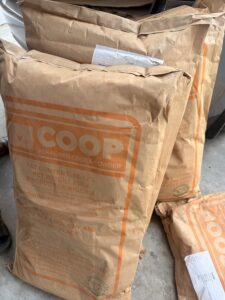
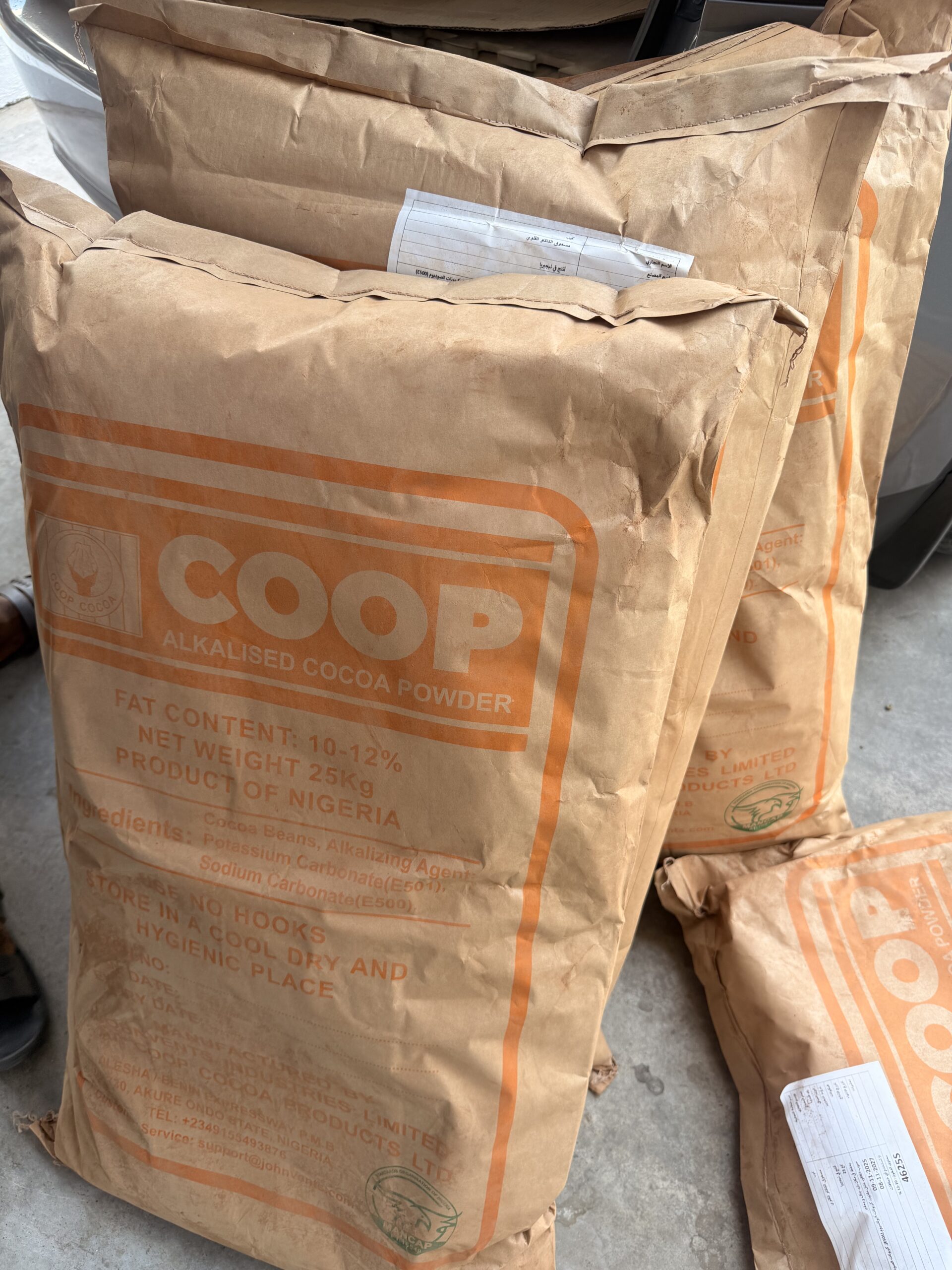
Bulk cocoa powder packaging is built around the 25 kg bag, made of several layers of paper. Cocoa powder draws in moisture and strong smells from the air around it, so the bag, the pallet and the storage conditions decide whether a lot reaches the buyer inside its specification or arrives caked, damp or tainted.
Packaging also carries the information a shipment is traded on: the lot code that ties the bag to its certificate of analysis, the net weight the invoice is checked against, and the origin and manufacturer details that customs and a buyer’s own traceability records need. For importers, distributors, bakeries and food manufacturers, the packaging specification belongs in the purchase contract.
Overview
Bulk cocoa powder is packed in 25 kg multi-layer paper bags, stacked on pallets and moved in clean, dry, odour-free containers. Smaller volumes run from 1 kg to 25 kg packs. The packaging has to keep out moisture, odours and foreign matter, and the material itself must be safe for food contact under Regulation (EC) No 1935/2004, since no European regulation is written specifically for cocoa packaging.
Each bag should carry the product name, the lot or batch code, the net weight in kilograms, the country of origin, the manufacturer’s name and address, the processing and packing dates and the storage instructions, plus the certification body and number where a lot is certified. Radad International packs cocoa powder in 1 kg, 5 kg, 10 kg and 25 kg units, with a shelf life of 24 months stored at 22 to 25 °C and a relative humidity of 65% or less.
In this guide
- Pack sizes and bag types
- What the packaging has to do
- Pallets, containers and ISPM 15
- What is written on a bulk cocoa powder bag
- Storage conditions and shelf life
- How Radad packs each cocoa product
- Your packaging specification checklist
- Buying cocoa powder in bulk and retail packs
- FAQs
- Sources and References
Pack sizes
Pack Sizes and Bag Types for Cocoa Powder
Cocoa powder is sold in two pack types: a bulk bag for production volumes and smaller packs for kitchens, trials and retail. The bulk standard is a 25 kg multi-layer paper bag, and the smaller packs run from 1 kg upward.
Pack
Who buys it
Notes
Pack
25 kg bag
Who buys it
Manufacturers, importers and distributors buying by the tonne
Notes
The standard export pack for cocoa powder
Pack
10 kg pack
Who buys it
Bakeries, hotel kitchens and small producers
Notes
Enough for steady production without bulk storage
Pack
5 kg pack
Who buys it
Cafés, pastry kitchens and small-batch producers
Notes
Opens and reseals in one working period
Pack
1 kg pack
Who buys it
Retail buyers, trials and recipe development
Notes
The usual size for testing a grade before ordering volume
Pack
Custom weight up to 100 kg
Who buys it
Trial orders and mixed loads
Notes
Set the exact weight at the time of order
Three details decide how well a bulk bag protects what is inside it, and none of them appear on a price list:
How many layers
A bulk cocoa powder bag is built from several layers of paper. Ask how many, because the number of plies decides how the bag survives stacking, handling and a long sea voyage.
Whether there is an inner liner
A food-grade inner liner is what keeps water vapour and odours out of the powder. Ask whether the bag carries one and what the liner is made of.
The food-contact declaration
Ask for the declaration of compliance for the bag and the liner. Packaging must not pass anything into the powder that could harm health or change its composition.
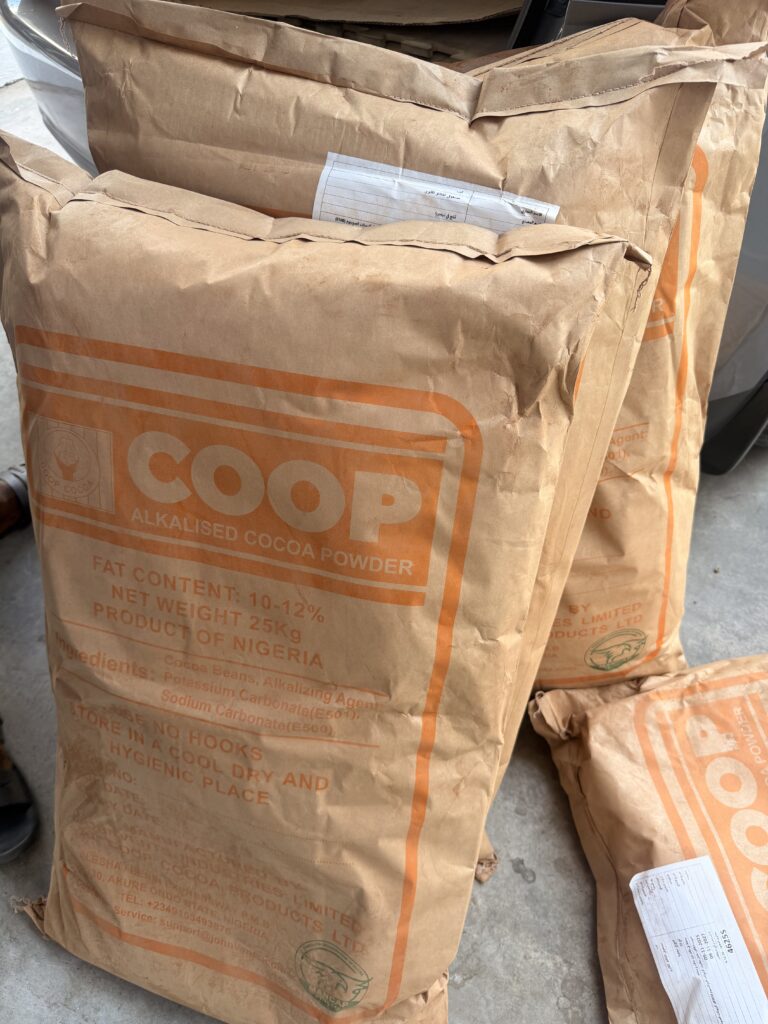
Bulk cocoa powder is supplied in 25 kg bags.
Function
What Cocoa Powder Packaging Has to Do
Packaging for cocoa powder has four jobs:
Moisture
Cocoa powder takes up water from the air, and damp powder cakes, loses flow and shortens its own shelf life. The pack has to be a moisture barrier, and the store behind it has to be dry.
Odours
Cocoa absorbs strong smells. Fuel, paint, spices, cleaning chemicals and scented cargo in the same container or store will carry into the powder and cannot be removed afterwards.
Foreign matter
Packaging itself can be the source. Recycled paper and treated sacks can introduce foreign matter, so the packaging material is worth checking.
Food-contact safety
Under Regulation (EC) No 1935/2004, packaging must not transfer anything into the food in amounts that could harm health or unacceptably change the food’s composition. No European regulation covers cocoa packaging specifically, so the general food-contact rules apply.
Keep chemicals out of cocoa stores
Keep chemicals and used chemical containers out of any room where cocoa is stored or transported. Taint from a neighbouring product cannot be corrected once it has happened, and it normally writes the lot off.
Logistics
Pallets, Containers and ISPM 15
How bags are stacked, wrapped and loaded decides how many arrive intact, and the pallet itself is regulated once it crosses a border.
Point to agree
What to specify
Point to agree
Pallet pattern
What to specify
How many bags per pallet and the net weight per pallet. A 25 kg unit at 40 to a Euro pallet gives 1,000 kg net.
Point to agree
Pallet type
What to specify
Euro pallet, standard pallet or slip sheet, and whether pallets are exchanged or charged.
Point to agree
Wood treatment
What to specify
Wooden pallets in international shipments must be debarked and treated under ISPM 15, then marked.
Point to agree
Wrapping
What to specify
Whether pallets are stretch-wrapped, strapped or corner-protected, and whether a top sheet is used.
Point to agree
Container
What to specify
Clean, dry and odour-free, with the previous cargo confirmed. State whether a liner or desiccant is used.
Point to agree
Load
What to specify
A 20 ft container holds roughly 15 to 16 tonnes of bagged cocoa product.
ISPM 15 and wooden pallets
Wood packaging used in international trade, which covers pallets, box pallets, crates, drums, load boards and dunnage, has to be treated and marked under ISPM 15. Untreated or unmarked wood can hold a consignment at the border, whatever condition the cocoa is in.
Heat treatment
The wood must reach 56 °C for at least 30 continuous minutes right through the profile, including the core. Dielectric heating is allowed for wood under 20 cm, at a minimum of 60 °C for one continuous minute.
Fumigation
Methyl bromide and sulphuryl fluoride are the approved alternatives. Bark has to be removed first, because it reduces how well the treatment works.
The mark
Treated wood carries a legible ISPM 15 mark that includes the two-letter ISO country code issued by the national plant protection organisation. A treatment certificate does not replace the mark.
What is exempt
Processed wood such as plywood, raw wood of 6 mm or less, and sawdust, shavings and cardboard used as packing material are outside the rules.
Condensation in the container
A container loaded in a warm origin and discharged somewhere cooler can form condensation inside, and the wetting falls on the outer layers of the stack. Containers that will meet a large temperature swing are worth lining, and a load that has travelled this way is worth inspecting at the top and edges of the stack first.
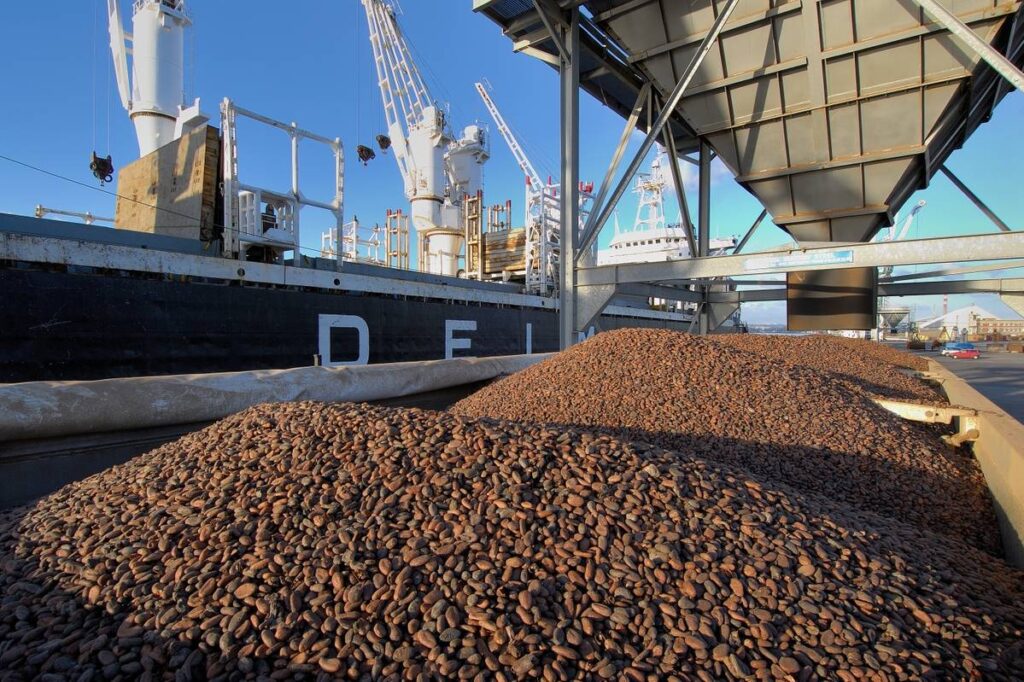
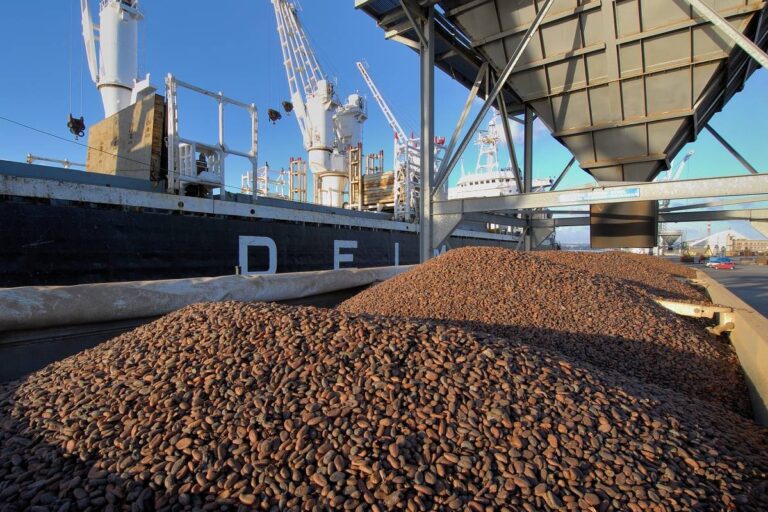
Cocoa moves in clean, dry, odour-free containers.
Who pays for the loading and the freight is a separate question, set by the trade term. See FOB vs CIF for cocoa.
Labelling
What Is Written on a Bulk Cocoa Powder Bag
There is no single label layout for bulk cocoa, so buyers set their own minimum. These elements are the ones European buyers expect on a bag, and they are the ones that make a lot traceable after it has been split across a warehouse:
- Product name, using the Codex Alimentarius definition for the product
- Lot or batch code, matching the certificate of analysis
- Country of origin
- Net weight in kilograms
- Name and address of the manufacturer, packer, distributor or importer
- List of ingredients
- Date of processing and date of packing
- Storage and use instructions
- Certification body name or code and certificate number, where the lot is certified
The batch code is the element that links a bag on a pallet back to its test results, so agree the coding system before production starts and check that your own warehouse system can read it.
Consumer packs and traceability
A pack that reaches a consumer is a different question from a bulk bag. Consumer packaging in the European market falls under Regulation (EU) No 1169/2011, which governs the ingredient list, allergen information, the nutrition declaration and any claims made on the pack. Traceability sits under Regulation (EC) No 178/2002, so records have to show where a lot came from and what was done to it.
Certified lots add a step. An organic shipment needs an electronic certificate of inspection, issued by an authorised inspector through the TRACES system before the goods ship. Without it the cocoa cannot be sold as organic in the European Union, even when the lot itself is certified.
Make the label legible and permanent
Labels should be clear, easy to read and fixed well enough to survive handling, in the language of the destination market. For certified organic lots, English is the usual working language.
Storage
Storage Conditions and Shelf Life
Shelf life on a specification sheet assumes the storage conditions on the same sheet. Cocoa powder held above its humidity limit will cake and lose flow well before its date, and powder held next to strong-smelling goods can fail on taint while every chemical result still passes.
Condition
Cocoa powder
Condition
Temperature
Cocoa powder
22 to 25 °C
Condition
Relative humidity
Cocoa powder
65% maximum
Condition
Environment
Cocoa powder
Cool, dry, odourless and ventilated
Condition
Shelf life
Cocoa powder
24 months from production, in sealed original packaging
Condition
Stacking
Cocoa powder
On pallets, off the floor and clear of walls
Condition
Rotation
Cocoa powder
First in, first out, against the production date on the bag
- Keep sealed bags out of direct sunlight and away from exterior walls that heat up
- Reseal opened bags, or move the balance into airtight containers
- Store no chemicals, cleaning products or scented goods in the same room
- In the Gulf, keep cocoa in an air-conditioned store and never in a yard, a container or a vehicle overnight
- Check bags on arrival for damp patches, tears and crushed corners before signing for the load
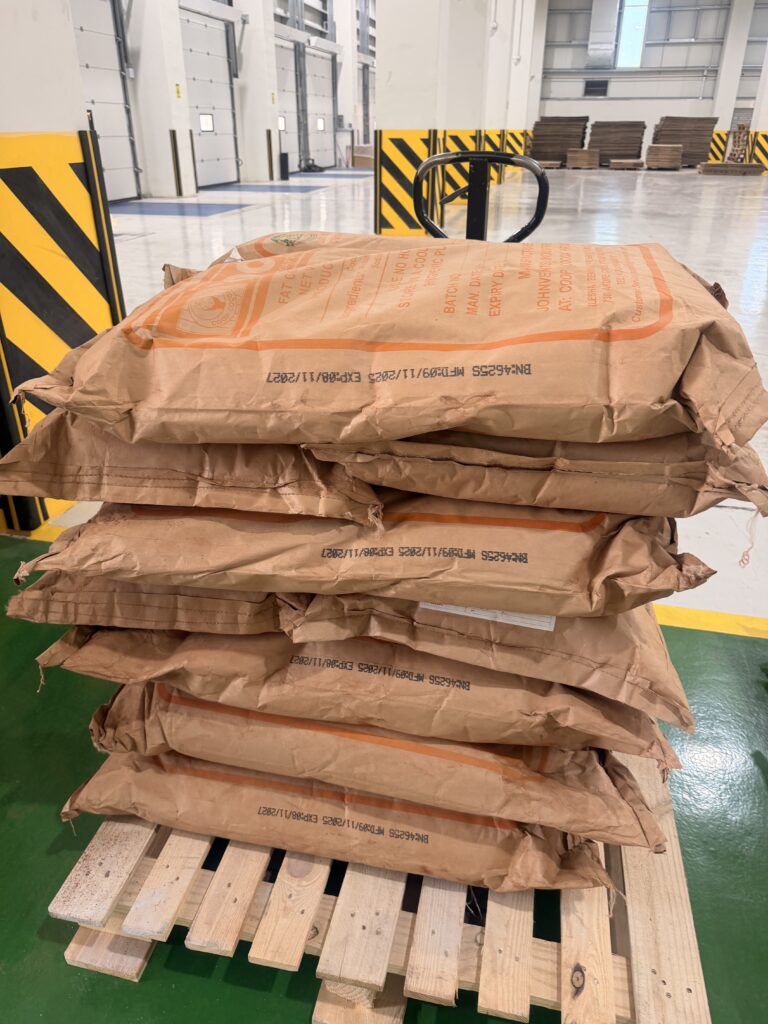
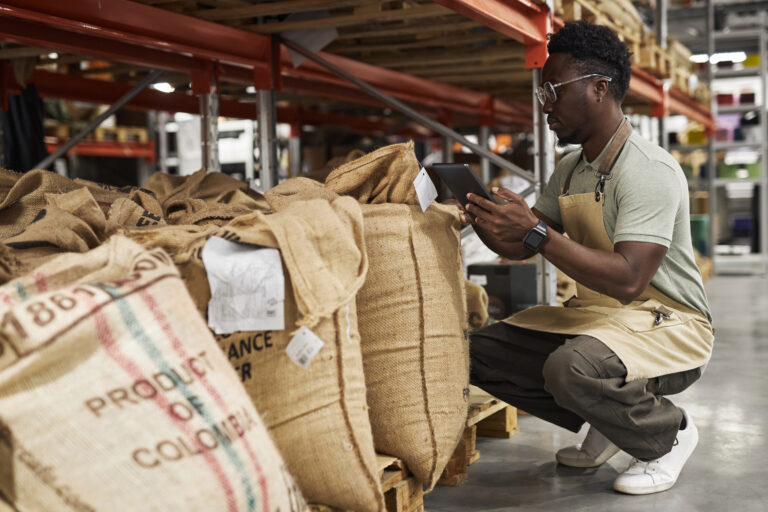
Bagged cocoa powder in store, stacked on pallets and off the floor.
Product range
How Radad Packs Each Cocoa Product
Packaging changes with the product. Powders go into bags, solid fats and nibs into lined cartons, and beans into jute. These are the standard packs across the Radad range:
Product
Standard pack
Shelf life
Product
Cocoa powder, alkalized and natural
Standard pack
1 kg, 5 kg, 10 kg and 25 kg units
Shelf life
24 months
Product
Cocoa nibs
Standard pack
25 kg cartons with a polyethylene liner
Shelf life
24 months
Product
Cocoa mass (cocoa liquor)
Standard pack
25 kg corrugated cartons with an inner polyethylene bag
Shelf life
24 months
Product
Natural cocoa butter
Standard pack
25 kg cartons with a food-grade polyethylene liner
Shelf life
24 months
Product
Deodorized cocoa butter
Standard pack
20 or 25 kg bag in box, or 950 kg IBC
Shelf life
24 months
Product
Whole cocoa beans
Standard pack
62.5 kg jute bags, food-grade inner liner on request
Shelf life
12 to 18 months
Cocoa mass is stored at a maximum of 25 °C and 70% relative humidity, and cocoa beans at 18 to 25 °C with relative humidity at 65% or less. Specification sheets with the full storage and packing details are available for every product.
Specification
Your Packaging Specification Checklist
Put the packaging terms in writing with the product specification, so a disagreement at discharge is settled by the contract:
- Pack size and net weight, with the tolerance you will accept
- Bag construction: number of paper plies, and whether a food-grade inner liner is fitted
- Declaration of compliance for the packaging and the liner
- Closure method, and whether bags are stitched, sealed or valved
- Pallet pattern, pallet type, net weight per pallet and whether pallets are exchanged
- ISPM 15 treatment and marking for any wooden pallets or dunnage
- Wrapping: stretch wrap, strapping, corner protection and top sheet
- Label content and placement, with a sample label approved before production
- Batch code layout, so your warehouse system can read it
- Container condition, previous cargo, and whether a liner or desiccant is used
- Storage conditions and shelf life, stated as a minimum remaining shelf life on arrival
- Who inspects on arrival, and what happens to damaged or short bags
The chemical and microbiological side of the specification is covered in cocoa microbiological specifications and contaminant limits, and the ordering process in how to import cocoa powder.
Supply
Buying Cocoa Powder in Bulk and Retail Packs
Radad International supplies alkalized and natural cocoa powder from Africa in 1 kg, 5 kg, 10 kg and 25 kg units, or any custom weight up to 100 kg, with delivery all over the UAE. Above 100 kg, supply moves to bulk terms on FOB or CIF, and the packaging specification is agreed with the order.
Pack size
Alkalized cocoa powder
Natural cocoa powder
Pack size
1 kg
Alkalized cocoa powder
AED 59.97
Natural cocoa powder
AED 58.95
Pack size
5 kg
Alkalized cocoa powder
AED 299.85
Natural cocoa powder
AED 294.75
Pack size
10 kg
Alkalized cocoa powder
AED 599.70
Natural cocoa powder
AED 589.50
Pack size
25 kg
Alkalized cocoa powder
AED 1,499.25
Natural cocoa powder
AED 1,473.75

Product
Alkalized Cocoa Powder
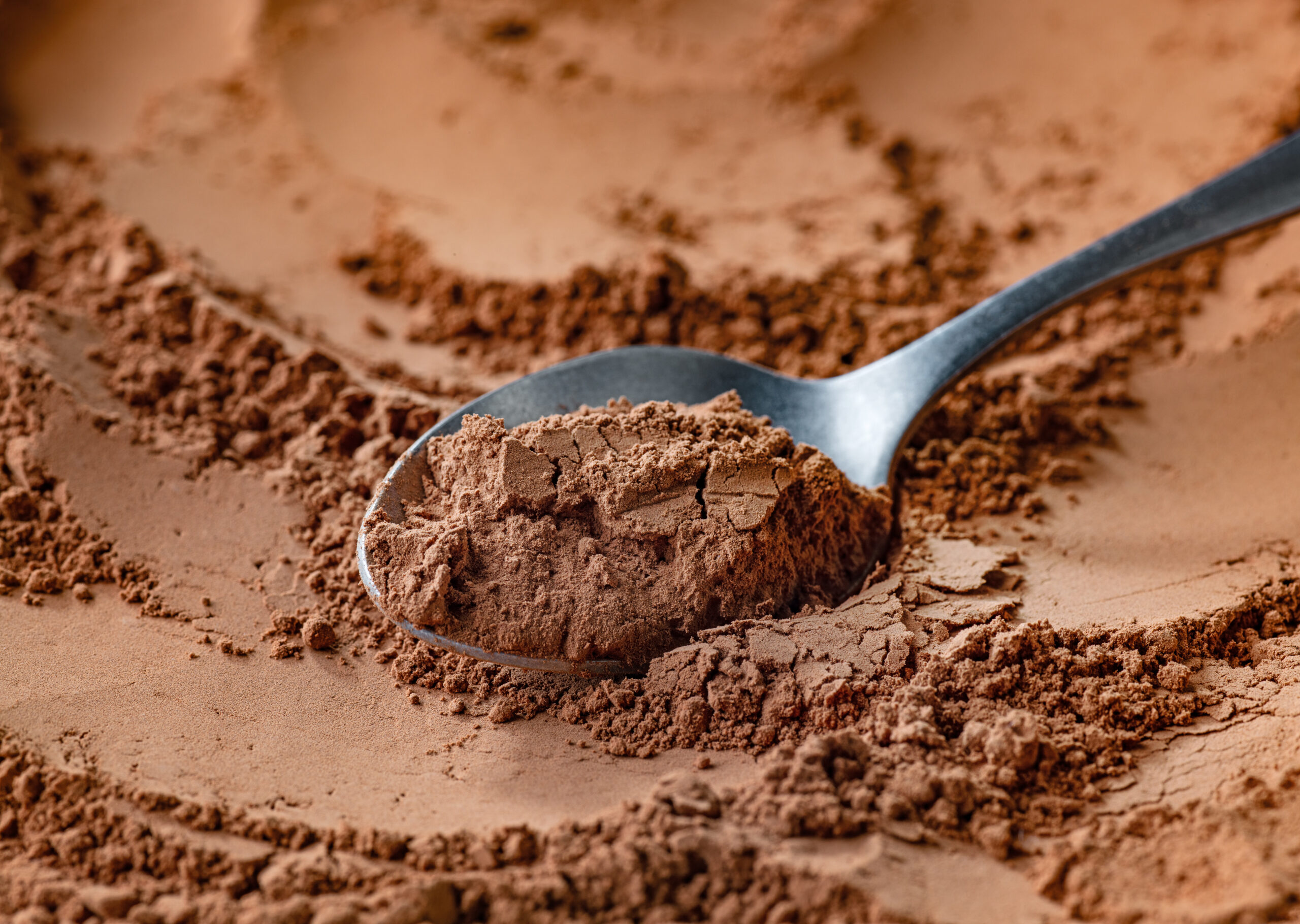
Dutch-process 10/12 grade, in 1 kg packs and 25 kg sacks.
Product
Natural Cocoa Powder
Non-alkalized 10/12 grade, in 1 kg packs and 25 kg sacks.
Work with Radad International
Request a Bulk Cocoa Powder Quote
Tell us the grade, the pack size, your volume and your destination, and we will send the specification sheet, the packaging details and a quote.
Or email info@radadinternational.com · +971 522 501 039
Questions
Bulk Cocoa Powder Packaging: FAQs
How is bulk cocoa powder packaged?
In 25 kg bags built from several layers of paper, stacked on pallets and shipped in clean, dry, odour-free containers. Smaller volumes are sold in 1 kg, 5 kg and 10 kg packs. The bag has to keep moisture, odours and foreign matter out, and the material must be declared safe for food contact.
Why is cocoa powder packed in 25 kg bags?
25 kg is the standard export unit for cocoa powder. It is heavy enough to palletise and ship efficiently and light enough for one person to handle, and it matches the pallet and container patterns that buyers and warehouses already run.
Does a cocoa powder bag need an inner liner?
A food-grade inner liner is what keeps water vapour and odours away from the powder, so ask whether the bag has one and what it is made of. Ask for the declaration of compliance for both the bag and the liner.
How long does bulk cocoa powder last?
Radad cocoa powder has a shelf life of 24 months from production in sealed original packaging, stored at 22 to 25 °C with relative humidity at 65% or less, in a cool, odourless, ventilated area.
What has to be printed on a bulk cocoa powder bag?
Product name, lot or batch code, country of origin, net weight in kilograms, the manufacturer’s name and address, the ingredient list, the processing and packing dates, and storage instructions. Certified lots also carry the certification body and certificate number.
Do wooden pallets need special treatment for export?
Yes. Wood packaging in international trade must be debarked and treated under ISPM 15, either by heat treatment to 56 °C for at least 30 continuous minutes through the core, or by approved fumigation, and it must carry the ISPM 15 mark with the two-letter country code. Plywood and other processed wood, raw wood of 6 mm or less, and sawdust, shavings and cardboard are exempt.
How much cocoa powder fits in a container?
A 20 ft container holds roughly 15 to 16 tonnes of bagged cocoa product. The exact figure depends on the pallet pattern, the wrapping and whether the load is floor-loaded or palletised.
Why did my cocoa powder arrive caked?
Caking comes from moisture. The usual causes are a bag with no effective moisture barrier, condensation inside the container on a route with a large temperature change, damaged bags, or storage above the humidity limit on arrival.
Can cocoa powder pick up smells in storage?
Yes, and the taint cannot be removed afterwards. Keep cocoa away from fuel, paint, spices, cleaning chemicals and scented cargo, in the store and in the container, and keep chemicals out of any room used for cocoa.
Which regulation covers cocoa packaging in Europe?
No European regulation is written specifically for cocoa packaging. Packaging falls under the general food-contact rules in Regulation (EC) No 1935/2004, consumer packs under Regulation (EU) No 1169/2011, and traceability under Regulation (EC) No 178/2002.
What should I put in a packaging specification?
Pack size and net weight, bag construction and liner, the declaration of compliance, closure, pallet pattern and type, ISPM 15 treatment, wrapping, label content with an approved sample, batch code layout, container condition, storage conditions and minimum remaining shelf life on arrival.
Does Radad supply small quantities as well as bulk?
Yes. Cocoa powder is sold online in 1 kg, 5 kg, 10 kg and 25 kg units, or any custom weight up to 100 kg, with delivery all over the UAE. Above 100 kg, supply moves to bulk terms on FOB or CIF.
Keep reading