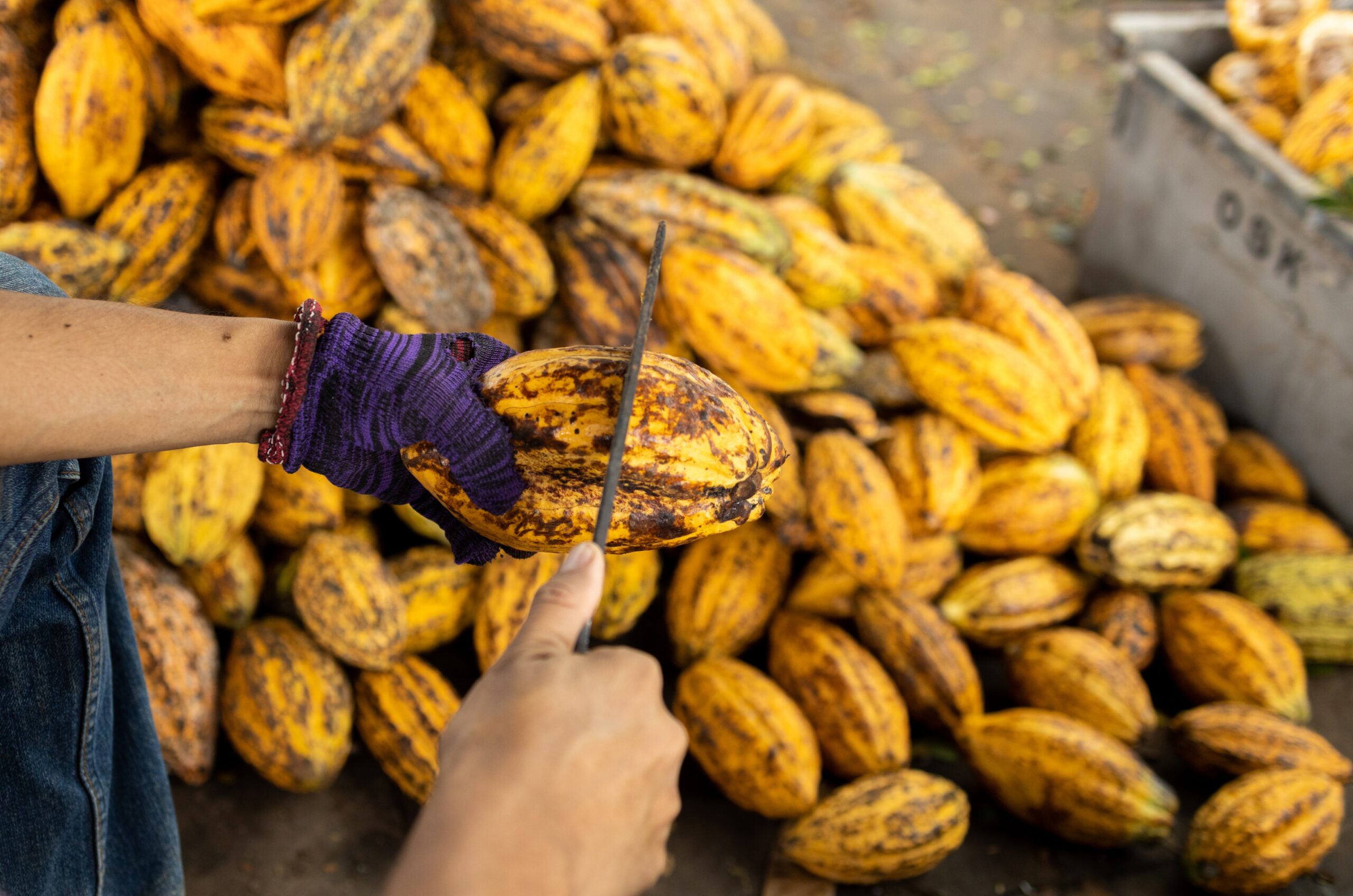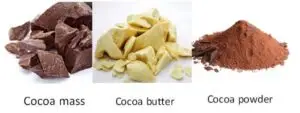
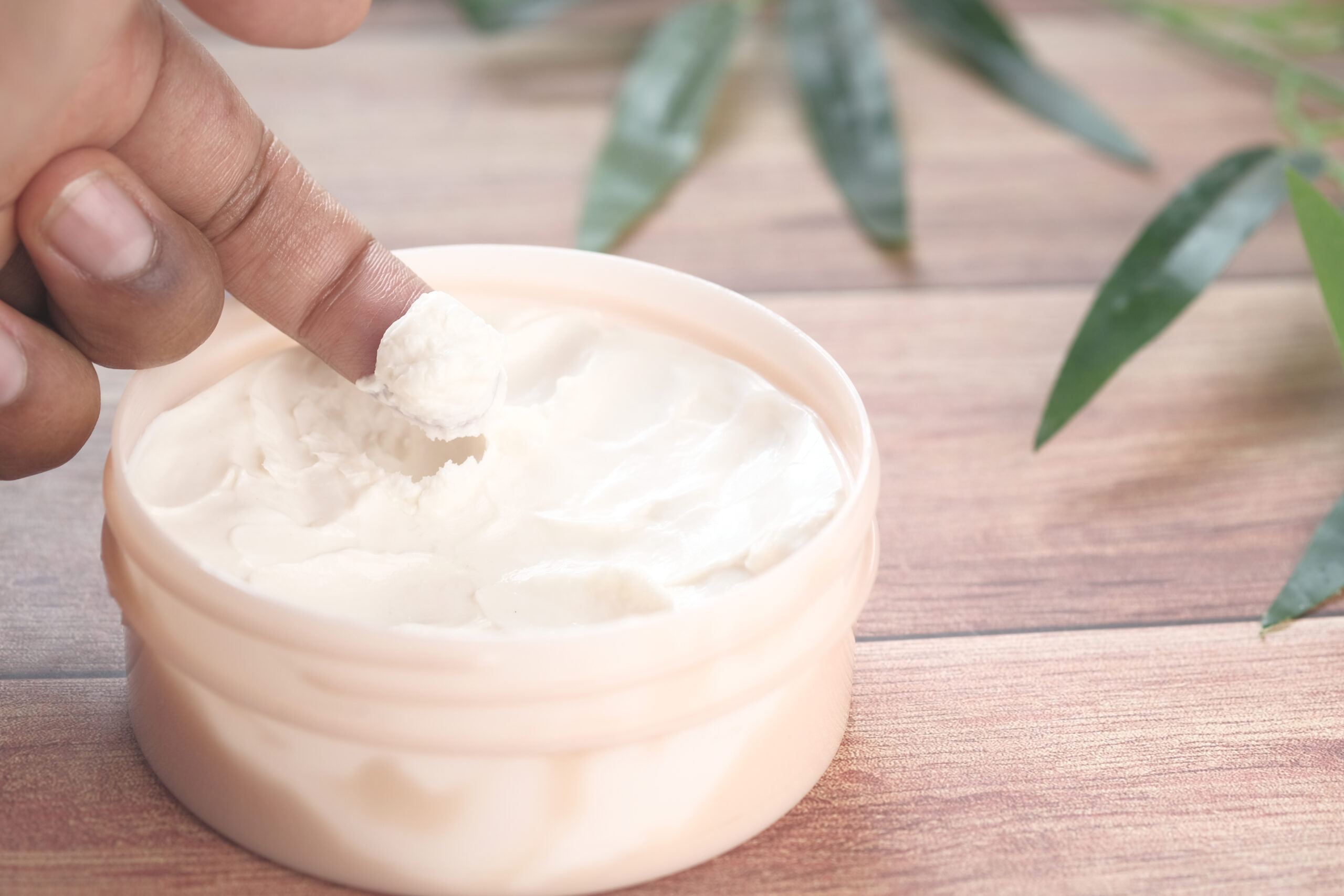
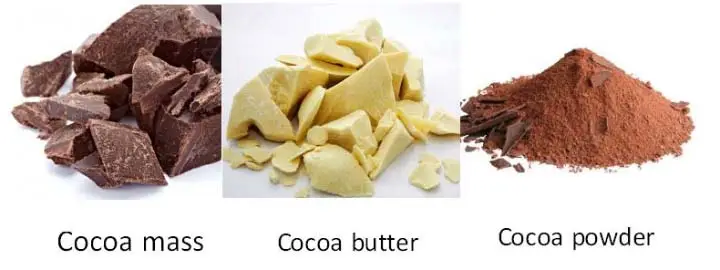
Cocoa butter is the fat pressed from cocoa mass, the ground nibs of the cocoa bean, and in cosmetics it is listed under the INCI name Theobroma Cacao Seed Butter. It is hard and brittle at room temperature and melts between about 31 and 38 °C, close to skin temperature, which is why it gives structure to lip balms, body butters, lotion bars and soaps and softens as soon as it touches the skin.
For cosmetic and soap manufacturers, the choice of cocoa butter comes down to the grade, natural or deodorized, and to four technical points: its fatty acid profile, its behaviour in a formula, including the grainy texture it develops when it cools without control, the specification it is bought to, and the rules for selling finished products. In the UAE, cosmetic products need a conformity certificate from the Ministry of Industry and Advanced Technology and registration in the emirate where they are sold, and the claims made on the pack must be supported by evidence.
Overview
Natural cocoa butter keeps the chocolate scent of the cocoa bean, which suits cocoa-scented body butters and natural cosmetics. Deodorized cocoa butter has its aroma removed with steam under vacuum, so it suits creams, lotions and balms that carry their own fragrance. Both grades are almost pure fat, made mainly of stearic, oleic and palmitic acid, and the EU cosmetic ingredient database lists their functions as skin conditioning, emollient and skin protecting.
In cold process soap, cocoa butter is used at up to 15% of the oils: it makes the bar firmer, adds no lather, and makes bars brittle and prone to cracking above that level. In anhydrous products such as lip balms and body butters, cocoa butter that is not tempered can form coarse crystals and a grainy texture, and temperature swings in shipping and storage make it worse.
Two randomised controlled trials found that cocoa butter products did not prevent stretch marks in pregnancy, and the Gulf standard on cosmetic claims rejects medical claims. Radad International supplies natural cocoa butter in 25 kg cartons and online from AED 129.75 per kg, and deodorized cocoa butter in 20 or 25 kg bag-in-box packs or 950 kg IBCs.
In this guide
- Properties of cocoa butter
- Natural or deodorized for cosmetics
- Cosmetic products that use cocoa butter
- Cocoa butter in soap making
- Graininess and tempering
- What a cocoa butter product can claim
- Selling cosmetics in the UAE
- Cocoa butter specification for cosmetics
- Prices and product pages
- FAQs
- Sources and References
Properties
Properties of Cocoa Butter in Cosmetics
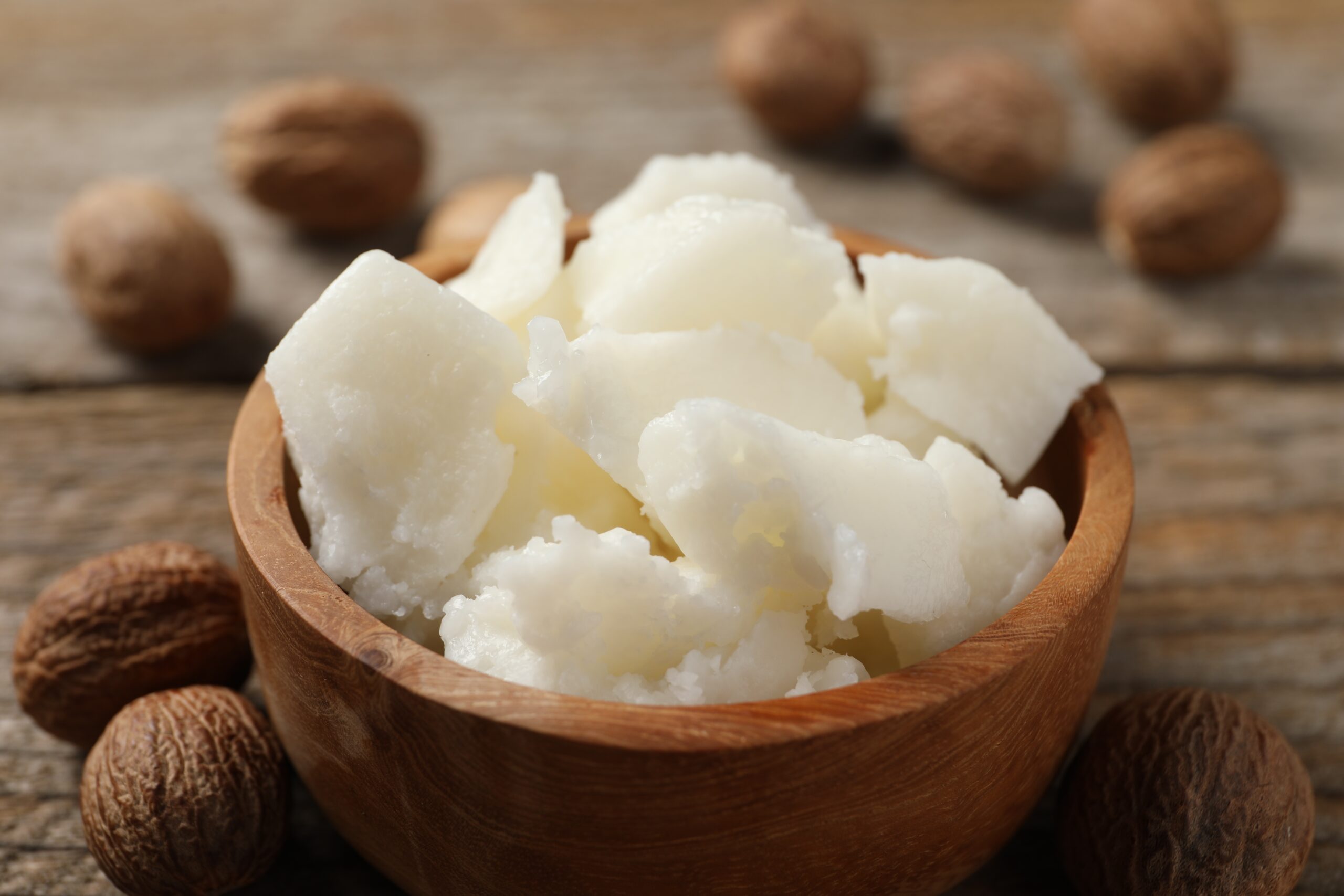
Cocoa butter owes its behaviour to a narrow fatty acid profile. Roughly a quarter of its fatty acids are palmitic acid and about a third each are stearic and oleic acid, and most of its triglycerides combine these three in a symmetrical structure. That structure makes the butter hard at room temperature and lets it melt over a narrow range near skin temperature:
Property
Value
Property
INCI name
Value
Theobroma Cacao Seed Butter
Property
Functions (EU ingredient database)
Value
Skin conditioning, emollient, skin protecting and fragrance
Property
Melting range
Value
About 31 to 38 °C; hard and brittle at room temperature
Property
Palmitic acid
Value
24.1 to 25.8%
Property
Stearic acid
Value
33.3 to 37.6%
Property
Oleic acid
Value
32.7 to 36.5%
Property
Linoleic acid
Value
2.6 to 3.5%
Property
Main triglycerides
Value
POS 36.3 to 38.3%, SOS 23.8 to 28.4%, POP 13.8 to 16.4%
Composition varies slightly with origin: African cocoa butters contain less oleic acid than South American ones. The fatty acid figures above cover cocoa butters from six origins; the triglyceride figures cover four.
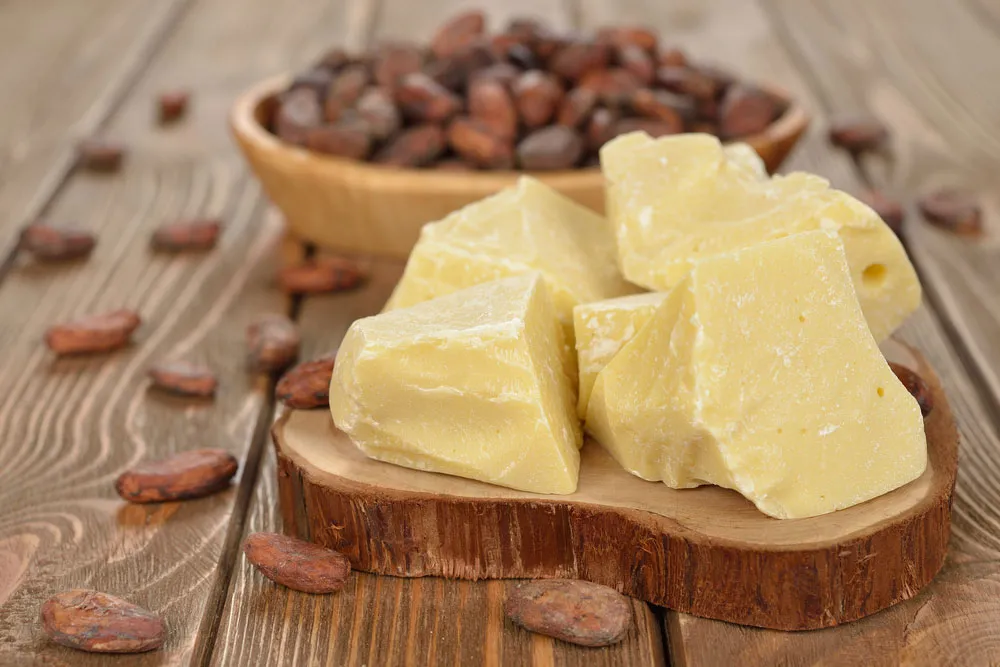
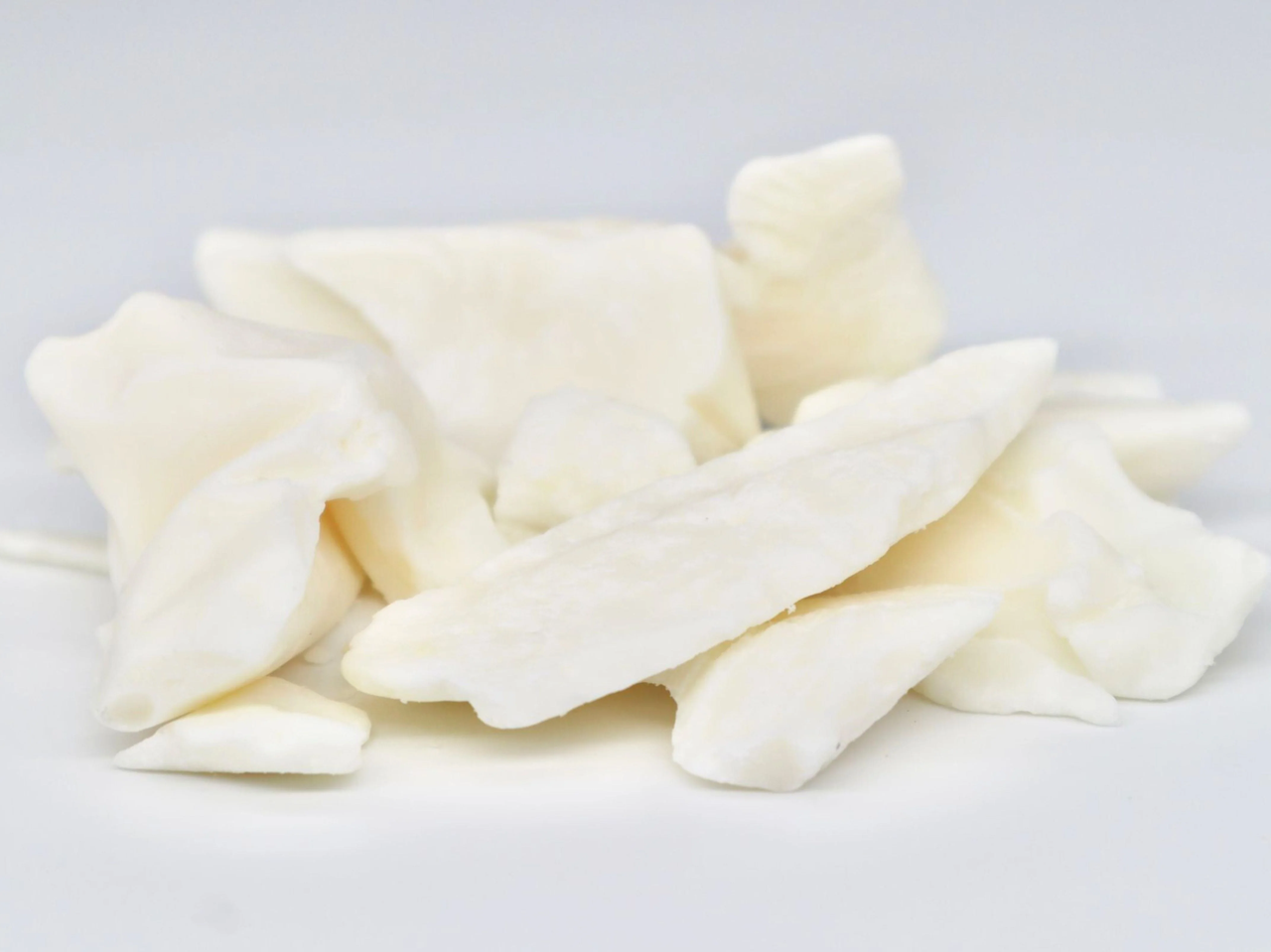
Natural cocoa butter with a cream colour
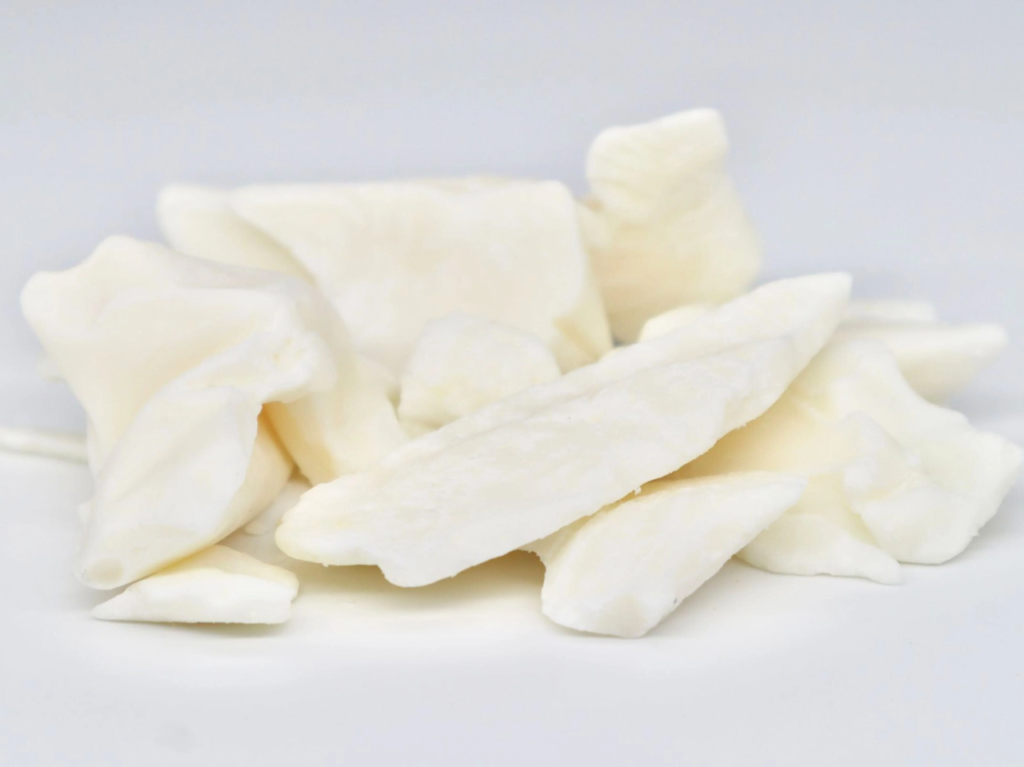
Deodorized cocoa butter with a paler colour
Grade
Natural or Deodorized Cocoa Butter for Cosmetics
Both grades are 100% cocoa butter with the same fatty acids. The difference is the aroma: deodorizing removes the volatile compounds that give cocoa butter its chocolate scent, so the choice depends on whether the finished product should smell of cocoa:
Point
Natural cocoa butter
Deodorized cocoa butter
Point
Processing
Natural cocoa butter
Pressed from cocoa mass and filtered
Deodorized cocoa butter
Pressed, filtered, then deodorized with steam under vacuum
Point
Odour
Natural cocoa butter
Typical chocolate aroma
Deodorized cocoa butter
Bland
Point
Colour
Natural cocoa butter
Light yellow to creamy
Deodorized cocoa butter
Light yellow to yellowish when solid, clear when melted
Point
Free fatty acids (Radad)
Natural cocoa butter
Maximum 1.75%
Deodorized cocoa butter
Maximum 1.75% (as oleic acid)
Point
Peroxide value (Radad)
Natural cocoa butter
Maximum 2
Deodorized cocoa butter
Maximum 3 meq O₂/kg at loading
Point
Melting point (Radad)
Natural cocoa butter
Full melting at 32 to 35 °C
Deodorized cocoa butter
About 30 to 34 °C
Point
Packing (Radad)
Natural cocoa butter
25 kg cartons with a food-grade PE liner
Deodorized cocoa butter
20 or 25 kg bag-in-box, or 950 kg IBC
Point
Typical cosmetic use
Natural cocoa butter
Cocoa-scented body butters, natural cosmetics
Deodorized cocoa butter
Fragranced or unscented creams, lotions, balms and soaps
The two grades are compared for food, cosmetic and pharmaceutical use in natural vs refined cocoa butter.
Applications
Cosmetic Products That Use Cocoa Butter
Cocoa butter is used wherever a cosmetic needs a solid fat that melts on the skin. The main product types are:
Lip balms and lip sticks
Cocoa butter gives the stick its structure: it stays firm in the tube at room temperature and softens on the lips, which melt it at skin temperature.
Body butters and lotion bars
Anhydrous body butters and solid lotion bars use cocoa butter as a structuring fat, so the product stays solid in the jar and melts on contact with the skin.
Creams and lotions
In emulsions, cocoa butter forms part of the oil phase as an emollient and skin-conditioning ingredient; the deodorized grade keeps the product’s own fragrance unchanged.
Soap
Soap makers add cocoa butter to make a firmer bar; at more than 15% of the oils, bars become brittle and prone to cracking.
Massage bars
Solid massage bars are made largely of cocoa butter, which melts with the warmth of the hands.
Natural and cocoa-scented ranges
Natural cocoa butter adds a chocolate scent without added fragrance, which suits products sold as natural or cocoa-scented.
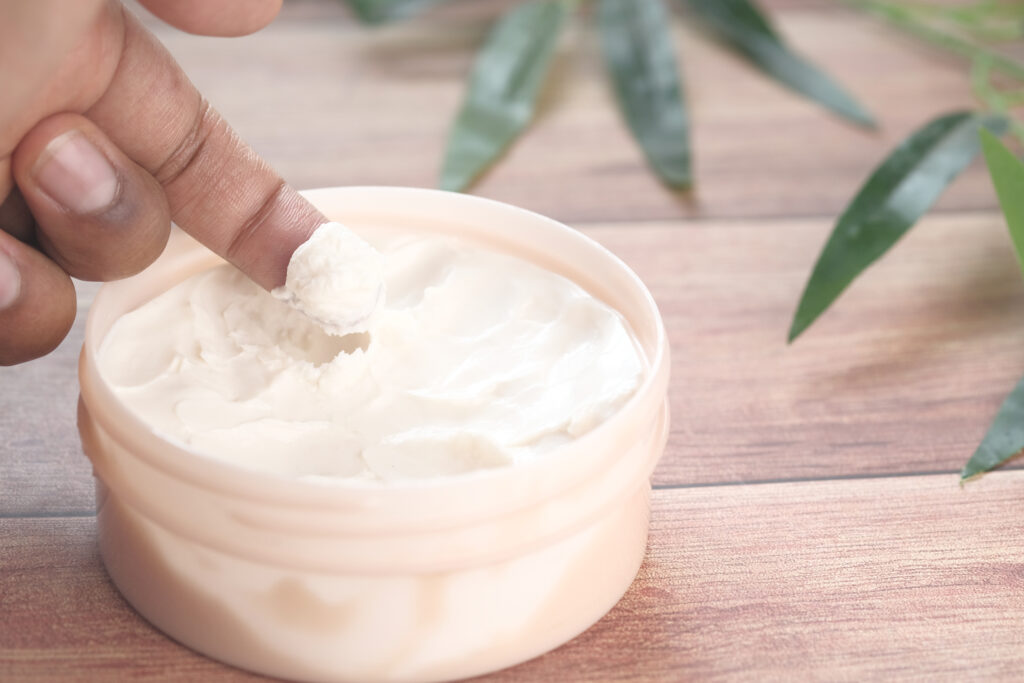
Cocoa butter melts at about skin temperature, so body butters and balms soften as soon as they are applied.
Soap
Cocoa Butter in Soap Making
In soap, cocoa butter is used as a hardening fat: it makes the bar firm, while other oils in the recipe provide the lather:
Point
Guidance
Point
Usage rate in cold process soap
Guidance
Up to 15% of the oils
Point
Effect on the bar
Guidance
A firmer, harder bar
Point
Effect on lather
Guidance
No contribution to lather
Point
Above 15%
Guidance
Bars become brittle and prone to cracking
Point
Scent
Guidance
Natural cocoa butter keeps a chocolate scent; deodorized cocoa butter gives a lighter scent and colour
Run every recipe change through a soap calculator, because each fat needs a different amount of lye, and test a small batch for hardness and cracking before scaling up.
Texture
Graininess and Tempering in Cocoa Butter Products
Grainy lip balms and body butters are the most common complaint with cocoa butter. The cause is the way the fat crystallises as it cools:
Why it happens
Cocoa butter can crystallise in several forms. Without control, it forms coarse crystals that feel grainy, and the stable form needed for fine crystals develops slowly.
What makes it worse
High butter levels, anhydrous formulas, incomplete crystallisation and temperature swings during shipping and storage all increase graininess and bloom.
How to temper
Hold the melted cocoa butter at about 38 °C for 45 to 60 minutes, then cool it quickly, so that it sets with fine crystals.
Storage
Keep finished balms and body butters away from heat, and ship them in conditions that avoid repeated melting and resetting.
Fine crystals, smooth product
Cocoa butter needs tempering to form fine crystals in its stable form. Without tempering it crystallises coarsely and tends to bloom, which is the same reason chocolate makers temper chocolate.
Claims
What a Cocoa Butter Product Can Claim
Cocoa butter has a long reputation in skin care, but claims on a finished product must stand up to the evidence and to the Gulf rules on cosmetic claims:
Point
What applies
Point
Medical claims
What applies
Claims of medical treatment, such as stopping ageing, killing germs or treating acne, are unacceptable under the Gulf standard on cosmetic claims (GSO 2528)
Point
Evidence
What applies
Every claim must be truthful, supported by evidence, honest and fair
Point
Stretch marks
What applies
Two double-blind randomised controlled trials found no benefit: a 25% cocoa butter cream used by 300 pregnant women and a cocoa butter lotion with vitamin E used by 210 women did not prevent stretch marks
Point
Halal
What applies
Halal certification is not legally required for cosmetics in the UAE, but any product that claims to be halal must be certified
Describe what the ingredient does, such as softening and conditioning the skin, and avoid promises of treatment or prevention that the evidence does not support.
UAE rules
Selling Cocoa Butter Cosmetics in the UAE
The UAE applies Gulf standards to cosmetics and checks products at two levels, federal and emirate:
Conformity certificate
Importers and manufacturers need a Certificate of Conformity from the Ministry of Industry and Advanced Technology under the Emirates Conformity Assessment Scheme (ECAS), and the certificate is required for customs clearance.
Ingredient rules
GSO 1943 sets the safety requirements for cosmetic ingredients, with lists of prohibited and restricted substances and permitted colorants, preservatives and UV filters, based on the EU Cosmetics Regulation 1223/2009.
Registration in Dubai
After certification, products are registered in the emirate where they are sold; in Dubai, through the Montaji system, where registration is valid for five years.
Documents
Dubai registration asks for documents such as a free sale certificate, the ingredient list, evidence of good manufacturing practice and a laboratory test report.
Declare cocoa butter on the ingredient list by its INCI name, Theobroma Cacao Seed Butter. Cocoa butter imported as a raw material is declared for customs under HS 1804.00, as set out in cocoa HS codes.
Specification
Cocoa Butter Specification for Cosmetic Manufacturers
Write these points into the purchase specification and check each delivery against its certificate of analysis:
Parameter
What to ask for
Parameter
Grade
What to ask for
Natural or deodorized, with the odour and colour you need
Parameter
Free fatty acids
What to ask for
A maximum value, expressed as oleic acid
Parameter
Peroxide value
What to ask for
A maximum value, which shows how far the fat has oxidised
Parameter
Melting point
What to ask for
The range that suits your product
Parameter
Odour and colour
What to ask for
A reference sample and a tolerance for each lot
Parameter
Packing
What to ask for
Carton, bag-in-box or IBC, with batch number, production and expiry dates
Parameter
Documents
What to ask for
A certificate of analysis for every lot, plus the certificate of origin and shipping documents
Radad’s natural cocoa butter has a maximum of 1.75% free fatty acids and a peroxide value of no more than 2, and melts fully at 32 to 35 °C. Radad’s deodorized cocoa butter has a maximum of 1.75% free fatty acids and a peroxide value of no more than 3 meq O₂/kg at loading, melts at about 30 to 34 °C, has a shelf life of 24 months, and carries the batch number, production date and expiry date on each package.
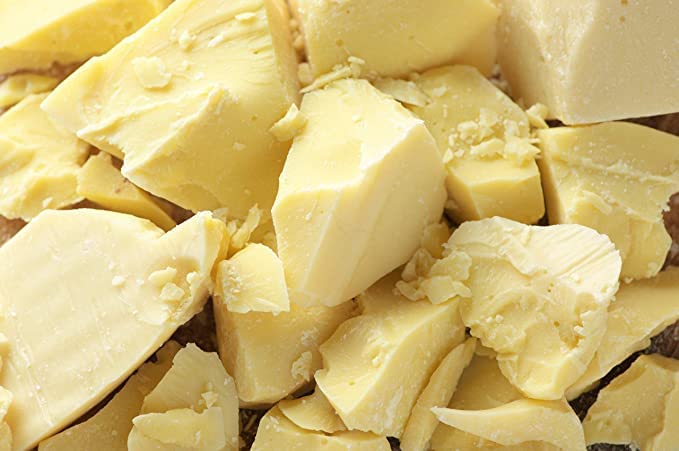
Check every delivery of cocoa butter against its certificate of analysis.
Supply
Cocoa Butter for Cosmetics: Prices and Product Pages
Radad International sells natural cocoa butter online in 1 kg, 5 kg, 10 kg and 25 kg packs, or any custom weight up to 100 kg, with delivery all over the UAE. Deodorized cocoa butter and orders above 100 kg are quoted in bulk on FOB or CIF terms:
Pack size
Natural cocoa butter
Pack size
1 kg
Natural cocoa butter
AED 129.75
Pack size
5 kg
Natural cocoa butter
AED 648.75
Pack size
10 kg
Natural cocoa butter
AED 1,297.50
Pack size
25 kg
Natural cocoa butter
AED 3,243.75
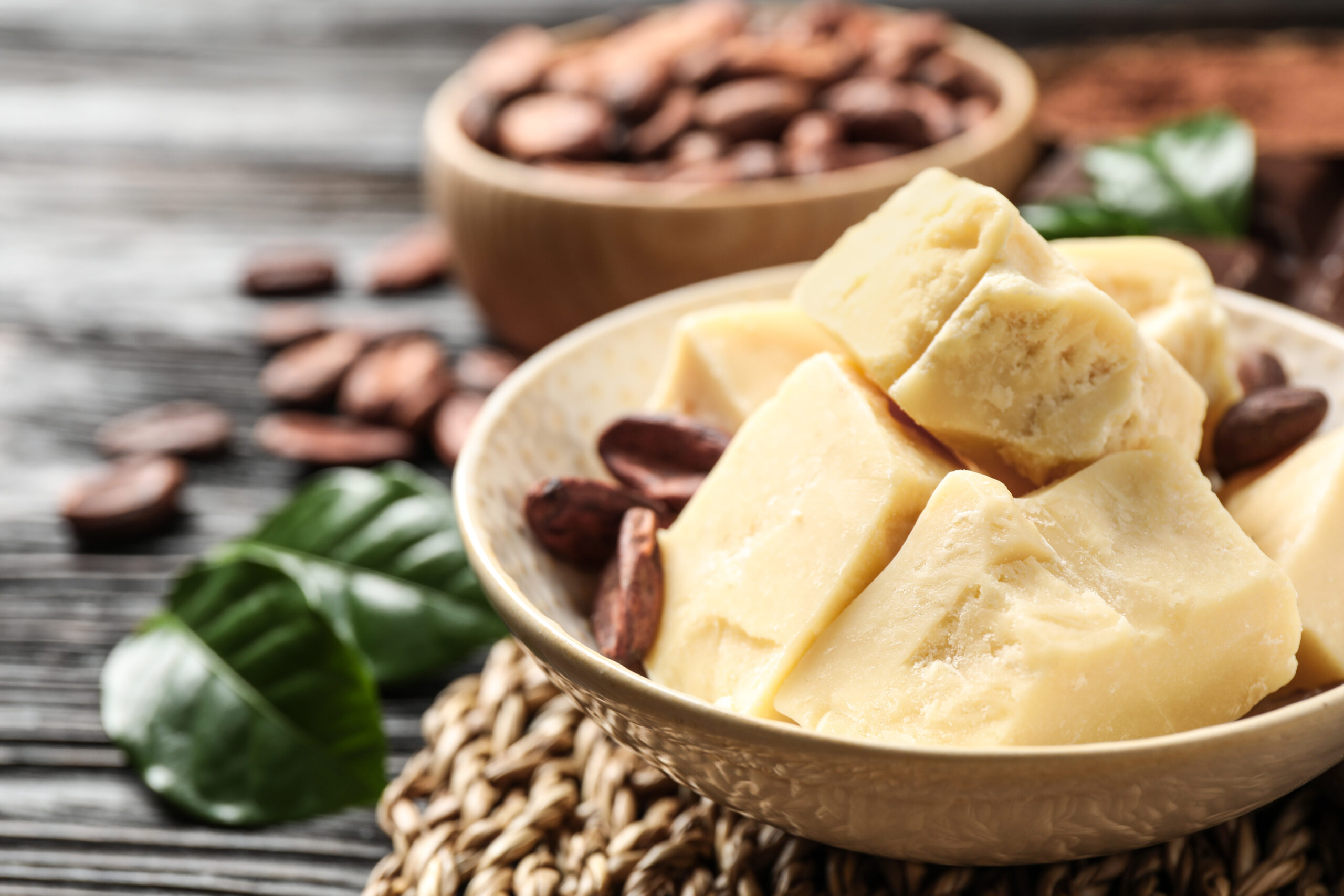
Product
Natural Cocoa Butter
Pressed and filtered, with its cocoa aroma, in 25 kg cartons.
Product
Deodorized Cocoa Butter
Bland odour and taste, in 20 or 25 kg bag-in-box or 950 kg IBC.
Work with Radad International
Request a Cocoa Butter Quote for Your Cosmetic Range
Tell us the grade, the quantity, the packing you need and your destination, and we will send the specification, a sample and a quote.
Or email info@radadinternational.com · +971 522 501 039
Questions
Cocoa Butter for Cosmetics: FAQs
What is cocoa butter used for in cosmetics?
Cocoa butter is used in lip balms, body butters, lotion bars, creams, lotions, soaps and massage bars. It is solid at room temperature and melts near skin temperature, and it works as a skin-conditioning, emollient and skin-protecting ingredient.
What is the INCI name of cocoa butter?
The INCI name is Theobroma Cacao Seed Butter, the name used on cosmetic ingredient lists.
Should I use natural or deodorized cocoa butter in cosmetics?
Use natural cocoa butter when the product should smell of chocolate, and deodorized cocoa butter when the product has its own fragrance or should be unscented; both grades have the same fatty acids and melting behaviour.
How much cocoa butter can I use in soap?
Up to 15% of the oils in cold process soap. It makes the bar firmer and adds no lather, and above 15% bars become brittle and prone to cracking.
Why is my cocoa butter balm grainy?
The cocoa butter cooled without control and formed coarse crystals. Temper it by holding the melted butter at about 38 °C for 45 to 60 minutes and then cooling it quickly, and avoid temperature swings in storage and shipping.
What is the melting point of cocoa butter?
Cocoa butter melts between about 31 and 38 °C, which is close to skin temperature. Radad’s natural cocoa butter melts fully at 32 to 35 °C, and its deodorized cocoa butter at about 30 to 34 °C.
Does cocoa butter prevent stretch marks?
Two double-blind randomised controlled trials, with 300 and 210 pregnant women, found that cocoa butter products did not prevent stretch marks, so a product should not make that claim.
Do cocoa butter cosmetics need registration in the UAE?
Cosmetic products need a Certificate of Conformity from the Ministry of Industry and Advanced Technology and registration in the emirate where they are sold; in Dubai, registration is through the Montaji system and is valid for five years.
Do cosmetics need halal certification in the UAE?
Halal certification is not legally required for cosmetics in the UAE, but a product that claims to be halal must be certified.
What should a cosmetic-grade cocoa butter specification include?
The grade, maximum free fatty acids, maximum peroxide value, melting point, odour and colour against a reference sample, packing with batch and dates, and a certificate of analysis for every lot.
Can I buy cocoa butter for cosmetics in the UAE?
Radad International sells natural cocoa butter online from AED 129.75 per kg in 1 kg to 25 kg packs, with delivery all over the UAE, and quotes deodorized cocoa butter and orders above 100 kg in bulk.
Keep reading
More Guides from Radad International

Sources and References
- COSMILE Europe, Theobroma Cacao Seed Butter
- Cocoa butter review, Part 1: composition (Texas A&M Talcott Lab)
- Bramble Berry, All about butters
- SpecialChem, Crystallization challenges with tropical butters in cosmetics
- The Journal of Family Practice, Do any topical agents help prevent or reduce stretch marks?
- ChemLinked, UAE cosmetic regulation
- Intertek, UAE regulatory update: GSO 1943:2021