Alkalized Cocoa Powder: The Complete Guide for Food Manufacturers, Bakers & Chocolate Enthusiasts
Whether you’re a food manufacturer sourcing bulk cocoa powder, a professional baker perfecting your chocolate recipes, or a business looking for reliable alkalized cocoa powder suppliers, this comprehensive guide covers everything you need to know about alkalized cocoa powder, from its chemical composition and pH levels to practical applications and buying considerations.
📋 Table of Contents
- 1. What Is Alkalized Cocoa Powder?
- 2. The History: Dutch Process Innovation
- 3. Chemical Composition & pH Levels
- 4. Alkalized vs. Natural Cocoa Powder
- 5. Types of Alkalized Cocoa Powder
- 6. Key Benefits & Advantages
- 7. Industrial Applications & Uses
- 8. Who Uses Alkalized Cocoa Powder?
- 9. Baking with Alkalized Cocoa
- 10. How to Buy Alkalized Cocoa Powder
- 11. Quality Specifications & Standards
- 12. Conclusion
What Is Alkalized Cocoa Powder?
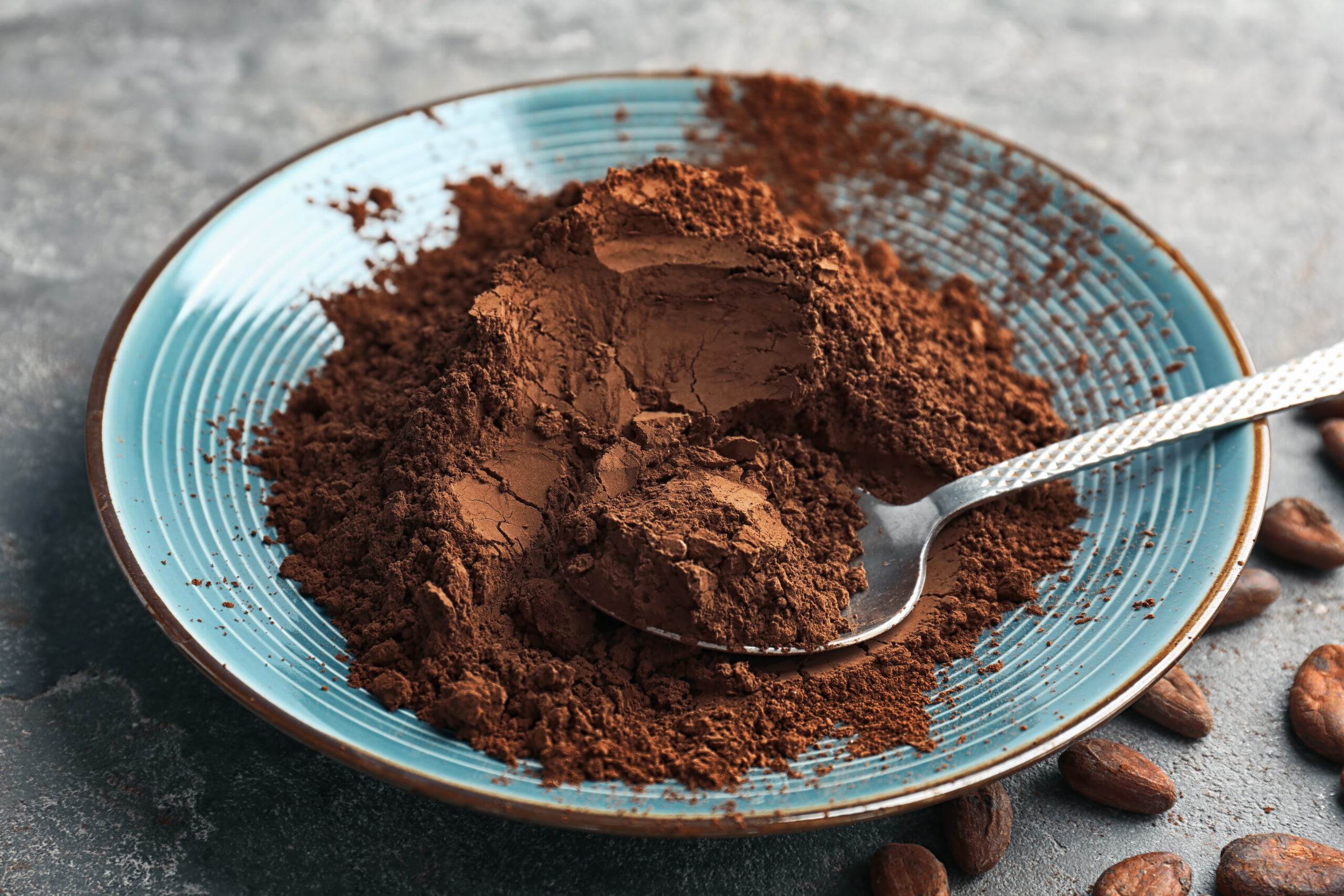
Alkalized cocoa powder, also known as Dutch process cocoa or Dutched cocoa, is cocoa powder that has been treated with an alkaline solution to neutralize its natural acidity. This process fundamentally transforms the cocoa’s characteristics, affecting its pH level, color, flavor profile, and solubility.
The alkalization process involves treating cocoa nibs, liquor, or powder with food-grade alkaline agents, most commonly potassium carbonate or sodium hydroxide. This treatment raises the pH from the natural acidic range of 5.0-5.8 to a more neutral 6.2-8.5, depending on the degree of alkalization desired.
The History: Dutch Process Innovation
The alkalization process was invented in the 19th century (around 1828) by Coenraad Johannes van Houten, a Dutch chocolate maker and innovator. Van Houten developed this method in the Netherlands to improve the taste and mixability of cocoa powder in beverages, particularly in milk and water-based drinks.
This groundbreaking innovation revolutionized the chocolate and cocoa industry. Before alkalization, cocoa powder was notoriously difficult to dissolve in liquids and had a harsh, bitter taste. Van Houten’s process made cocoa more accessible and palatable, leading to the widespread popularity of hot chocolate and eventually contributing to the modern chocolate industry as we know it today.
The term “Dutch process” comes directly from this Dutch heritage, and to this day, European-style cocoa products predominantly use alkalized cocoa powder for its superior processing characteristics and refined flavor profile.
Chemical Composition & pH Levels
Understanding the chemical transformation that occurs during alkalization is crucial for food manufacturers and product developers. Here’s what happens at the molecular level:
pH Transformation
| Cocoa Type | pH Range | Acidity Level | Processing Method |
|---|---|---|---|
| Natural Cocoa Powder | 5.0 – 5.8 | Acidic | Unprocessed, no alkali treatment |
| Lightly Alkalized | 6.8 – 7.5 | Slightly acidic to neutral | Mild potassium carbonate treatment |
| Medium Alkalized | 7.6 – 8.0 | Slightly alkaline | Moderate alkali treatment |
| Heavily Alkalized | 8.1 – 8.5+ | Alkaline | Strong sodium hydroxide or high potassium carbonate |
Alkalizing Agents Used
The food industry uses several FDA-approved alkalizing agents, each producing different results:
- Potassium Carbonate (K₂CO₃): The most widely used agent, added at approximately 2% concentration. Produces reddish-brown to dark brown cocoa with excellent aroma retention and mild flavor.
- Sodium Carbonate (Na₂CO₃): Creates similar results to potassium carbonate with slightly different flavor notes.
- Sodium Bicarbonate (NaHCO₃): Milder alkalization, often used in combination with other agents.
- Sodium Hydroxide (NaOH): Reserved for heavy alkalization to produce very dark or black cocoa powder. Requires careful handling due to its strong alkalizing power.
- Potassium Hydroxide (KOH): Alternative to sodium hydroxide for strong alkalization.
Fat Content
Most commercial alkalized cocoa powders contain 10-12% fat content (cocoa butter), though this can vary by specification:
- Low-fat cocoa powder: 10-12% fat
- Medium-fat cocoa powder: 20-22% fat
- High-fat cocoa powder: 22-24% fat
Higher fat content generally means richer flavor and better mouthfeel, which is why premium chocolate products often specify 22/24 cocoa powder.
Alkalized vs. Natural Cocoa Powder: A Comprehensive Comparison
Choosing between alkalized and natural cocoa powder is one of the most important decisions in product formulation. Here’s everything you need to know:
| Characteristic | Natural Cocoa Powder | Alkalized Cocoa Powder |
|---|---|---|
| pH Level | 5.0 – 6.0 (acidic) | 6.8 – 8.5 (neutral to alkaline) |
| Color | Light brown with reddish tint | Deep reddish-brown to black |
| Flavor Profile | Sharp, bitter, intense chocolate | Mellow, smooth, rounded, less bitter |
| Solubility in Water | Poor (20-30%) | Excellent (60-80%) |
| Sedimentation | Settles quickly in beverages | Delayed sedimentation |
| Best Paired With | Baking soda (sodium bicarbonate) | Baking powder |
| Antioxidant Content | Higher (more flavanols retained) | Somewhat reduced due to processing |
| Typical Applications | Brownies with baking soda, health products, raw desserts | Beverages, cakes, ice cream, confectionery |
| Color Stability | Can vary between batches | Highly consistent and predictable |
| Cost | Generally lower | Higher due to processing |
Types of Alkalized Cocoa Powder by Color Intensity
The degree of alkalization determines the final color of the cocoa powder, and manufacturers produce various grades to meet different application needs:
1. Light/Red Alkalized Cocoa Powder
- pH Range: 6.8 – 7.2
- Color: Reddish-brown, warm chocolate tone
- Flavor: Chocolatey with some fruity undertones
- Applications: Chocolate cakes, brownies, compound coatings, milk chocolate products
- Characteristics: Retains more of the natural cocoa aromatics while reducing acidity
2. Medium/Dark Brown Alkalized Cocoa
- pH Range: 7.3 – 7.8
- Color: Rich, deep brown
- Flavor: Smooth, darker chocolate flavor
- Applications: Ice cream, beverages, dark chocolate formulations, premium desserts
- Characteristics: Most versatile type, balanced between flavor and color
3. Very Dark Brown/Black Cocoa Powder
- pH Range: 8.0 – 8.5+
- Color: Nearly black (like Oreo cookies)
- Flavor: Very mellow, neutral, minimal bitterness
- Applications: Black forest cakes, sandwich cookies (Oreos), wafers, visual contrast in ice cream, dark chocolate cookies
- Characteristics: Prioritizes dramatic color over intense flavor; some aroma compounds are lost during heavy alkalization
Key Benefits & Advantages of Alkalized Cocoa Powder
Understanding why alkalized cocoa powder commands a premium price and dominates certain market segments requires examining its unique advantages:
1. Superior Solubility & Dispersibility
Alkalized cocoa powder dissolves 2-3 times better than natural cocoa in water-based and milk-based liquids. This makes it indispensable for:
- Hot chocolate and cocoa beverage mixes
- Cold chocolate milk formulations
- Protein shakes and nutritional beverages
- Beer brewing (for chocolate stouts and porters)
- Instant drink powders
2. Reduced Acidity & Smoother Flavor
The alkalization process neutralizes the natural acids in cocoa, resulting in:
- Less bitterness and astringency
- Smoother, rounder chocolate flavor
- Better for consumers with acid reflux or sensitive stomachs
- Reduced need for additional sweeteners
3. Consistent, Predictable Color
For food manufacturers, color consistency is critical for brand recognition and quality control. Alkalized cocoa provides:
- Batch-to-batch color uniformity
- Deep, rich chocolate appearance
- Color stability during processing and storage
- Meeting consumer expectations for “dark chocolate” visual appeal
4. Enhanced Processing Performance
Industrial food production benefits from alkalized cocoa’s superior technical properties:
- Better integration into automated production lines
- Reduced sedimentation in liquid products
- Improved mixing characteristics in batters and doughs
- More uniform distribution in finished products
5. Shelf Life & Stability
Alkalized cocoa powder typically offers:
- 24-month shelf life when properly stored
- Stable flavor and color over time
- Less susceptibility to rancidity
- Better resistance to moisture absorption
Industrial Applications & Uses
Alkalized cocoa powder has become an essential ingredient across multiple food and beverage sectors. Here’s where it’s making the biggest impact:
Bakery Products
- Chocolate Cakes: Provides deep color and works perfectly with baking powder
- Brownies: Creates that characteristic dark, fudgy appearance
- Cookies: Especially dark chocolate and sandwich cookies (Oreo-style)
- Muffins & Cupcakes: Consistent chocolate color and flavor
- Pastries & Doughnuts: Used in fillings and glazes
Confectionery & Chocolate Manufacturing
- Chocolate Bars: Used in dark chocolate and compound chocolate formulations
- Chocolate Coatings: For cookies, biscuits, and confections
- Truffles & Ganache: Smooth flavor profile preferred in premium products
- Chocolate Spreads: Nutella-style products use alkalized cocoa
Dairy & Frozen Desserts
- Ice Cream: Excellent dispersion prevents graininess
- Chocolate Milk: Both hot and cold varieties
- Yogurt: Chocolate-flavored yogurts and desserts
- Frozen Yogurt: Smooth texture and rich color
Beverages
- Hot Chocolate Mixes: Superior solubility is essential
- Instant Cocoa Drinks: Dissolves easily in both hot and cold milk
- Protein Shakes: Chocolate-flavored nutritional supplements
- Coffee Drinks: Mochas and chocolate coffee beverages
- Craft Beer: Chocolate stouts and porter beers
Nutritional & Functional Foods
- Protein Bars: Chocolate-flavored energy and protein bars
- Meal Replacement Shakes: Nutritional beverages
- Health Supplements: Cocoa-flavored powders
- Breakfast Cereals: Chocolate-flavored granola and cereal products
Specialty Applications
- Cosmetics: Face masks, body scrubs (cocoa’s antioxidant properties)
- Pet Food: Dog treats and specialty pet products (in controlled amounts)
- Nutraceuticals: Health products capitalizing on cocoa’s benefits
Who Uses Alkalized Cocoa Powder? Major Industry Players
Alkalized cocoa powder is the choice of global food and beverage manufacturers across multiple sectors. Here’s who relies on this ingredient:
Major Chocolate Manufacturers
- Radad International: A leading natural cocoa supplier in the UAE, with a strong presence in Ghana, Cameroon, Nigeria, Sierra Leone, among many others
- Barry Callebaut: World’s leading chocolate manufacturer, produces extensive range of alkalized cocoa powders
- Cargill Cocoa & Chocolate: Global supplier with advanced alkalization technologies
- Olam Cocoa: Major cocoa processor offering various alkalized grades
- Blommer Chocolate Company: North America’s largest cocoa processor
- ECOM Agroindustrial: Global commodity trader and processor
Bakery & Confectionery Brands
- Industrial bakeries producing chocolate cakes and pastries
- Cookie manufacturers (particularly sandwich cookies and dark chocolate varieties)
- Confectionery companies making chocolate candies and coatings
- Artisan chocolate makers using premium alkalized cocoa
Beverage Manufacturers
- Hot chocolate and cocoa mix producers
- Chocolate milk manufacturers (both dairy and plant-based)
- Protein shake and supplement companies
- Craft breweries producing chocolate beers
Ice Cream & Frozen Dessert Producers
- Major ice cream brands requiring consistent chocolate color
- Frozen yogurt manufacturers
- Novelty ice cream producers
Ingredient Suppliers & Distributors
- Santa Barbara Chocolate: Specializes in black and red alkalized cocoa powders
- Gerkens Cocoa: Dutch manufacturer with extensive alkalization expertise
- Latamarko: Spanish processor serving industrial customers
- Foodchem International: Global distributor of alkalized cocoa ingredients
Premium Alkalized Cocoa Powder from RADAD International
RADAD International supplies food-grade alkalized cocoa powder in various specifications to meet your exact requirements. From light red to deep black cocoa, we offer consistent quality, competitive pricing, and reliable global delivery.
Available Grades: 10-12% fat, 20-22% fat, 22-24% fat | pH 6.8-8.5 | All color variations
Request a Quote & SampleBaking with Alkalized Cocoa: The Complete Guide
Understanding the interaction between alkalized cocoa and leavening agents is crucial for successful baking. Here’s everything you need to know:
The pH & Leavening Connection
The type of cocoa you use directly affects how your baked goods rise:
- Natural Cocoa (acidic): Use with BAKING SODA (sodium bicarbonate)
- Alkalized Cocoa (neutral/alkaline): Use with BAKING POWDER
Why This Matters
Baking Soda (Sodium Bicarbonate): Requires an acid to activate and produce carbon dioxide bubbles that make baked goods rise. Natural cocoa provides this acid. If you use alkalized cocoa with baking soda, there’s insufficient acid, and your cake won’t rise properly.
Baking Powder: Already contains both an acid and a base, so it just needs moisture to activate. It works perfectly with neutral alkalized cocoa and doesn’t require additional acid from the cocoa itself.
Recipe Conversion Guide
If you want to substitute one type for another, follow these guidelines:
| Original Recipe Uses | Substitution | Leavening Adjustment |
|---|---|---|
| Natural cocoa + Baking soda | Switch to alkalized cocoa | Replace baking soda with baking powder (use 3x the amount) |
| Alkalized cocoa + Baking powder | Switch to natural cocoa | Replace baking powder with baking soda (use 1/3 the amount) + add acid (vinegar/buttermilk) |
Best Applications for Alkalized Cocoa in Baking
- Devil’s Food Cake: Traditional recipe specifically designed for alkalized cocoa
- Red Velvet Cake: The reddish-brown color comes from alkalized cocoa
- Black Forest Cake: Dark chocolate appearance requires heavily alkalized cocoa
- Chocolate Ice Cream Base: Better dispersion, no graininess
- Chocolate Mousse & Puddings: Smooth, refined chocolate flavor
- Hot Fudge Sauce: Easy mixing and rich color
How to Buy Alkalized Cocoa Powder: A Comprehensive Buyer’s Guide
Whether you’re a small bakery or a large food manufacturer, purchasing the right alkalized cocoa powder requires understanding several key factors:
1. Determine Your Specification Requirements
Fat Content
- 10-12% Fat: Standard grade, most economical, suitable for most applications
- 20-22% Fat: Premium grade, richer flavor and mouthfeel
- 22-24% Fat: Super premium, used in high-end chocolate products
pH Level & Color
- Light Alkalized (pH 6.8-7.2): Reddish-brown, retains more cocoa aromatics
- Medium Alkalized (pH 7.3-7.8): Deep brown, balanced flavor
- Heavy Alkalized (pH 8.0+): Black color, very mild flavor
Moisture Content
- Industry standard: Maximum 5% moisture
- Lower moisture = longer shelf life and better flowability
2. Quality Certifications to Look For
| Certification | Importance | What It Means |
|---|---|---|
| HACCP | Critical | Hazard Analysis Critical Control Points – food safety system |
| ISO 22000 | Critical | International food safety management standard |
| Halal Certification | Market-dependent | Essential for Muslim-majority markets |
| Kosher Certification | Market-dependent | Required for Jewish dietary compliance |
| Organic Certification | Premium segment | USDA Organic or EU Organic for organic products |
| Fair Trade | Ethical sourcing | Ensures fair compensation for cocoa farmers |
| Non-GMO | Clean label | No genetically modified ingredients |
3. Minimum Order Quantities (MOQ)
Understanding MOQ helps you plan your purchasing:
- Small Bakeries/Startups: 25 kg – 500 kg (some suppliers accommodate smaller orders)
- Medium Businesses: 500 kg – 5 metric tons
- Large Manufacturers: 10+ metric tons (often by container load – 20-25 tons)
4. Packaging Options
- 25 kg Kraft Paper Bags: Standard industrial packaging with polyethylene inner liner
- 20 kg Multi-wall Paper Bags: Alternative standard size
- 1 kg Retail Packages: For smaller operations or retail distribution
- Bulk Bags/Super Sacks: 500-1000 kg for large manufacturers
5. Storage Requirements
Proper storage is essential for maintaining quality:
- Temperature: Cool environment, ideally 15-20°C (59-68°F)
- Humidity: Dry storage, maximum 60% relative humidity
- Protection: Keep away from strong odors (cocoa absorbs smells easily)
- Container: Sealed containers to prevent moisture absorption
- Shelf Life: Typically 24 months when properly stored
6. Pricing Considerations
Several factors affect alkalized cocoa powder pricing:
- Raw Cocoa Bean Prices: Subject to commodity market fluctuations
- Degree of Alkalization: Heavily alkalized (black) cocoa typically costs more
- Fat Content: Higher fat content = higher price
- Origin: West African (Ivory Coast, Ghana) vs. South American cocoa
- Certifications: Organic, Fair Trade add premium to base price
- Order Volume: Larger orders receive better per-kg pricing
- Processing Standards: European-processed generally commands premium
7. Questions to Ask Your Supplier
Before finalizing your purchase, ensure you get answers to these critical questions:
- What is the exact pH range of this cocoa powder?
- Can you provide a Certificate of Analysis (COA) for each batch?
- What is the origin of the cocoa beans used?
- Do you offer batch-to-batch consistency guarantees?
- What is your production capacity per month?
- Can you accommodate custom pH or color specifications?
- What are your lead times for production and delivery?
- Do you offer technical support for product formulation?
- What quality control processes do you have in place?
- Are there any heavy metal testing results available?
Quality Specifications & Standards
Professional buyers should verify these standard quality parameters:
Physical & Chemical Specifications
| Parameter | Standard Specification | Testing Method |
|---|---|---|
| Appearance | Fine, free-flowing powder | Visual inspection |
| Color | Brown to black (per grade specification) | Colorimetry (L*, a*, b* values) |
| Odor & Taste | Characteristic cocoa, free from off-odors | Organoleptic testing |
| pH | 6.2 – 8.5 (per grade) | pH meter (10% aqueous suspension) |
| Fat Content | 10-12%, 20-22%, or 22-24% | Soxhlet extraction |
| Moisture | Maximum 5% | Loss on drying at 105°C |
| Ash Content | Maximum 12% | Gravimetric analysis at 550°C |
| Fineness | 99.5% through 200 mesh | Sieve analysis |
Microbiological Standards
| Microorganism | Maximum Acceptable Level |
|---|---|
| Total Plate Count | < 5,000 CFU/g |
| Yeast & Mold | < 100 CFU/g |
| Coliforms | < 10 CFU/g |
| E. coli | Negative in 1g |
| Salmonella | Negative in 25g |
Heavy Metal Limits
| Heavy Metal | Maximum Limit (mg/kg) |
|---|---|
| Lead (Pb) | < 0.5 |
| Cadmium (Cd) | < 0.3 |
| Arsenic (As) | < 0.5 |
| Mercury (Hg) | < 0.05 |
Conclusion: Why Alkalized Cocoa Powder Matters
Alkalized cocoa powder represents a perfect marriage of food science and culinary tradition. Since its invention by Coenraad Johannes van Houten in 19th century Netherlands, this Dutch process innovation has become indispensable to modern food manufacturing and professional baking.
The key advantages—superior solubility, consistent color, smoother flavor, and enhanced processing performance—make alkalized cocoa powder the ingredient of choice for beverages, ice cream, confectionery, and baked goods that require baking powder. While it comes at a premium compared to natural cocoa powder, the functional benefits justify the investment for applications where performance and consistency are critical.
- For Beverages: Choose alkalized cocoa for its excellent dispersion and smooth taste
- For Industrial Baking: Select based on your leavening agent (baking powder = alkalized, baking soda = natural)
- For Color-Critical Products: Alkalized cocoa delivers consistent, deep chocolate color
- For Health Products: Consider natural cocoa for higher antioxidant content
- For Premium Confectionery: Higher fat content (22-24%) alkalized cocoa provides superior mouthfeel
The global alkalized cocoa powder market continues to grow at 3.6% annually, projected to reach $3.22 billion by 2030. This growth is driven by increasing consumer demand for premium chocolate products, the expansion of the global bakery industry, and rising consumption in developing markets across Asia-Pacific and Latin America.
Market Trends to Watch
- Organic Growth: Organic alkalized cocoa is the fastest-growing segment at 7.9% CAGR
- Sustainability Focus: 69% of manufacturers now prioritize traceability and eco-friendly processing
- Clean Label Demand: Consumers increasingly seek products with minimal processing
- Premiumization: Growing middle class in Asia driving demand for premium chocolate products
- Plant-Based Beverages: Alkalized cocoa perfect for dairy-free chocolate milk alternatives
Partner with RADAD International for Your Alkalized Cocoa Needs
At RADAD International, we understand that quality cocoa ingredients are the foundation of exceptional food products. We supply premium alkalized cocoa powder in all grades and specifications, backed by:
- ✓ Comprehensive quality certifications (HACCP, ISO 22000, Halal, Kosher)
- ✓ Batch-to-batch consistency with full traceability
- ✓ Flexible packaging and global logistics support
- ✓ Technical support for product formulation
- ✓ Competitive pricing for all order volumes
- ✓ Samples available for quality verification
Whether you need 100 kg for a small bakery or 100 tons for industrial production, we deliver the alkalized cocoa powder that meets your exact specifications.
Contact RADAD International Today📚 Additional Resources
- Related Topics: Natural Cocoa Powder, Cocoa Butter, Chocolate Manufacturing, Food-Grade Cocoa Ingredients
- Keywords: alkalized cocoa powder, Dutch process cocoa, Dutched cocoa, cocoa powder suppliers, food grade cocoa, red cocoa powder, black cocoa powder, alkalized cocoa manufacturers, cocoa powder pH, cocoa powder for baking, industrial cocoa powder
- Global Markets: Alkalized cocoa powder available for export to USA, Europe, Middle East, Asia-Pacific, Latin America, Africa
Frequently Asked Questions (FAQ)
Q: Can I substitute alkalized cocoa powder for natural cocoa powder in recipes?
Q: Does alkalized cocoa powder taste like chocolate?
Q: Is alkalized cocoa powder healthier than natural cocoa?
Q: Why is alkalized cocoa powder darker in color?
Q: What is “black cocoa powder”?
Q: How do I test the quality of received cocoa powder?
About RADAD International: A trusted global supplier of premium cocoa products including alkalized cocoa powder, natural cocoa powder, cocoa butter, and other food-grade cocoa ingredients. Serving food manufacturers, bakeries, confectionery companies, and beverage producers worldwide.
Disclaimer: This guide is for informational purposes. Always consult technical data sheets and conduct trials before commercial production. Nutritional and regulatory information is subject to change; verify current regulations with local authorities.