
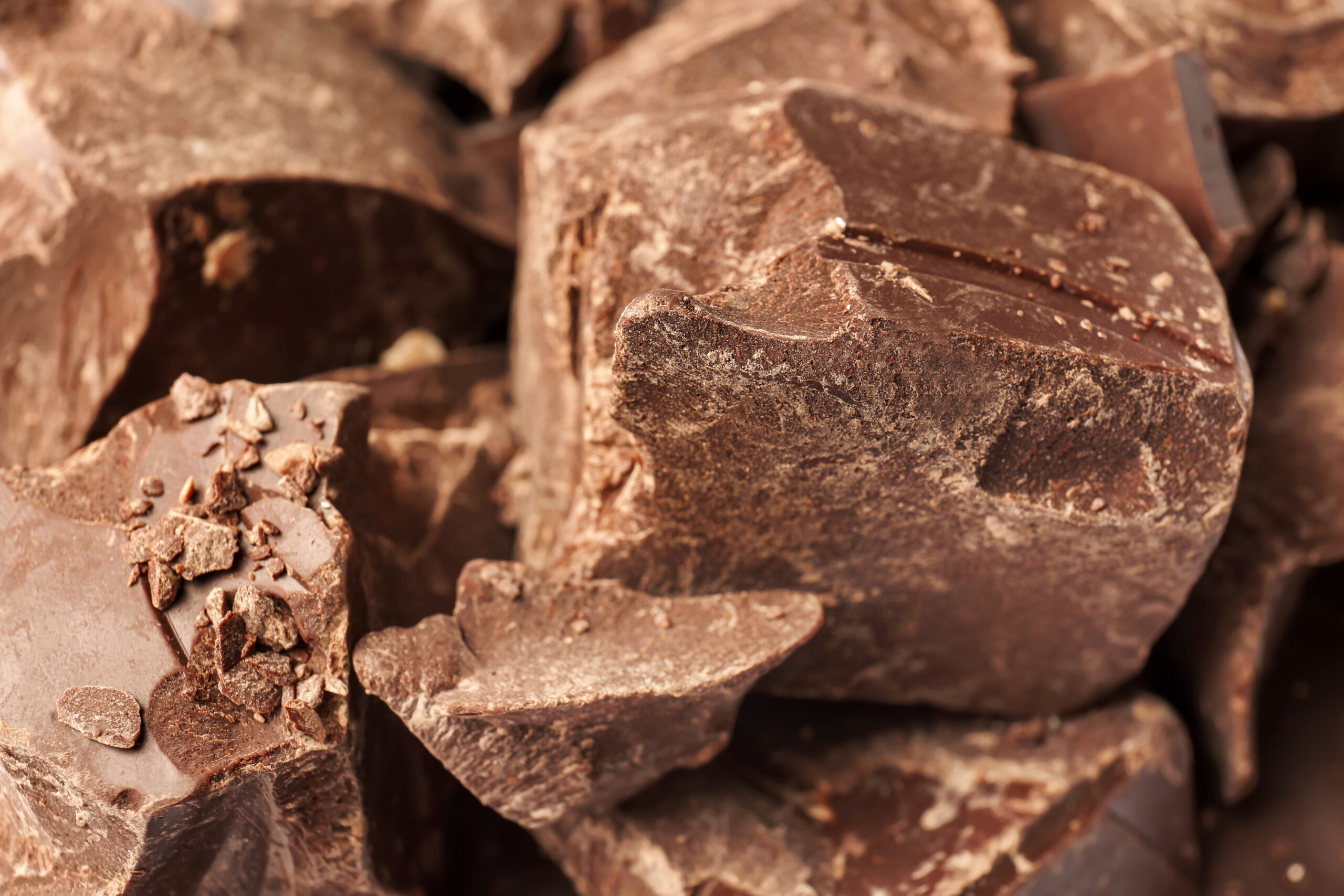
What is Cocoa Mass (Cocoa Liquor)?
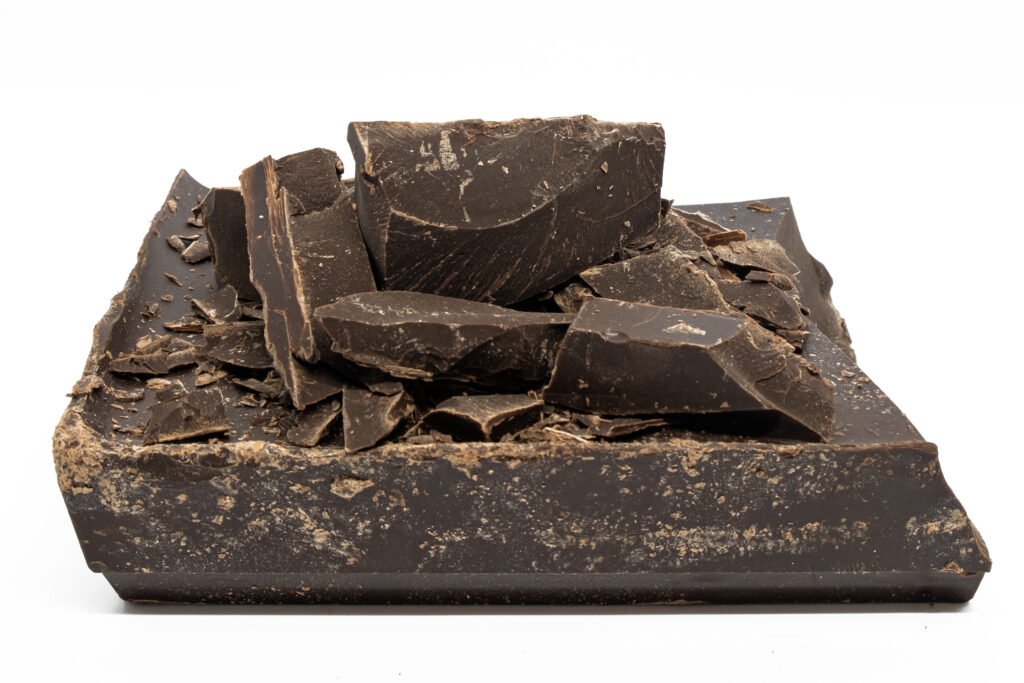
When you bite into a piece of chocolate, you’re experiencing the culmination of a process that begins with cocoa beans and transforms them into one of the world’s most beloved treats. Cocoa mass, commonly referred to as cocoa liquor in industrial settings, is the pure, ground form of cocoa beans. Despite the name “liquor,” this product contains no alcohol whatsoever. The term “liquor” comes from the old English word meaning “liquid” or “fluid,” referring to its molten state when freshly produced at temperatures above 35°C (95°F).
When cocoa beans are roasted, shelled, and ground into a smooth, flowing paste, the result is cocoa mass. This paste contains both cocoa solids and cocoa butter in their natural proportions, typically around 53-58% cocoa butter and 42-47% cocoa solids, though these ratios vary depending on the bean origin and variety.
The Production Process of Cocoa Mass
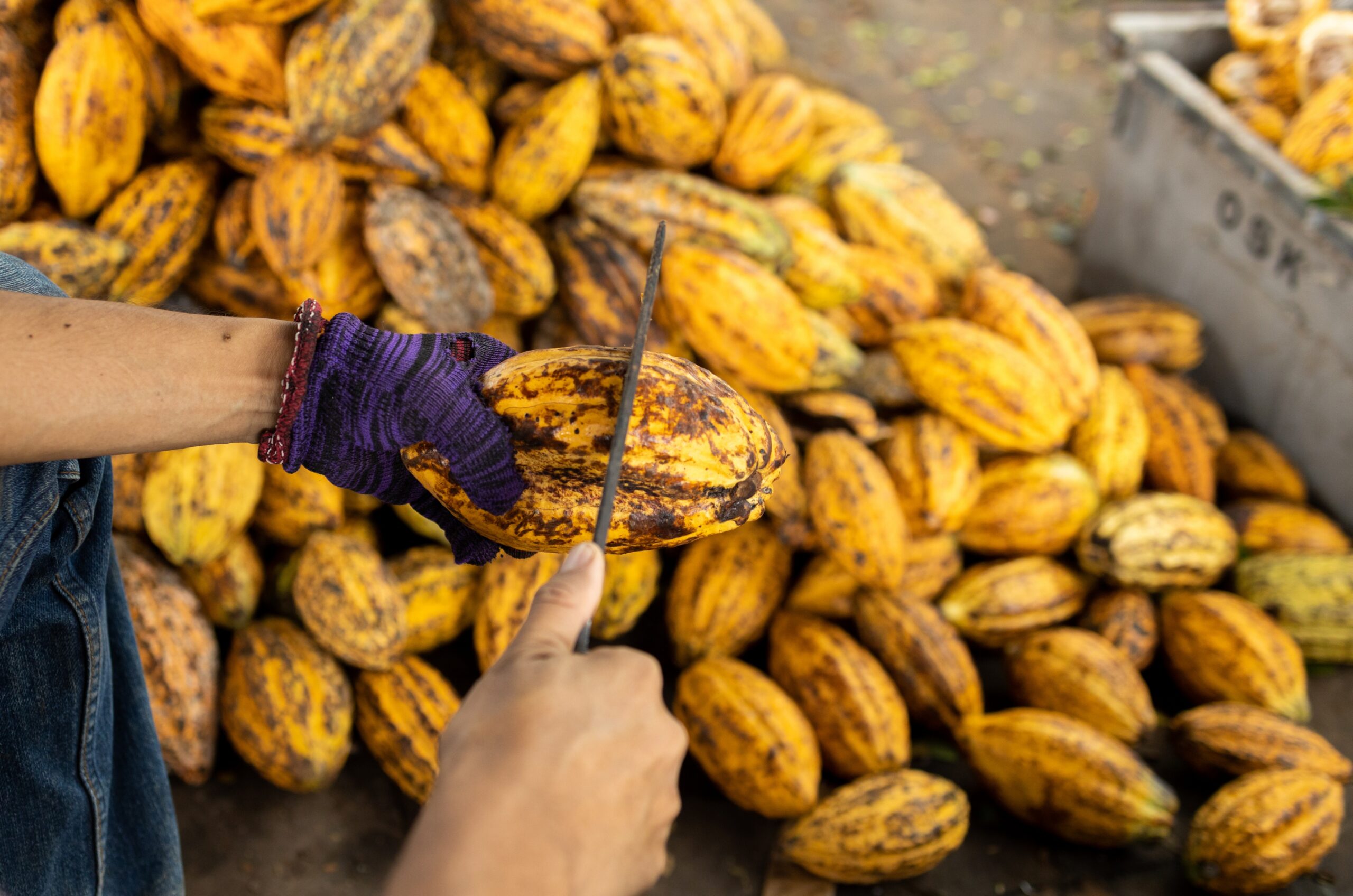
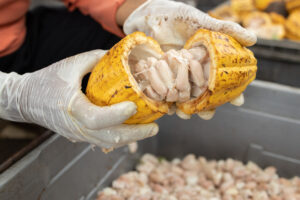
- Harvesting and Fermentation: Cocoa pods are harvested from Theobroma cacao trees, primarily in West Africa, South America, and Southeast Asia. The beans are extracted and fermented for 5-7 days, developing the precursors to chocolate flavor.
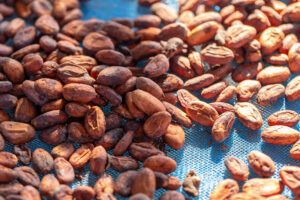
- Drying: Fermented beans are sun-dried or mechanically dried to reduce moisture content to about 7-8%, preventing mold growth and concentrating flavors.
- Roasting: Dried beans are roasted at temperatures between 120-150°C (248-302°F) for 20-40 minutes. This crucial step develops the characteristic chocolate flavor through the Maillard reaction and reduces moisture further.
- Winnowing: Roasted beans are cracked and winnowed to separate the nibs (the edible inner portion) from the shells.
- Grinding: The nibs are ground using stone mills or modern refiners. The friction generates heat, melting the cocoa butter within the nibs and creating a smooth, flowing liquid—the cocoa mass.
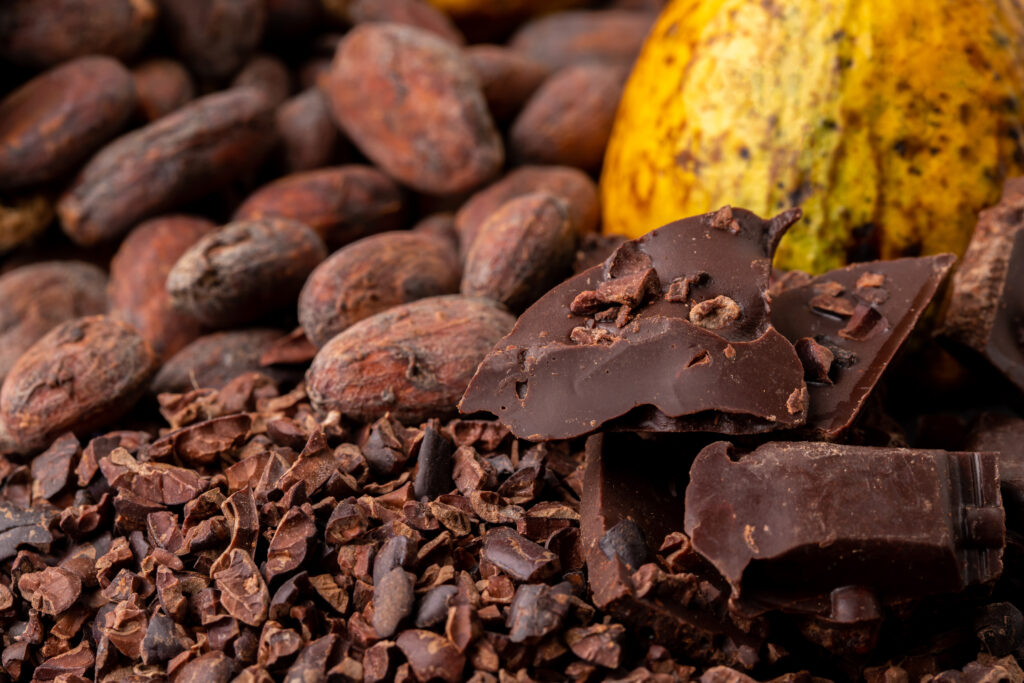
Difference Between Cocoa Mass and Other Cocoa Products
-
Cocoa Mass/Liquor: Whole ground cocoa beans containing both cocoa butter and cocoa solids in natural proportions
-
Cocoa Butter: The fat extracted from cocoa mass through pressing, with a pale yellow color and cocoa aroma
-
Cocoa Powder: The solid cake remaining after cocoa butter extraction, ground into powder
-
Cocoa Nibs: Roasted, cracked cocoa beans before grinding into mass
-
Chocolate: Cocoa mass combined with additional cocoa butter, sugar, and often milk solids
Nutritional Profile of Cocoa Mass
Macronutrient Composition (per 100g)
| Nutrient | Amount |
| Calories | 530-550 kcal |
| Total Fat | 52-54g |
| Saturated Fat | 32-34g |
| Monounsaturated Fat | 16-18g |
| Polyunsaturated Fat | 1.5-2g |
| Carbohydrates | 28-32g |
| Dietary Fiber | 15-18g |
| Sugars | 0.5-1.5g |
| Protein | 12-14g |
| Water | 2-3g |
Micronutrients and Minerals (per 100g)
| Mineral | Amount | % Daily Value* |
| Iron | 13-17mg | 72-94% |
| Magnesium | 420-500mg | 100-119% |
| Phosphorus | 650-750mg | 52-60% |
| Potassium | 1500-1800mg | 32-38% |
| Zinc | 6-7mg | 55-64% |
| Copper | 3.5-4mg | 389-444% |
| Manganese | 3-4mg | 130-174% |
| Selenium | 8-10mcg | 15-18% |
Vitamins (per 100g)
| Vitamin | Amount | % Daily Value* |
| Vitamin E | 1-2mg | 7-13% |
| Vitamin K | 8-10mcg | 7-8% |
| Thiamin (B1) | 0.08-0.1mg | 7-8% |
| Riboflavin (B2) | 0.2-0.25mg | 15-19% |
| Niacin (B3) | 1.5-2mg | 9-13% |
| Vitamin B6 | 0.1-0.12mg | 6-7% |
| Folate (B9) | 30-35mcg | 8-9% |
Bioactive Compounds
-
Flavonoids: 12-18mg per gram, including epicatechin, catechin, and procyanidins
-
Theobromine: 1.5-2.5% by weight, a mild stimulant
-
Caffeine: 0.1-0.3% by weight
-
Phenylethylamine: Mood-enhancing compound
-
Anandamide: Known as the “bliss molecule”
Uses of Cocoa Mass Across Industries
Chocolate Manufacturing
-
Dark Chocolate: Cocoa mass mixed with sugar and additional cocoa butter, with cocoa content ranging from 50% to 100%
-
Milk Chocolate: Cocoa mass combined with milk solids, sugar, and cocoa butter
-
White Chocolate: Made using only the cocoa butter extracted from cocoa mass, combined with milk and sugar
-
Couverture Chocolate: High-quality chocolate with elevated cocoa butter content (32-39%) for professional use
Confectionery Industry
-
Chocolate coatings for candies and bars
-
Ganache and truffle centers
-
Chocolate fillings for pastries
-
Enrobing applications for nuts, fruits, and caramels
Baking and Food Service
-
Brownies and chocolate cakes for intense chocolate flavor
-
Ice cream and frozen desserts
-
Chocolate mousses and puddings
-
Specialty breads and pastries
-
Artisanal chocolate products
Beverage Industry
-
Hot chocolate and drinking chocolate (distinct from cocoa powder drinks)
-
Chocolate-flavored liqueurs
-
Protein shakes and nutritional beverages
-
Specialty coffee drinks
Cosmetics and Personal Care
-
Lip balms and lipsticks (for color and emollient properties)
-
Body butters and moisturizers
-
Hair conditioning treatments
-
Anti-aging skin products (due to antioxidants)
Pharmaceutical Applications
-
Coating for tablets and pills
-
Suppository bases
-
Nutritional supplements
-
Drug delivery systems
Regional Variations: African Cocoa Mass Excellence
Ghana Cocoa Mass
-
Flavor Profile: Classic chocolate flavor with subtle fruity notes and mild acidity
-
Consistency: Exceptional uniformity due to Ghana’s quality control systems
-
Cocoa Content: Typically 54-56% cocoa butter content
-
Color: Deep reddish-brown
-
Applications: Ideal for premium dark chocolate, milk chocolate, and confectionery
Cameroon Cocoa Mass
-
Flavor Profile: Complex flavor with strong fruity notes, wine-like acidity, and hints of spice
-
Aromatic Qualities: Intense, full-bodied aroma with floral undertones
-
Cocoa Butter Content: 55-58%, slightly higher than most origins
-
Color: Rich brown with purple undertones
-
Applications: Particularly valued for single-origin chocolates and premium chocolate products
Côte d’Ivoire (Ivory Coast) Cocoa Mass
-
Flavor Profile: Strong, classic cocoa flavor with slightly bitter notes
-
Consistency: High volume availability ensures supply chain reliability
-
Cocoa Butter Content: 53-55%
-
Applications: Bulk chocolate production, industrial applications, compound coatings
Nigeria Cocoa Mass
-
Flavor Profile: Robust chocolate flavor with earthy, nutty undertones
-
Quality: Improving significantly with modern processing techniques
-
Price Point: Competitive pricing makes it attractive for cost-conscious buyers
-
Applications: Suitable for bulk chocolate, cocoa powder production, and industrial uses
Quality Grades of Cocoa Mass
Premium Grade Cocoa Mass
-
Made from carefully selected, fully fermented beans
-
Low defect count (less than 3% defective beans)
-
Consistent particle size (typically refined to 18-25 microns)
-
Rich, complex flavor profile
-
Free from off-flavors or contamination
-
Full traceability to origin
Standard Grade Cocoa Mass
-
Made from properly fermented beans with acceptable quality standards
-
Defect count between 3-8%
-
Standard processing and refining
-
Good, consistent chocolate flavor
-
Suitable for most industrial applications
Industrial Grade Cocoa Mass
-
Made from beans with higher defect tolerance (up to 10-12%)
-
Basic processing standards
-
Suitable flavor for products where chocolate is not the primary flavor
-
Cost-effective solution for large-volume needs
Price of Cocoa Mass: Understanding Market Dynamics
Current Price Ranges (2024-2025)
-
Premium Grade (Ghana, Cameroon): $14,800-$17,200 per metric ton
-
Standard Grade: $12,500-$14,800 per metric ton
-
Industrial Grade: $10,000-$11,800 per metric ton
-
Cocoa mass in Dubai and UAE: Typically 5-10% premium over international prices due to logistics and import duties
-
Cocoa mass in Saudi Arabia and cocoa mass in Jeddah: Similar to UAE pricing with slight variations based on port of entry
-
Cocoa mass in GCC countries: Generally consistent across the region with minor differences in import regulations
-
Cocoa mass in Turkey: Competitive pricing due to Turkey’s strategic location and strong chocolate industry
-
Cocoa mass in Europe: Premium pricing for certified organic and fair-trade options
-
Cocoa mass in USA: Domestic market prices influenced by futures contracts and commodity trading
Factors Affecting Cocoa Mass Pricing
-
Harvest yields in major producing countries (especially Ghana and Côte d’Ivoire)
-
Weather patterns and climate change impacts
-
Cocoa diseases (black pod, swollen shoot virus)
-
Political stability in producing regions
-
Labor availability and costs
-
Currency fluctuations in producing countries
-
Global chocolate consumption trends
-
Premium chocolate market growth
-
Emerging markets development (particularly Asia)
-
Health and wellness trends affecting chocolate sales
-
Seasonal demand fluctuations (holiday periods)
-
Energy costs for roasting and grinding
-
Transportation and shipping costs
-
Storage and warehousing expenses
-
Quality certifications (organic, fair trade, Rainforest Alliance)
-
Import duties and taxes in destination countries
Price Forecasting
-
Climate change impacts on West African production
-
Increased demand from emerging markets
-
Growing preference for premium and dark chocolate
-
Supply chain disruptions and logistics challenges
How to Buy Cocoa Mass: A Comprehensive Buyer’s Guide
Step 1: Define Your Requirements
-
Small-scale (25-500 kg cocoa mass): Suitable for artisanal chocolate makers, small bakeries, testing purposes
-
Medium-scale (500 kg-5 metric tons cocoa mass): Small to medium chocolate manufacturers, confectionery businesses
-
Large-scale (5+ metric tons cocoa mass): Industrial chocolate production, large confectionery operations
-
Determine whether you need premium, standard, or industrial grade based on your end product
-
Consider flavor profiles required for your specific applications
-
Assess particle size requirements (finer grinding costs more but provides smoother texture)
-
Single-origin cocoa mass for artisanal products (Ghana cocoa mass, Cameroon cocoa mass)
-
Blended origins for consistent flavor profiles
-
African cocoa mass from various countries for different price points
-
Organic certification (USDA, EU organic standards)
-
Fair Trade certification
-
Rainforest Alliance certification
-
Kosher or Halal certification (particularly important for cocoa mass in the UAE, cocoa mass in Saudi Arabia, and GCC markets)
-
ISO quality standards
-
Food safety certifications (HACCP, BRC, FSSC 22000)
Step 2: Research and Identify Suppliers
Types of Suppliers:
-
Competitive pricing
-
Full supply chain visibility
-
Potential for customization
-
However, may require larger minimum orders and direct import arrangements
-
Flexible ordering quantities
-
Consolidated shipping options
-
Quality guarantees and certifications
-
Simplified import procedures
-
However, prices may be higher than direct sourcing
-
Smaller minimum orders
-
Local currency transactions
-
Quick delivery times
-
Local market expertise
-
However, limited origin options and higher per-unit costs
-
Wide range of cocoa products (cocoa beans, cocoa mass, cocoa butter, cocoa nibs)
-
Technical expertise and support
-
Quality consistency across product lines
-
Flexible sourcing options from multiple African origins
-
Established logistics networks to major markets
Step 3: Evaluate Supplier Credentials
-
What is your sourcing network? (Direct farm relationships, cooperatives, auctions)
-
What quality control measures do you have in place?
-
Can you provide samples of cocoa mass before bulk ordering?
-
What certifications do your cocoa products carry?
-
What are your typical lead times from order to delivery?
-
What are your payment terms and conditions?
-
Do you offer technical support for product applications?
-
What is your minimum order quantity?
-
How do you handle quality complaints or disputes?
-
Can you provide references from current customers?
Red Flags to Watch For:
-
Unwillingness to provide samples
-
Vague answers about sourcing or quality control
-
Significantly lower prices than market average (may indicate quality issues)
-
No certifications or verifiable credentials
-
Poor communication or unprofessional conduct
-
Reluctance to share customer references
Step 4: Sample Testing and Evaluation
-
Color uniformity (should be consistent throughout)
-
Texture when cooled (smooth surface without fat bloom)
-
Absence of foreign materials or contamination
-
Aroma (should be characteristic chocolate aroma without off-notes)
-
Flavor profile (taste a small amount, noting acidity, bitterness, fruity notes)
-
Mouthfeel and texture
-
Melting characteristics
-
Fat content analysis (should match claimed cocoa butter percentage)
-
Moisture content (should be below 2% to prevent mold)
-
Particle size distribution (if specific fineness is required)
-
Microbiological testing (particularly important for food safety compliance)
-
Heavy metals screening (lead, cadmium levels)
-
Pesticide residue testing
-
Create your target product with the sample cocoa mass
-
Assess performance in your specific application
-
Compare with your current supplier (if applicable)
-
Test storage stability over time
Step 5: Negotiate Terms and Place Order
-
Request quotes from multiple suppliers (minimum 3-5 for comparison)
-
Negotiate based on order volume (larger orders warrant better pricing)
-
Consider long-term contracts for price stability
-
Ask about payment term discounts (payment upon delivery vs. net 30/60 days)
-
Inquire about freight and insurance inclusions
-
Clearly specify quality parameters (grade, origin, certifications)
-
Define delivery schedules and logistics responsibilities
-
Establish quality dispute resolution procedures
-
Include force majeure clauses for unforeseen circumstances
-
Specify payment terms, currency, and method
-
Include confidentiality clauses if applicable
-
EXW (Ex Works): Cocoa mass buyer handles all transportation from supplier’s facility
-
FOB (Free On Board): Cocoa mass seller delivers to port of shipment; buyer handles ocean freight
-
CIF (Cost, Insurance, Freight): Cocoa mass seller pays freight and insurance to destination port
-
DDP (Delivered Duty Paid): Cocoa mass seller handles all costs, including customs and delivery to the buyer’s door
Step 6: Manage Logistics and Import Procedures
-
Commercial invoice
-
Bill of lading (for sea freight) or air waybill
-
Certificate of origin
-
Quality certificates and certifications
-
Phytosanitary certificate (if required by destination country)
-
Import permits (varies by destination)
-
Store in cool (18-20°C/64-68°F), dry conditions
-
Protect from direct sunlight and strong odors
-
Maintain relative humidity below 65%
-
Use within 12-18 months for optimal quality
-
Follow FIFO (First In, First Out) inventory management
-
Relatively straightforward import procedures
-
5% customs duty on cocoa products
-
Food safety approval from Dubai Municipality or relevant emirate authority required
-
Halal certification beneficial for local market distribution
-
SFDA (Saudi Food and Drug Authority) registration required
-
Halal certification mandatory for food products
-
Customs clearance through ZATCA (Zakat, Tax and Customs Authority)
-
Import duty typically 5%
-
Generally harmonized customs procedures
-
GCC Standardization Organization (GSO) compliance
-
Similar duty structures across member states
-
Requires Turkish Food Codex compliance
-
TÜRKAK accredited laboratory testing may be required
-
Customs duty varies based on origin and trade agreements
-
EU food safety regulations compliance
-
Potential preferential duty rates based on origin (EPA agreements with African countries)
-
TRACES (Trade Control and Expert System) registration for imports
-
FDA (Food and Drug Administration) compliance required
-
Prior Notice before shipment arrival
-
Customs duty typically 0.52 cents per kg
-
Bioterrorism Act registration for facilities
Why Choose Radad International for Your Cocoa Mass Needs
Our Product Range
-
Cocoa Beans: From carefully selected farms across West Africa
-
Cocoa Mass: Available in premium, standard, and industrial grades
-
Cocoa Butter: Natural and deodorized options
-
Cocoa Nibs: Roasted and raw for various applications
-
Cocoa Powder: Natural and alkalized varieties
-
Cocoa pods
-
Cocoa Shells….
Our Sourcing Network
-
Direct relationships with farmer cooperatives in Ghana, Cameroon, Nigeria, and Côte d’Ivoire
-
Quality verification at origin before processing
-
Traceability from farm to final product
-
Support for sustainable farming practices
Quality Assurance
-
Comprehensive quality control at every stage
-
Third-party laboratory testing and certification
-
Consistent product specifications
-
Detailed documentation and certificates of analysis
Global Distribution Capabilities
-
Middle East: Specialized expertise in cocoa mass in UAE, cocoa mass in Saudi Arabia, and broader GCC markets
-
Europe: Established logistics networks for efficient European distribution
-
North America: Reliable supply chains for cocoa mass in USA
-
Asia: Growing presence in emerging chocolate markets
-
Turkey: Strong connections for cocoa mass in Turkey
Value-Added Services
-
Technical consultation for product applications
-
Customized solutions for specific requirements
-
Competitive pricing through optimized supply chains
-
Flexible order quantities to match your business scale
-
Reliable delivery schedules and inventory management support
Competitive Advantages
-
Origin Diversity: Access to cheap cocoa mass for cost-conscious projects and premium cocoa mass for luxury applications from multiple African origins
-
Quality Consistency: Rigorous quality standards ensure batch-to-batch uniformity
-
Market Knowledge: Deep understanding of regional requirements and preferences
-
Responsive Service: Dedicated account management and quick response times
-
Transparent Pricing: Clear quotations with no hidden costs
-
Certification Portfolio: Comprehensive certifications meeting global market requirements
-
Sustainability Commitment: Supporting ethical sourcing and farmer welfare programs
Emerging Trends in the Cocoa Mass Market
Bean-to-Bar Movement
-
Single-origin, traceable cocoa mass
-
Small-batch processing
-
Transparent supply chains
-
Direct trade relationships
Health and Wellness Focus
-
High-percentage dark chocolate (70%+ cocoa content)
-
Natural cocoa mass without additives
-
Organic and fair-trade certified products
-
Functional chocolate products enhanced with probiotics, adaptogens, etc.
Sustainability and Ethics
-
Deforestation-free supply chains
-
Fair wages for cocoa farmers
-
Child labor-free certification
-
Climate-smart agriculture practices
-
Regenerative farming techniques
Technology Integration
-
Improved flavor development through precise roasting control
-
Enhanced microbial safety through advanced processing
-
Better consistency through automated quality monitoring
-
Longer shelf life through optimized packaging
Regional Market Growth
-
Rapid chocolate market expansion in Asia (China, India, Southeast Asia)
-
Growing middle class in Africa creating domestic demand
-
Innovation in Middle Eastern confectionery (particularly GCC markets)
-
Latin American specialty chocolate development
Storage and Handling Best Practices for Cocoa Mass
Optimal Storage Conditions for Cocoa Mass
-
Ideal: 15-18°C (59-64°F)
-
Maximum: 20°C (68°F)
-
Avoid temperature fluctuations that can cause fat bloom
-
Relative humidity below 65%
-
Excessive moisture can promote mold growth and fat separation
-
Original sealed packaging until use
-
Food-grade containers if transferred
-
Protection from oxygen exposure (vacuum-sealed or nitrogen-flushed packaging preferred)
-
Cool, dry storage area
-
Away from direct sunlight
-
Protected from strong odors (cocoa mass readily absorbs surrounding smells)
-
Separate from chemicals or non-food items
Shelf Life of Cocoa Mass
-
12-18 months under optimal conditions
-
Up to 24 months for specially packaged premium grades
-
3-6 months if properly resealed and stored
-
Use clean utensils to prevent contamination
-
Minimize air exposure during use
Handling Procedures
-
Gentle heating (40-50°C/104-122°F) to liquify
-
Avoid direct heat sources
-
Stir regularly for uniform melting
-
Do not allow water contact (causes seizing)
-
If using for chocolate production, proper tempering is essential
-
Follow standard chocolate tempering curves
-
Use seed method, tabling method, or tempering machine
-
Use food-grade equipment
-
Maintain hygiene standards
-
Follow HACCP principles
-
Regular equipment cleaning and sanitization



2 Responses
You must participate in a contest for the most effective blogs on the web. I will recommend this web site!
Lovely just what I was looking for.