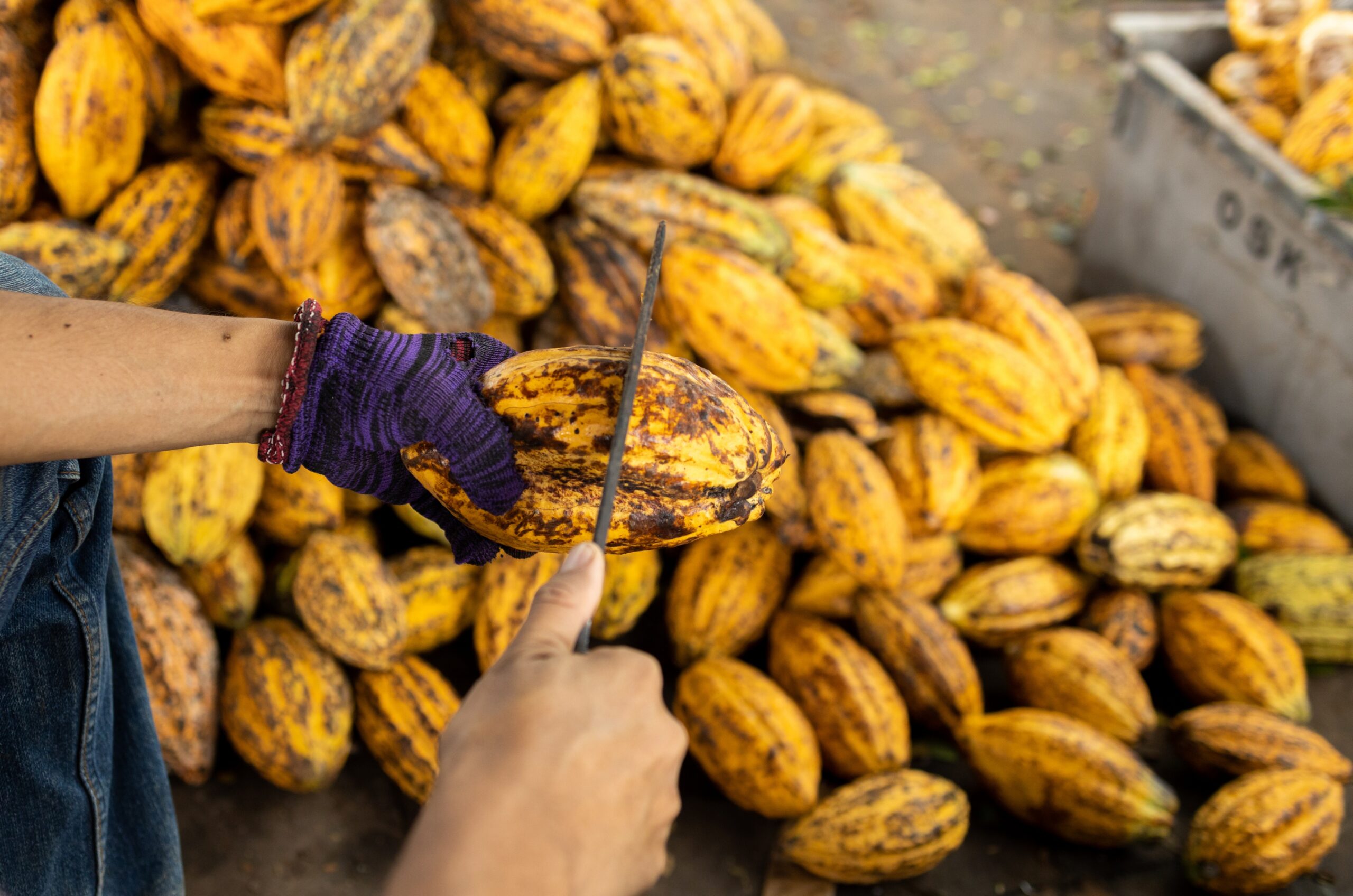
Buying cocoa beans in bulk looks simple on paper: agree a price, book a container, wait for it to arrive. In practice, first-time importers lose money to under-dried beans, missing documents, fraudulent sellers and contracts that leave all the risk on their side. The cocoa market has also been unusually volatile since 2024, which makes every pricing decision more important.
Quick summary
To import cocoa beans in bulk: (1) write a specification covering variety, origin, grade and moisture; (2) shortlist verified exporters and check their registration and references; (3) approve a physical sample with a cut test; (4) agree price, Incoterms and secure payment terms; (5) book shipping and check every export document; (6) clear customs under HS code 1801 and meet rules such as the EUDR; (7) turn a good first shipment into a long-term supply agreement.
1801.00HS code for cocoa beans, whole or broken, raw or roasted
≤ 7.5%maximum moisture for export beans; wetter beans can go mouldy in transit
4–8 weekstypical time from order confirmation to arrival at port
30 Dec 2026EU Deforestation Regulation applies to cocoa for large and medium operators
Contents
01Specification
Step 1: Define exactly what you need
Every successful cocoa purchase starts with a written specification. It tells suppliers what to quote, gives you a standard to test samples against, and becomes part of the contract if a shipment arrives below grade.

Choose the variety
| Variety | Main origins | Flavour | Best for |
|---|---|---|---|
| Forastero | West Africa (most of world supply) | Bold, classic chocolate, earthy | Industrial chocolate, cocoa powder, butter |
| Trinitario | Caribbean, Latin America, parts of Africa | Complex and fruity | Premium and craft chocolate |
| Criollo | Central and South America | Delicate, nutty, low bitterness | Fine and luxury chocolate |
Choose the origin
| Origin | What buyers value |
|---|---|
| Côte d’Ivoire | The world’s largest producer; large, consistent volumes |
| Ghana | Tightly regulated quality and a strong reputation for consistency |
| Nigeria | Bold flavour, strong fermentation and flexible export options |
| Cameroon | Distinctive, often reddish beans used in premium blends |
| Sierra Leone and Uganda | Smaller volumes with growing interest from speciality buyers |
Set the grade
Export grades follow the cut-test limits in the international standard for cocoa beans (ISO 2451). Specify the grade in your contract:
| Defect (by count, cut test) | Grade I | Grade II |
|---|---|---|
| Mouldy beans | Max 3% | Max 4% |
| Slaty (unfermented) beans | Max 3% | Max 8% |
| Insect-damaged, germinated or flat | Max 3% | Max 6% |
| Moisture | Max 7.5% | Max 7.5% |
Your specification sheet should include
- Variety and country (or region) of origin
- Grade, maximum moisture and maximum defects
- Bean count (beans per 100 g) and, if relevant, fat content
- Crop: main crop or mid crop
- Packaging: 60–65 kg jute bags, lined PP bags or bulk liner
- Quantity, delivery window and destination port
- Certifications or traceability data you need (organic, Fairtrade, Rainforest Alliance, EUDR)
02Suppliers
Step 2: Find and vet suppliers
The cocoa trade attracts fraudulent “exporters” who advertise below-market prices, take a deposit and disappear. Finding suppliers is easy. Verifying them is the real work.
Where to look
Trade events
The World Cocoa Conference, ISM Cologne and Salon du Chocolat, where established exporters exhibit.
Where to look
Directories and bodies
Trade directories, national cocoa boards and chambers of commerce in producing countries.
Where to look
Referrals
Recommendations from other importers, freight forwarders and inspection companies you already trust.
Red flags that usually mean fraud
Prices far below the ICE New York or ICE London benchmarks. Real exporters price close to the market.
Demands for 100% advance payment, especially to a personal or third-party account.
No verifiable company registration, export licence, physical office or client references.
Reluctance to allow independent inspection, send samples or share documents before payment.
Questions to ask every supplier
- What are your company registration and export licence numbers?
- What volume do you export each year, and to which countries?
- Can you provide references from at least two international buyers?
- Will you accept pre-shipment inspection by SGS, Bureau Veritas or Intertek?
- Which Incoterms and payment terms do you offer?
- Can you supply farm geolocation data for EUDR due diligence?
Tip
Verify registration yourself with the national company registry (for example Nigeria’s Corporate Affairs Commission), not only from documents the seller sends. A short video call from the warehouse is also a quick way to confirm the stock exists.
03Quality
Step 3: Test samples with a cut test
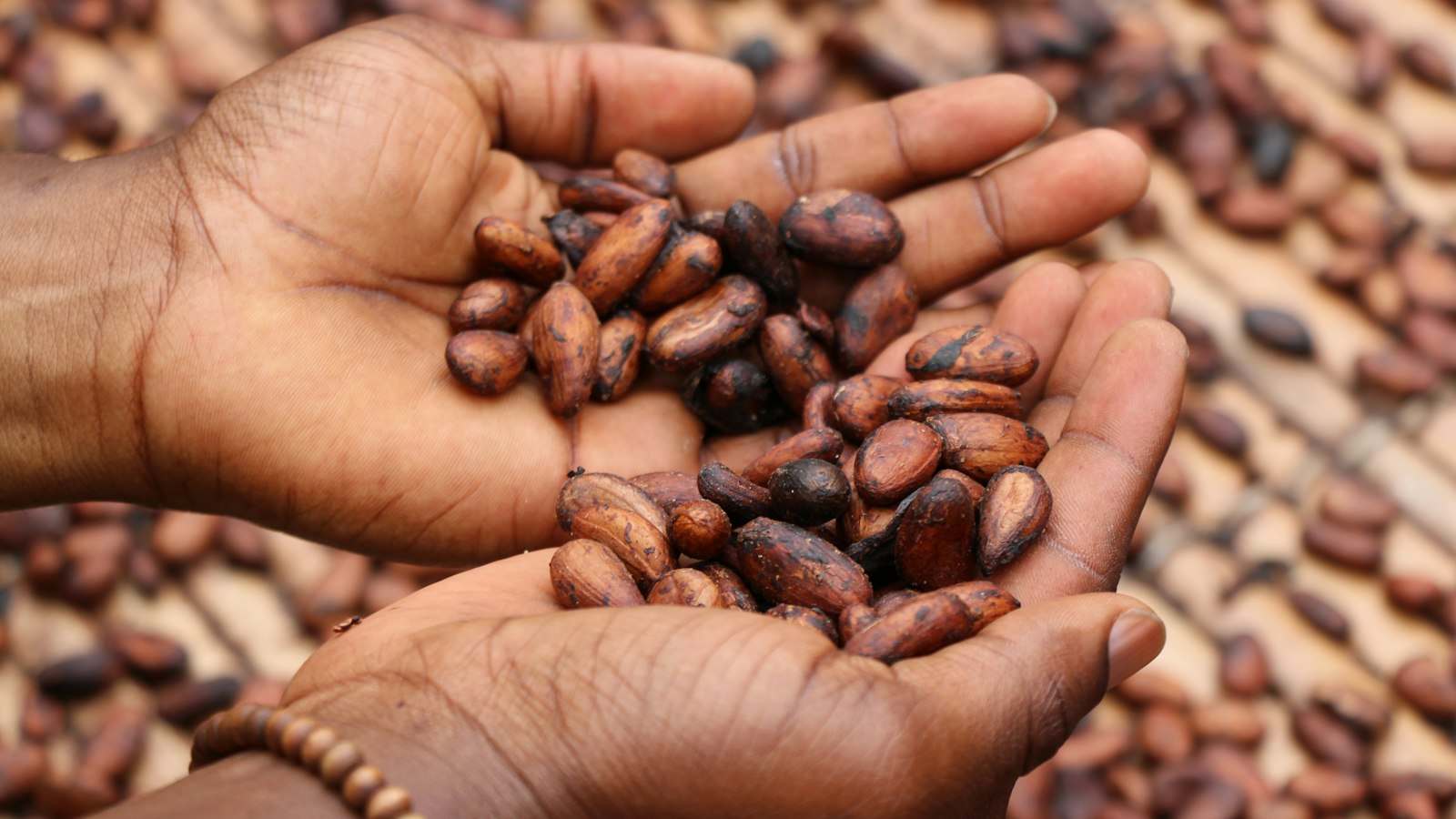
Never place a bulk order without evaluating a physical sample from the lot you are buying. The standard method is the cut test: 300 beans are cut lengthwise and each interior is classified by colour and defect.
| Interior appearance | What it means | Target |
|---|---|---|
| Brown | Well fermented, good flavour potential | The majority of the sample |
| Purple | Partly fermented, more bitter and astringent | Keep low for chocolate use |
| Slaty (grey) | Unfermented, little chocolate flavour | Grade I: max 3% |
| Mouldy | Moisture damage; off-flavours | Grade I: max 3% |
| Insect-damaged or germinated | Pest damage or sprouted beans | Grade I: max 3% |
Smell and feel
Good beans smell of cocoa with light acidity. Smoky, musty or ammonia notes point to poor drying or fermentation. Beans should snap, not bend.
Moisture
Check with a moisture meter. Above 7.5%, mould can develop during the voyage. Ask for moisture on the quality certificate for the actual shipment.
04Commercial terms
Step 4: Agree price, Incoterms and payment
Physical cocoa is priced against the futures markets: ICE Futures US (New York) in US dollars and ICE Futures Europe (London) in pounds. Exporters quote a premium or discount (the “differential”) on top, depending on origin, quality and certification.
Prices in 2026 have moved sharply
After the record highs of 2024, cocoa futures fell to around USD 3,100–3,300 per tonne in March 2026, then climbed again to average about USD 6,000 per tonne in August 2026 on concerns about black pod disease and El Niño in West Africa. Check the live benchmark on the day you negotiate, and consider fixing prices for part of your volume.
Price formula
Your price = futures benchmark + origin differential + certification premium (if any) + freight and insurance (for CIF or DAP)
Choose your Incoterms
| Incoterm | Who pays freight | Risk passes to you | Best for |
|---|---|---|---|
| FOB (Free On Board) | You | When loaded on the vessel at origin | Buyers with their own freight forwarder |
| CFR / CIF | Seller (CIF adds insurance) | When loaded on the vessel at origin | First-time importers who want a simpler process |
| DAP (Delivered at Place) | Seller, to your named place | On arrival at the named place | Maximum convenience |
| EXW (Ex Works) | You, from the seller’s warehouse | At the seller’s premises | Experienced importers with local agents |
Choose safe payment terms
Safest
Letter of credit
Your bank pays only when the seller presents compliant shipping documents. Best for first orders and large volumes.
Common
Deposit + balance on B/L
A 30–40% deposit, with the balance paid against a copy of the bill of lading. Suits verified suppliers.
Trusted only
Full advance
Only for small samples or trial lots with suppliers you have already verified.
05Logistics
Step 5: Book shipping and check the documents
| Option | Typical load | Notes |
|---|---|---|
| 20ft container, bagged | About 12–16 MT | Cocoa stows at roughly 2 m³ per tonne, so volume usually runs out before weight |
| 40ft container, bagged | About 24–26 MT | Lowest freight cost per tonne for regular buyers |
| Bulk in liner | Higher than bagged | A liner bag fills the container; used by large processors |
| LCL (shared container) | From about 1–5 MT | Good for trials; slower and more handling |
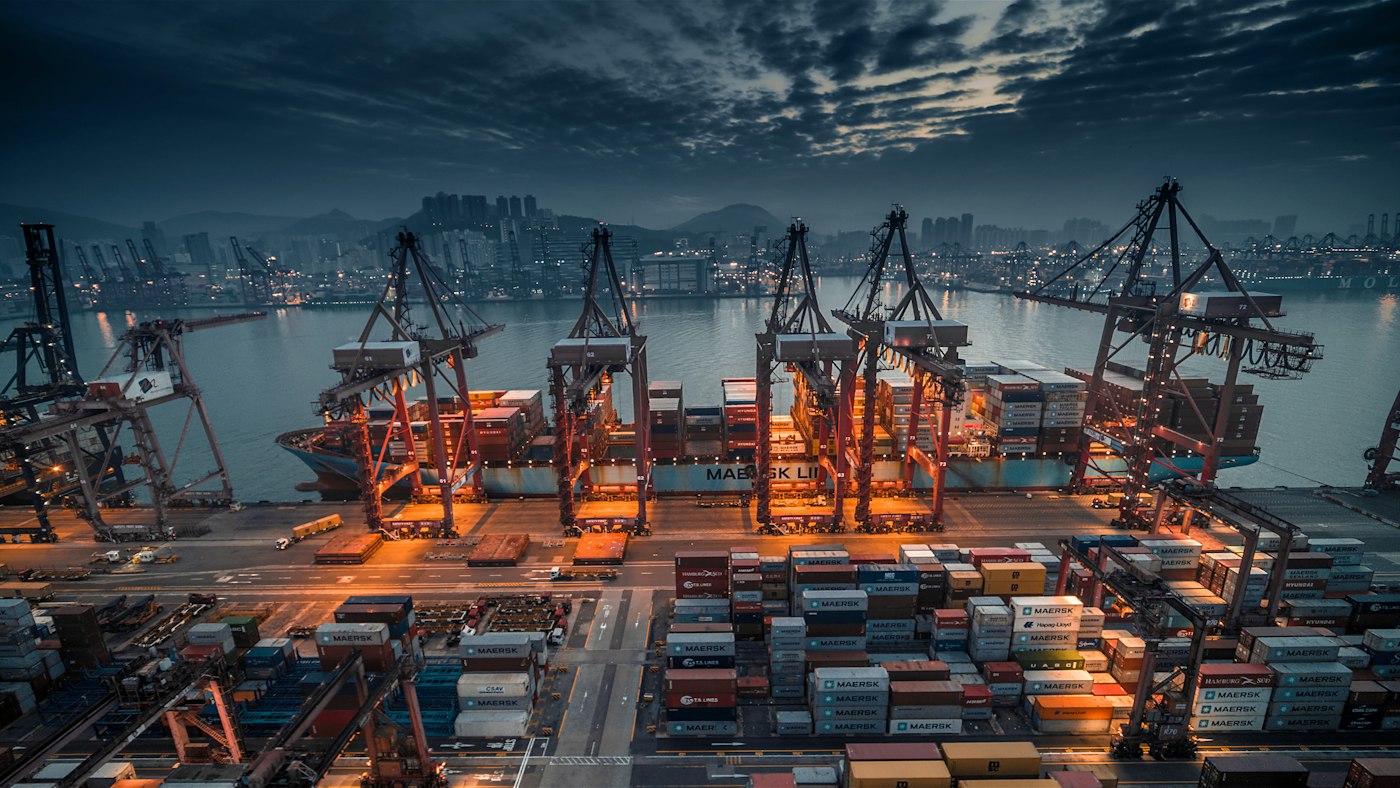
Use dry, clean containers lined with kraft paper, and add desiccant (dry bags) against condensation, which is the biggest cause of mould on long voyages.
Documents to receive before the goods arrive
| Document | Purpose | Issued by |
|---|---|---|
| Bill of lading | Proof of shipment and title to the goods | Shipping line |
| Commercial invoice and packing list | Value, weights and bag count for customs | Exporter |
| Certificate of origin | Proves the origin; may lower duties | Chamber of commerce or authority |
| Phytosanitary certificate | Confirms freedom from pests and disease | Plant health authority |
| Quality and weight certificate | Independent grade and weight check | SGS, Bureau Veritas, Intertek |
| Fumigation certificate | Pest treatment before loading | Licensed fumigator |
| EUDR data | Farm geolocation for the due diligence statement (EU buyers) | Exporter, with the importer |
06Compliance
Step 6: Clear customs and meet the rules
Raw cocoa beans are classified under HS 1801.00 (cocoa beans, whole or broken, raw or roasted). Related products have their own headings: shells and husks under 1802 (see our HS 1802 guide), paste 1803, butter 1804 and powder 1805.
| Market | Import duty on raw beans | Notes |
|---|---|---|
| European Union | 0% | EUDR due diligence applies from 30 December 2026 |
| United Kingdom | 0% | Check UK plant health and import notification rules |
| United States | Free | FDA prior notice is required for food imports |
| Other markets | Varies | Confirm the current rate and any free-zone benefits with your customs broker |
The EU Deforestation Regulation (EUDR)
If you place cocoa on the EU market, you must show it was not grown on land deforested after 31 December 2020 and that it was produced legally. That means a due diligence statement backed by geolocation data for the farm plots. The rules apply from 30 December 2026 for large and medium operators and from 30 June 2027 for small and micro operators. Records must be kept for five years, and penalties can reach at least 4% of EU annual turnover.
Tip
Even if you do not sell into the EU, ask for farm-level traceability. Major chocolate brands now expect it from all their suppliers, and it makes resale into the EU possible later.
07Partnership
Step 7: Build a long-term supply relationship
The importers who get the best beans at the best prices treat sourcing as a relationship, not a one-off purchase. A supplier who knows your volumes can reserve stock, warn you early about crop problems and prioritise your orders when supply is tight.

October–March
Main crop
The largest and usually best-quality harvest in West Africa. Plan your biggest purchases a few weeks after it starts.
May–August
Mid crop
A smaller harvest, often with smaller beans. Useful for top-up volumes.
All year
Forward contracts
Fix a price or price formula for 6–12 months to protect your margins from volatility.
Share quarterly forecasts with your supplier, give feedback on every shipment, and keep a simple scorecard for quality, punctuality and documentation.
Worked example
What does a container of cocoa really cost?
The contract price is only part of your cost. Use this structure to compare offers on a landed basis. The figures are illustrative only; replace them with your own quotes.
| Cost line | How to calculate | Example (20 MT, FOB) |
|---|---|---|
| Beans | Tonnes × FOB price | 20 × USD 6,000 = USD 120,000 |
| Ocean freight | Per container, from your forwarder | Your quote |
| Insurance | Usually a small % of cargo value | Your quote |
| Inspection and documents | Pre-shipment inspection, certificates | Your quote |
| Import duty and taxes | Duty rate × customs value, plus VAT where due | 0% duty in the EU, UK and US |
| Port, clearance and haulage | Terminal fees, broker, trucking | Your quote |
| Landed cost per tonne | Total ÷ tonnes received | Compare suppliers on this figure |
Checklist
Importer’s checklist
- Written specification: variety, origin, grade, moisture, packaging, quantity
- Supplier registration and export licence verified independently
- At least two buyer references checked
- Physical sample approved with a cut test
- Price linked to the benchmark, with Incoterms and payment terms in writing
- Pre-shipment inspection booked
- All documents checked before the vessel sails
- HS code, duty rate and EUDR obligations confirmed with your broker
Work with Radad International
Source bulk cocoa beans directly from Africa
Radad International supplies whole cocoa beans, nibs, powders, mass and butter from Nigeria, Ghana, Côte d’Ivoire, Cameroon and other origins, with offices in Nigeria and Dubai. We support trial lots from about 2 MT up to full containers, FOB, CIF and DAP shipping, pre-shipment inspection and full export documentation.
Tell us your grade, volume and destination port, and we will send a specification sheet, a sample and a quotation.
Or email info@radadinternational.com · +971 522 501 039
FAQ
Frequently asked questions
What is the minimum order for bulk cocoa beans?
Most exporters sell by the container: roughly 12–16 MT in a 20ft container of bagged beans, or about 24–26 MT in a 40ft container. Some suppliers, including Radad International, offer smaller trial lots of about 2 MT.
How much do cocoa beans cost per tonne in 2026?
Prices follow the ICE futures markets and have been volatile. Futures fell to around USD 3,100–3,300 per tonne in March 2026 and averaged about USD 6,000 per tonne in August 2026. Physical beans are quoted at a differential to that benchmark, so always check the live price when you negotiate.
What documents do I need to import cocoa beans?
Typically a bill of lading, commercial invoice, packing list, certificate of origin, phytosanitary certificate, quality and weight certificate and fumigation certificate. EU importers also need geolocation data for their EUDR due diligence statement.
How long does shipping take?
Allow 4–8 weeks from order confirmation to arrival: about 1–2 weeks for preparation and loading, several weeks at sea depending on the route, and a few days for customs clearance.
How can I avoid cocoa export scams?
Be wary of prices far below market, requests for full advance payment and sellers who refuse inspection. Verify registration with the national registry, check references, approve a sample and use a letter of credit or a deposit with the balance against the bill of lading.
Should I buy FOB or CIF?
FOB gives you control over freight and is usually cheaper if you have a forwarder. CIF is simpler for first-time importers because the seller arranges shipping and basic insurance.
What is the HS code for cocoa beans?
HS 1801.00 covers cocoa beans, whole or broken, raw or roasted. Raw beans enter the EU, UK and US duty-free.
Does the EUDR apply to cocoa beans?
Yes. From 30 December 2026 (30 June 2027 for small and micro operators), cocoa placed on the EU market needs a due diligence statement proving it is deforestation-free and legally produced, backed by farm geolocation data.
Keep reading
More guides from Radad International
Processing
From Bean to Bar
Every step of chocolate making, from fermentation to conching.
Start-ups
How to Start a Craft Chocolate Business
Ingredients, equipment, suppliers, MOQs and licences for new chocolate brands.
By-products
Cocoa Bean Shells and Husks
Uses, nutrition, market value and the HS 1802 trade code.
Sources and references
- ISO 2451: Cocoa beans — Specification and quality requirements.
- Cargo Handbook: Cocoa beans (stowage, moisture and condensation).
- FocusEconomics: Cocoa price (August 2026 averages).
- Trading Economics: Cocoa (March 2026 levels).
- European Commission. Implementing the EU Deforestation Regulation.
- US Harmonized Tariff Schedule, heading 1801.