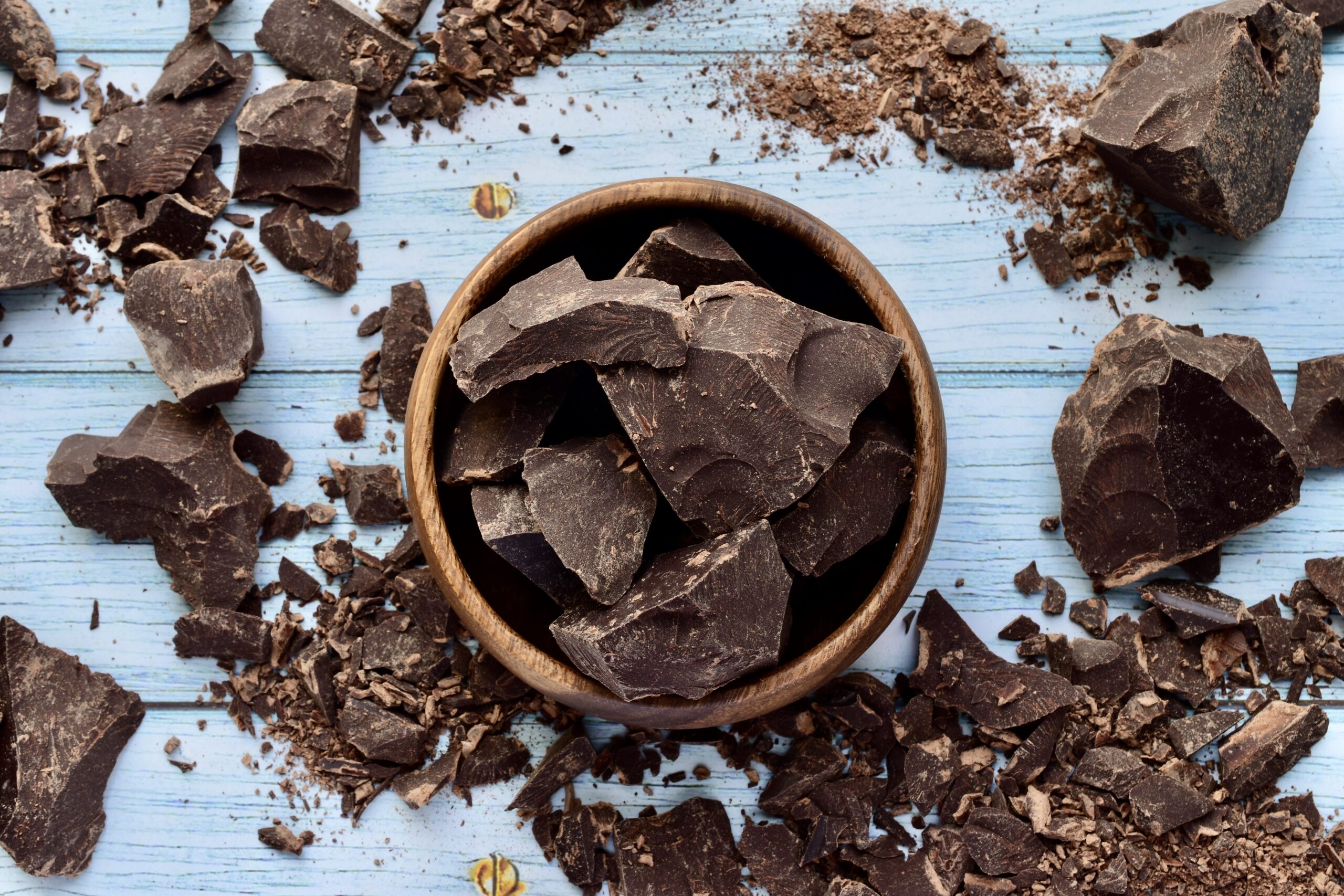
Cocoa Mass (Cocoa Liquor, Chocolate Paste)
Everything you need to know about cocoa mass: what it is, how it’s made, industrial uses, the difference between cocoa mass vs cocoa powder vs cocoa butter, and where to source premium African cocoa mass in Dubai and the UAE.
Quick Summary
Cocoa mass (also called cocoa liquor, chocolate paste, or cocoa paste) is 100% pure cocoa made by grinding roasted cocoa nibs into a smooth, liquid paste. Despite the name “cocoa liquor,” it contains no alcohol. The term “liquor” simply refers to its liquid state when heated.
Cocoa mass contains both cocoa solids (the dark, flavorful particles) and cocoa butter (the natural fat from cocoa beans) in their natural proportions, typically around 53-58% cocoa butter and 42-47% cocoa solids. It’s the fundamental ingredient from which all chocolate products are made, and it’s used extensively in chocolate manufacturing, confectionery, baking, and food production.
What Is Cocoa Mass?
Cocoa mass is the first solid product you get when you process cocoa beans for chocolate making. It’s essentially liquid chocolate in its purest, most unrefined form (no sugar, no milk, no additives)…. It is 100% cocoa.
Understanding the Terminology
Cocoa mass goes by several names in the industry, and they all mean the same thing:
- Cocoa Mass — Most common term worldwide
- Cocoa Liquor — American English term (no alcohol!)
- Chocolate Paste — Descriptive term for its consistency
- Cocoa Paste — Common in European markets
- Unsweetened Chocolate — Consumer retail term
Key Characteristics
| Property | Details |
|---|---|
| Composition | 100% pure cocoa (53-58% cocoa butter + 42-47% cocoa solids) |
| State at Room Temperature | Solid (hard, brittle block) |
| State When Heated (40°C+) | Liquid (flows freely, can be poured) |
| Color | Dark brown to nearly black (depends on roast level) |
| Flavor | Intensely chocolate, bitter (no sugar added) |
| Texture | Smooth when liquid; hard and brittle when solid |
| Alcohol Content | 0% (the “liquor” name is historical, not literal) |
| Shelf Life | 12-24 months when stored properly (cool, dry, sealed) |
🍫 Why “Cocoa Liquor” Contains No Alcohol
The term “cocoa liquor” confuses many people. It has nothing to do with alcoholic beverages. The word “liquor” is an old English term meaning “liquid” or “essence.” It refers to the fact that cocoa mass becomes liquid when heated above its melting point (around 40°C / 104°F). Think of it like “the liquid form of cocoa” rather than “cocoa-flavored alcohol.”
How Cocoa Mass Is Produced
Here’s the complete step-by-step process of how to produce cocoa mass (cocoa liquor):
Cocoa Bean Selection & Sourcing
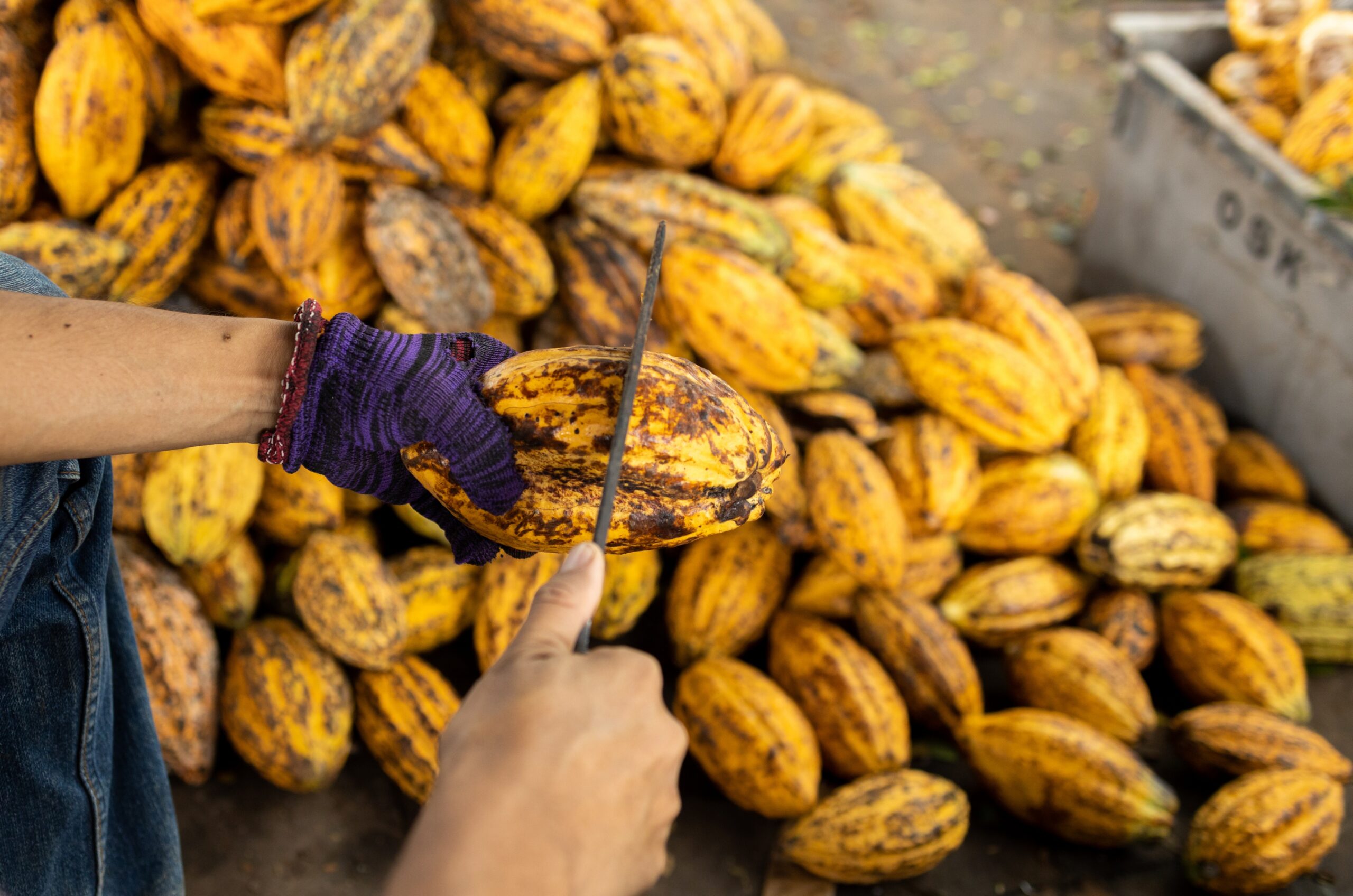
The process starts with high-quality cocoa beans, typically sourced from West Africa (Ghana, Côte d’Ivoire, Cameroon, Nigeria, Sierra Leone), South America (Ecuador, Peru), or Southeast Asia (Indonesia). Bean quality determines final cocoa mass quality. Premium cocoa mass uses fine-flavor beans; standard cocoa mass uses bulk Forastero beans.
Cleaning & Roasting
Beans are cleaned to remove debris, then roasted at 120-160°C for 20-40 minutes. Roasting develops chocolate flavor, reduces moisture, and makes the shells brittle for easier removal. Roast profiles vary: light roasts preserve fruity notes; dark roasts create deep, bold chocolate flavor.
Winnowing (Shell Removal)
Roasted beans are cracked and winnowed, a process that separates the outer shell from the inner nib using air flow and vibration. The shells are discarded or used for cocoa mulch/fertilizer. What remains are pure cocoa nibs — the edible part of the cocoa bean.
Grinding to Cocoa Mass
Cocoa nibs are ground in specialized mills (stone mills, disc mills, or ball mills) until they become a smooth, flowing liquid. The friction and heat from grinding (reaching 50-60°C) melts the natural cocoa butter within the nibs, transforming solid nibs into liquid cocoa mass. This is a purely mechanical process — no chemicals, no additives.
Refining (Optional)
Some manufacturers refine the cocoa mass further to achieve ultra-smooth particle size (typically 18-25 microns). This creates a silkier texture but is optional — many industrial applications use standard-grind cocoa mass.
Cooling & Solidification
The liquid cocoa mass is poured into molds or onto cooling belts where it solidifies as it cools below 30°C. Once solid, it’s broken into blocks or chips for packaging and distribution. At this point, it’s ready to be used as an ingredient or further processed into cocoa powder and cocoa butter.
🔍 Quality Factors in Cocoa Mass Production
- Bean origin: Single-origin vs blended beans affect flavor profile
- Roast level: Light, medium, or dark roasting creates different flavor notes
- Grinding fineness: Particle size affects texture (finer = smoother)
- Processing temperature: Lower temperatures preserve delicate flavors
- Contamination control: Premium facilities prevent cross-contamination
Cocoa Mass vs Cocoa Powder vs Cocoa Butter
Understanding the difference between these three cocoa products is essential for choosing the right ingredient for your application.
Cocoa Mass
100% whole cocoa containing both cocoa butter (53-58%) and cocoa solids (42-47%) in natural proportions. Liquid when heated, solid at room temperature.
Cocoa Powder
Cocoa solids only — cocoa mass with most of the cocoa butter removed (10-24% fat remaining). Always in powder form. Made by pressing cocoa mass.
Cocoa Butter
Pure cocoa fat extracted from cocoa mass by hydraulic pressing. Pale yellow, solid at room temperature, melts at 34-38°C. Used in chocolate and cosmetics.
Detailed Comparison Table
| Characteristic | Cocoa Mass | Cocoa Powder | Cocoa Butter |
|---|---|---|---|
| Composition | Cocoa butter + cocoa solids (natural ratio) | Mostly cocoa solids (10-24% fat) | 100% pure cocoa fat |
| Fat Content | 53-58% | 10-24% | 100% |
| Form | Solid blocks/chips (liquid when heated) | Fine powder | Solid blocks/wafers |
| Color | Dark brown | Light to dark brown (depends on alkalization) | Pale yellow to ivory |
| Flavor | Intense chocolate, bitter | Chocolate flavor, can be bitter or mild | Mild cocoa aroma, minimal flavor |
| Primary Use | Chocolate manufacturing | Baking, beverages, coatings | Chocolate making, cosmetics, pharmaceuticals |
| Melting Point | ~40°C (104°F) | N/A (doesn’t melt) | 34-38°C (93-100°F) |
| Production Method | Grinding roasted cocoa nibs | Pressing cocoa mass, removing fat | Pressing cocoa mass, extracting fat |
| Price Level | Medium | Lower (less fat content) | Higher (pure fat, multiple uses) |
💡 How They’re Related
Think of it this way:
- Cocoa mass is the starting point — 100% whole cocoa
- Cocoa powder is what’s left when you press out most of the cocoa butter from cocoa mass
- Cocoa butter is the fat that was pressed out of the cocoa mass
So: Cocoa Mass = Cocoa Powder + Cocoa Butter (in their natural proportions)
Source Premium African Cocoa Mass in Dubai
Radad International supplies high-quality natural cocoa mass sourced from premium West African cocoa beans. Available in bulk quantities for chocolate manufacturers, confectionery producers, and food industry professionals across the UAE and GCC.
Industrial Uses & Applications of Cocoa Mass
Cocoa mass is a fundamental ingredient in food manufacturing and confectionery production. Here’s where it’s used and why:
Chocolate Manufacturing
The primary use worldwide. Cocoa mass is the base ingredient for all chocolate types:
- Dark chocolate (cocoa mass + cocoa butter + sugar)
- Milk chocolate (cocoa mass + milk powder + sugar)
- Chocolate coatings and compounds
- Chocolate bars, blocks, and chips
Confectionery Production
Used to add deep chocolate flavor and color to confections:
- Chocolate fillings for candies and pralines
- Truffle ganache and fudge
- Chocolate-coated nuts and fruits
- Nougat and caramel centers
Industrial Baking
Provides intense chocolate flavor in large-scale baking:
- Brownie and cake mixes
- Cookie dough (especially double chocolate)
- Chocolate muffins and pastries
- Chocolate bread and buns
Ice Cream & Frozen Desserts
Creates rich chocolate flavor in frozen applications:
- Chocolate ice cream base
- Chocolate ripple and swirl
- Frozen chocolate desserts
- Gelato and sorbet
Beverage Industry
Adds chocolate richness to drinks:
- Hot chocolate powder bases
- Chocolate milk production
- Chocolate-flavored protein drinks
- Coffee drinks (mochas)
Bakery Fillings & Toppings
Professional bakery applications:
- Chocolate ganache for cakes
- Chocolate buttercream
- Pastry cream and custard
- Donut fillings and glazes
Why Industrial Users Choose Cocoa Mass
💰 Cost Efficiency
Using cocoa mass allows manufacturers to control cocoa butter and cocoa powder ratios themselves, often reducing costs compared to buying them separately.
🎨 Flavor Control
Cocoa mass provides the full spectrum of chocolate flavor — both the richness from cocoa butter and the intensity from cocoa solids.
🔧 Versatility
Can be used as-is in chocolate making or further processed into cocoa powder and cocoa butter in-house.
📦 Easy Storage
Solid at room temperature, cocoa mass is stable and easy to store without special refrigeration (unlike cocoa butter which requires temperature control).
🇦🇪 Top Natural Cocoa Mass Supplier in Dubai, UAE
Radad International is your trusted source for premium African cocoa mass in Dubai and across the United Arab Emirates. We serve chocolate manufacturers, confectionery producers, bakeries, and food industry professionals throughout the GCC region.
Local Dubai Stock
Inventory maintained in Dubai for immediate availability
Fast UAE Delivery
2-3 business days across UAE; 3-5 days GCC-wide
African Origin
Premium West African cocoa beans (Ghana, Côte d’Ivoire)
Full Documentation
CoA, certifications, import paperwork provided
Buying Guide: What to Look For
Whether you’re sourcing cocoa mass for a chocolate factory, bakery, or confectionery operation, here are the key quality factors and specifications to evaluate:
Key Quality Specifications
| Specification | Standard Range | What to Ask |
|---|---|---|
| Fat Content (Cocoa Butter) | 53-58% | Higher fat = richer, smoother chocolate; lower fat = more intense cocoa flavor |
| Moisture Content | ≤ 2% | Lower moisture = longer shelf life and better stability |
| Particle Size (Fineness) | 18-30 microns | Finer = smoother texture; coarser = more rustic mouthfeel |
| Shell Content | ≤ 1.75% | Lower shell content = higher purity and better flavor |
| pH Level | 5.2-6.0 (natural) 6.5-7.5 (alkalized) |
Natural = more acidic/fruity; alkalized = milder, darker |
| Origin | West Africa, South America, Asia | Origin affects flavor: African (earthy, bold), South American (fruity, complex) |
| Microbiological Safety | Low TPC, Salmonella negative | Always request Certificate of Analysis (CoA) |
Types of Cocoa Mass Available
🌱 Natural Cocoa Mass
Unalkalized, with natural acidity and fruity chocolate notes. pH 5.2-6.0. Best for premium dark chocolate and specialty applications where you want full cocoa flavor complexity.
🔬 Alkalized Cocoa Mass
Dutch-processed with reduced acidity, darker color, and milder flavor. pH 6.5-7.5. Ideal for milk chocolate, confectionery, and applications where smoother, less acidic chocolate is desired.
🌍 Single-Origin Cocoa Mass
Made from beans from a single country or region. Premium pricing but offers distinct terroir characteristics and traceability. Popular for craft chocolate and specialty products.
🌿 Organic Cocoa Mass
Certified organic by EU, USDA, or local standards. Higher price point but essential for organic chocolate products and health-conscious brands.
📋 Questions to Ask Your Supplier
- What is the exact fat content (cocoa butter percentage)?
- Can you provide a Certificate of Analysis (CoA) for the latest batch?
- What is the origin of the cocoa beans?
- Is the cocoa mass natural or alkalized?
- What is the particle size/fineness?
- What certifications do you have (Kosher, Halal, Organic, Fair Trade)?
- What are the minimum order quantities?
- What is the shelf life and recommended storage conditions?
- Can you provide samples for testing before bulk orders?
Frequently Asked Questions
Everything you need to know about cocoa mass — answered clearly and completely.
There is no difference; they are the exact same product. “Cocoa mass” is the preferred term in most of the world, while “cocoa liquor” is more common in American English. Both refer to 100% pure ground cocoa made by grinding roasted cocoa nibs into a smooth paste. The term “cocoa liquor” is confusing because it suggests alcohol, but there is no alcohol whatsoever in cocoa liquor. The word “liquor” simply means “liquid,” referring to the fact that cocoa mass becomes liquid when heated above 40°C.
Yes, you can eat cocoa mass, but it will be very bitter and intense since it contains no sugar. Cocoa mass is essentially unsweetened baking chocolate. Some people enjoy the intense, pure chocolate flavor and eat small amounts as a superfood or stimulant (it contains caffeine and theobromine). However, most people find it too bitter on its own and prefer to use it as an ingredient in chocolate making, baking, or confectionery where sugar and other ingredients balance the bitterness.
The key difference is fat content:
- Cocoa mass: Contains 53-58% cocoa butter (fat) + 42-47% cocoa solids. It’s the whole, natural product with all the fat intact.
- Cocoa powder: Made by pressing cocoa mass to remove most of the cocoa butter, leaving 10-24% fat. It’s in powder form and is what’s left after fat extraction.
Think of it this way: cocoa mass is the starting point. Press out the fat, and you get cocoa powder (plus cocoa butter as a separate product).
Cocoa mass is primarily used in:
- Chocolate manufacturing: The base ingredient for all chocolate types (dark, milk, white chocolate production)
- Confectionery: Chocolate fillings, truffles, ganache, fudge
- Industrial baking: Brownie mixes, chocolate cookies, cakes
- Ice cream production: Chocolate ice cream base and chocolate ripple
- Beverage production: Hot chocolate powder, chocolate milk
- Further processing: Can be pressed to create cocoa powder and cocoa butter
Not quite : cocoa mass is pure, unsweetened chocolate, while what most people call “chocolate” contains sugar and often milk. Here’s the breakdown:
- Cocoa mass: 100% pure ground cocoa (no sugar, no milk, no additives)
- Dark chocolate: Cocoa mass + cocoa butter + sugar (no milk)
- Milk chocolate: Cocoa mass + cocoa butter + sugar + milk powder
- White chocolate: Cocoa butter + sugar + milk (no cocoa solids/mass)
So cocoa mass is the cocoa component of chocolate, but chocolate is cocoa mass plus other ingredients.
Radad International supplies premium African cocoa mass to businesses across Dubai and the UAE. We serve:
- Chocolate manufacturers and chocolatiers
- Confectionery producers
- Commercial bakeries
- Ice cream manufacturers
- Food production facilities
We offer both bulk quantities for industrial use and smaller quantities for specialty producers. Contact us at +971 522 501 039 or info@radadinternational.com for pricing and availability.
When stored properly, cocoa mass has a shelf life of 12-24 months. Storage requirements:
- Temperature: Cool environment, 15-20°C (59-68°F) ideal
- Humidity: Low humidity, below 60% relative humidity
- Light: Store in a dark place away from direct sunlight
- Packaging: Keep sealed in original packaging or airtight containers
- Odors: Store away from strong-smelling products (cocoa mass absorbs odors easily)
Properly stored cocoa mass can develop “bloom” (a white, chalky appearance) over time, which is harmless, it’s just cocoa butter rising to the surface. The product is still safe to use and will melt normally when heated.
Yes, in moderation. Cocoa mass contains beneficial compounds found in dark chocolate:
- Antioxidants: High in flavonoids, particularly epicatechin
- Minerals: Good source of magnesium, iron, zinc, and copper
- Fiber: Contains dietary fiber from cocoa solids
- Stimulants: Contains caffeine and theobromine (mild stimulants)
However, cocoa mass is also high in fat (53-58% cocoa butter) and calories, so it should be consumed in small amounts. It’s not sweetened, so it won’t spike blood sugar like regular chocolate. Many health-conscious consumers use small amounts in smoothies, coffee, or as a superfood supplement.
The difference is in processing:
- Natural cocoa mass: Unprocessed, with natural acidity (pH 5.2-6.0). Has bright, fruity, complex chocolate flavors and lighter brown color. This is the default/standard type.
- Alkalized cocoa mass (Dutch-processed): Treated with alkalizing agents to neutralize acidity (pH 6.5-7.5). Results in darker color, milder flavor, and reduced bitterness. Popular for milk chocolate and confectionery.
Most commercial cocoa mass sold is natural (unalkalized). Alkalized cocoa mass is a specialty product usually custom-ordered for specific applications.
Not practically. Making cocoa powder from cocoa mass requires industrial hydraulic presses that apply several tons of pressure to squeeze out the cocoa butter. This equipment is expensive and specialized — far beyond what’s feasible for home use. Home chocolate makers can use cocoa mass directly in chocolate making, but if you need cocoa powder, it’s much more practical to simply buy cocoa powder rather than trying to extract it from cocoa mass yourself.
Cocoa mass pricing varies based on origin, quality, certifications, and order quantity. Factors affecting price:
- Origin: West African cocoa mass is typically less expensive than South American single-origin
- Certifications: Organic, Fair Trade, or specialty certifications increase cost
- Quality: Fine-flavor cocoa mass costs more than bulk/commodity grades
- Volume: Bulk orders (metric ton quantities) get better pricing than small orders
For current pricing on premium African cocoa mass in Dubai/UAE, contact Radad International at info@radadinternational.com or call +971 522501039. We provide transparent pricing based on your specific needs and order volumes.
Cocoa mass melts easily using gentle heat:
- Melting point: Around 40°C (104°F)
- Double boiler method: Chop cocoa mass into small pieces, place in a heatproof bowl over simmering water (not touching water), stir until fully melted
- Microwave method: Chop into small pieces, microwave in 20-30 second intervals, stirring between each interval
- Direct heat (industrial): Large quantities can be melted in jacketed kettles or melters at controlled temperatures
Important: Avoid overheating (don’t exceed 50°C / 122°F) and prevent water contact, as cocoa mass will seize (become thick and grainy) if water droplets get in.
Minimum order quantities vary by supplier and application:
- Industrial/bulk buyers: Typically minimum 500 kg to 1 metric ton
- Small businesses: Some suppliers offer 25 kg bags as minimum
- Retail/craft chocolatiers: May be able to purchase 5-10 kg quantities
Radad International offers flexible ordering to accommodate different business sizes. Contact us to discuss your specific volume needs and we’ll provide options that work for your operation.
Yes. While our primary market is the UAE and GCC region (where we offer fastest delivery), Radad International can arrange international shipping for cocoa mass orders. Delivery times and costs vary by destination. We handle all export documentation and can arrange shipping to most countries worldwide. Contact our export team for international shipping quotes and lead times.
Source Premium African Cocoa Mass
from Radad International
Whether you’re manufacturing chocolate, producing confectionery, or need cocoa mass for industrial food production — Radad International supplies consistent, high-quality natural cocoa mass sourced from premium West African cocoa beans. Available for delivery across Dubai, UAE, and the GCC region.
Email: sales@radadinternational.com | Samples available upon request for qualified buyers
Your trusted partner in premium cocoa products — serving chocolate manufacturers, confectionery producers, and food industry professionals across the UAE and GCC.
Cocoa Mass · Cocoa Powder · Cocoa Butter · Cocoa Products
© 2026 Radad International · Dubai, United Arab Emirates · All rights reserved | FUNUI DONARD