Complete Guide · Radad International | Funui Donard

Cocoa Pods:
Where Every Chocolate Story Begins

🌱 Growing & Planting 🍫 Pod-to-Bar Chocolate 🌍 Origins & Varieties 🔬 Nutritional Value 🛒 Where to Buy

🌿 Cocoa Pods at a Glance

📏
15–30 cm
Average Pod Length
⚖️
300–700 g
Pod Weight Range
🫘
30–50
Beans per Pod
5–7 Months
Pod Ripening Time
📅
2× Per Year
Harvest Cycles
🍫
400 Beans
To Make 1 lb Chocolate

What Are Cocoa Pods?


If you’ve ever eaten a piece of chocolate, you’ve already had a relationship with a cocoa pod, you just didn’t know it. A cocoa pod is the fruit of the cacao tree (Theobroma cacao), and it is the very starting point of chocolate as we know it. Without the pod, there are no beans. Without the beans, there’s no cocoa. Without cocoa, chocolate simply doesn’t exist.

The name Theobroma literally means “food of the gods” in Greek — and when you see a ripe cocoa pod hanging from a tree trunk, vibrant in colour and heavy with beans, that name starts to feel perfectly right.

What makes cocoa pods unusual in the plant world is where they grow. Unlike most fruit trees, where fruit hangs from outer branches, cocoa pods grow directly from the trunk and major branches of the tree — a botanical trait called cauliflory. It looks almost otherworldly. One moment you’re looking at a thick, rough tree trunk; the next, dozens of colourful pods in yellow, red, orange, green, and purple are jutting out like nature’s own ornaments.

Each pod contains 30 to 50 beans, each bean nestled in a sweet, white pulp called mucilage. It takes around 400 dried cocoa beans to produce just one pound (450 grams) of finished chocolate. So every single pod matters. Every harvest counts. And the entire global chocolate industry — worth over $130 billion — rests on the shoulders of this one humble, beautiful fruit.

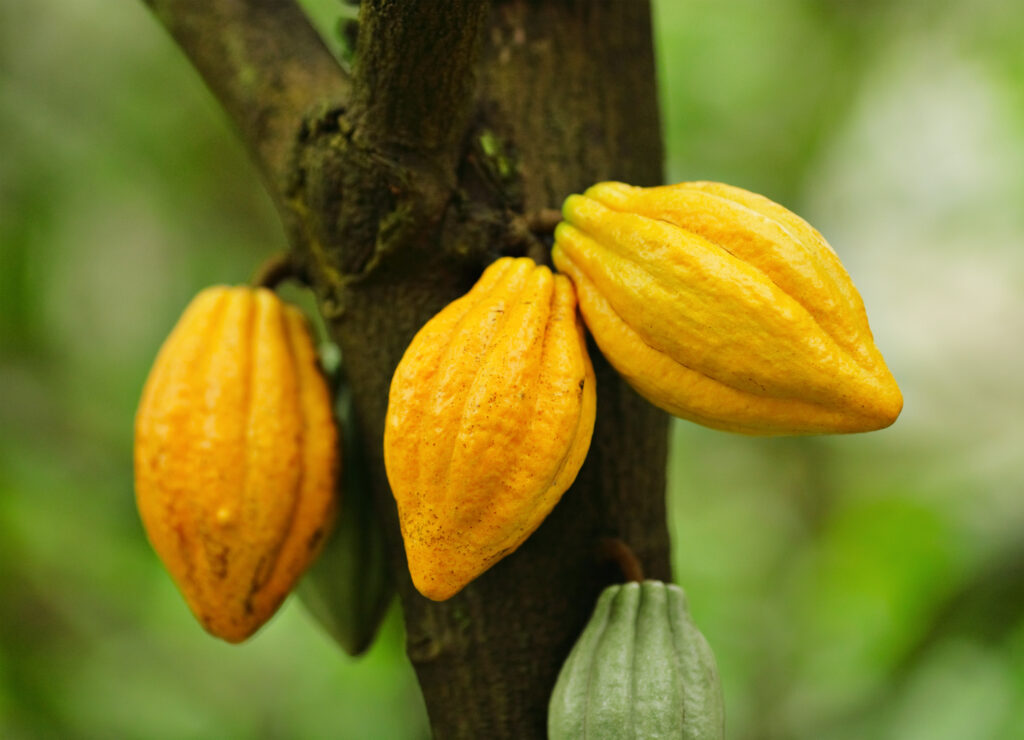
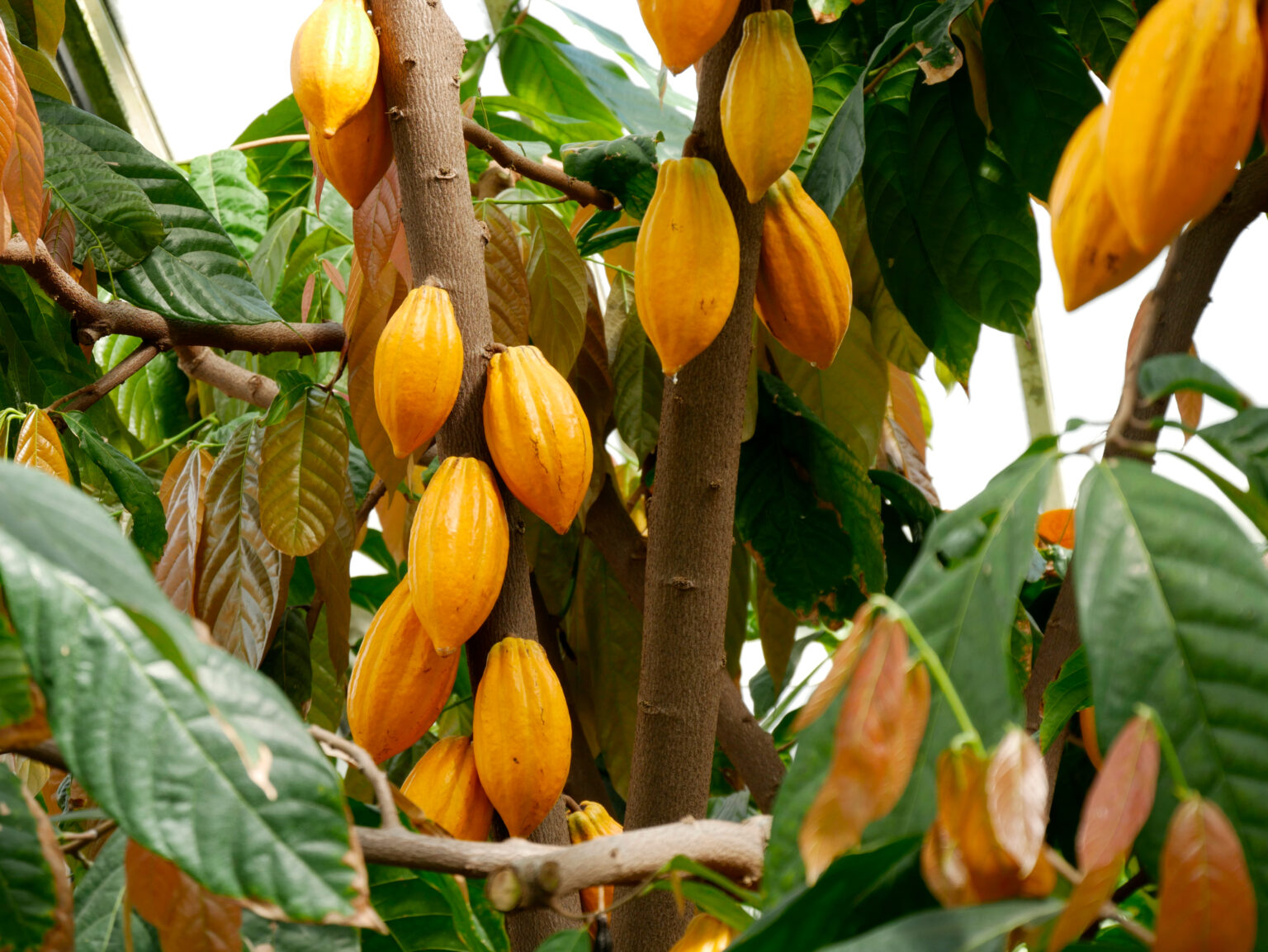
Forastero Cocoa pods on a tree | Radad International

🌿 Did You Know?

A single cacao tree can produce up to 2,500 flowers per year, yet only about 1 in every 500 flowers will successfully develop into a pod. That means every cocoa pod you hold is a small miracle of nature — the result of precise pollination, the right climate, and months of careful growth.

Anatomy of a Cocoa Pod


A cocoa pod is not just a wrapper for the beans. Every part of it has a role — and increasingly, every part is being put to use. Here’s what you’ll find when you study one carefully:

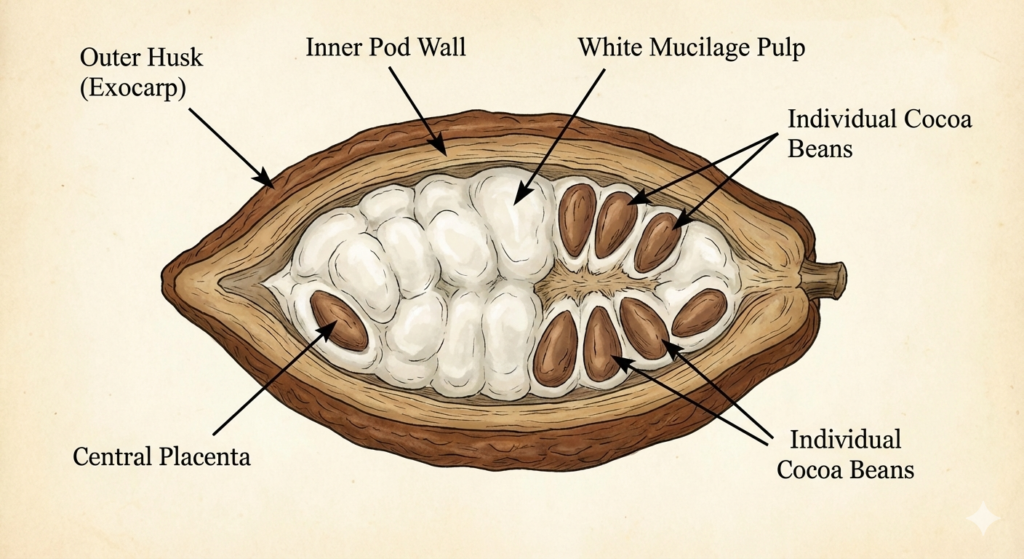
Detailed cross-section diagram of a cocoa pod showing: outer husk/exocarp, inner pod wall, white mucilage pulp, individual cocoa beans arranged in rows, and the central placenta | Radad International

Part of Pod Description Composition Primary Use
Outer Husk (Exocarp) Thick, leathery outer shell; 2–3 cm thick; ridged or smooth depending on variety Cellulose, pectin, lignin, mineral-rich fibre Compost, animal feed, biochar, potash fertilizer
Pod Wall (Mesocarp) Fibrous inner wall connecting husk to beans Fibre, water, trace minerals Composting, biofuel research
White Pulp (Mucilage) Sweet, sticky, gel-like coating surrounding each bean; tropical fruit flavour Water (80–90%), sugars (glucose, fructose, sucrose), citric acid, pectin Cocoa juice, wine, vinegar, syrup; critical for fermentation
Cocoa Beans (Seeds) 30–50 seeds per pod; purple when fresh, turn brown after fermentation Cocoa butter (50–55%), cocoa solids, theobromine, protein, flavonoids Chocolate production, cocoa butter, cocoa powder, cosmetics
Placenta (Core) Central column to which beans are attached in 5 rows Fibrous plant material Composted back into the farm

Source: World Cocoa Foundation; ICCO; hotel Chocolat research

🔁 Nothing Goes to Waste

Modern cocoa farming increasingly embraces a zero-waste approach to the pod. Husks are composted as natural fertilizer, pulp is fermented into cocoa juice or wine, and bean shells after processing become garden mulch or animal feed. What once looked like “leftovers” is now a valuable additional income stream for cocoa farmers.

The Three Main Varieties of Cocoa Pods


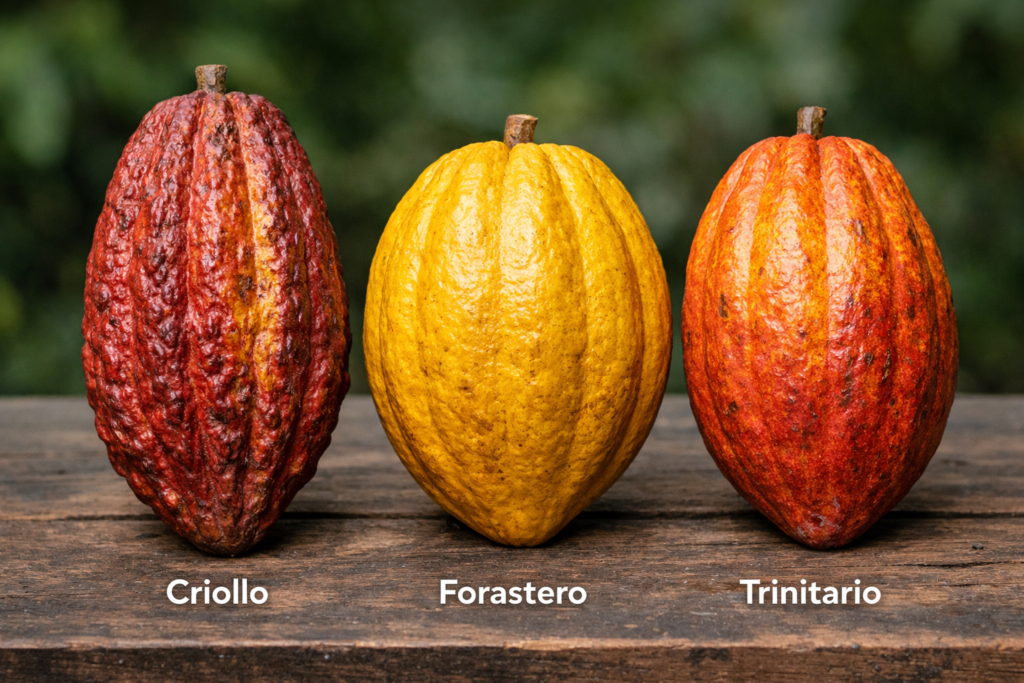
Not all cocoa pods are created equal. There are three primary botanical varieties of Theobroma cacao, each producing pods with distinct shapes, colours, flavour profiles, and commercial qualities. Knowing the difference matters enormously — both for farmers choosing what to plant and for chocolate makers choosing what to source.

🟡 Criollo

The King of Cocoa · Fine Flavour

The original cacao of the ancient Mayans and Aztecs, Criollo is the rarest and most prized variety in the world. Its pods are elongated, pointed, and typically turn red or yellow when ripe. The beans inside are pale or white rather than purple, and the chocolate they produce is extraordinary — complex, mild, with notes of red fruit, nuts, and spice.

  • Represents only 1–5% of global cocoa production
  • Commands the highest market premiums
  • Highly susceptible to disease and climate stress
  • Grown mainly in Venezuela, Peru, Sri Lanka, and Java
  • Favoured by luxury chocolate makers worldwide

🟢 Forastero

The Workhouse · Bulk Production

Forastero is the backbone of global chocolate production, accounting for over 80–90% of the world’s cocoa. Its pods are round, smooth, and turn yellow when ripe. The beans are deep purple, producing a robust, strong chocolate flavour with some bitterness. It is hearty, disease-resistant, and productive — the practical choice for large-scale farming.

  • Dominant in West Africa (Ghana, Côte d’Ivoire)
  • High-yielding and more resistant to disease
  • The basis of most commercial chocolates
  • The Arriba/Nacional variety of Ecuador is a prized Forastero sub-type
  • Shorter fermentation period than Criollo

🔵 Trinitario

The Hybrid · Best of Both Worlds

Born on the island of Trinidad, Trinitario is a natural cross between Criollo and Forastero. It inherits the fine, complex flavours of Criollo with the hardiness and productivity of Forastero. Pods vary widely in shape and colour, depending on which parent traits dominate. The chocolate produced ranges from good quality to exceptional.

  • Accounts for 10–15% of global production
  • Grown in the Caribbean, Indonesia, Papua New Guinea, Sri Lanka, Cameroon
  • More disease-resistant than Criollo
  • Better flavour potential than standard Forastero
  • The preferred variety for “premium bulk” chocolate
Characteristic Criollo Forastero Trinitario
Global Share 1–5% 80–90% 10–15%
Pod Colour (Ripe) Red / Yellow Yellow / Green Variable
Bean Colour (Fresh) White / Pale Purple Deep Purple Mixed
Flavour Profile Complex, mild, fruity, nutty Bold, strong, classic chocolate Rich, balanced, nuanced
Fermentation Shorter (2–4 days) Standard (5–7 days) Medium (4–6 days)
Disease Resistance Low (fragile) High Medium–High
Yield Lower Higher Medium
Market Value Premium (highest) Commodity pricing Premium–Medium

How Cocoa Pods Grow: From Tiny Flower to Ripe Fruit


Understanding how cocoa pods grow gives you a deep appreciation for why they’re so precious — and so expensive. It is a slow, patient, labour-intensive journey from flower to chocolate.

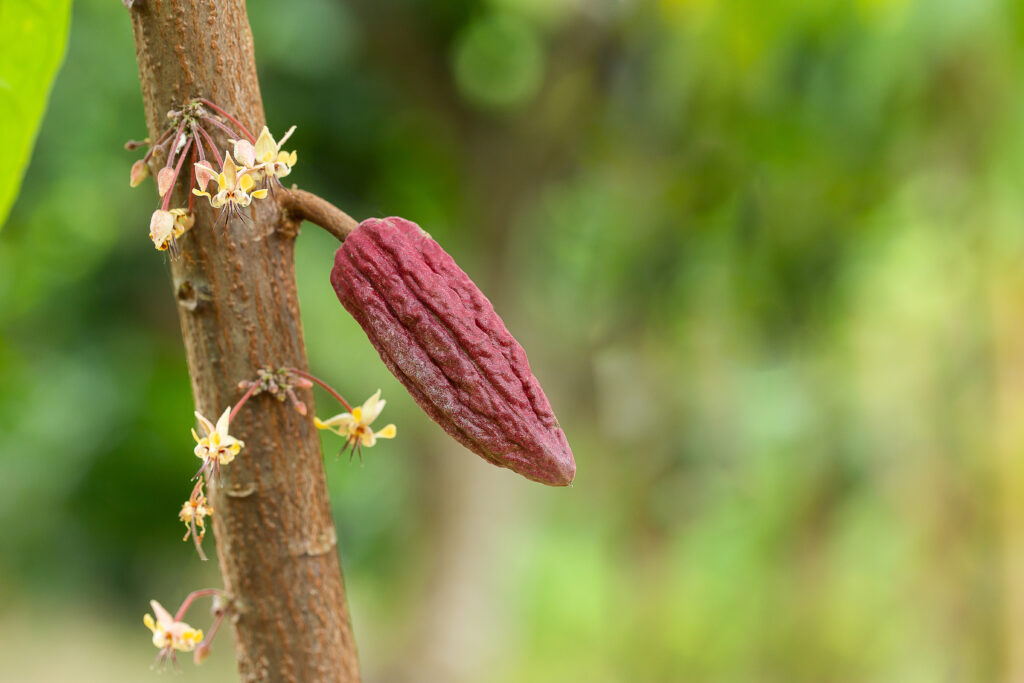
The cacao tree begins flowering around its third to fifth year of life. Thousands of tiny white or pink blossoms emerge directly from the trunk and older branches — not from the leafy canopy like most fruit trees. These flowers are extremely small, barely 1 cm across, and they only remain receptive to pollination for a single day.

Pollination happens primarily through tiny midges (small flies of the genus Forcipomyia), not bees. This means the cocoa tree is dependent on a very specific ecosystem — shade trees, leaf litter, and humid microhabitats — where these midges thrive. Deforestation and monoculture farming without shade trees disrupt this delicate balance, reducing pollination rates significantly.

Of the thousands of flowers a tree produces, only 1 in 500 will successfully develop into a pod. Once pollinated, a pod takes 5 to 7 months to reach full maturity. During this time, it changes colour as it ripens — moving from green, red, or purple through to yellow, orange, or gold. Pods on the same tree do not ripen simultaneously, which is why harvesting must happen continuously and carefully throughout the season.

Photo of cacao tree trunk showing tiny cacao flowers blooming alongside young green pods in early development stages Radad International

What a Cocoa Tree Needs to Produce Pods

Requirement Ideal Condition Why It Matters
Climate Tropical; within 20° of the equator Constant warmth and humidity are non-negotiable for flowering and pod development
Temperature 21°C – 32°C (70°F – 90°F) year-round Temperature extremes cause flower drop and pod abortion
Rainfall 1,500 – 2,000 mm per year; well-distributed Insufficient water is the single biggest cause of yield loss
Dry Season No more than 3 consecutive months below 100 mm Brief dry periods help trigger flowering cycles
Shade Partial shade, especially when young Protects from scorching sun; supports the humid microhabitat midges need for pollination
Soil Deep, well-drained, rich in organic matter; pH 6.0–7.5 Poor drainage causes root rot; nutrient-poor soils reduce yield and bean quality
Altitude Up to 600 metres above sea level Higher altitudes can produce fine-flavour cocoa but slow growth
Wind Protected from strong winds Wind damages flowers and young pods; disrupts pollinators

🌳 Agroforestry: The Smart Way to Grow Cocoa

The most productive and sustainable cocoa farms today practice agroforestry — growing cocoa under a canopy of taller shade trees alongside crops like banana, citrus, and timber. This approach:

  • Keeps soil moist and cool, reducing drought stress on cocoa trees
  • Maintains the humid microhabitat that cocoa-pollinating midges need
  • Adds organic matter to the soil as leaves fall
  • Provides farmers with additional income from shade crops
  • Helps sequester carbon, making cocoa farming part of the climate solution
  • Produces cocoa with more complex, nuanced flavours prized by craft chocolate makers

Harvesting Cocoa Pods: A Craft That Cannot Be Rushed


One of the things that makes cocoa farming genuinely remarkable is that it is still entirely done by hand. No machine has successfully replaced the farmer’s eye, the farmer’s knife, and the farmer’s careful judgement when it comes to knowing which pod is ready and which should be left a little longer. This handcrafted harvest is one of the reasons good chocolate is never cheap — and should never be taken for granted.

How Do Farmers Know a Pod Is Ripe?

👁️ Colour Check

A pod that started green usually turns yellow or orange when ripe. Red pods often turn bright orange. However, colour alone is not always reliable — especially in hotter climates where pods can ripen faster and colour change is subtle. Experienced farmers combine colour with other signals.

👂 The Hollow Knock

Perhaps the most traditional ripeness test: a farmer taps the pod gently with a knuckle. A ripe pod produces a hollow, resonant sound — indicating that the beans have separated from the pod walls and are moving freely inside. An unripe pod sounds dense and dull.

🔍 Shell Scrape

Farmers sometimes scrape a small area of the outer husk with a fingernail or knife blade. If the flesh beneath is still green, the pod needs more time. If it has turned white or yellow, it is ready for harvest.

⚠️ Timing Is Everything

An unripe pod contains insufficient sugar in the pulp for proper fermentation — resulting in flat-tasting beans. An overripe pod may begin germinating or fermenting on the tree, destroying the beans. The window for perfect harvest is narrow and requires daily attention.

The Step-by-Step Harvesting Process

1

Identify & Select

Farmers walk the plantation, checking each pod individually using colour, sound, and touch. Only ripe or near-ripe pods are selected. Harvesting happens 3–4 times per week during peak season.

2

Cut Carefully

A sharp machete or curved knife is used to cut the pod stem cleanly. Critical: The “cushion” at the base — the flower pad — must not be damaged, as it is where all future pods and flowers will emerge from the same spot.

3

Collect & Pile

Harvested pods are placed into baskets or bags and carried to a central point in the plantation. Pods must be cracked open within a week to ten days of harvesting before the beans begin to deteriorate.

4

Crack Open the Pod

A wooden club or the blunt side of a machete is used to crack each pod open with a single, clean hit to the centre. This splits the pod into two halves without damaging the beans. The best tool is a wooden club — not a blade — to prevent cutting beans.

5

Remove Beans & Pulp

Farmers scoop out the beans together with the white mucilage pulp using their hands. The shell/husk is discarded — ideally spread across the farm to decompose and return nutrients to the soil.

6

Ferment

Beans and pulp are piled in wooden boxes, heaps, or baskets and covered with banana leaves for 5–8 days. The natural sugars in the pulp ferment, generating heat (up to 50°C) that kills the bean’s germ and triggers the development of chocolate flavour precursors.

📅 Harvest Seasons Around the World

Unlike most crops, cocoa pods ripen year-round in climates close to the equator. However, most producing countries have two defined peak periods:

  • Main Harvest (October – March): The largest crop; highest yields; best quality in most regions
  • Secondary Harvest (May – August): Smaller yields, lighter quality — sometimes called the “mid-crop”
  • West Africa: Most farmers harvest every 3–4 weeks during peak season
  • Latin America: More continuous harvest, especially near the equator in Ecuador and Peru
  • Southeast Asia: Two defined seasons with a pronounced off-season period

Pod to Bar: Making Chocolate From a Cocoa Pod


The “pod to bar” concept is the most complete and transparent form of chocolate making. Instead of buying processed cocoa beans or semi-finished products, the maker starts from the actual cocoa pod — growing, harvesting, fermenting, drying, roasting, and refining everything themselves. It gives complete control over flavour, quality, and ethics at every stage.

Whether you’re a craft chocolate enthusiast, a small-batch producer, or a farm that wants to capture more value from its harvest, the pod-to-bar journey is deeply rewarding. Here’s exactly how it works:

1
 

Start With a Fresh, Ripe Pod

Select a fully ripe pod from the cacao tree using the colour, sound, and scrape method. The freshness of the pod directly affects fermentation quality and final chocolate flavour. Never use an overripe or diseased pod.

2
 

Crack & Extract the Beans

Strike the pod at its centre with a wooden club or the blunt spine of a machete — it splits cleanly without cutting beans. Remove the beans and their white pulp by hand, gently, as damaged beans affect fermentation.

3
 

Fermentation (5–8 Days)

Heap the pulp-covered beans in wooden boxes or covered piles under banana leaves. Natural sugars ferment, heat builds to 50°C, and the chemical reactions that create chocolate’s characteristic flavour compounds begin. This step is irreversible — poor fermentation cannot be fixed later.

4
 

Sun Drying (7–14 Days)

Spread fermented beans on raised drying beds or bamboo mats in full sunlight. Reduce moisture from ~60% down to 6–7%. Turn the beans regularly for even drying. Under-drying invites mould; over-drying makes beans brittle and fragile.

5
 

Sorting & Grading

Inspect every bean by hand. Remove flat, mouldy, broken, germinated, or insect-damaged beans. Consistent, well-graded beans are the foundation of consistent, high-quality chocolate.

6
 

Roasting (110°C – 140°C)

Roasting drives the Maillard reaction — the same process that browns bread and deepens coffee — unlocking chocolate’s complex flavour. A lighter roast preserves fruity, floral notes; a darker roast builds bold, classic chocolate. Roast profile is one of the most critical craft decisions a maker makes.

7
 

Cracking & Winnowing

Crack the roasted beans and use a fan or natural air current to blow away the thin outer shells (husks). What remains are pure cocoa nibs — the heart of the bean and the core of all chocolate.

8
 

Grinding to Cocoa Liquor

Grind the nibs in a stone melanger or ball mill. Friction generates heat, melting the cocoa butter within the nibs and producing a smooth, fluid paste — cocoa mass or cocoa liquor. This is 100% pure chocolate, nothing added.

9
 

Refining & Conching (24–72 Hours)

Continue grinding while adding sugar, and any other chosen ingredients. Extended refining (conching) reduces particle size below 20 microns, develops flavour, drives off acidic volatile compounds, and creates the silky texture that defines fine chocolate.

10

Tempering, Moulding & Your Chocolate Bar 🍫

Carefully heat and cool the chocolate through a specific temperature curve to stabilise the cocoa butter crystals. Pour into moulds, let set, then unmould. What you now hold started life as a cocoa pod hanging on a tree — and you controlled every decision along the way.

🎯 Why Pod-to-Bar Is the Purest Form of Chocolate Making

Pod-to-bar chocolate makers have control that industrial chocolate producers simply don’t. They know which farm the pods came from, which variety of tree, how it was fermented, how long it was dried, and at what temperature it was roasted. This traceability produces the most authentic, flavourful, and ethically transparent chocolate in the world. It is also the concept that connects farmers directly to makers, ensuring that more of the value stays in producing communities.

All the Ways Cocoa Pods Are Used


While the beans get all the glory, a whole cocoa pod offers more uses than most people realise. Today, forward-thinking farmers and producers are finding value in every part:

🍫
Chocolate Production

The beans are the primary source of all chocolate and cocoa products globally

🧴
Cosmetics & Skincare

Cocoa butter from the beans is prized in moisturisers, lip balms, and anti-ageing creams

🥤
Cocoa Pulp Juice

The sweet white pulp can be juiced into a tropical drink — mild, citrusy, and refreshing

🍷
Cocoa Wine & Spirits

Several countries ferment and distil the pulp into cocoa wine, brandy, and craft spirits

🌱
Organic Fertilizer

Pod husks composted and returned to the farm replace expensive chemical fertilizers naturally

🐄
Animal Feed

Dried and processed husks provide supplemental feed for cattle, goats, and poultry

💊
Pharmaceuticals

Cocoa butter and theobromine have applications in medicine; cocoa flavonoids are studied for cardiovascular health

🔥
Biochar & Fuel

Pod shells can be converted to biochar — a natural soil amendment — or used as biomass fuel

💡 The Cocoa Pulp Opportunity

One of the most exciting under-utilised parts of the cocoa pod is its white mucilage pulp. The pulp surrounding the beans is sweet, fruity, and delicious — yet for decades it was simply washed away during processing. Today, innovative producers in Brazil, Ecuador, and Ghana are collecting cocoa pulp and selling it as juice, smoothie ingredient, or processing it into syrup, jam, and even vinegar. It adds a significant new revenue stream to cocoa farming, and gives consumers a new taste of chocolate’s tropical fruit origins.

Nutritional Value of Cocoa Pod Components


The cocoa pod contains several distinct components, each with its own nutritional profile. Here’s a breakdown of what you’re working with nutritionally — from the bean to the pulp to the husk:

Nutrient Cocoa Beans (per 28g/1 oz) % Daily Value Health Benefit
Calories 175 kcal 9% Energy-dense without empty calories
Total Fat 15g 19% Mostly heart-healthy stearic and oleic acids
Protein 4.2g 8% Muscle maintenance; essential amino acids
Dietary Fibre 9g 32% Digestive health; promotes satiety
Magnesium 64mg 15% Muscle & nerve function; reduces fatigue
Iron 6.3mg 35% Oxygen transport; prevents anaemia
Copper 2.3mg 230% Collagen formation; brain function
Manganese 1.9mg 95% Bone health; antioxidant enzyme production
Zinc 2.1mg 19% Immune function; wound healing
Theobromine ~230mg Mild stimulant; mood lift; cardiovascular support
Flavonoids (Polyphenols) Highest of any food Potent antioxidants; anti-inflammatory; heart health

Sources: USDA Nutrition Database; Nutrition Advance; Healthline

Cocoa Pod Pulp: The Forgotten Superfood

Most people don’t know that the white pulp inside a cocoa pod is absolutely delicious. It tastes like a cross between lychee, mango, and citrus — sweet, tangy, and tropical. And nutritionally, it’s a hidden gem:

  • Rich in natural sugars (glucose, fructose, sucrose) for quick energy
  • Contains citric acid — a natural antimicrobial and antioxidant
  • High in pectin (soluble fibre) that supports gut health
  • Source of Vitamin C in meaningful amounts
  • Contains small amounts of B-vitamins
  • Naturally hydrating — pulp is 80–90% water

🌿 Pod Husk: Surprisingly Nutritious

Even the outer shell of the cocoa pod has nutritional value — particularly for animals and soil:

  • Potassium content makes husks excellent as natural fertilizer
  • Pectin extracted from husks is used in food processing
  • Theobromine extracted from husks has medical applications
  • High-fibre content makes processed husks a viable animal feed supplement

Buying Cocoa Pods for Planting: A Farmer’s Guide


If you’re a farmer thinking about starting or expanding a cocoa plantation, the very first decision you’ll make is whether to grow from cocoa pod seeds (direct seeding) or purchase grafted seedlings. Both approaches have merits, and understanding them helps you make the right choice for your land and goals.

🌱 Growing from Cocoa Pod Seeds

Fresh seeds from ripe cocoa pods can be planted directly. The key details:

  • Seeds must be planted within 15 days of removal from the pod — they lose viability quickly
  • Plant in a shaded nursery bed at 2–3 cm depth
  • Germination takes 7–14 days
  • Seedlings are ready to transplant after 3–6 months
  • Trees take 3–5 years to first produce pods
  • Seeds grow true to variety if from a known parent tree
  • Advantage: Lower cost; large-scale planting possible
  • Disadvantage: Longer wait; slight genetic variability between plants

✂️ Grafted Seedlings / Budwood

Grafting takes a cutting (budwood) from a high-performing tree and fuses it to a rootstock:

  • Produces trees genetically identical to the parent
  • Can come into production 1–2 years earlier than seed-grown trees
  • More expensive than seed propagation
  • Allows selection of disease-resistant, high-yield, or fine-flavour varieties
  • Best for: Farmers who want a specific variety outcome
  • Best for: Replanting aged or diseased trees quickly

What to Look for When Buying Cocoa Pods for Planting

✅ Buyer’s Checklist

  • Known Variety: Know whether you’re buying Criollo, Forastero, or Trinitario — each has different implications for yield, disease resistance, and market value
  • Freshness: Pods for seed propagation must be fresh. Seeds deteriorate within days of pod opening. Ask about harvest date.
  • Disease-Free Origin: Pods should come from healthy, certified disease-free trees. CSSV and Black Pod Disease can be transmitted through material
  • Reliable Supplier: Source from established, reputable suppliers like Radad International who can provide documentation and origin traceability
  • Seed Selection: For best results, select the largest, fully developed beans from the pod’s equatorial middle — they tend to produce the strongest seedlings
  • Quantity Planning: Plan for nursery losses of 15–25%; buy more pods than you think you need
  • Climate Match: Ensure the variety you’re purchasing performs well in your specific climate and altitude

Challenges Cocoa Pod Farmers Face


Cocoa farming is beautiful, important work — but it isn’t easy. The farmers who grow cocoa pods face a range of challenges that the average chocolate consumer rarely thinks about when unwrapping a bar. Understanding these challenges helps build appreciation for what goes into every pod — and every piece of chocolate.

🌡️ Climate Change

Shifting rainfall patterns, prolonged droughts, and temperature extremes are making traditional harvest cycles unpredictable. In some regions, pods that once reliably turned colour to signal ripeness no longer follow that pattern. Farmers are adapting with agroforestry, drought-resistant varieties, and careful irrigation — but the challenge is real and growing.

🦠 Crop Diseases

  • Cocoa Swollen Shoot Virus (CSSV): Devastating in Ghana; infected trees must be destroyed
  • Black Pod Disease: Fungal disease that can destroy 30–40% of a season’s pods if untreated
  • Witches’ Broom: Fungal disease widespread in South America
  • Mirids (capsid bugs): Insects that bore into pods and destroy beans

🌳 Ageing Trees

Many cocoa trees in West Africa are 30–40+ years old — well past their most productive years. Replanting takes time and money, and farmers must forgo income for several years while new trees mature. Without replanting programs or financial support, yield decline becomes inevitable.

💰 Price Volatility

Global cocoa prices fluctuate wildly — sometimes doubling or halving within a single season, as we saw in 2024-2025. Smallholder farmers, who form the backbone of cocoa production worldwide, often lack the financial cushion to survive price crashes or the bargaining power to benefit fully from price spikes.

🌍 Buy Premium Cocoa Pods from Radad International

Whether you’re a farmer ready to plant your first cocoa trees, a chocolate maker pursuing the pure pod-to-bar experience, or a business that needs a reliable cocoa pod supply — Radad International is here with quality you can trust and service that never lets you down.

🌱 Pods for Planting & Propagation 🍫 Pod-to-Bar Chocolate Makers 🌍 UAE, GCC & Global Delivery ✅ Quality Verified & Traceable 📦 Flexible Quantities 🤝 Expert Sourcing Guidance
Get in Touch with Radad International

Frequently Asked Questions About Cocoa Pods

What exactly is a cocoa pod?
A cocoa pod is the fruit of the cacao tree (Theobroma cacao). It grows directly from the trunk and large branches of the tree and contains 30–50 cocoa beans surrounded by a sweet white pulp called mucilage. The pod itself is thick-shelled, football-shaped, and changes colour as it ripens — from green, red, or purple to yellow, orange, or gold. It is the very beginning of every chocolate product in the world.
How long does it take for a cocoa pod to grow?
Once a cacao flower is pollinated, it takes 5 to 7 months for the pod to fully ripen and be ready for harvest. The exact timing depends on the variety of cocoa tree, the altitude, the climate, and local seasonal conditions. Once mature, pods don’t all ripen at the same time — even on the same tree — so harvesting must happen continuously, typically every 3–4 weeks during the growing season.
How many beans does a cocoa pod contain?
A typical cocoa pod contains between 30 and 50 beans, nestled in five rows around a central core and coated in sweet white pulp. The exact number varies by variety and how well-pollinated the flower was. For context: it takes around 400 dried cocoa beans to produce just one pound (450 grams) of chocolate — so about 10 to 13 pods per pound of chocolate.
Can you eat a cocoa pod raw?
Yes — partially. The white mucilage pulp surrounding the beans is completely edible raw and is actually delicious: sweet, tangy, and fruity, with flavours reminiscent of lychee or passion fruit. The raw beans inside can technically be eaten, but they are very bitter and astringent due to high tannin content. The shell/husk of the pod is not eaten. Most people experience cocoa beans after fermentation, roasting, and processing — stages that transform raw bitterness into chocolate flavour.
What do ripe cocoa pods look like?
Ripe cocoa pods typically turn from their immature colour (green, purple, or red) to a yellow, orange, or bright red tone, depending on the variety. The creases and ridges of the pod are often the first areas to show colour change. However, experienced farmers don’t rely on colour alone — they also knock the pod and listen for a hollow sound (indicating the beans have separated from the walls inside) or scrape the surface to see if the inner flesh has turned from green to white or yellow.
How many cocoa pods does one tree produce per year?
A mature, healthy cacao tree typically produces 20 to 50 pods per year, though exceptional trees in ideal conditions can produce more. Each year, that same tree may generate up to 2,500 flowers, but only around 1 in 500 flowers will successfully develop into a pod. This low conversion rate — from thousands of flowers to a handful of pods — is one of the reasons cocoa is a labour-intensive, precious crop.
What’s the difference between a cocoa pod, cacao pod, and cocoa bean?
These terms are closely related but refer to different things: “Cacao pod” and “cocoa pod” refer to the same fruit — the whole outer shell that grows on the tree. “Cacao” tends to be used for unprocessed or minimally processed forms, while “cocoa” is used more broadly including processed products. The “cocoa bean” or “cacao bean” is specifically the seed inside the pod — the small, oval-shaped seed that, after fermentation, drying, and roasting, becomes the source of all chocolate and cocoa products.
Can I grow a cocoa tree from a cocoa pod?
Yes! Cocoa trees are commonly grown from the seeds (beans) extracted from fresh pods. The critical rule is speed: seeds must be planted within 15 days of being removed from the pod, as they lose viability very quickly once separated from the pulp and exposed to air. Plant in shaded nursery conditions at about 2–3 cm depth; germination takes 7–14 days. Seedlings will be ready to transplant into the field after 3–6 months, and the tree will begin producing pods after approximately 3–5 years.
What climate does a cocoa tree need to produce pods?
Cocoa trees are tropical plants that require very specific conditions:
  • Temperature between 21°C and 32°C year-round
  • Annual rainfall of 1,500–2,000 mm, well distributed
  • Location within 20 degrees of the equator
  • Partial shade, especially for young trees
  • No more than three consecutive months with less than 100 mm of rain
They cannot survive frost, and dry, arid climates are completely unsuitable. The “cocoa belt” — the narrow tropical band where cocoa grows — runs through West Africa, Central America, South America, and parts of Southeast Asia.
What is “pod to bar” chocolate making?
“Pod to bar” is the most complete and hands-on approach to chocolate making, where the maker works with whole cocoa pods rather than pre-processed beans or semi-finished products. Starting with the fresh pod, the maker controls every step: cracking the pod, fermenting the beans in the pulp, sun-drying them, roasting, cracking, winnowing, grinding, refining, tempering, and moulding. It gives the maker maximum control over flavour and quality, and produces the most transparent, traceable, and often the most flavourful chocolate possible.
Why do cocoa pods grow on the trunk of the tree and not the branches?
This is the result of a botanical phenomenon called cauliflory — the direct growth of flowers and fruit from a plant’s trunk and older woody branches, rather than from younger branch tips. Scientists believe this adaptation evolved because the primary pollinators of cacao flowers (tiny midges of the genus Forcipomyia) live in humid, shaded environments closer to the ground, near decomposing leaf litter. Having pods on the trunk makes them more accessible to these pollinators — and as a practical bonus, it also makes them easier for farmers to harvest by hand without needing ladders.
What can you do with cocoa pod husks?
Cocoa pod husks, which were once considered agricultural waste, are increasingly being put to valuable use:
  • Organic fertilizer: Husks are composted and returned to the soil, restoring potassium and other nutrients
  • Animal feed: Dried and processed husks serve as supplemental feed for cattle, goats, and poultry
  • Biochar: Husks burned in low-oxygen conditions produce biochar, a soil amendment that improves water retention and carbon sequestration
  • Pectin extraction: Food-grade pectin extracted from husks is used as a thickener in jams and food products
  • Theobromine extraction: For pharmaceutical applications
Where do most cocoa pods come from in the world?
West Africa produces approximately two-thirds of the world’s cocoa, with Côte d’Ivoire (Ivory Coast) being the single largest producer (around 45% of global supply) and Ghana in second place. Other significant producing countries include Cameroon, Nigeria, Ecuador, Peru, Indonesia, and Brazil. While the crop originates from the Amazon basin of South America, African farmers today produce the vast majority of the world’s cocoa pods and beans.
Is cocoa pod pulp used in food products?
Yes, and it’s an increasingly exciting area of innovation. The sweet white pulp surrounding cocoa beans inside the pod is 80–90% water, packed with natural sugars and has a refreshing tropical flavour. It is being used to make:
  • Cocoa fruit juice (sold fresh or bottled)
  • Smoothie ingredients
  • Cocoa wine and craft spirits
  • Syrups and jams
  • Fermented beverages
  • Ice cream flavouring
Companies in Brazil, Ghana, and Ecuador are leading this innovation, creating revenue from a part of the pod that was previously discarded entirely.
How long does a cacao tree live and produce pods?
A cacao tree can live for up to 100 years in the wild, though cultivated trees typically have productive lifespans of 25 to 30 years. Trees begin producing pods at around 3–5 years of age and reach peak productivity around 10–15 years. After that, pod production gradually declines unless trees are properly managed with pruning, fertilization, and pest control. This is why replanting programs and farm rehabilitation are so critical to the long-term sustainability of cocoa supply worldwide.
Are cocoa pods seasonal or available year-round?
It depends on the region. In countries very close to the equator (such as Ecuador and parts of West Africa), cocoa pods ripen continuously throughout the year, allowing for near-constant harvesting. In most producing countries, however, there are two main harvest peaks: a larger “main crop” (October–March in West Africa) and a smaller “mid-crop” (May–August). Pods on any individual tree do not all ripen simultaneously, so even within peak season, harvesting happens repeatedly — typically every 3–4 weeks per tree.
What makes a high-quality cocoa pod?
Quality in a cocoa pod comes down to:
  • Variety: Fine-flavour varieties (Criollo, Trinitario) generally produce beans with more complex, desirable flavour profiles
  • Ripeness at harvest: Perfectly ripe pods give beans with ideal sugar content for fermentation
  • Bean count: More fully developed beans per pod indicates better growing conditions
  • Disease-free status: No mould, no CSSV or Black Pod evidence on the husk
  • Fermentation potential: High pulp sugar content is critical for proper fermentation
  • Farm management: Shade-grown, agroforestry cocoa consistently produces better flavour complexity
Can I buy cocoa pods in the UAE?
Yes. Radad International supplies cocoa pods in the UAE and ships worldwide. Whether you need cocoa pods for planting on your farm, for a pod-to-bar chocolate project, for educational purposes, or for commercial supply — Radad International can source and deliver to your requirements. Contact the team to discuss variety, quantity, freshness, and delivery options. The UAE’s position as a global trading hub makes it an ideal procurement base for cocoa from West Africa, South America, and Southeast Asia.
Is it possible to make chocolate at home from a cocoa pod?
Absolutely — and it’s one of the most rewarding food projects you can do at home. You’ll need fresh cocoa pods (or fresh cocoa beans immediately after fermentation and drying), basic equipment (an oven, a high-powered blender or food processor, and a chocolate mould), and patience. The hardest part to replicate at home is proper fermentation and grinding fine enough for smooth chocolate — but even a rustic home batch gives you a genuine connection to where chocolate comes from. Radad International can supply fresh pods for exactly this purpose.
How does Radad International source its cocoa pods?
Radad International sources cocoa pods through established supply chains from premium cocoa-growing regions including West Africa (Ghana, Côte d’Ivoire), Latin America, and other origins as needed. All pods are sourced from verified, quality-focused farms and suppliers, with attention to variety accuracy, freshness, disease-free status, and ethical sourcing practices. Whether you need pods for planting, for pod-to-bar chocolate making, or for any other purpose, the Radad team works to match you with the right quality and quantity for your specific needs.